




26 May 2026
When crises stop being exceptions: what resilience really meant at the EUSBSR Annual Forum 2026
Written by Anna Zaccaro
For years, resilience was one of those words floating through conference halls and policy papers…important, certainly, but often abstract. At the EUSBSR Annual Forum 2026 in Tallinn, that changed.
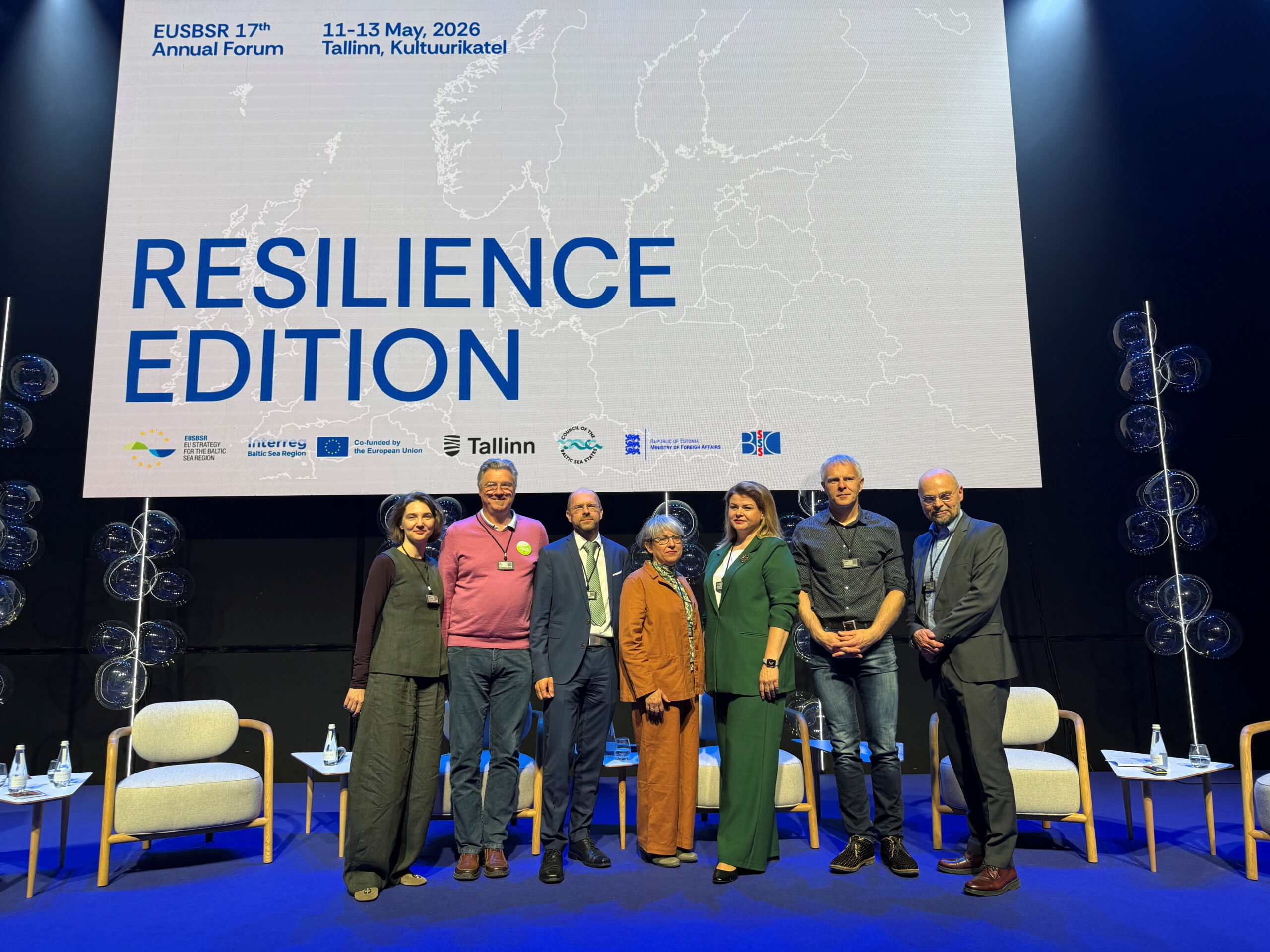
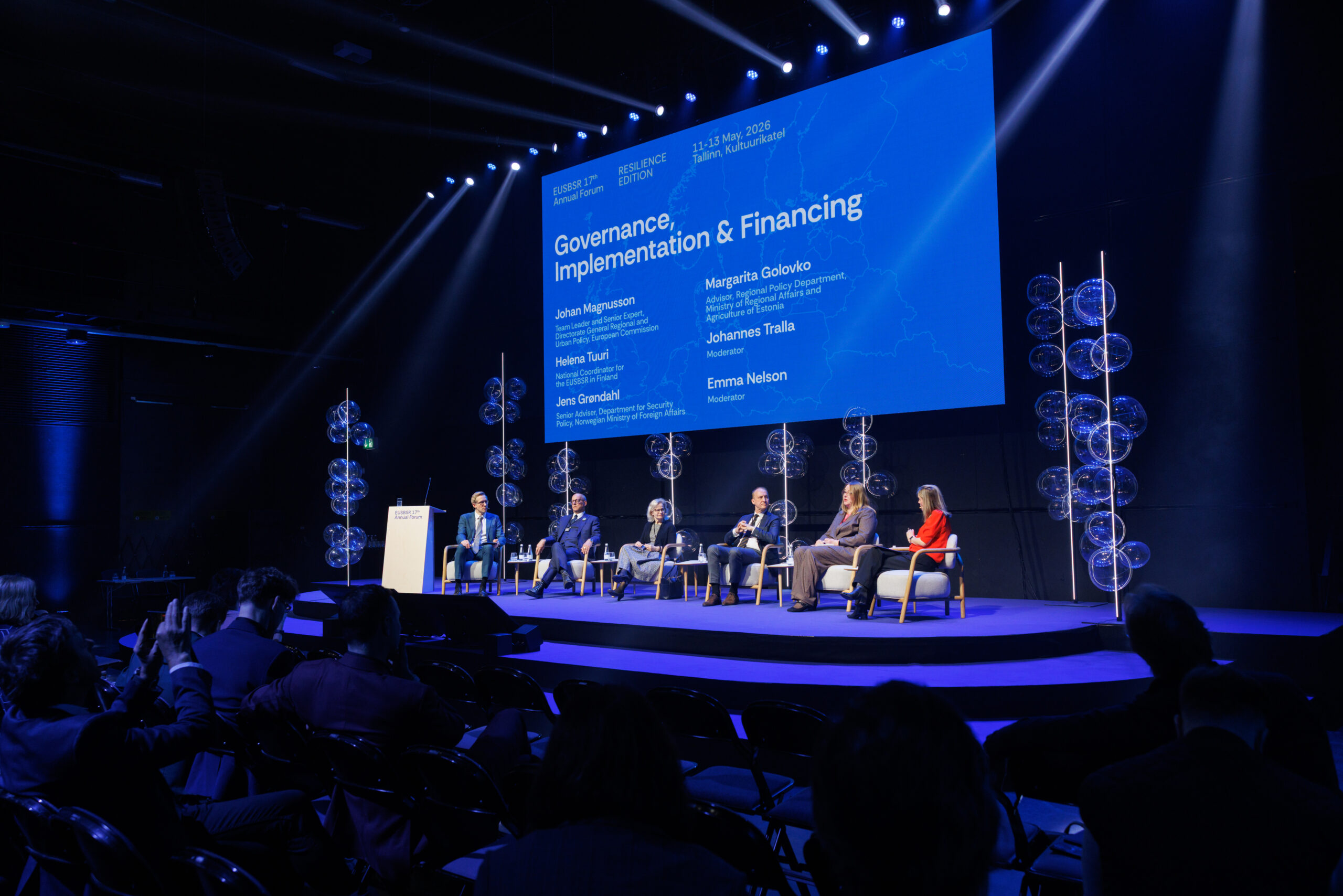
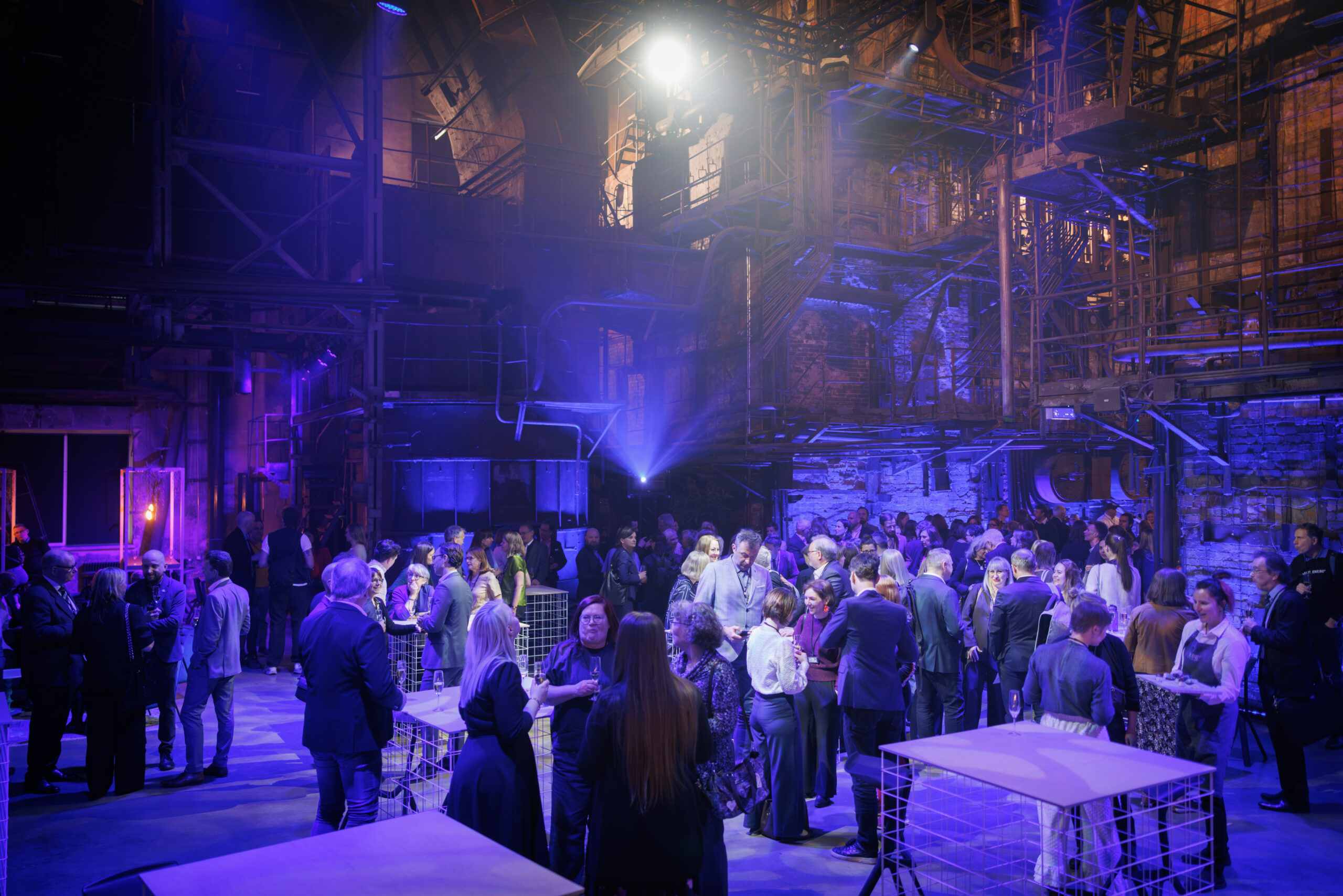
Held from 11–13 May at Kultuurikatel in Tallinn , the “Resilience Edition” of the EUSBSR Annual Forum gathered governments, cities, researchers, civil society organisations, innovators and regional networks around one shared understanding: the Baltic Sea Region is entering a new era where crises no longer arrive one at a time.
Climate pressures, security threats, demographic decline, cyberattacks, economic uncertainty and infrastructure vulnerabilities are unfolding simultaneously. They overlap, reinforce each other and increasingly shape everyday life across the region.
And perhaps most importantly, no country can solve them alone. That idea, cooperation not as a political luxury but as a survival skill, ran through the entire forum
Resilience is no longer about “bouncing back”
Across plenary discussions and workshops, one message surfaced repeatedly: resilience is not about returning to the way things were before the crisis. It is about learning how to function, adapt and cooperate in permanent uncertainty.
The Forum’s four main themes reflected exactly that complexity:
- security and geopolitical uncertainty,
- climate and environmental pressures,
- demographic shifts and competitiveness,
- governance and financing gaps.
But rather than discussing them separately, the Forum constantly pushed participants to connect the dots. Environmental instability affects economic security. Demographic decline weakens local preparedness. Cybersecurity depends on governance capacity. Maritime safety relies on regional trust. The Baltic Sea itself became a symbol of this interconnectedness, shared by all countries in the region, vulnerable to all pressures, and impossible to protect in isolation.
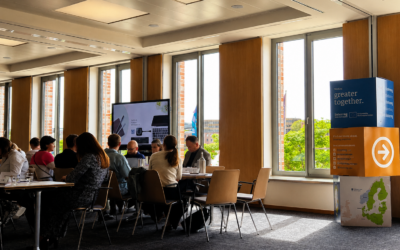
Click the picture to open the gallery
From big strategies to practical cooperation
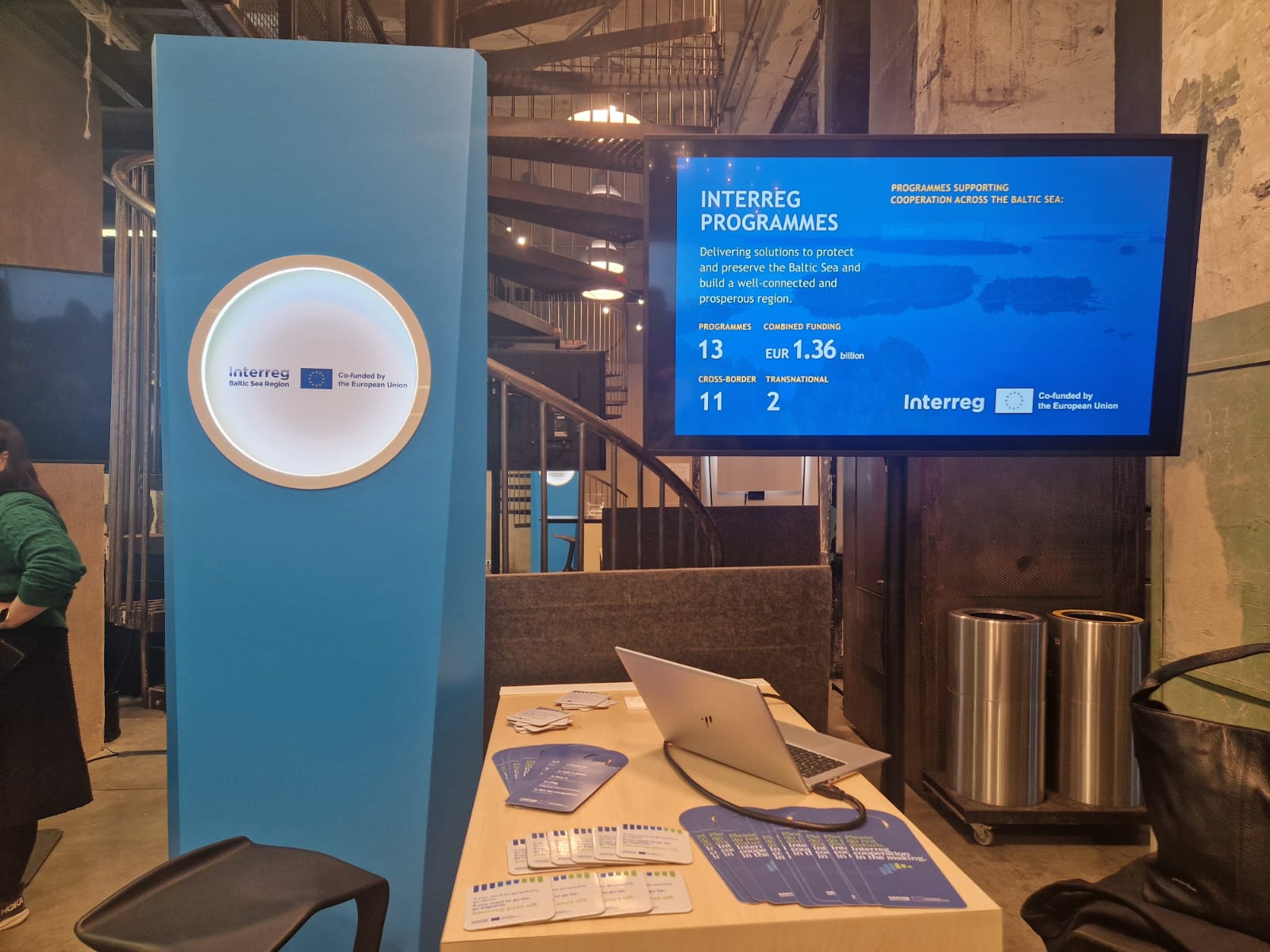
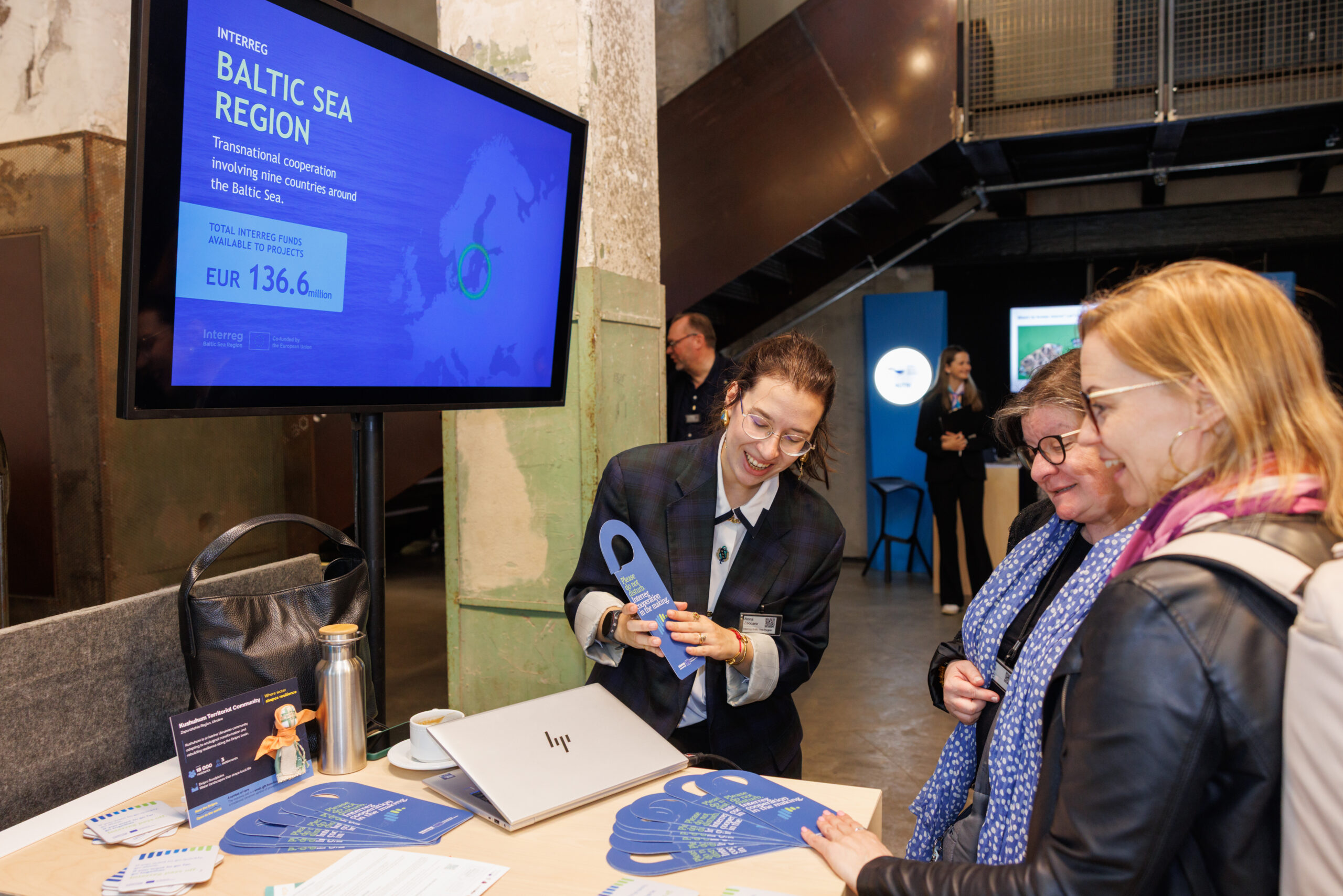
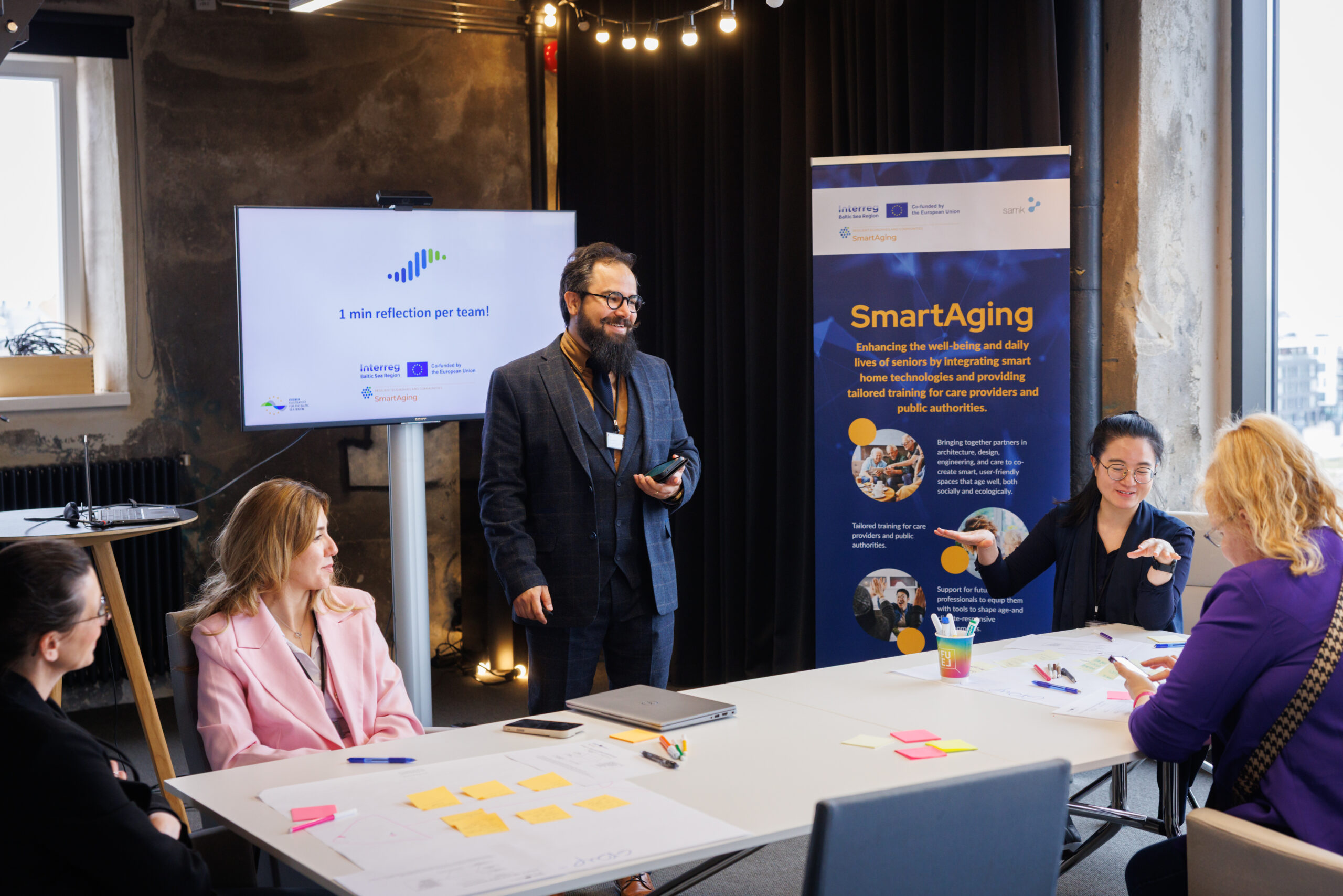
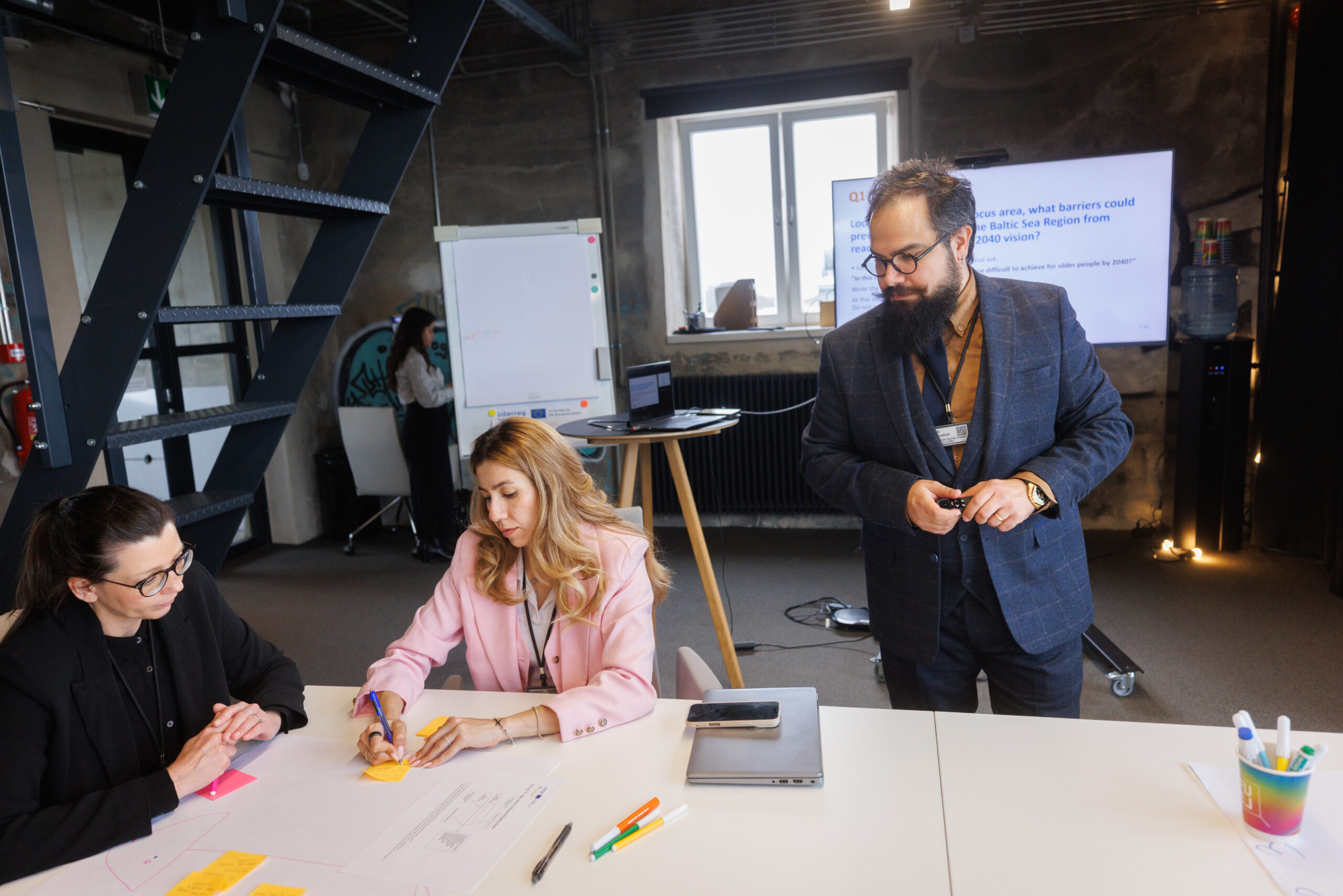
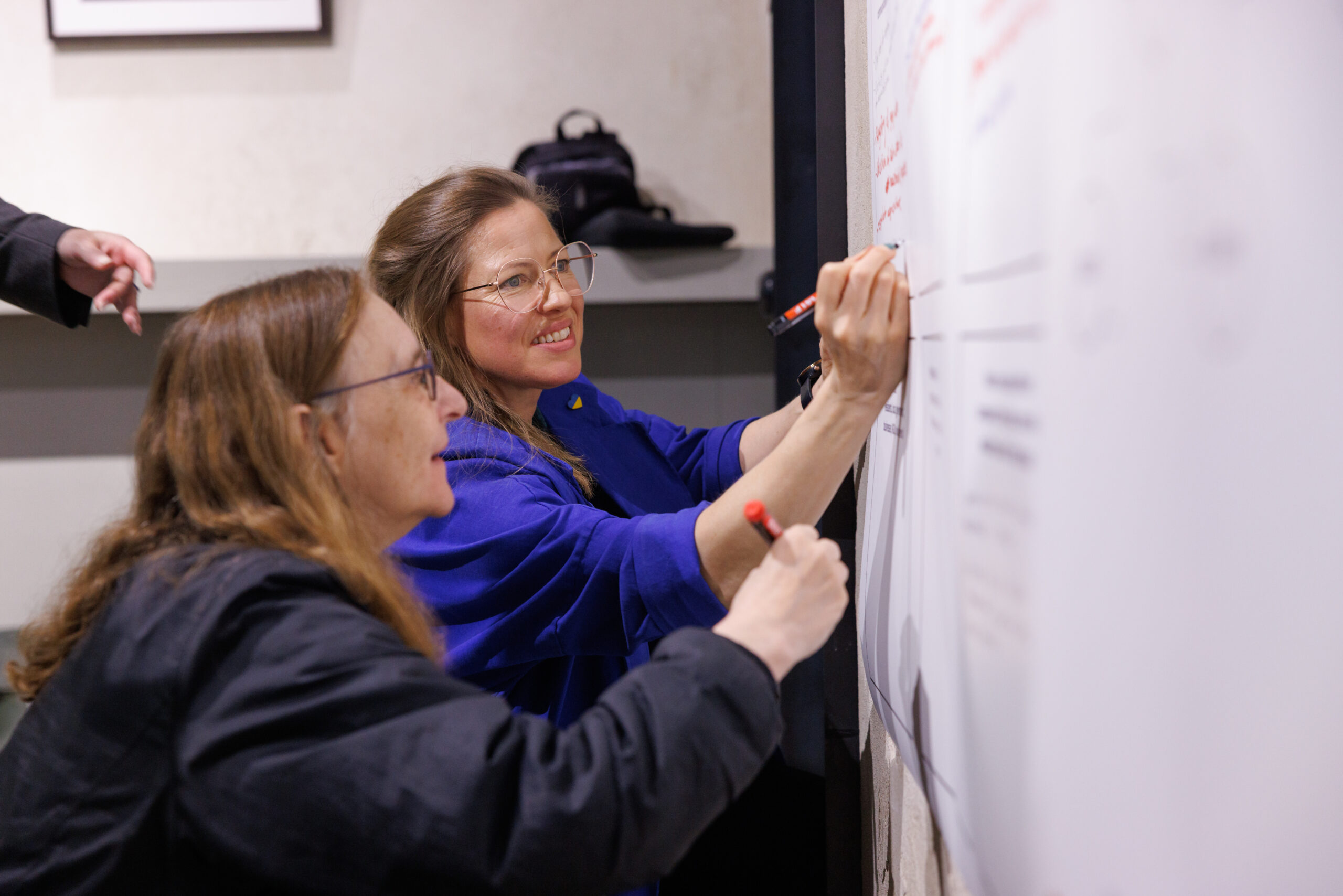
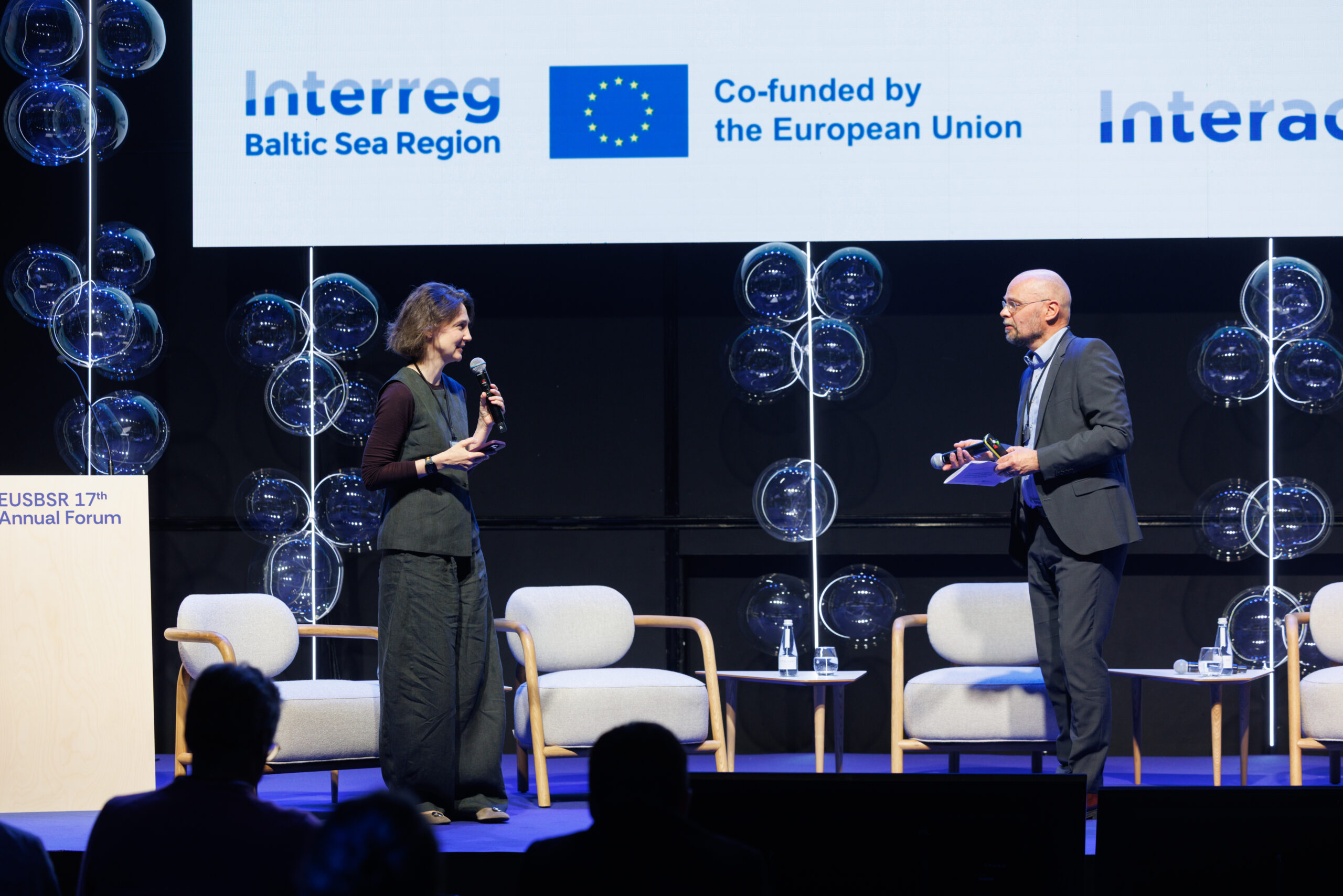
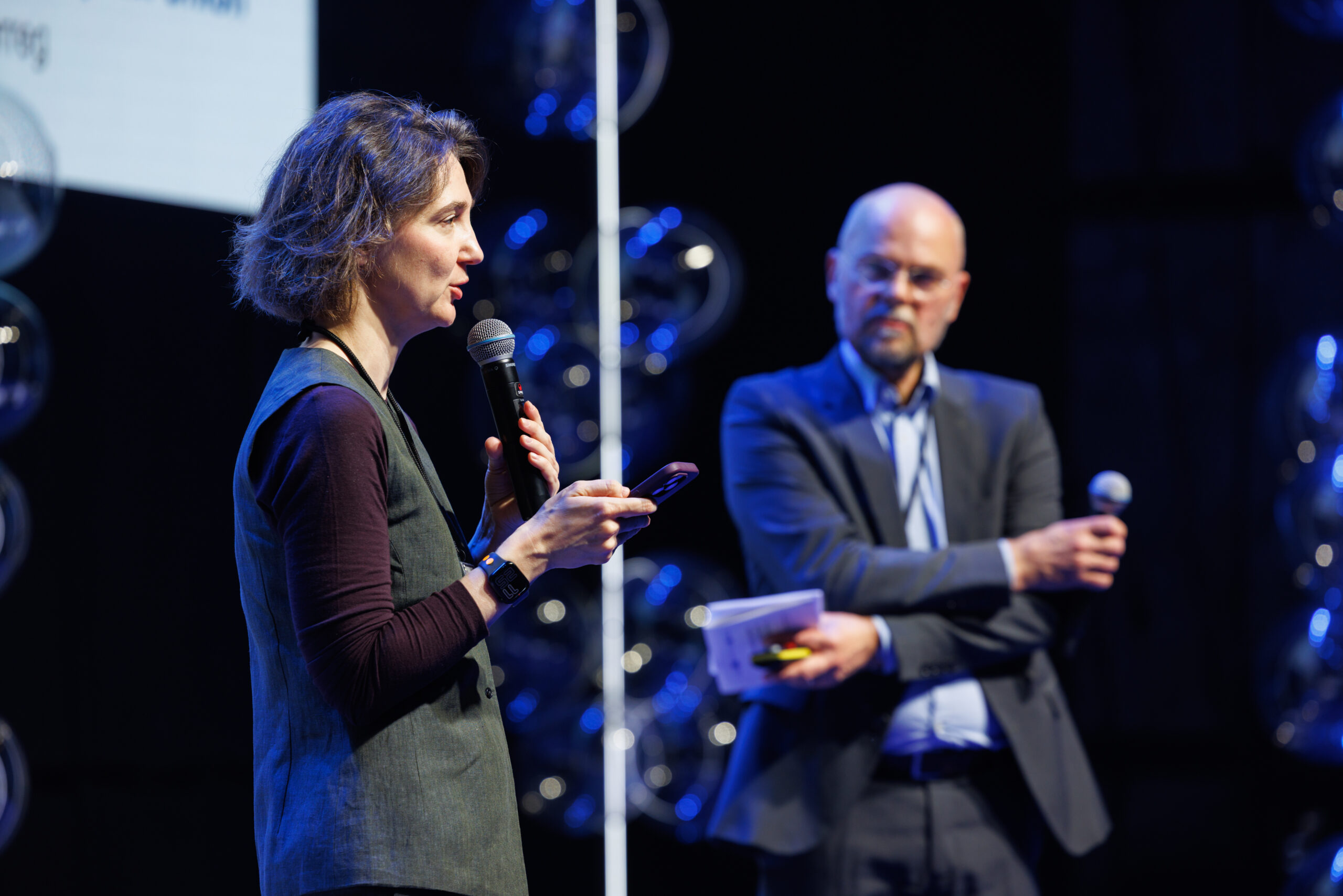
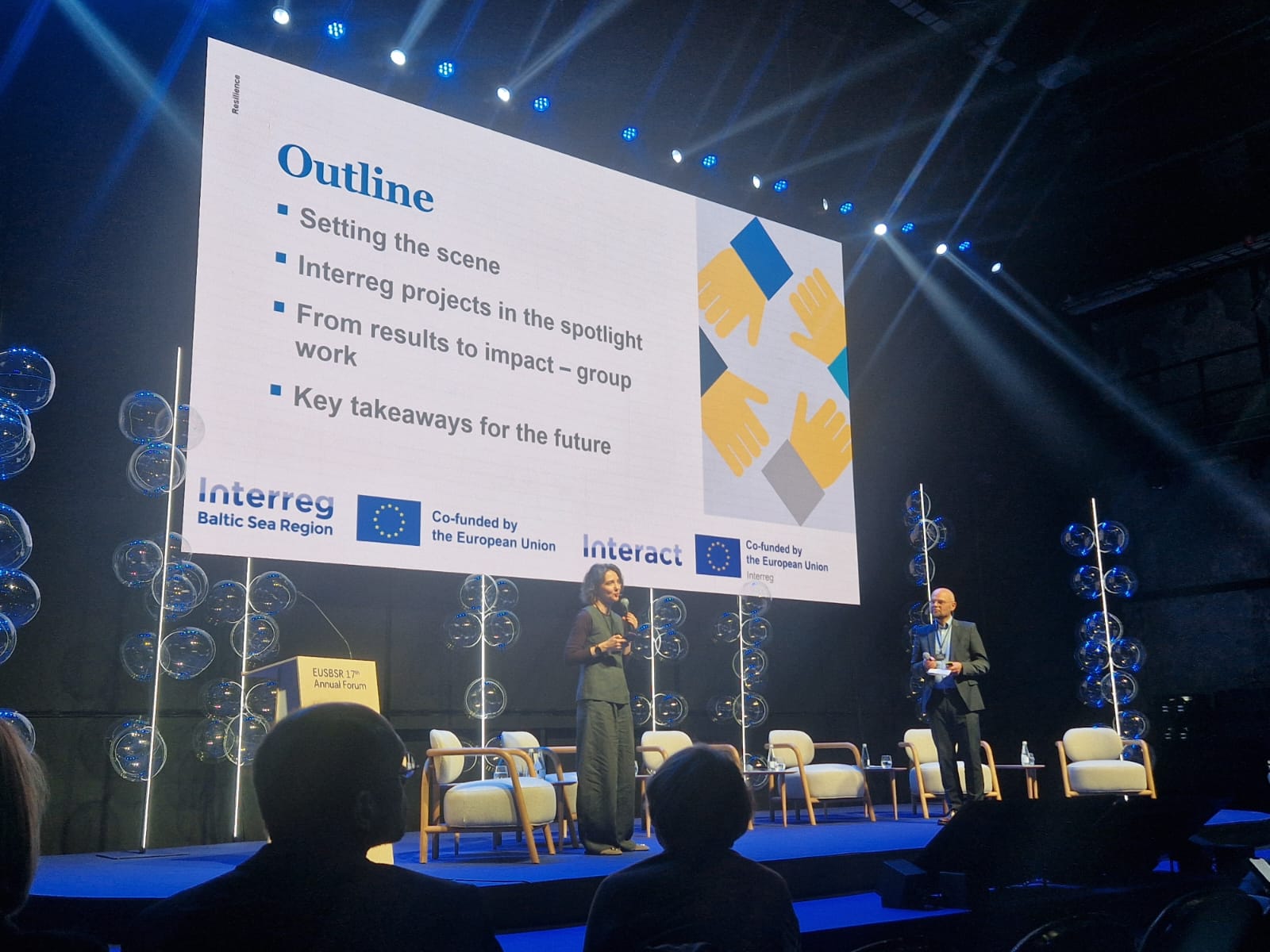
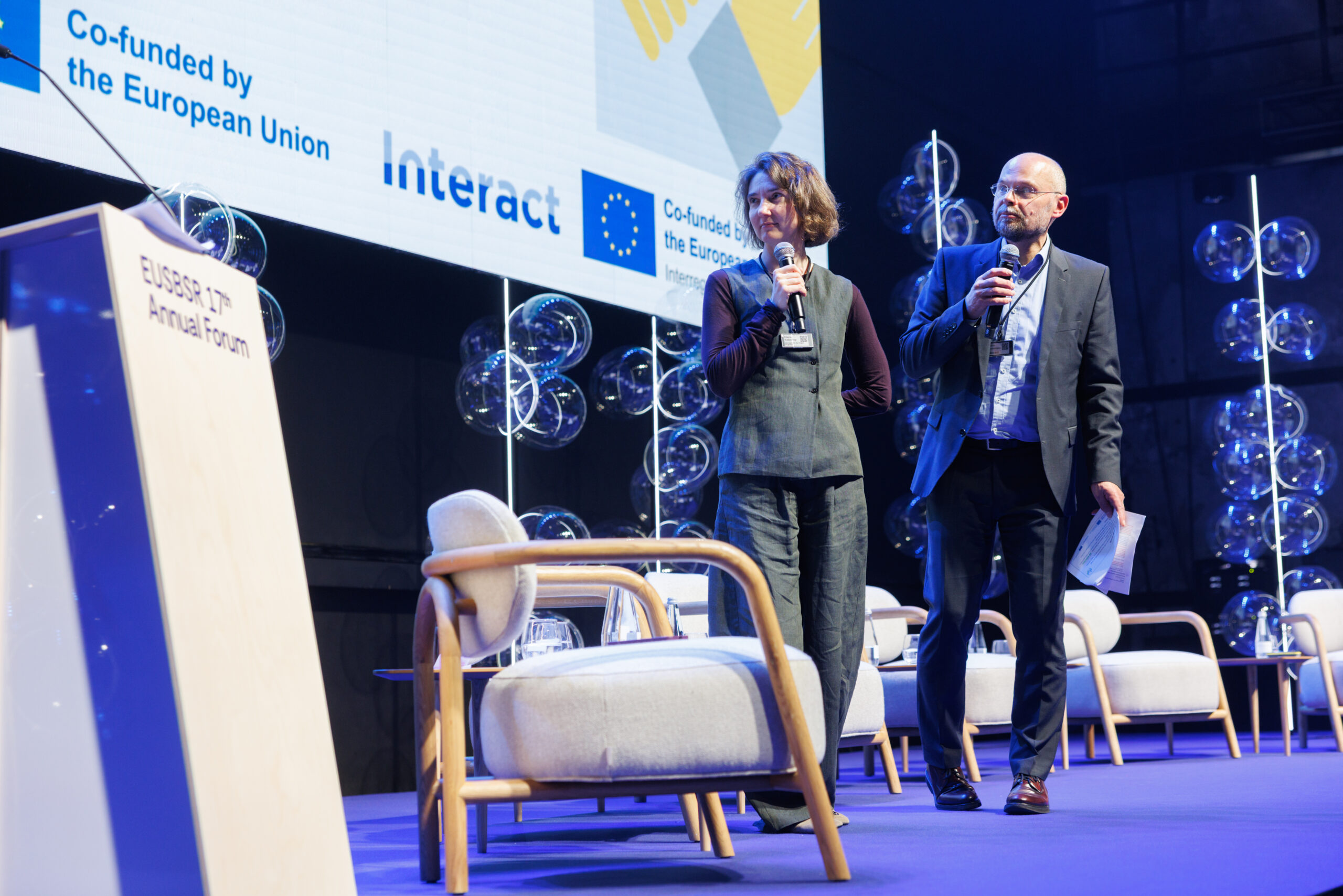
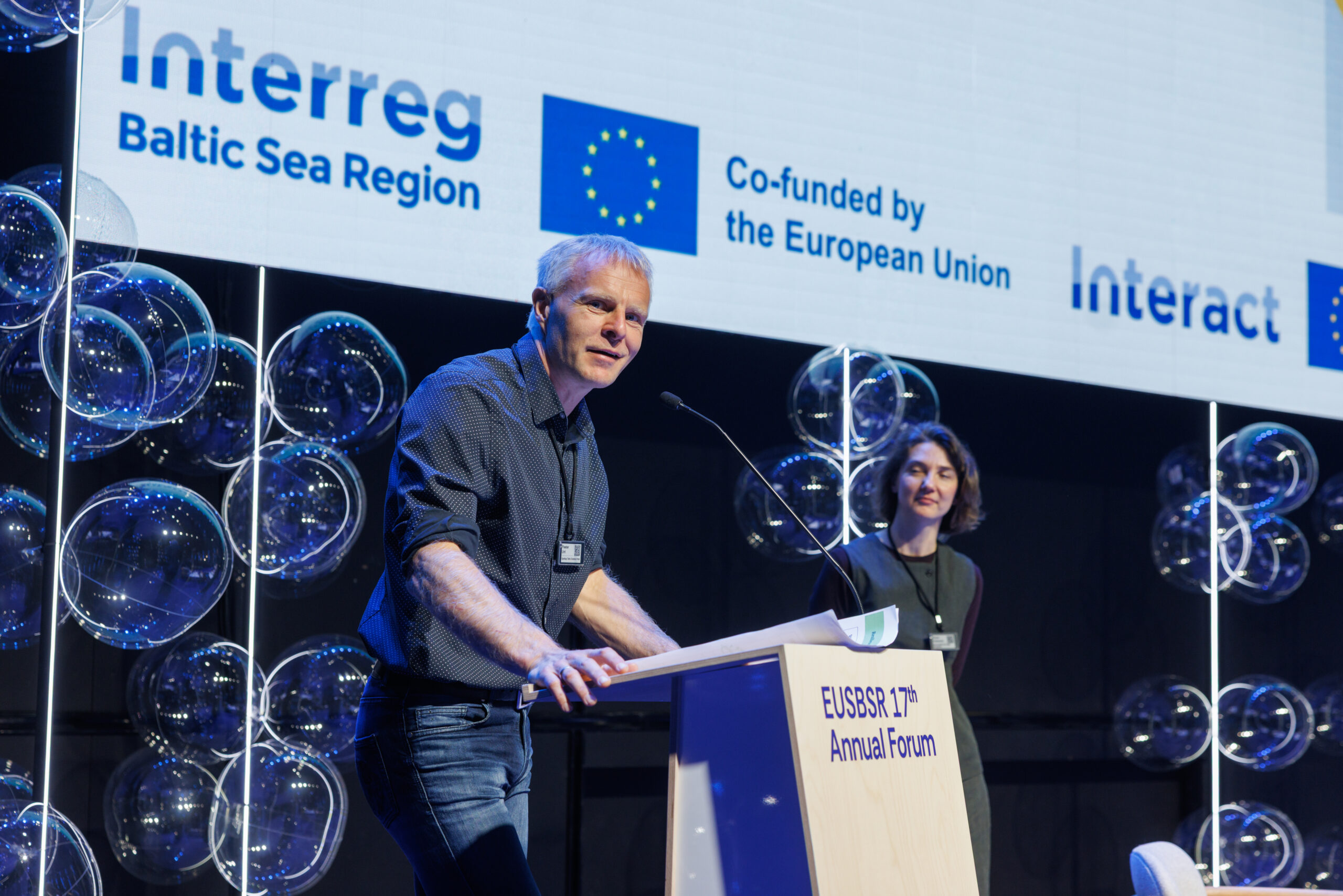
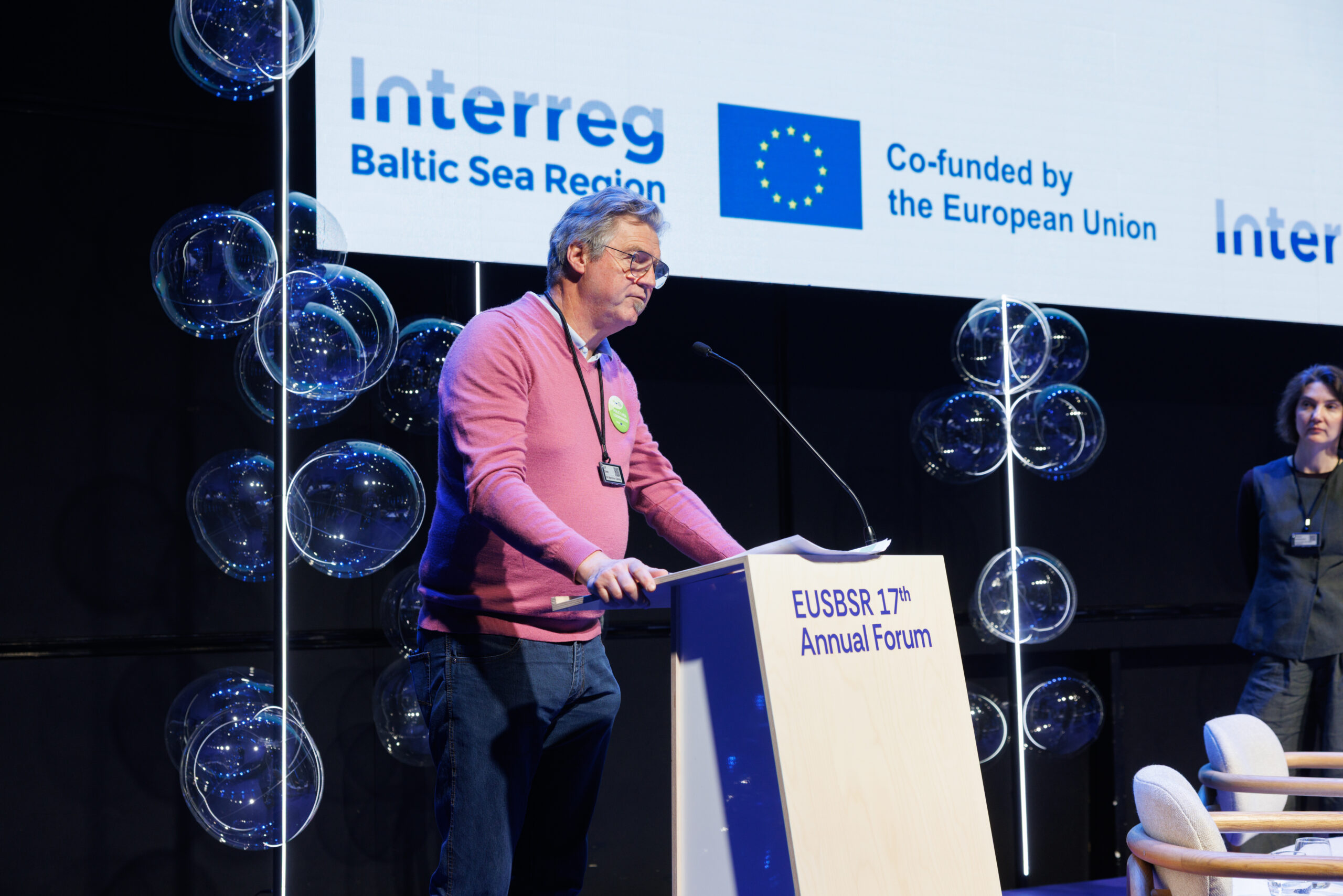
One example of this shift occurred during the workshop “Co-creating Resilience: How Interreg Cooperation Helps the Baltic Sea Region Stay Strong Together,” organised by us, the Interreg Baltic Sea Region Programme, together with the Interact Secretariat.
The session explored what resilience actually looks like on the ground: emergency preparedness, navigation safety, drone technologies, schools, food systems and community networks. The workshop started from a simple but uncomfortable truth: crises are no longer exceptional events.
As Marko Ruokangas from the Interact Programme explained:
“We are dealing both with shocks- sudden crises- and stresses, meaning long-term pressures. Today’s reality is that crises are no longer exceptions. This is where Interreg becomes a resilience enabler: a platform for developing solutions, testing them locally, sharing experiences, transferring knowledge, and building new capacities together.”
That idea resonated strongly throughout the discussion. Resilience was described not as a single system or technology, but as something built slowly through cooperation, trust and practical experience.
Elena Kolosova from Interreg Baltic Sea Region highlighted why transnational cooperation matters precisely in moments of fragmentation:
“We are dealing both with shocks- sudden crises- and stresses, meaning long-term pressures. Today’s reality is that crises are no longer exceptions. This is where Interreg becomes a resilience enabler: a platform for developing solutions, testing them locally, sharing experiences, transferring knowledge, and building new capacities together.”
Click the picture to open the gallery
What resilience looks like in real life
Interreg Baltic Sea Region projects show how broad the concept of resilience has become. The projects work on the region’s resilience in maritime safety, energy supply, crisis preparedness, food security, and more. The projects presented during the workshop illustrated this well.
The CREWS project focused on crisis preparedness and emergency coordination between authorities and civil society organisations. Discussions quickly moved beyond technical planning into something more personal: mindset.
As Birgit Gutenmorgen from the City of Hamburg put it:
“We are dealing both with shocks- sudden crises- and stresses, meaning long-term pressures. Today’s reality is that crises are no longer exceptions. This is where Interreg becomes a resilience enabler: a platform for developing solutions, testing them locally, sharing experiences, transferring knowledge, and building new capacities together.”
Meanwhile, the ORMOBASS project approached resilience from a maritime safety perspective. With growing concerns over disrupted communication systems and vulnerabilities in critical infrastructure, the project is developing terrestrial backup navigation systems across the Baltic Sea Region.
Stefan Gewies from the German Aerospace Centre explained:
“We are dealing both with shocks- sudden crises- and stresses, meaning long-term pressures. Today’s reality is that crises are no longer exceptions. This is where Interreg becomes a resilience enabler: a platform for developing solutions, testing them locally, sharing experiences, transferring knowledge, and building new capacities together.”
The Interreg Central Baltic project examples on drone technologies and healthy school food showed how innovation for better resilience intersects with local communities. For border regions such as Latgale in Latvia, resilience also carried a strong social and political dimension.
Ruta Priede from the Latgale Planning Region reflected on how cooperation helps regions remain connected despite demographic and geopolitical pressures:
“In the case of Latgale, Interreg is not only a funding instrument. It is also about how border regions stay connected to Europe and continue building partnerships.”
Networks as infrastructure
One of the strongest ideas emerging from the Forum was that resilience is not built only through infrastructure, regulations or technologies. It is also built through relationships.
Throughout the discussions, participants repeatedly stressed that cooperation networks themselves are becoming a form of regional infrastructure, just as important as cables, ports or digital systems.
Ulf Siwe from EUSBSR Policy Area Maritime Safety summarised this clearly:
“We need to prepare for the future in a coordinated way. Harmonised approaches to building and delivering solutions are extremely important. In the end, networks are one of the biggest sources of resilience we have.”
That thinking reflected the wider ambition of the Forum itself: to move beyond discussions and towards a more connected regional approach.
A different tone for the Baltic Sea region
What made this year’s Forum stand out was not only the topics discussed, but the tone. There was less emphasis on polished declarations and more focus on practical cooperation. Less talk about isolated projects and more discussion about systems, coordination gaps and preparedness. Participants spoke openly about uncertainty, vulnerabilities and the pressure many regions are facing.
But there was also a noticeable sense of determination. Because despite the complexity of today’s challenges, the Forum repeatedly showed that the Baltic Sea Region already possesses one of its strongest resilience tools: the habit of working together. From maritime safety to schools, from local governments to research institutions, resilience in the Baltic Sea Region is increasingly being built not through isolated national responses, but through shared learning, across-border networks and cooperation that continues long after projects officially end.
If one conclusion emerged from Tallinn, it was this: in a world where crises are becoming permanent, cooperation itself may be the region’s most important form of preparedness.
Don’t miss these links
More recent news
This September take Cooperation Further!
On 21 September, Interreg Cooperation Day brings projects across Europe out of the meeting room and into the streets. Here’s how your project can join in, and why it’s worth the effort.
Getting ready to turn ideas into action, new small projects gather in Kiel
25 June 2026 Getting ready to turn ideas into action, new small projects gather in Kiel Written by Anna ZaccaroBefore new projects can create...
From achievements to ambitions: shaping the future Interreg Baltic Sea Region
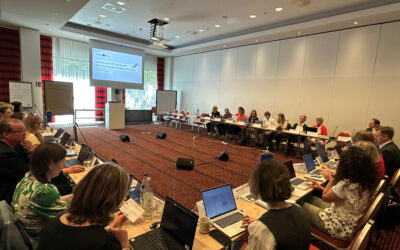
While the current Interreg Baltic Sea Region Programme is delivering results across the region, preparations for the next Programme are already gaining momentum. This dual focus was at the heart of the Monitoring Committee meeting held in Berlin on 9–10 June 2026.
High five: new project platforms onboard!
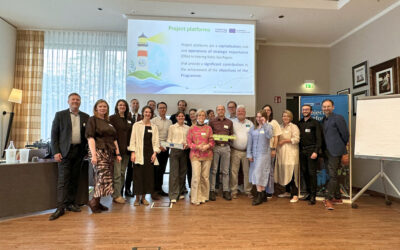
Five strong transnational partnerships, five strategic topics addressed, and endless opportunities to showcase the power of Interreg: the new project platforms, designated as Operations of Strategic Importance, met for their kick-off meeting in Berlin on 9 June.