




Interreg Baltic Sea Region: in the making
Interreg tomorrow starts today
In the Baltic Sea region, Interreg transnational cooperation has been addressing shared challenges and widening horizons for almost 30 years. And the need to work across borders, sectors, and governance levels still remains essential, as the region continues to evolve.
The 2021-2027 funding period is coming to an end. To ensure that Interreg Baltic Sea Region can continue supporting transnational cooperation projects after 2027, preparations for the new Programme have officially started.
Step into this next chapter with us! Help us shape the Programme that best addresses the needs of our region – through transnational cooperation.
Cohesion Policy 2028 – 2034
How it’s made
Ever wondered how Interreg programmes actually come to life?
As part of the Cohesion Policy, Interreg is shaped by EU legislation that defines what it is and what it can do. In July 2025, the European Commission put forward proposals for the next long-term EU budget and future Cohesion Policy, including Interreg. Negotiations are now underway. The European Parliament (representing EU citizens) and the Council of the European Union (representing EU governments) are examining the proposals, each bringing in their priorities and perspectives. Discussions are likely to continue beyond 2026 until a final agreement is reached, setting the legal framework.
For Interreg, the direction is evident: the programmes are expected to continue, but the exact setup will only become clear as negotiations progress.
Interreg Baltic Sea Region in Cohesion Policy 2028-2034
From policy to Programme
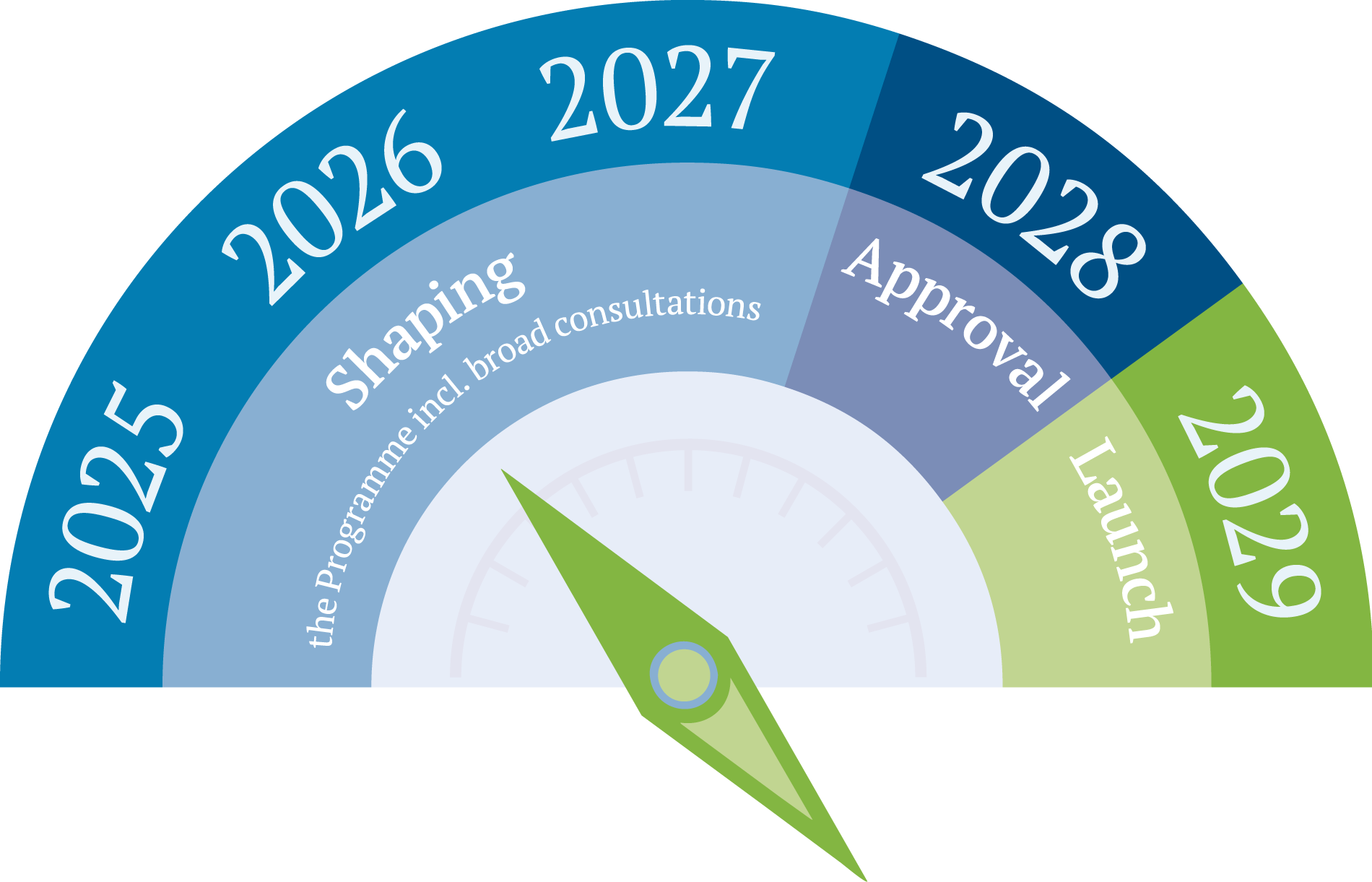
This indicative timeline is aligned with the expected adoption of the Cohesion Policy legislative package by the end of 2027. It will be adjusted if the timing of the legislative package changes.
Designing the Programme tailored to the region lies with the Monitoring Committee, bringing together representatives from all nine Programme area countries. Already at the end of 2025, the Committee began exploring ideas and preparing for what comes next.
In the months ahead, countries will take further steps to shape the Programme, aligning first ideas with the evolving EU policy framework. The Managing Authority/Joint Secretariat will actively facilitate this process.
Depending on how the Cohesion Policy legislative package develops, the Programme could be ready for approval by the Programme countries and the European Commission around 2028. This would pave the way for its launch and the opening of new calls for project applications, potentially in 2029.
This indicative timeline is aligned with the expected adoption of the Cohesion Policy legislative package by the end of 2027. It will be adjusted if the timing of the legislative package changes.
Interreg Baltic Sea Region: in the making
What the region needs & what Interreg can deliver
Designing a Programme that is truly tailored to the region requires a thorough mapping of today’s needs, combined with a clear focus on what transnational cooperation can do best: address shared and pressing challenges, jointly develop, test and advance practical solutions, and create space for bottom-up initiatives and experimentation. This goes hand in hand with an ambition to remain relevant until at least 2034 and alignment with the evolving EU policy framework.
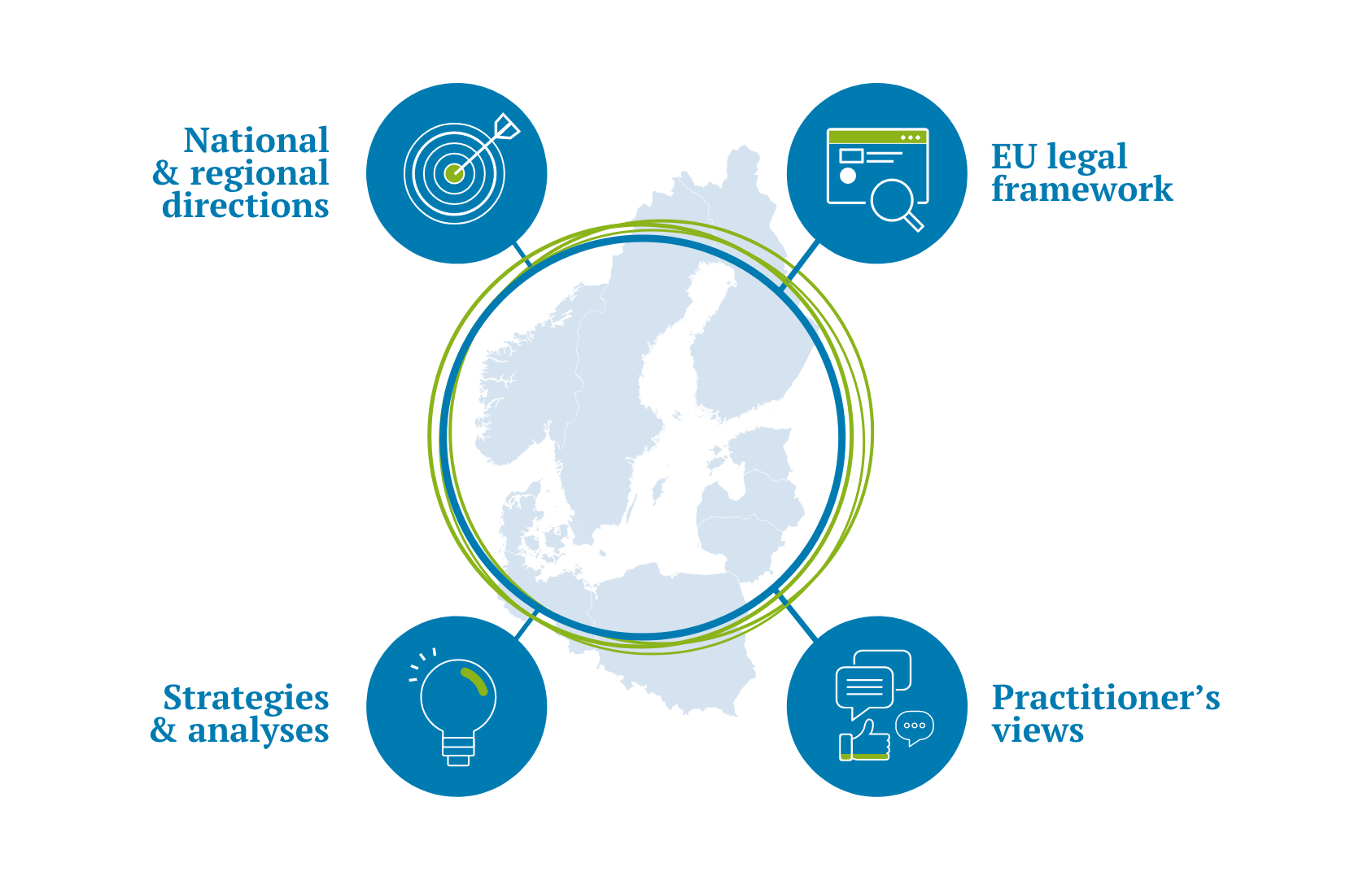
As part of this mapping, countries are gathering insights through national, regional and local channels. They are also drawing on well-established macro-regional and regional strategies, as well as specific thematic analyses of the region. It includes close interaction with the EU Strategy for the Baltic Sea Region (EUSBSR), in particular through exchanges with Policy Area Coordinators and their Steering Groups, but also reaching out to policy makers and practitioners during EUSBSR events. These interactions help connect the needs identified in the programming process with the priorities of the Strategy and explore their potential for transnational cooperation. The process also includes inputs from cooperation initiatives and plans of other pan-Baltic organisations and networks. Last but not least, open public consultations will complement the mapping of the region’s needs.
As a result, rather than following a linear path, the shaping of the Programme evolves through continuous exchange, bringing together different perspectives. This helps ensure that the future Programme responds to real needs and delivers practical results that are taken up and used on the ground.
Interreg Baltic Sea Region: in the making
Preparing the future Programme:
state of play
First indications of needs and opportunities for transnational cooperation in the region emerged from consultations carried out in 2024. Feedback gathered from around 300 organisations across the Baltic Sea Region through the “harvesting process” already pointed towards a stronger focus on a more resilient, secure, green and climate-neutral region.
Since then, the Monitoring Committee has discussed core directions for the Programme on several occasions and revisited its essential values. These values are still being refined to fully reflect the Programme’s future mission.
In essence, members have focused on where cooperation across borders can bring the greatest added value. Against increasing geopolitical uncertainty, as well as environmental and societal challenges, several emerging areas are already taking shape:
- Resilience and security
- Liveability of territories
- Clean waters and blue economy
- Resource efficiency and climate
These areas reflect the needs identified so far and create space for an open exchange on their further development, as well as on expectations and the results that Interreg transnational cooperation can best deliver.
Documents to explore:
Don’t miss
Shaping the Programme:
Upcoming opportunities to engage
Monitoring Committee meetings
12th Monitoring Committee meeting
25-26 November 2026
Tallinn, Estonia
Past events
& Monitoring Committee meetings
Danish EUSBSR Presidency opening event - Session: The future Interreg Baltic Sea Region Programme
29 September 2026
Copenhagen, Denmark
Stakeholder engagement meeting on Climate, Resource Efficiency and Water Management with UBC Sustainable Cities Commission
3 September 2026
Turku, Finland
11th Monitoring Committee meeting
10-11 June 2026
Berlin, Germany
Workshop "Co-creating a more secure and resilient Baltic Sea region with Interreg" at EUSBSR Annual Forum
12 May 2026
Tallinn, Estonia
Cities and Regions Lab at BSSSC Day of Cities and Regions
11 May 2026
Tallinn, Estonia
10th Monitoring Committee meeting
24-25 March 2026
Tallinn, Estonia
9th Monitoring Committee meeting
19-20 November 2025
Berlin, Germany
Don’t miss
Interested in the future Programme?
Follow the news for more information:
Continuing the dialogue with the EUSBSR on future transnational cooperation
What should Interreg Baltic Sea Region, as a transnational cooperation programme, address after 2027? As work on the future Programme progresses, dialogue with regional stakeholders helps us further develop the cooperation needs identified by the Programme countries. The EUSBSR is of particular importance in this process, bringing the macro-regional strategic perspective and helping to ensure that future cooperation needs are firmly rooted in the updated EUSBSR Action Plan and its implementation. The opening of the Danish EUSBSR Presidency provided a timely opportunity to bring this perspective into the ongoing Programme development dialogue.
From achievements to ambitions: shaping the future Interreg Baltic Sea Region
While the current Interreg Baltic Sea Region Programme is delivering results across the region, preparations for the next Programme are already gaining momentum. This dual focus was at the heart of the Monitoring Committee meeting held in Berlin on 9–10 June 2026.
Designing the future Programme, together with cities and regions!
Tallinn, 11 May, may have appeared in many calendars simply as “BSSSC Day of Regions and Cities”. In reality, the day marked an important moment in shaping the future of the Interreg Baltic Sea Region Programme. What made it special? Cities and regions took centre stage!
When crises stop being exceptions: what resilience really meant at the EUSBSR Annual Forum 2026
For years, resilience was one of those words floating through conference halls and policy papers…important, certainly, but often abstract. At the EUSBSR Annual Forum 2026 in Tallinn, that changed.
Stay informed
Curious about the future Interreg Baltic Sea Region? Interested in getting involved in the process? Sign up for our newsletter to always stay up to date!

Managing Authority/Joint Secretariat
IB.SH Investitionsbank Schleswig-Holstein
Grubenstraße 20
18055 Rostock, Germany
Phone +49 163 600 5203
Mail [email protected]
We support smart ideas that shape the Baltic Sea region with EU funding.

Subscribe to the newsletter
Your shortcuts
About us
Funding
Projects
Copyright © IB.SH
Managing Authority/Joint Secretariat
IB.SH Investitionsbank Schleswig-Holstein
Grubenstraße 20
18055 Rostock, Germany
Phone +49 163 600 5203
Mail [email protected]
We support smart ideas that shape the Baltic Sea region with EU funding.
Subscribe to the newsletter
Your shortcuts
About us
Funding
Projects
Copyright © IB.SH