




This wrap-up has been compiled by the Programme
PROGRAMME 2021-2027
Priority 3 Climate-neutral societies
Objective 3.1 Circular economy
BREC:
Wrap-up of project achievements
From educating future generations of farmers to helping policymakers and practitioners overcome analysis paralysis, the Interreg project BREC demonstrated which circular bioeconomy technologies work best in agriculture, anchoring more environmentally friendly practices and reducing the sector’s footprint across the Baltic Sea region.
Highlights
BREC
Highlights
BREC
BREC created a knowledge bank that simplifies navigating through the overwhelming number of emerging circular bioeconomy technologies. By offering a set of modular, accessible tools and educational resources, it supported effective decision-making and illustrated how specific technologies can address agricultural challenges.
In a nutshell, the project developed:
- A biorefinery pilot plant concept with a calculation tool
- Educational materials, lesson plans on circular bioeconomy principles, along with a teacher’s guide
Project
Details
Project type
Small project
Project duration
October 2022 – September 2024
Contribution to the EUSBSR
PA Bioeconomy
Budget in million
EURO
Involved
Countries
Lead partner
Project partners

Project Details
Project type
Small project
Project duration
October 2022 – September 2024
Contribution to the EUSBSR
PA Bioeconomy
Budget in million EURO
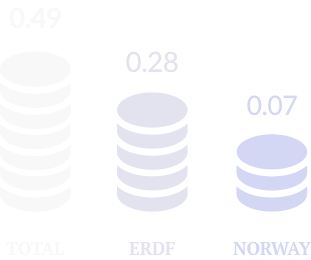
0.49 total // 0.28 ERDF // 0.07 Norway
Involved Countries
Lead Partner: Norway
Project Partners: Sweden // Denmark // Estonia // Germany
Biorefinery plant concept
Best practice guidance for advanced wastewater treatment
The comprehensive biorefinery pilot plant concept presents pathways to sustainable and circular bioeconomy practices, demonstrating how interconnected technologies can work together to produce bio-based renewable products. It recommends suitable technologies and plant modules for pilot plants and outlines how local agricultural waste and residual materials can be converted into valuable bio-based products, such as power, heat, protein for animal feed, biomethane for vehicle fuel, biofertilisers.
A calculation tool serves as a template for site-specific planning. It estimates the potential annual material flow through the plant and helps identify the most beneficial uses of local resources.
The concept also features an example based on a small-scale biorefinery pilot plant concept at NOME Agricultural School in the Oslofjord region of Norway.
Get inspired
Educational materials
Educational materials
Lesson plan & teacher’s guide
The project developed an educational lesson plan on the circular bioeconomy, tailored for agricultural high schools and vocational training institutions. The materials introduce students to circular bioeconomy principles and demonstrate how agricultural, aquaculture, and forestry by-products can be repurposed. The teacher’s guide provides background information, helping educators explain what the bioeconomy is and which technologies are in use — even if not yet widespread in practice. These resources equip the next generation of farmers and agricultural professionals with the knowledge and skills to adopt sustainable practices.
Information materials
To tackle analysis paralysis in the agricultural sector, BREC produced reader-friendly materials that explain various technologies capable of increasing circularity in the agricultural bioeconomy. These resources provide decision-makers with a clear overview of opportunities, without overwhelming them with multiple options. By outlining specific applications and benefits, they empower farmers, advisors, and organisations to make confident, informed decisions.
Covered technologies include:
- Biogas production, pyrolysis (biochar) and gasification
- Circular nitrogen management
- Circular phosphorus management
- Dewatering of manure
- Pretreatment of lignocellulose-rich materials
- Protein extraction
- Upgrading of biofertilisers
Learn more
Interreg pays off
BREC
Interreg pays off: BREC
The project actively promoted its results at events such as Arendalsuka and the Markens Grøde agricultural fair (Norway). It also engaged educational institutions across Latvia, Sweden, Norway, Germany, and Finland through the established teacher reference group, school visits, study tours and a series of webinars on circular bioeconomy technologies, including a digital study tour of a biogas plant.
Several organisations are already using BREC’s solutions. For example, educators at Nome and Kalnes Agricultural Schools (Norway), Sötåsen Agricultural School and Biologiska Yrkeshögskolan in Skara (Sweden) are testing selected educational materials in their curricula.
In numbers
7 organisations cooperating across borders
12 organisations directly benefitting from project solutions
Project Wrap-Up
Thanks to Interreg funding and transnational cooperation, BREC successfully bridged the gap between research, education and practice in circular bioeconomy technologies in agriculture.
Through its practical tools and educational materials, the project equipped farmers, educators, and decision-makers a clear, manageable way to make informed choices about implementing sustainable practices.