





10 April 2026
Shaping the Programme’s future with care
Written by Anna Gałyga
With the current Programme in full swing and the last tranches of EU funds allocated, Interreg Baltic Sea Region is already looking ahead to the next programming period. Are you ready for what comes next?
Tomorrow starts today
Following the meeting on 24–25 March 2026, the Monitoring Committee members laid the foundations for the future Interreg Baltic Sea Region Programme 2028–2034. The first discussions on the next Programme began already in November 2025.
Designing the future Programme now formally lies with the Monitoring Committee members, representing all nine Programme area countries. Through dedicated Monitoring Committee Task Force meetings, the Committee gathers inputs, reflects, analyses, and gradually shapes the future Programme, in line with the EU legal framework currently under development.
This early start reflects the Monitoring Committee’s ambition to support new projects as soon as possible. The need for Interreg transnational cooperation in the Baltic Sea region remains clear. It enables countries to work together on shared and pressing challenges, going beyond exchange to jointly develop, test, and advance practical solutions. It offers unique opportunities to exchange knowledge and best practices, build on existing experience, and create tested, ready-to-scale approaches, while building lasting networks.
Interreg transnational cooperation is indispensable for strengthening the capacities of organisations across borders, sectors, and governance levels. It lays the groundwork for policy developments or investments and addresses gaps that other programmes do not cover. Last but not least, the Programme is tailored to the needs of regions and communities in the Baltic Sea region.
Transnational work cannot wait
During the March meeting, the Monitoring Committee took a major step by revisiting the Programme values to keep them relevant, sharp and fit for the Baltic Sea region.
In light of the growing need to enhance resilience and respond to evolving geopolitical dynamics, alongside environmental and societal challenges, countries also explored where Interreg transnational cooperation can bring the most value. While the Programme framework is still in development, discussions have begun to highlight several areas where countries see emerging needs:
- Resilience and security
- Liveability of territories
- Clean waters and blue economy
- Resource efficiency and climate
Exciting time ahead!
These four areas reflect the needs identified so far and create space for an open exchange on their further development, as well as on expectations and the results that Interreg transnational cooperation can best deliver.
As development continues, the Programme will build on its strong roots in the region and its links with macro-regional and pan-Baltic strategies. From actors involved in the EU Strategy for the Baltic Sea Region (EUSBSR) and pan-Baltic organisations to project beneficiaries and all those interested in Interreg, we invite you to take part in shaping a relevant and forward-looking Programme.
Two opportunities to engage are already coming up! Join us at the BSSSC Day of Cities and Regions (11 May, Tallinn), where our large-scale labs will bring together cities and regions, EUSBSR coordinators, young people, and others to co-design transnational actions for the region, building on these emerging areas.
Another opportunity will be the EUSBSR Annual Forum (12 May, Tallinn), where we will examine Interreg experience in strengthening community resilience, crisis preparedness, and maritime safety, while exploring the potential for future cooperation and implementation of the EUSBSR Action Plan.
Stay tuned for other opportunities to help shape the future Interreg Baltic Sea Region!
More recent news
Getting ready to turn ideas into action, new small projects gather in Kiel
25 June 2026 Getting ready to turn ideas into action, new small projects gather in Kiel Written by Anna ZaccaroBefore new projects can create...
From achievements to ambitions: shaping the future Interreg Baltic Sea Region
While the current Interreg Baltic Sea Region Programme is delivering results across the region, preparations for the next Programme are already gaining momentum. This dual focus was at the heart of the Monitoring Committee meeting held in Berlin on 9–10 June 2026.
High five: new project platforms onboard!
Five strong transnational partnerships, five strategic topics addressed, and endless opportunities to showcase the power of Interreg: the new project platforms, designated as Operations of Strategic Importance, met for their kick-off meeting in Berlin on 9 June.
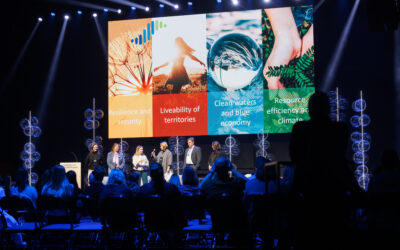
Designing the future Programme, together with cities and regions!
Tallinn, 11 May, may have appeared in many calendars simply as “BSSSC Day of Regions and Cities”. In reality, the day marked an important moment in shaping the future of the Interreg Baltic Sea Region Programme. What made it special? Cities and regions took centre stage!