




This wrap-up has been compiled by the Programme
PROGRAMME 2021-2027
Priority 3 Climate-neutral societies
Objective 3.2 Energy transition
BEST ACE:
Wrap-up of project achievements
Biogas and biomethane have strong climate potential, yet their uptake in the Baltic Sea region remains limited. The Interreg project BEST ACE addressed this challenge by developing coordinated, market-specific roadmaps that guide authorities, producers, and investors in advancing biomethane and hydrogen markets across the region.
Highlights
BEST ACE
Highlights
BEST ACE
The BEST ACE project established national reference groups in Estonia, Finland, Latvia, and Sweden to explore the market opportunities, barriers, and infrastructure needs, and to identify policy measures that could accelerate the adoption of biomethane and hydrogen solutions. Their insights shaped the Baltic Biogas Business Roadmap, which study visit offered practical examples of biogas production, use, and infrastructure in Denmark, Estonia, Latvia and Sweden.
The main solution developed by the project:
- Baltic Biogas Business Roadmap, a comprehensive guide outlining market conditions, regulatory frameworks, and national recommendations to bridge market gaps and accelerate the adoption of biomethane in transport, energy, and hydrogen applications across the region.
Download links
Project
Details
Project type
Small project
Project duration
October 2022 – September 2024
Contribution to the EUSBSR
PA Energy
PA Transport
Budget in million
EURO
Involved
Countries
Lead partner
Project partners


Project Details
Project type
Small project
Project duration
October 2022 – September 2024
Contribution to the EUSBSR
PA Energy
PA Transport
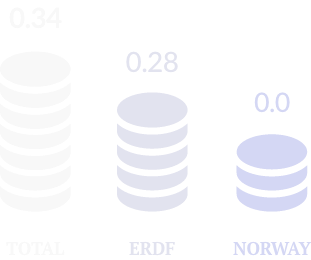
Budget in million EURO
0.34 total // 0.28 ERDF // 0.0 Norway
Involved Countries
Lead Partner: Sweden
Project Partners: Sweden // Estonia // Finland // Denmark
Baltic Biogas Business Roadmap
Baltic Biogas Business Roadmap
The Baltic Biogas Business Roadmap integrates national market analyses, legislative frameworks, and sector-specific recommendations to bridge the gap between compressed and liquefied biogas markets. It serves as a practical tool for producers, public authorities, and infrastructure owners to coordinate investments and regulatory steps. Both national and international reference groups contributed to its development, ensuring a broad and representative perspective. Through this transnational, multi-sectoral effort, BEST-ACE laid the foundation for accelerating biomethane deployment and supporting the EU’s climate and energy objectives.
Podcast story
National reference groups
National reference groups
One of the project’s key successes was the activation of national reference groups in Sweden, Estonia, Latvia, and Finland that triggered cross-sectoral and transnational cooperation. These groups united representatives from public authorities, industry, and research institutions.
- Sweden: the reference group contributed to updating the national biogas roadmap and continued collaboration through parallel projects involving companies like Stormossen, Wärtsilä, and Gasum;
- Estonia’s group extended its focus beyond biomethane to green hydrogen, offering expert input to a national study commissioned by the Ministry of Climate;
- Latvia: despite a smaller market, stakeholders used the roadmap as a framework for legislative and infrastructure development.
Study visits
Study visits
Study visits played a crucial role in knowledge exchange and strategic alignment.
- In Sweden, participants visited Vafab Miljö’s plant and Gasum’s agricultural site, learning about local circular business models and advanced infrastructure for CNG and LNG;
- Denmark: the visit showcased Power-to-X innovations at GrønGas Hjørring, rapid expansion of production and CO2 storage potential at Sindal Biogas, alongside Hjørring municipality’s support for green initiatives;
- In Estonia, the visit explored Biometaan OÜ and the Bioforce filling station, the largest in the Baltics, offering insights into agricultural biogas and its use in public transport.
- Finland’s visit highlighted biogas production at Stormossen and Jeppo Biogas, CO₂ capture at West Energy, and maritime fuel innovations at Wärtsilä’s Sustainable Technology Hub.
In numbers
6 organisations cooperating across borders
19 organisations cooperating across borders in the project
Project Wrap-Up
Thanks to the Interreg-funded BEST ACE project, people working in the biogas sector across the Baltic Sea region can now make more informed decisions, coordinate investments across borders, and align policy and infrastructure development, using a shared roadmap. Through active reference groups and hands-on study visits, the project also built lasting relationships, strengthening trust, encouraging collaboration, and accelerating regional progress toward climate and energy goals.