




eRural Resilience Partners Meet in Tartu and Valmiera to Celebrate Project Achievements, 27–28 October.
30 October 2026
eRural resilience – Interreg BSR project: 3 Years of Cooperation, Innovation and Results!
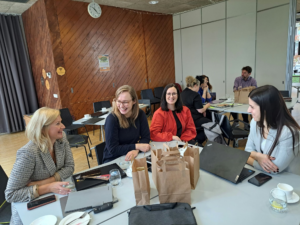 📍 On 27–28 October, eRural Resilience partners met in Tartu, Estonia, and Valmiera, Latvia, to reflect on three years of joint work, share achievements and celebrate the project’s results.
We are proud that all planned content activities and results have been successfully delivered, and that the practical tools developed throughout the project have been tested and piloted in partner regions.
eRural resilience – Interreg BSR project has successfully developed two practical tools to support the development of bio-businesses and strengthen the capacity of business supporters:
🔹 Solution 1 – Methodology for Assessment of e-Bio-Business Supporters
Test your competence in supporting e-bio-business development with our online assessment tool:
👉 www.ebiobusiness.eu/assessment/
🔹 Solution 2 – Online Tool for Supporting e-Bio-Business Launching
Discover how this tool can help assess a company’s readiness for e-bio-business development and identify practical steps towards launching or developing a bio-business:
👉 diagnostic.erural.eu
Building cooperation beyond the project!
Throughout eRural Resilience, partners have established a network of Knowledge HUBs to support small and medium-sized enterprises, especially those operating in the bioeconomy.
To ensure that this valuable cooperation continues beyond the project, partners have signed a Long-Term Cooperation Agreement, committing to maintaining the Knowledge HUB network for at least three years after the project’s final payment.
Explore the Knowledge HUB network and contact list (link) and discover how partners will continue supporting rural businesses and bioeconomy development.
🎥 Watch the video to see how eRural Resilience partners wrapped up three years of cooperation, shared their achievements and looked towards the future!
eRural resilience – Interreg BSR project is supported by Interreg Baltic Sea Programme.

Additional links
details
-
Homepage
-
Project typeCore Project

-
ImplementationNovember 2023 - October 2026
-
StatusOngoing
-
Contribution to EUSBSRPolicy Area Bioeconomy

-
Target groups
- Business support organisation
- Local public authority
-
Social media
-
Additional links
-
Tags