


This wrap-up has been compiled by the Programme
Priority 2 Water-Smart societies
Objective 2.1 Sustainable waters
UrbFRail:
Wrap-up of project achievements
Cities today face a number of pressures on their transport infrastructure, including growing urban freight traffic and road congestion. Bringing rail freight transport back into the city could alleviate these challenges, but local public authorities, infrastructure providers, and spatial and transport planners lack knowledge and tools for revitalising inner-urban freight rail infrastructure. To address this challenge, partners from Germany, Poland, and Sweden joined forces to develop the Interreg UrbFRail Learning Platform, including a Screening Tool and a Development Tool that help planners identify suitable sites, engage relevant experts, and plan urban freight rail hubs, thereby supporting more sustainable, efficient, and low-emission urban logistics.
Solutions
UrbFRail
Highlights
UrbFrail
The UrbFRail project strengthened the capacity of public authorities and infrastructure players to revitalise urban freight rail infrastructure and support more sustainable, efficient freight transport offering the UrbFRail Learning Platform, which contains two key parts:
- BSR Urban Freight Rail Screening Tool
- BSR UrbFRail Development Tool for Inner Urban Rail Freight Hubs
Project Details
Project type
Small project
Project duration
August 2023 – July 2025
Contribution to the EUSBSR
PA Transport
PA Spatial Planning
Budget in million EURO
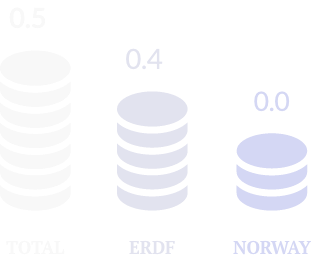
0.5 total // 0.4 ERDF // 0.0 Norway
Involved Countries
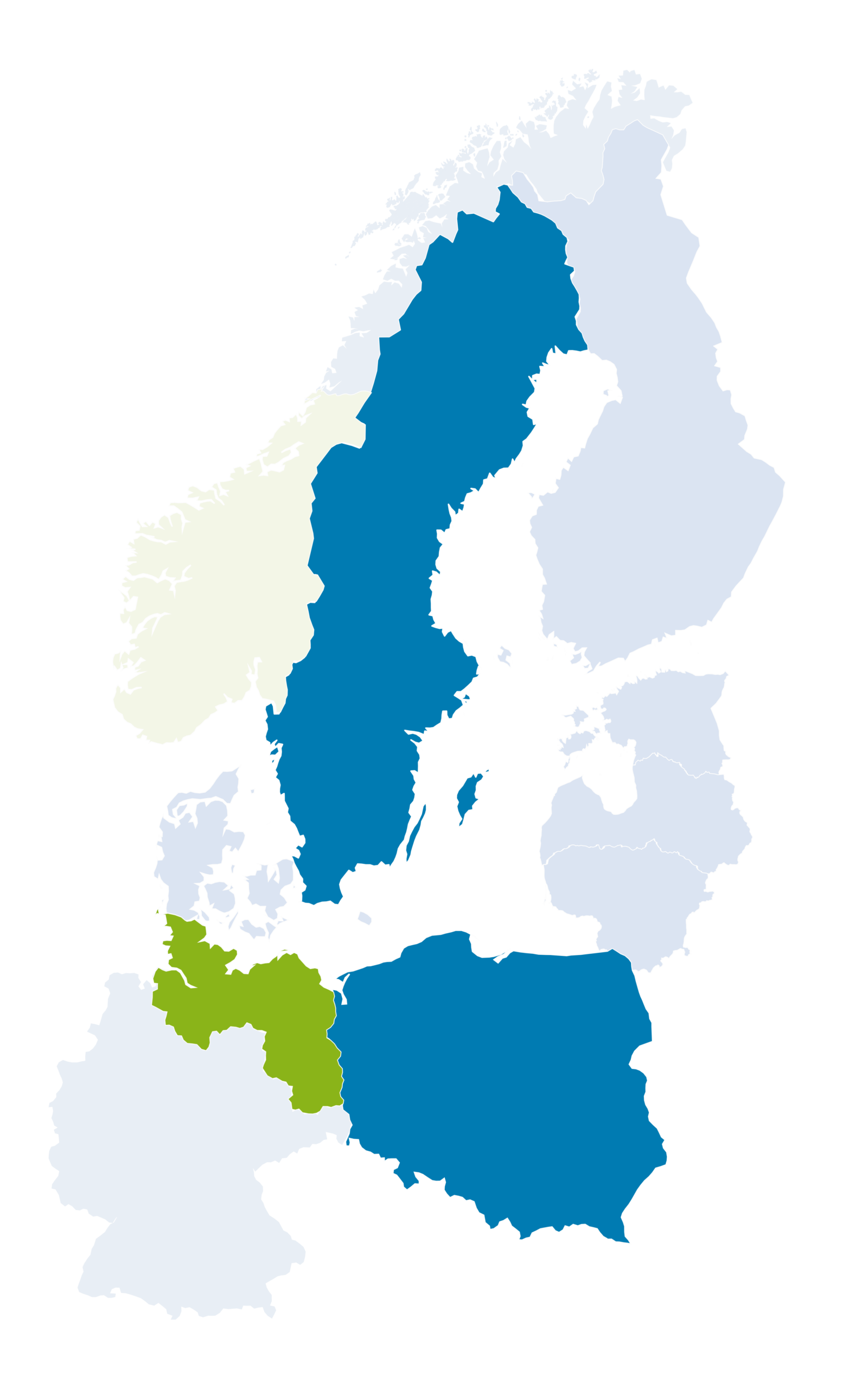
Lead Partner: Germany
Project Partners: Poland // Sweden
BSR Urban Freight Rail Screening Tool
BSR Urban Freight Rail Screening Tool
The BSR Urban Freight Rail Screening Tool was developed to help public authorities, infrastructure managers, transport planners, and urban development practitioners identify locations with potential for inner-urban rail freight operations. Across the Baltic Sea region, many cities face increasing freight transport volumes and congestion, yet often lack practical methods for assessing whether existing rail infrastructure and urban sites could support more sustainable freight solutions. The Screening Tool addresses this challenge through a structured, evidence-based assessment methodology.
The web-based tool guides users through a series of criteria related to rail accessibility, surrounding land use, logistics demand, operational feasibility, and development potential. Based on these inputs, it provides an initial assessment of a site’s suitability for an urban freight rail hub. In doing so, it helps stakeholders identify promising locations, compare alternatives, and focus further planning efforts on sites with the greatest potential.
The tool was developed through close cooperation between project partners from Germany, Poland, and Sweden, combining expertise from public authorities, metropolitan planning organisations, research institutions, and transport specialists. Its methodology was informed by practical experiences gathered in the project’s pilot regions, including Berlin, Stockholm, Warsaw, and the Górnośląsko-Zagłębiowska metropolitan area. Through stakeholder workshops and transnational exchanges, the partners refined the tool to ensure its applicability across different planning contexts. The final Screening Tool is available through the UrbFRail Learning Platform, allowing cities and regions throughout the Baltic Sea Region to access and apply a common framework for identifying urban freight rail opportunities.
Get inspired
BSR UrbFRail Development Tool for Inner-Urban Rail Freight Hubs
BSR UrbFRail Development Tool for Inner-Urban Rail Freight Hubs
While identifying suitable locations is an important first step, many public authorities and infrastructure stakeholders face difficulties in moving freight rail projects from concept to implementation. To address this challenge, the UrbFRail partnership developed the BSR UrbFRail Development Tool for Inner-Urban Rail Freight Hubs, a practical workbook that supports the planning and preparation of freight rail hub projects.
The Development Tool provides a structured process that guides users through the key stages of project development. It supports stakeholder mapping and engagement, governance and organisational planning, business model considerations, regulatory requirements, site development issues, and project preparation activities. Rather than offering a one-size-fits-all solution, the tool helps users adapt proven approaches to local circumstances while ensuring that critical planning aspects are addressed systematically.
The Development Tool emerged from transnational collaboration between public authorities, transport agencies, metropolitan regions, and research organisations from Germany, Poland, and Sweden. The framework was tested and refined using experiences from the project’s pilot areas and through consultation with stakeholders representing both the public and private sectors. By capturing and transferring knowledge gained across multiple countries and planning systems, the tool enables cities and regions to accelerate the development of sustainable urban freight rail solutions. Together with the Screening Tool, it forms the core practical output of the project and is made available through the UrbFRail Learning Platform for wider uptake across the Baltic Sea region.
In numbers
9 organisations cooperating across borders
15 directly benefitting from project solutions
Interreg pays off
Solutions in use
Interreg pays off: Solutions in use
Thanks to Interreg funding and transnational cooperation across Germany, Poland and Sweden, UrbFRail has closed a key gap in practical planning capacity for urban freight rail development. Cities and regions can now jointly identify suitable sites and systematically develop inner-urban rail freight hubs, accelerating the shift towards more sustainable urban logistics across borders
What started as cooperation between 9 partner organisations resulted in 2 planning solutions for cities, validated through 2 pilot activities and already being used in practice. The project’s results are helping 15 organisations make urban freight transport more sustainable.
Learn more
In focus
Small stories, big gains
In focus: Small stories, big gains
Deliveries back on track
Screening rail sites for future urban logistics hubs
Not every delivery needs a truck. In Berlin, Germany, the city is working to move more freight by rail, bringing goods closer to where they are needed instead of stopping at the city limits. Together with partners from Poland and Sweden, Berlin developed practical tools to help plan and reactivate urban rail freight hubs, making last-mile deliveries more efficient while reducing road traffic and emissions.
Berlin already has a well-functioning inner-city freight terminal at Westhafen and is developing another hub at Südhafen in Spandau. Thanks to the Interreg Baltic Sea Region UrbFRail project, the city now uses a screening tool to identify further suitable locations and a development tool to guide their (re)activation. These practical tools support better planning and decision-making in Berlin and can also help other cities across the Baltic Sea region make better use of rail for sustainable urban freight transport.
Project
Details
Project type
Small project
Project duration
August 2023 – July 2025
Contribution to the EUSBSR
PA Transport
PA Spatial Planning
Budget in million
EURO
Involved
Countries
Lead partner

Project partners