

This wrap-up has been compiled by the Programme
Priority 2 Water-Smart societies
Objective 2.1 Sustainable waters
TRUST ALUM:
Wrap-up of project achievements
Eutrophication occurs when an excess of nutrients, including phosphorus stored in lake sediments, fuels algal blooms that degrade water quality in lakes and the Baltic Sea. Although the ALUM treatment method has been used successfully to reverse this process in lakes in Sweden for decades, it has remained largely unknown in Estonia, Latvia, and Lithuania. The Interreg project TRUST ALUM introduced this method to public authorities in these countries, building confidence in its use and equipping them with the knowledge and tools needed to apply it more widely.
Solutions
TRUST ALUM
Highlights
TRUST ALUM
Through practical demonstration, knowledge transfer, and policy dialogue, the project delivered:
- ALUM Treatment Toolbox
- Expertise linking hub for ALUM treatment
- Restoring lakes using the ALUM method in the Baltic states
Project Details
Project type
Small project
Project duration
August 2023 – July 2025
Contribution to the EUSBSR
PA Nutri
Budget in million EURO
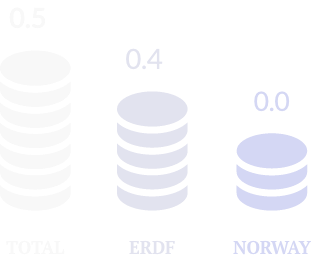
0.5 total // 0.4 ERDF // 0.0 Norway
Involved Countries
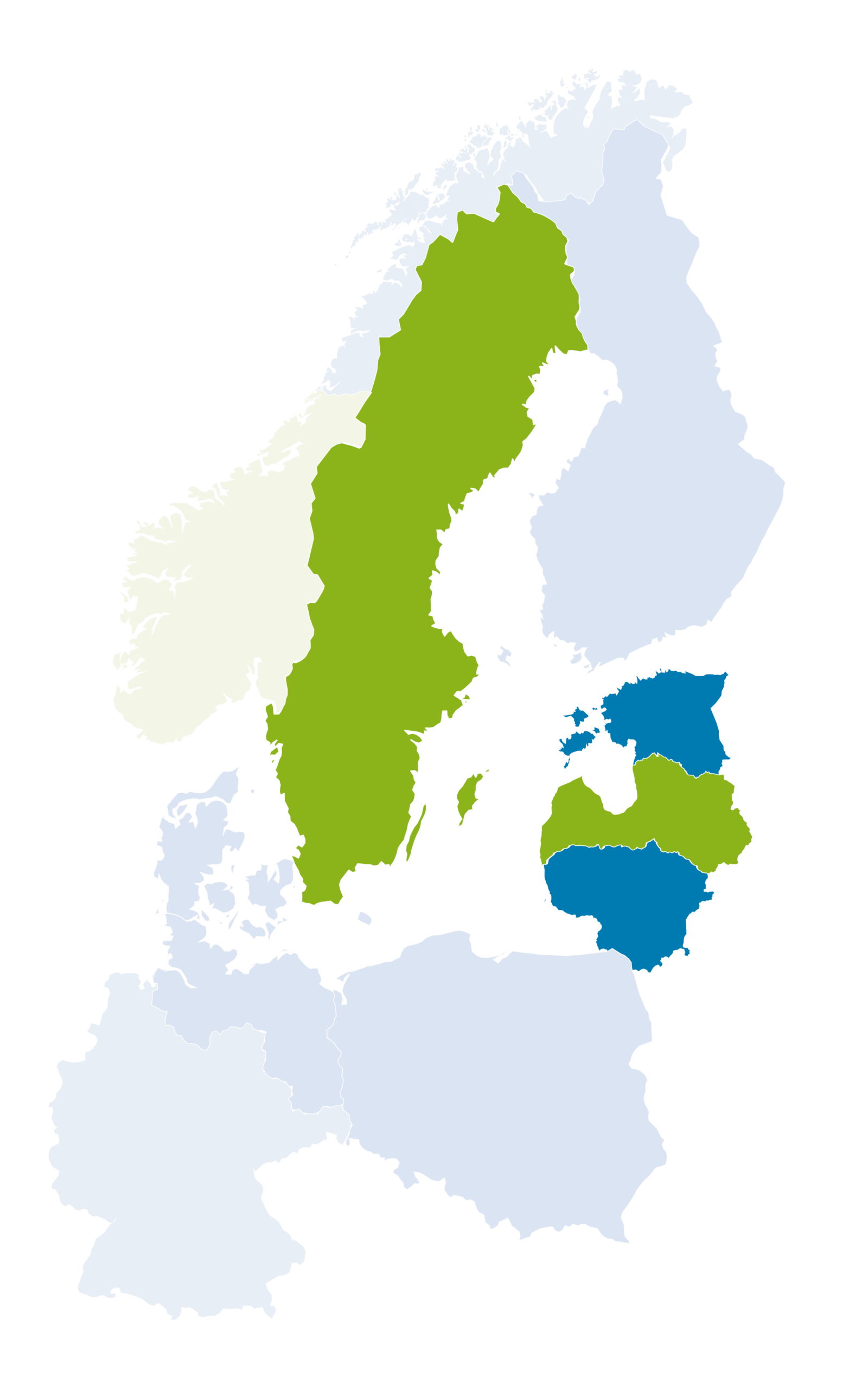
Lead Partner: Latvia
Project Partners: Estonia // Sweden // Latvia // Lithuania
ALUM Treatment Toolbox
ALUM Treatment Toolbox
The project developed the ALUM Treatment Toolbox for national, regional and local public authorities as well as other organisations involved in water management. It consists of recommendations, technical documentation, monitoring requirements, and a step-by-step roadmap to support the preparation, implementation, and monitoring of ALUM treatment.
The project worked with organisations from Estonia, Latvia, and Lithuania to adapt decades of Swedish experience to the environmental, regulatory, and practical needs of these countries. The value of the transnational cooperation lies in transferring proven know-how from countries where the method is already established to countries where it was previously unknown. Thanks to this, public authorities now have a practical tool that reduces uncertainty and supports the wider use of effective lake restoration measures.
Pilot activity
The project tested and demonstrated the ALUM treatment in Lake Velnezers in Riga, Latvia. The pilot activity addressed one of the main barriers to wider use of the method in the Baltic countries: the lack of practical examples. The pilot demonstrated that ALUM treatment can safely and effectively bind phosphorus in lake sediments, thereby reducing internal nutrient loading and improving water quality. Just as importantly, it gave public authorities, water management experts, and other organisations the opportunity to observe the treatment in practice, build confidence in the method, and gain first-hand experience for future applications.
Get inspired
In numbers
15 organisations cooperating across borders
25 directly benefitting from project solutions
Interreg pays off
Solutions in use
Interreg pays off: Solutions in use
Thanks to Interreg funding and transnational cooperation, TRUST ALUM helped overcome barriers to the use of ALUM treatment in Estonia, Latvia and Lithuania. By demonstrating the effectiveness and safety of ALUM treatment, the project built trust among public authorities, experts, and other organisations, and launched a permanent expertise hub that connects practitioners and researchers across borders. The pilot generated valuable evidence and provided a practical example that can encourage the wider use of ALUM treatment across the Baltic Sea region. As a follow-up to the pilot activity, the project plans to monitor water quality parameters in Lake Velnezers in Latvia for at least the next five years.
By transferring proven solutions across borders, the project has created lasting capacity for more effective lake restoration and eutrophication management across the region.
One of the project’s greatest achievements was contributing to regulatory changes in Latvia. The project’s pilot activities, scientific evidence, and dialogue helped pave the way for amendments to existing regulations that recognise ALUM treatment as a valid measure to improve water quality. This removes a key barrier to future implementation and creates favourable conditions for wider uptake of the method.
In focus
Small stories, big gains
In focus: Small stories, big impact
Can a boat save a lake?
500 kilometres to carry a solution
Lake Velnezers in Riga, a popular recreation area, was turning greener and murkier every year. An excess of nutrients trapped in the lakebed was fuelling algae blooming. But it was more than an aesthetic problem: in winter 2024, the lake suffered a major fish kill as oxygen levels plummeted.
The solution for this eutrophic lake came from Sweden. Through the Interreg project Trust ALUM, a specially designed Swedish boat brought a restoration method that has been improving water quality in Swedish lakes for decades. Over three days, 12 tonnes of aluminium salts were precisely applied to the lakebed, while water quality was monitored every hour. The treatment permanently bound phosphorus in the sediments, preventing it from feeding new algae blooms. Within just a month, water clarity improved from 0.7 metres to 2.6 metres, and within a year, phosphorus concentrations dropped by over 75%.
This pilot activity did more than help restore one lake. It showed that proven solutions can travel across borders. “Applying new, innovative methods to improve the environment is both exciting and essential for protecting our natural resources,” said Mārcis Zariņš from Riga City Council. The demonstration also resonated beyond Latvia. “The achievements of Trust ALUM in Latvia will inspire the continuation of such activities in other Baltic countries,” said Vaiva Ramanauskienė from the Environmental Centre for Administration and Technology in Lithuania. Throughout the project, authorities and practitioners from Estonia, Latvia, Lithuania and Sweden worked together to build confidence in the method and learn how it could be applied in different national contexts. The impact of transnational cooperation is already visible – from cleaner water in Lake Velnezers to Latvia taking steps to officially recognise ALUM treatment as a lake restoration measure.
Project
Details
Project type
Small project
Project duration
August 2023 – July 2025
Contribution to the EUSBSR
PA Nutri
Budget in million
EURO
Involved
Countries
Lead partner

Project partners