




This wrap-up has been compiled by the Programme
PROGRAMME 2021-2027
Priority 3 Climate-neutral societies
Objective 3.2 Energy transition
PV 4 All:
Wrap-up of project achievements
Regulatory, financial, and technical, as well as mindset barriers, hindered the uptake of small-scale photovoltaic (PV) systems in the Baltic Sea region. The Interreg project PV 4 All addressed these challenges by helping companies, organisations, and individuals overcome uncertainty and access practical solutions for adopting solar energy.
Highlights
PV 4 All
Highlights
PV 4 All
The project PV 4 All brought together public, private and research organisations to develop advisory tools, models and services that support the uptake of small-scale PV across the Baltic Sea region.
The project’s main outputs/solutions
- A PV 4 All toolbox with separate modules for private institutions, public authorities, and private persons
- An atlas on options for small-scale photovoltaics
Project
Details
Project type
Small project
Project duration
October 2022 – September 2024
Contribution to the EUSBSR
PA Energy
Budget in million
EURO
Involved
Countries
Lead partner
Project partners
Project Details
Project type
Small project
Project duration
October 2022 – September 2024
Contribution to the EUSBSR
PA Energy
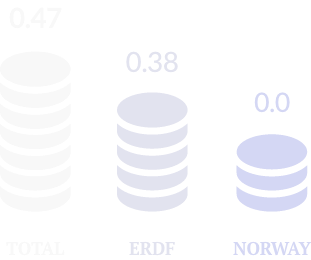
Budget in million EURO
0.47 total // 0.38 ERDF // 0.0 Norway
Involved Countries
Lead Partner: Germany
Project Partners: Sweden // Lithuania // Poland // Germany // Finland
PV 4 All Toolbox
PV 4 All Toolbox
The PV 4 All Toolbox is a comprehensive package of guidance, instruments, and best practices designed for public authorities, private institutions/businesses, as well as private persons (households, NGOs, and communities). By merging experiences from Germany, Finland, Lithuania, Poland and Sweden, the toolbox closes the gap between the demand for PV solutions and the lack of knowledge, confidence, or regulatory clarity.
Each group can find tailored materials in the Toolbox:
- Public authorities get insights on regulatory frameworks, planning tools, case studies, and event/webinar formats that help them create enabling conditions for PV adoption.
- Businesses and institutions can access models for integrating PV into housing, hybrid heating, and testing facilities, with examples of practical implementation and existing business models.
- Private individuals can also use the Toolbox to easily access information, consultations, and promotional activities (e.g., exhibitions or “solar ambassadors”) that lower the entry barrier to small-scale PV.
The novelty of the Toolbox lies in its transnational co-creation: partners compared different legal systems, subsidy schemes, and social contexts to identify what works where, then compiled transferable models. This exchange across borders made up a modular and adaptable toolbox: users in one country can learn from successes (and failures) in another.
Interreg pays off
The toolbox in use
Interreg pays off: The toolbox in use
In practice, the toolbox has been disseminated through events, online resources, and direct consultations, engaging municipalities, SMEs, housing companies, NGOs, and private households. The project’s impact is evident through several ongoing partnerships and local-level engagement.
- In Germany, cooperation platforms like the Solarforum and SoliSolar continue, alongside advisory campaigns on PV for commercial roofs and practical guides on plug-in PV;
- In Finland, municipalities in Central Finland are pursuing closer cooperation on solar and renewable energy, supported by new Interreg applications such as Energy Circle;
- In Sweden, Sustainable Business Hub and Energy Agency South Sweden are working with local authorities to expand PV as a role model for citizens;
- In Lithuania, balcony PVs are now legally enabled and supported by national subsidies, with ongoing collaboration with the Consumers’ Alliance;
- In Poland, new partnerships and exchange formats are keeping knowledge transfer alive through fairs and local agency networks.
Together, these activities demonstrate how PV 4 All has established durable collaborations, facilitated regulatory changes, and maintained continued international engagement across the Baltic Sea region.
Organisations in PV 4 All
16 organisations cooperating across borders
16 organisations directly benefitting from project solutions
Atlas on Small-scale PV options
Atlas on Small-scale PV options
The Atlas maps the current status, potentials, challenges and good practice models of small-scale PV in the Germany, Finland, Lithuania, Poland, and Sweden. It includes a status report (national data, regulatory/funding landscape, barriers & success factors), localised analyses, and specific solution types (like plug-in PV, off-grid, “one-stop-shops”, rental & tenant-flow models). The interactive map accompanying it, shows 31 practice examples and enables comparison across regions.
This transnational effort involved partners from five countries, enabling the exchange of experiences, such as what regulatory conditions work well in Finland versus Germany, or how to address social or institutional barriers in Sweden versus Poland. The novelty lies in assembling comparable data + good practice examples across diverse contexts, which supports targeted policy / advisory action. Because of this, stakeholders can better identify approaches that might work in their local/regional setting, thereby reducing uncertainty.
In practice, the Atlas has been used by public authorities, businesses, NGOs to identify suitable PV models, understand legal/regulatory constraints, and plan pilot or investment projects. The fact that 31 projects are profiled gives concrete examples. It also feeds into other outputs, such as the toolbox.
Get inspired
Project wrap-up
Thanks to Interreg funding and strong transnational cooperation, PV 4 All has made it easier for private citizens, businesses, NGOs and public authorities across the Baltic Sea region to overcome barriers to adopting small-scale photovoltaics. Now, they can more confidently assess, plan and implement PV solutions advancing the clean energy transition in their regions.