

This wrap-up has been compiled by the Programme
PROGRAMME 2021-2027
Priority 1 Innovative societies
Objective 1.1 Resilient economies and communities
MentalHealthMatters
Wrap-up of project achievements
When mental health suffers at work, both employees and organisations feel the consequences. Yet many employers and occupational safety and health (OSH) professionals lack practical ways to identify and address psychosocial risks. The Interreg project MentalHealthMatters brought together health experts, employers, social partners and policymakers from Sweden, Estonia, Finland, Latvia, Norway and Poland to change that. Together, they developed guidance and methods to help workplaces prevent mental health problems, create healthier working environments and make employees’ mental well-being an integral part of workplace management.
Highlights
MentalHealthMatters
Highlights
MentalHealthMatters
In a nutshell, the project provided these people with the following:
- Roadmap for Improvement of OSH policy and education, with policy options and actions for improving mental health at work
- First-Aid Kit for Mental Health –a practical guidance for employers on managing psychosocial risks
Project Details
Project type
Small project
Project duration
August 2023 – July 2025
Contribution to the EUSBSR
PA Health
Budget in million EURO
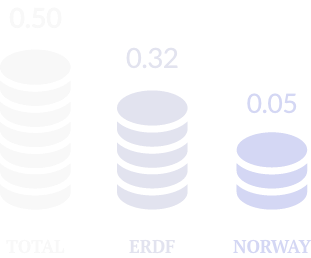
0.5 total // 0.32 ERDF // 0.05 Norway
Involved Countries
Lead Partner: Sweden
Project Partners: Finland // Latvia // Estonia // Poland // Norway
Roadmap for Improvement of OSH policy and education
Roadmap for Improvement of OSH policy and education
The project has developed a Roadmap for Improvement of OSH policy and education in Estonia, Finland, Latvia, Norway and Poland. It builds on the consensus reached through the National Communities of Practice established by the project.
The roadmap provides both country-specific recommendations tailored to distinct national challenges and contexts, and includes proposals for collaborative actions in the Baltic Sea region, emphasising how these countries can support each other, in three key improvement areas: policies and regulations, knowledge and data, education and training.
It outlines options for improving psychosocial risk assessment and support for SMEs in Estonia, advancing interprofessional OSH education in Finland, raising employer awareness in Latvia, building healthier workplace cultures in Poland, and extending mental-health-support tools for migrant-worker sectors in Norway. The document also highlights four streams for regional collaboration, emphasising how the Baltic Sea region can jointly support healthier workplaces.
The project actively engaged OSH authorities, social partners and experts from labour, health, safety and education sectors, and policymakers from Estonia, Finland, Latvia, Poland and Norway (like the Finnish Institute of Occupational Health, Nofer Institute of Occupational Medicine in Poland and Norwegian Labour Inspection Authority), who jointly discussed and drafted the roadmap. It is complemented by two additional documents:
- country-specific technical reports that uncover the current state of occupational health and safety policies, regulations, data availability, and education, highlighting the needs for improvement
- a legal annex compiling an overview of definitions, legislation, and national guidance related to the psychosocial work environment.
The greatest value of doing this transnationally was the ability to compare legal frameworks, share and learn from each other’s experiences, and propose solutions together that respect national priorities while aligning with broader EU standards.
This has enabled national authorities from the Communities of Practice and partners to use the Roadmap as a policy reference and development tool, fostering evidence-based decision-making and stimulating policy dialogues at national and transnational levels. Thanks to this, the project helped OSH experts and civil servants with an in-depth analysis of national shortcomings regarding workplace mental health and possible interventions to address them. Furthermore, policy advisors, ministerial staff and legal experts can better inform national policy processes.
By now, the Roadmap is already being used across all five project countries:
- Finland: The Ministry of Social Affairs and Health is using the roadmap to explore future occupational safety and health (OSH) policy directions.
- Latvia: The Ministry of Welfare has started evaluating the roadmap’s findings and expressed interest in discussing concrete initiatives to strengthen preventive and regulatory frameworks.
- Norway: The Labour Inspection Authority is using insights from the roadmap to support the expansion of its Workplace Environment Tool to sectors with high proportions of migrant workers, such as passenger transport.
- Poland: The Nofer Institute of Occupational Medicine has integrated the project findings into a major national research initiative on workplace health promotion, shaping subsequent trend studies.
- Estonia: Employers’ confederations and trade unions are using the roadmap as a source of inspiration and a reference for their national development work, while benchmarking activities with neighbouring countries.
Within a short time of its publication, the Roadmap is already informing policy development, regulatory discussions, tool development, and national research across all five project countries.
Get inspired
First-Aid Kit for Mental Health
First-Aid Kit for Mental Health
The project has developed the First-Aid Kit for Mental Health for employers, managers, HR staff and occupational safety and health (OSH) specialists, in order to close the gap between policy-level ambitions and everyday workplace practice. The Kit is a multilingual, research-based online tool that provides practical “quick wins” for preventing and managing psychosocial risks, particularly in small and medium-sized enterprises with limited resources. It works as a platform, available free of charge in English, Estonian, Finnish, Latvian and Norwegian. Its content is organised into 21 thematic categories covering key aspects of the psychosocial work environment, from overtime and remote work to burnout and anxiety. Each section defines the issue, clarifies roles and responsibilities within the workplace and offers research-based tools and concrete steps that can be applied immediately.
The project actively engaged experts from the health, labour and education sectors, as well as employers and social partners from Estonia, Finland, Latvia, Norway and Poland, who cooperated to identify, compile and structure the full range of resources that make up the first-aid kit. The greatest value in doing this transnationally lay in pooling diverse legal, organisational and cultural perspectives to create a tool that is both evidence-based and adaptable to different national contexts. The novelty lies in combining policy knowledge, academic research, and hands-on employer experience into a single practical, user-friendly digital instrument.
This has enabled workplace leaders to better understand psychosocial risks, take structured action, and strengthen resilient work communities. Thanks to this, the project made workplace mental health promotion tangible and achievable, empowering leaders to act proactively instead of reactively.
By now, the First-Aid Kit has been introduced to companies, employer organisations, labour inspectorates, and universities across the partner countries:
- Estonia: attorneys at law have used the Kit to clarify internal leadership responsibilities and introduce low-cost measures such as clearer remote-work norms and new workplace rituals. One enterprise used the Kit to reframe recurring “hot situations” as work process challenges, introducing an expectations sheet that reduced off-hours calls. Swedbank has initiated systematic psychosocial risk assessments following its involvement in developing the Kit. The Estonian Confederation of Employers and the Labour Inspectorate actively recommend the Kit to companies seeking guidance. Tallinn University of Technology has integrated the Kit into OSH, HR, and management curricula. It is also permanently embedded in management and HR development training, with plans to expand it to SME-focused professional training.
- Latvia: the Labour Inspectorate actively recommends the Kit to companies seeking guidance. Riga Stradins University has integrated the Kit into OSH, HR, and management curricula.
- Finland: Tampere University and the Finnish Institute of Occupational Health have integrated the Kit into OSH, HR, and management curricula.
Interreg pays off
Follow-up activities
Follow-up activities
Thanks to Interreg funding and transnational cooperation, this project substantially advanced efforts to prevent psychosocial risks at work and closed the gap between policy ambitions and practical workplace solutions for employers, authorities and social partners in the Baltic Sea region.
In Finland, the Ministry of Social Affairs and Health and universities are exploring an interprofessional occupational safety and health (OSH) curriculum, supported by a joint funding application prepared to advance interprofessional OSH education.
In Norway, the Workplace Environment Tool of the Norwegian Labour Inspection Authority, which was further developed within MentalHealthMatters using insights from the Roadmap and transnational exchange, will be expanded to new sectors, including passenger transport, while also improving multilingual accessibility.
At the regional level, the Northern Dimension Partnership in Public Health and Social Well-being (NDPHS) will continue building on the Roadmap through the project platform BSR Mental Health to develop long-term policy recommendations for non-clinical mental health initiatives across the Baltic Sea region. NDPHS also plans to further enhance the toolkit by integrating short videos and quick diagnostic questions for each thematic category, as well as new content on culture, arts and physical activity as promoters of mental health.
These follow-up initiatives demonstrate how the Roadmap is already generating spin-off effects in policy development, research and practical implementation beyond the project’s lifetime.
In numbers
26 organisations cooperating across borders
38 organisations directly benefitting
In focus
Small stories, big gains
Small stories, big gains
When a bandage isn’t enough
First Aid Kit for mental health
When people think of first aid, they picture bandages, ice packs and emergency treatment. But one of the most important workplace emergencies often can’t be seen. Stress, burnout and other psychosocial risks affect millions of employees every year. That’s why the Interreg Baltic Sea Region project MentalHealthMatters has developed a different kind of First Aid Kit: a free digital tool that helps employers recognise risks early and build healthier workplaces before problems escalate.
“The employer should find the motivation to tackle mental health at work. But we cannot rely on every employer acting proactively. We cannot rely on their inner motivation,” says Karin Reinhold, Associate Professor in the Management of Well-being at Work at Tallinn University of Technology. That is exactly the gap experts from Estonia, Finland, Latvia, Norway, Poland and Sweden set out to close. An online First Aid Kit makes supporting mental well-being less daunting by offering practical, easy-to-use guidance for everyday workplaces, especially in smaller businesses.
Today, the tool is already reaching the people it was designed for. In Estonia, it has been integrated into management and occupational safety education at Tallinn University of Technology, while the Labour Inspectorate actively recommends it to companies seeking guidance. The shared solution is also being adopted by universities and occupational safety organisations in Latvia and Finland, extending its impact across the region. It is a reminder that creating healthier workplaces does not always require sweeping reforms – sometimes it starts with giving people the confidence to take the first step.
The invisible workplace safety
The invisible workplace safety
Why labour inspectors are looking beyond physical hazards
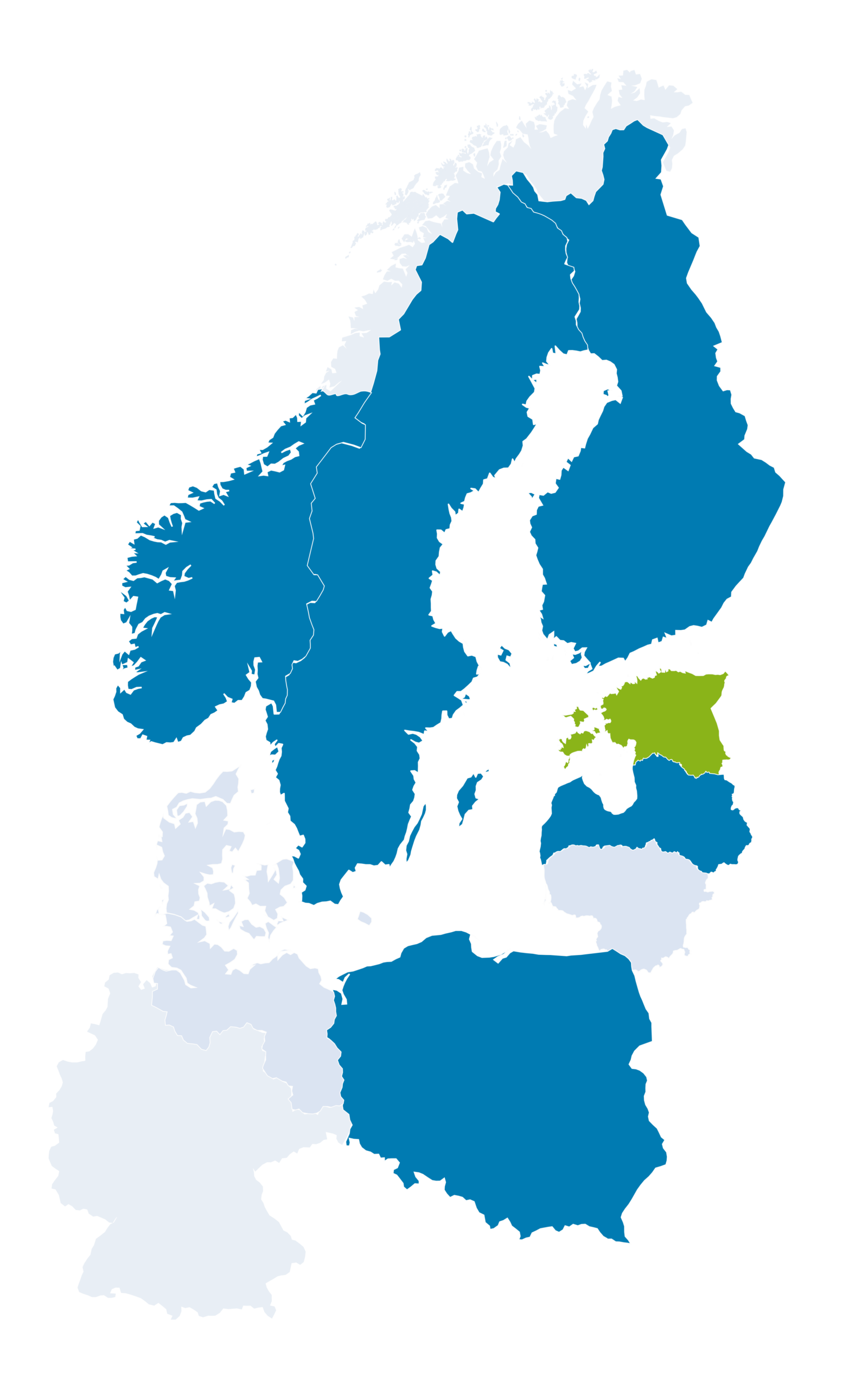
When labour inspectors visit a workplace, they usually look for visible hazards: unsafe machinery, missing protective equipment or dangerous working conditions. But what about stress, excessive workloads or isolation? In Trondheim, the Norwegian Labour Inspection Authority is helping broaden the understanding of workplace safety. Through the Interreg Baltic Sea Region project MentalHealthMatters, they check how employers can better recognise and prevent psychosocial risks before they lead to burnout, long-term sickness absence or staff turnover. The work paid particular attention to Norway’s cleaning sector, where many employees work alone and migrant workers can face additional challenges.
The Norwegian experience is part of a wider cooperation in the Baltic Sea region, involving labour authorities, researchers and occupational health experts from Estonia, Finland, Latvia, Poland and Sweden. By comparing national approaches and testing solutions in different workplace settings, partners developed practical guidance to help employers address mental wellbeing alongside physical safety.
Project
Details
Project type
Small project
Project duration
August 2023 – July 2025
Contribution to the EUSBSR
PA Health
Budget in million
EURO
Involved
Countries
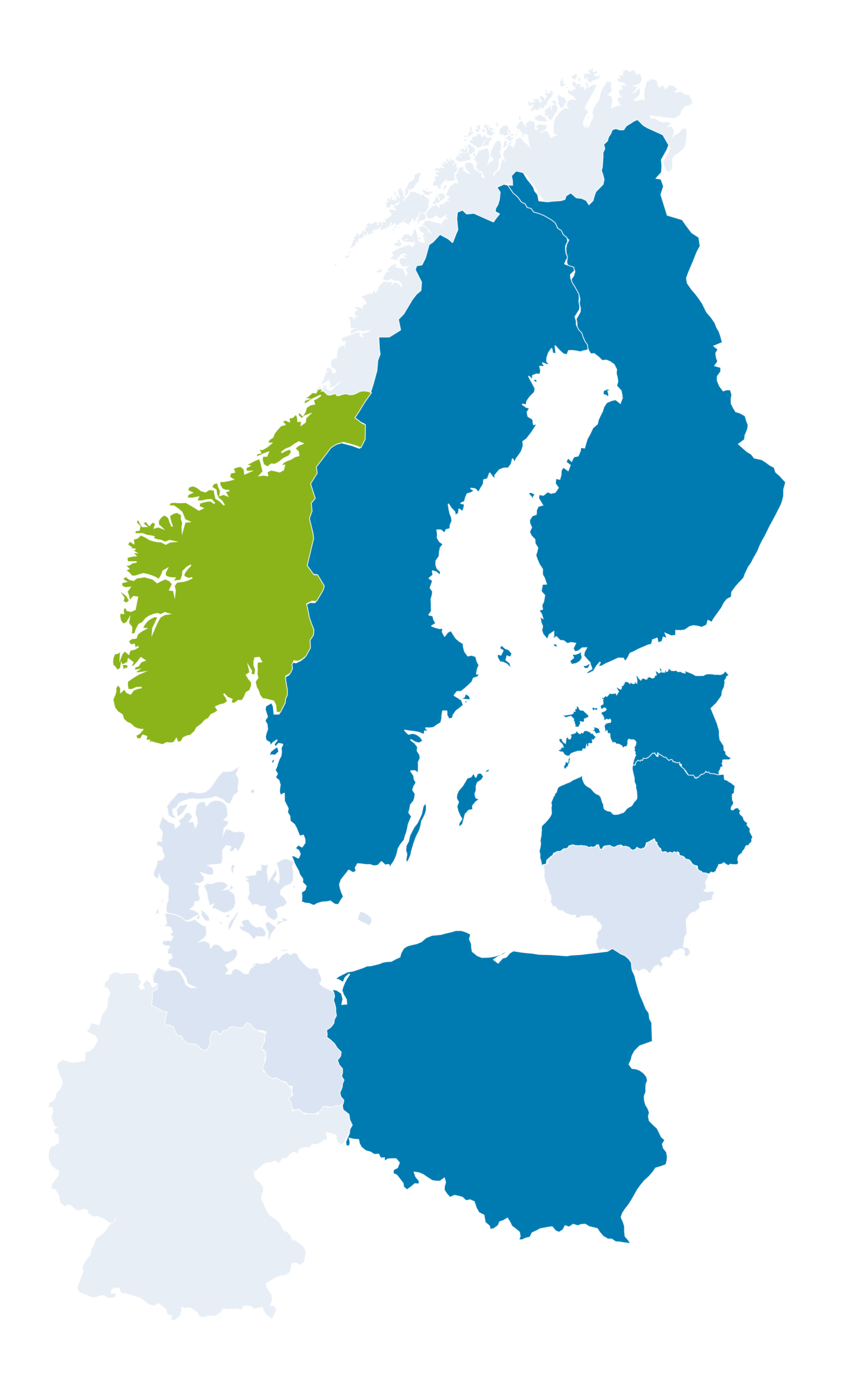
Lead partner
Project partners