
This wrap-up has been compiled by the Programme
PROGRAMME 2021-2027
Priority 3 Climate-neutral societies
Objective 3.2 Energy transition
CCI4Change:
Wrap-up of project achievements
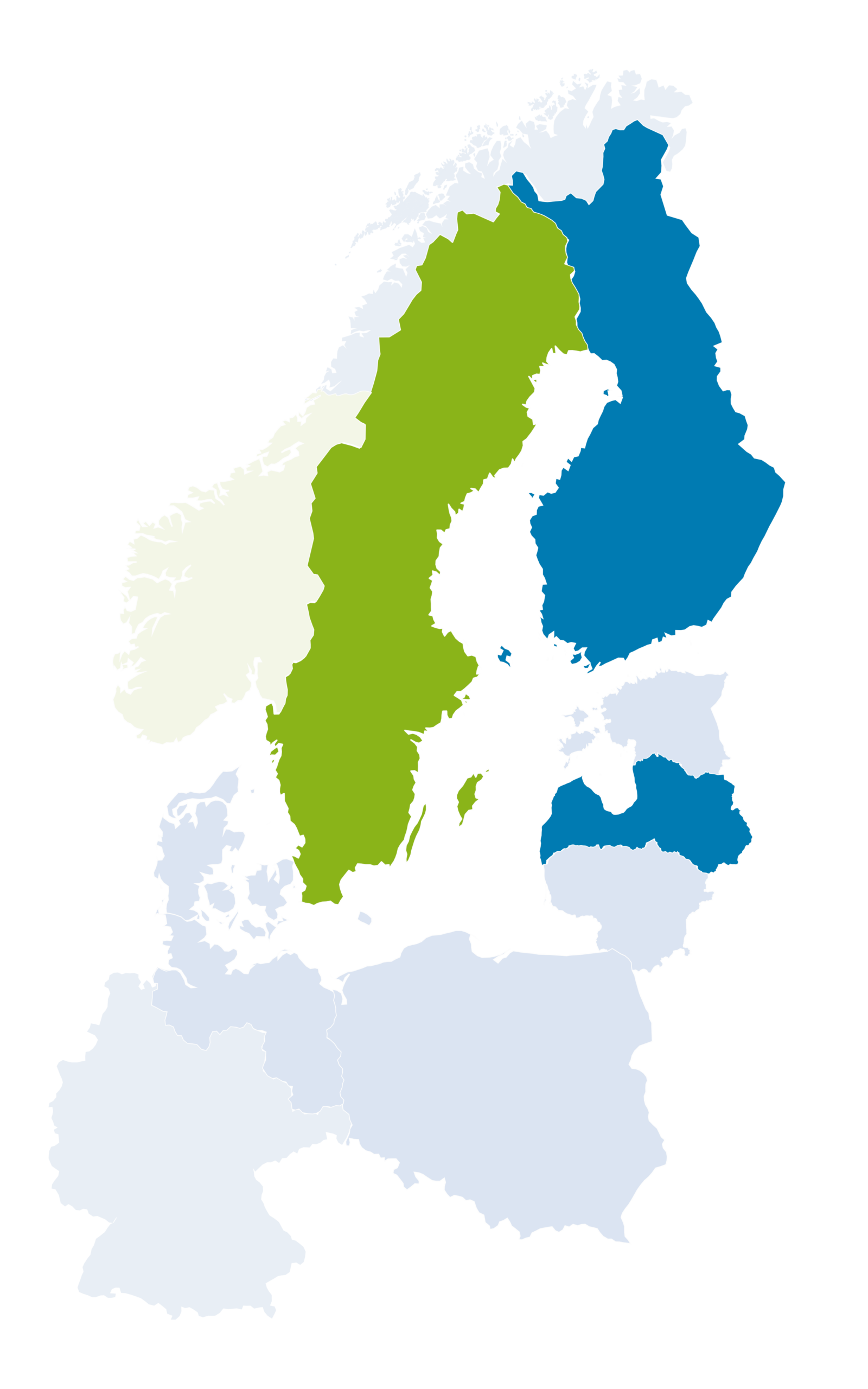
Encouraging people to reduce their energy consumption is one of the biggest challenges of the green transition. The Interreg project CCI4Change project addressed it by bringing together municipalities, cultural and creative professionals, and local communities in Finland, Latvia and Sweden. Together, they made energy use tangible, engaging and easier to understand, supporting more sustainable energy habits using creative and cost-effective resources rather than additional financial investments. The result is an open-access toolkit that helps others apply these methods in their own communities.
Solutions
CCI4Change
Highlights
CCI4Change
The project ran five practical pilot actions that engaged local residents in Kotka (FI), Jūrmala (LV) and the Skåne region (SE). Selected by local authorities and implemented by NGOs and companies, the actions tested creative approaches and practical methods for changing energy consumption habits. The experience fed into the project’s main solution:
- CCI4Change Toolkit, which guides local authorities in engaging citizens and supporting behaviour change to reduce energy consumption.
Resources to use:
CCI4Change Toolkit
CCI4Change Toolkit
The CCI4Change Toolkit is a practical, open-access resource that helps local authorities, creative professionals, and intermediary organisations work together to address climate-related challenges, with a particular focus on reducing energy consumption together with communities.
The toolkit is designed for public authorities looking for creative ways to engage people beyond traditional policy communication, creative professionals who want to contribute to sustainability through their work, and intermediary organisations that connect the public sector with the creative community. It provides a step-by-step collaboration model that guides users through four key phases: Identify, Plan & Learn, Act, and Evaluate, helping partners co-create impactful community initiatives.
The toolkit includes a wide range of downloadable, adaptable resources, such as the Action to Impact Wheel, the Roadmap for Collaboration, the Trust Radar, and practical tips for co-creation and citizen engagement to inspire local climate and energy-saving actions.
It also features five case studies from demonstration actions in Kotka (Finland), Jūrmala (Latvia), and the Skåne region (Sweden), showing how creative approaches can engage citizens and encourage them to reduce their energy consumption.
Get inspired
Pilot activities
Pilot activities
- In Kotka (Finland), the “Energeezer” case study engaged high school students in the “Energy Gobbler in Kotka” game jam, where they developed ideas for an energy-themed character inspired by the city. Their concepts became the basis for a professionally designed computer game in which players help the Energeezer learn energy-saving habits. By turning energy efficiency into a game, the project encouraged young people to adopt more sustainable behaviours in an engaging and relatable way.
The Banja Media case study brought together students from Kotka’s educational institutions and a professional filmmaking team, including a children’s author, to produce five humorous and engaging videos promoting energy-saving practices at home. Covering topics such as reducing hot water use and lowering indoor temperatures, the videos combined educational messages with entertainment, inspiring both the students and filmmakers to continue creating content on energy conservation and environmental protection. - In Jūrmala (Latvia), the case study focused on the Kauguri district, where an arts and culture foundation engaged around 170 residents through meetings, guided walks, interviews, and conversations at the local market. By exploring everyday life, local challenges, and attitudes towards energy use, the project gathered insights that inspired an artistic installation reflecting the connections between electricity and community.
- In the Skåne region (Sweden), the On Standby case study transformed household energy consumption data into sound. Residents in Malmö tracked the overnight electricity use of their appliances, and the data, together with recordings of participants sharing their thoughts on energy use and daily routines, became a unique soundscape. Broadcast on local radio and shared online, the artwork encouraged people to reflect on their own energy habits and feel more connected to the topic of energy consumption. The Zero Sum Residency case study at the Ifö Center in Bromölla transformed a former ceramics factory into a creative space for exploring energy systems and sustainable living. Through artist residencies, community discussions, workshops, and a public exhibition using reused materials, the pilot brought together artists, designers, and local residents to inspire new perspectives on energy and sustainable living.
Learn more
Interreg pays off
CCI4Change
Interreg pays off: CCI4Change
Thanks to Interreg funding and transnational cooperation across Sweden, Latvia, and Finland, the project increased awareness, built trust, and strengthened connections between the public sector and creative professionals. It provided municipalities with an innovative and cost-effective way to engage citizens in reducing energy consumption. By making energy use tangible, engaging, and easy to relate to, the project demonstrated that cultural and creative actors can play an important role in encouraging more sustainable practices and energy-saving behaviours in communities and organisations.
To ensure further use of project results, CCI4Change became a part of the energy transition Platform EnTra, where it will further use and promote the developed toolkit among the local authorities across the Baltic Sea region.
In numbers
9 organisations cooperating across borders
46 organisations directly benefitting from project solutions
In focus
Small stories, big gains
In focus: Small stories, big impact
The rhythm of energy
How art helps people see their everyday energy habits in a new way
What does electricity sound like? In Malmö, Sweden, people found out through an unusual experiment. Small sensors installed in homes recorded their nighttime electricity use, with every half watt of energy translated into sound. The result was a 10-hour composition that revealed the hidden rhythms of everyday life.
By listening to the sounds of their own consumption, people could reflect on how small, often unnoticed actions add up over time. For Region Skåne, this experiment demonstrated the value of working differently “to step outside the usual rules of public administration and confront the urgent challenge of energy with fresh eyes,” said Maria Lindblom, Developer at the Department of Culture, Region Skåne.
The Malmö pilot activity was one of several creative experiments initiated by the Interreg Baltic Sea Region project CCI4Change. In Finland and Latvia, other artistic approaches showed how local authorities and cultural and creative professionals can combine their expertise to inspire people to reduce energy consumption and rethink their everyday behaviour.
Project
Details
Project type
Small project
Project duration
August 2023 – July 2025
Contribution to the EUSBSR
PA Culture
PA Energy
Budget in million
EURO
Involved
Countries
Lead partner

Project partners