




This wrap-up has been compiled by the Programme
PROGRAMME 2021-2027
Priority 1 Innovative societies
Objective 1.2 Responsive public services
BSR Food Coalition:
Wrap-up of project achievements
Many municipalities across the region recognised sustainable food as part of their development goals, but they lacked knowledge and cooperation structures to put it into action. The Interreg project BSR Food Coalition closed this gap by developing Farm-to-School programmes in Estonia, Latvia and Lithuania.
Highlights
BSR Food Coalition
Highlights
BSR Food Coalition
The BSR Food Coalition mobilised municipalities, schools, and farmers in Estonia, Latvia, and Lithuania to test and scale up farm-to-school programmes in their regions. Partners explored ways to integrate local and organic products into school meals and educational activities. They compared experiences, shared methods and tested models showing how innovative procurement and local supply can become part of everyday routines.
In a nutshell, the project developed:
- Farm-to-School programme and pilot activities
Download link
Project
Details
Project type
Small project
Project duration
October 2022 – September 2024
Contribution to the EUSBSR
PA Innovation
Budget in million
EURO
Involved
Countries
Lead partner

Project partners


Project Details
Project type
Small project
Project duration
October 2022 – September 2024
Contribution to the EUSBSR
PA Innovation
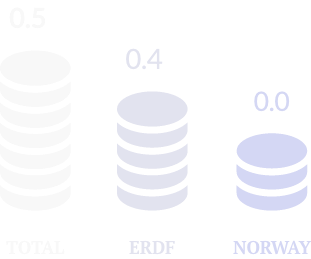
Budget in million EURO
0.5 total // 0.4 ERDF // 0.0 Norway
Involved Countries
Lead Partner: Lithuania
Project Partners: Lithuania // Latvia // Estonia
Farm-to-school programmes
Farm-to-school programmes
Farm-to-School programmes connect schools with local farmers, producers and distributors to deliver fresh, locally sourced food for school canteens and educational curricula. It offers a holistic view on nutrition and education, emphasising sustainability and community ties while strengthening local markets.
The framework functions as a ready-made tool that is easy to adapt and expand. It is a useful tool for municipalities at different levels, practitioners, policymakers, civil society, community organisations and private businesses.
The framework was tested through pilot actions across five partner regions: Klaipėda, Kurzeme, Latgale, Tartu and Võru regions.
Get inspired
Knowledge exchange across borders
Knowledge exchange across borders
One of the project’s strongest elements was the exchange of experience enabled by work across borders. For example, Swedish chefs travelled to Latvia to demonstrate how to prepare healthy, sustainable school meals. Their masterclasses inspired local chefs with new ideas and practical methods.
Workshops in Latvia and other partner regions brought together farmers, caterers, municipalities and schools. These exchanges helped everyone understand each other’s challenges and uncover shared solutions. Seeing what works in another country often sparked confidence to try similar approaches at home.
The real-life pilots made everything tangible and useful. Over time, strong networks formed. Trust grew, and people now know who to reach out to when they face similar issues. The project demonstrated that working with peers from other regions can be practical, hands-on and very effective for shaping local change.
Interreg pays off
Solutions in use
Interreg pays off: Solutions in use
The farm-to-school programme proved to be easy to implement, measure and scale.
Klaipėda Region (Lithuania): Exchanges with partners from Latvia, Estonia and Sweden encouraged the Kretinga municipality to embrace the farm-to-school model. With solid budget planning, Kretinga decided to invest in its school kitchen infrastructure. Starting in 2025, the school will no longer rely on private catering but will run its own kitchen.
Based on BSR Food Coalition survey findings, Klaipėda University contributed to drafting a resolution highlighting the need for strong food education, links between students and producers, and a broader understanding of sustainable food systems. This work helped raise attention across ministries.
Võru Region (Estonia): Thanks to the project, Võru reached the first level of the organic catering ecolabel in all 42 of its schools. At least 20% of meals are now prepared with local organic ingredients. Thousands of children benefit from healthier meals, and local farmers have gained new markets.
Tartu (Estonia): The project supported the creation of educational gardens in kindergartens and in a school. Children now learn by growing food themselves, gaining practical awareness of sustainability.
Both ecolabel approaches and gardens are simple to explain and easy to replicate in other municipalities.
In numbers
10 organisations cooperating across borders
35 organisations directly benefitting
Project Wrap-Up
Thanks to Interreg funding and transnational cooperation, the project BSR Food Coalition advanced Farm-to-School approaches across different parts of the Baltic Sea region. Municipalities, schools, and producers can now connect more effectively, scale local organic supply, making healthy and sustainable school meals a practical reality and bringing resilient communities to the next level.