




This wrap-up has been compiled by the Programme
PROGRAMME 2021-2027
Priority 3 Climate-neutral societies
Objective 3.2 Energy transition
BOWE2H:
Wrap-up of project achievements
Due to the fluctuating nature of renewable energy and existing transport constraints, integrating offshore wind and hydrogen systems remained a challenge. The Interreg BOWE2H project brought together authorities, policymakers, researchers, and industry experts to jointly design a roadmap for a coordinated energy system for the Baltic Sea region.
Highlights
BOWE2H
Highlights
BOWE2H
BOWE2H established a transnational expert network in the Baltic Sea region, hosting expert events and creative workshops in key offshore wind markets. The project developed a strategic roadmap for integrating offshore wind and hydrogen, supported by shared knowledge on policy, infrastructure, and investment. Interreg’s involvement attracted key participants and ensured the broad relevance and visibility of results.
In a nutshell, the project developed:
- Strategic Regional Roadmap
- BOWE2H Forum
Download links
Project
Details
Project type
Small project
Project duration
October 2022 – September 2024
Contribution to the EUSBSR
PA Energy
Budget in million
EURO
Involved
Countries
Lead partner
Project partners

Project Details
Project type
Small project
Project duration
October 2022 – September 2024
Contribution to the EUSBSR
PA Energy
Budget in million EURO
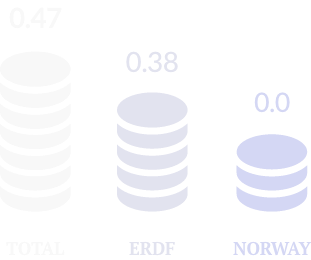
0.47 total // 0.38 ERDF // 0.0 Norway
Involved Countries
Lead Partner: Germany
Project Partners: Estonia // Germany // Sweden // Lithuania // Poland
Strategic Regional Roadmap
Strategic Regional Roadmap
The BOWE2H Strategic Roadmap is a practical guide for developing offshore wind and green hydrogen in the Baltic Sea region. It combines findings from a meta-study, expert interviews, and creative workshops that brought together actors from different countries and sectors. The roadmap assesses the current state of offshore wind and hydrogen in Denmark, Estonia, Finland, Germany, Latvia, Lithuania, Poland and Sweden, identifies barriers such as fragmented regulation and infrastructure gaps, and outlines recommendations for overcoming them through joint planning and shared investments.
A key feature of the roadmap is its transnational perspective. The Baltic Sea’s offshore wind farms and hydrogen production facilities affect multiple countries, so any progress requires cooperation across borders. Transmission system operators (TSOs), such as 50Hertz (Germany) and AST (Latvia), were involved to ensure that grid development and electricity flows are planned across national borders.
Get inspired
BOWE2H Forum
BOWE2H Forum
BOWE2H established a knowledge-building network that connected policymakers, industry representatives, researchers, and local and national authorities across the Baltic Sea region. Through initiatives in Warsaw, Vilnius, Malmö, and Berlin, network members discussed how to integrate offshore wind and green hydrogen, exchanged expertise on regulatory and market challenges, and co-developed practical recommendations. More than 250 contacts were established, strengthening cooperation between sectors and across borders.
- Local authorities, such as the Pomeranian Voivodeship (Poland), used the discussions to align regional energy planning with national strategies;
- National authorities, including the Latvian Ministry of Economic Affairs and Communications, gained insights into designing supportive policy frameworks;
- Transmission system operators like 50Hertz (Germany) used the dialogue to refine cross-border grid and infrastructure planning;
- Research organisations such as IKEM (Germany) integrated findings into their studies on energy systems, while companies including Polenergia (Poland) and Ørsted (Denmark) applied the outcomes to investment strategies and project development.
The knowledge circulated across the network in multiple forms: event recordings, detailed notes, workshop recommendations, and interactive tools such as quizzes and surveys. The insights were also integrated into the Strategic Roadmap, ensuring consistency between the events and the project’s flagship result. Designed to last, the network continues to offer opportunities for collaboration, policy alignment, and research-practice exchange.
Interreg pays off
BOWE2H solutions in use
Interreg pays off: BOWE2H solutions in use
The BOWE2H Strategic Regional Roadmap began to take effect, delivering tangible benefits.
- Local public authorities, such as the Latvian Association of Local and Regional Governments, used the roadmap to align municipal planning with national and regional objectives;
- National authorities such as the Lithuanian Energy Agency drew on its insights to strengthen energy policy frameworks;
- Swedish Energy Agency is expected to apply its recommendations to improve cooperation across borders.
The roadmap also brought in guidelines for other sectors. Research organisations, such as IKEM (Germany) and the University of Greifswald (Germany), used it to steer their projects towards real-world needs, while large enterprises, including Polenergia (Poland) and Ramboll Poland can now use the findings to refine investment strategies and consulting services.
By making the roadmap available both as a detailed report and an accessible infographic, BOWE2H ensured that diverse groups: governments, grid operators, researchers, and companies, could use it as a long-term planning tool for coordinated offshore wind and hydrogen development across the Baltic Sea.
In numbers
17 organisations cooperating across borders
9 organisations directly benefitting from project solutions
Project Wrap-Up
BOWE2H brought together policymakers, grid operators, researchers, businesses, and local authorities across the Baltic Sea to co-create a Strategic Roadmap for offshore wind and hydrogen. Through lively events, hands-on workshops, and a lasting network, it delivered concrete guidance for cross-border energy planning. Supported by Interreg funds and thanks to transnational cooperation, the project secured strong participation, wide outreach, and lasting impact for the region’s energy transition.