

This wrap-up has been compiled by the Programme
PROGRAMME 2021-2027
Priority 1 Innovative societies
Objective 1.2 Responsive public services
BALTIC UKH:
Wrap-up of project achievements
Communities need welcoming public spaces where people can meet, learn and access reliable information. Yet existing public spaces and services do not always keep pace with changing needs. The Interreg project BALTIC UKH brought together libraries and public authorities from Denmark, Germany, Latvia, and Norway to develop people-centred Urban Knowledge Hubs. By involving different generations in co-creating public spaces and services, the project tested new approaches and developed practical guidance for other public institutions.
Solutions
BALTIC UKH
Highlights
BALTIC UKH
With the aim of building hybrid learning and meeting spaces, the project developed:
- 4C Toolbox – Engaging Users to Transform Public Spaces and Services: a step-by-step guidance for developing Urban Knowledge Hubs
Project Details
Project type
Small project
Project duration
August 2023 – July 2025
Contribution to the EUSBSR
PA Culture
PA Innovation
Budget in million EURO
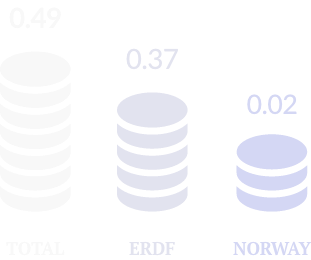
0.49 total // 0.37 ERDF // 0.02 Norway
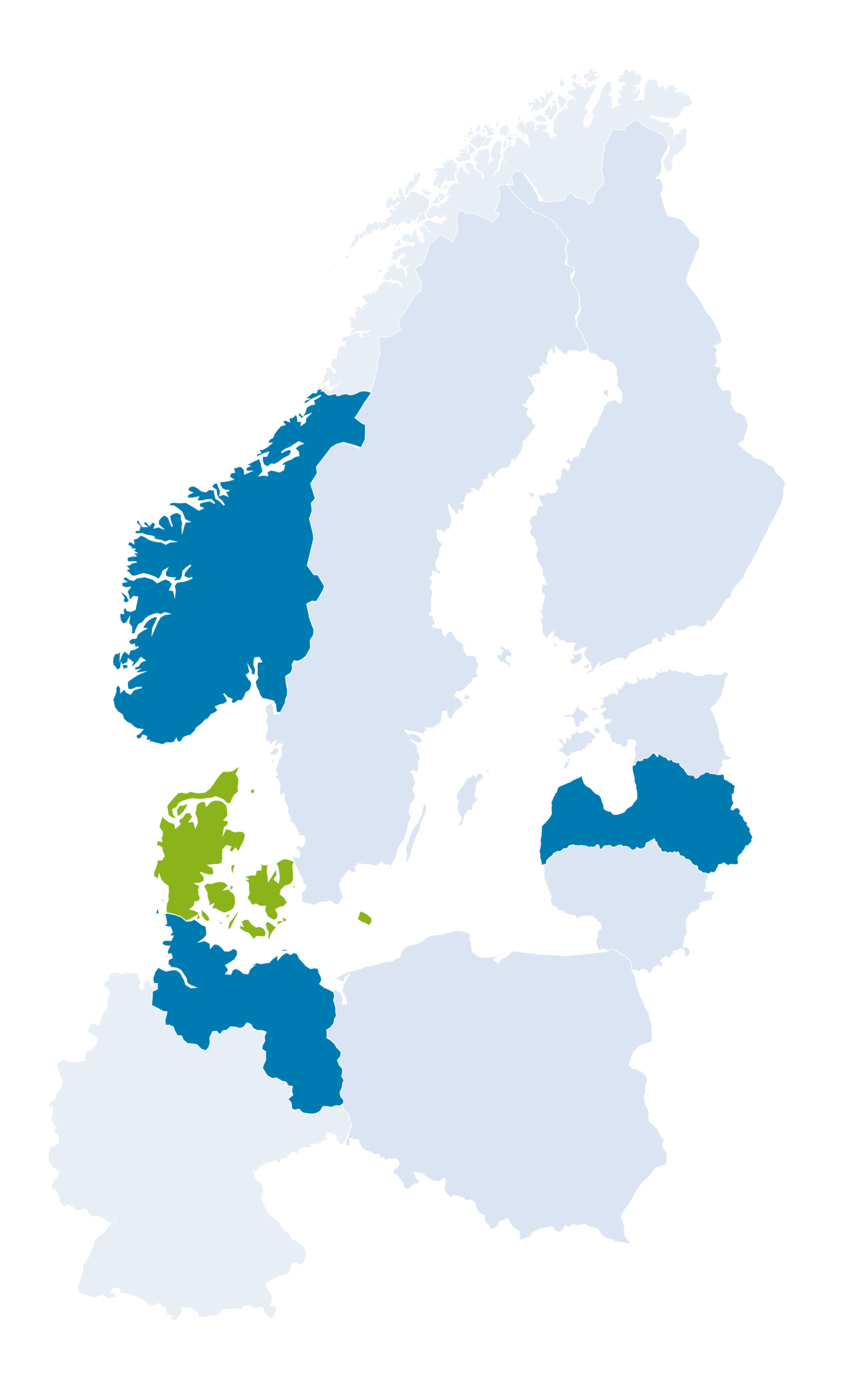
Lead Partner: Germany
Project Partners: Latvia // Denmark // Norway
4C Toolbox
4C Toolbox
The 4C Toolbox – Engaging Users to Transform Public Spaces and Services is a practical five-step guide for creating and developing Urban Knowledge Hubs (UKHs). Although developed with public libraries, it is equally relevant for archives, museums, universities, and other public institutions seeking to transform spaces and services through user engagement.
Rather than a static manual, the 4C Toolbox is a living resource that can be adapted and expanded as new institutions, communities, and contexts apply its methods. Drawing on navigation and maritime imagery, such as lighthouses, compasses, and binoculars, it helps public service providers navigate the complexities of user-centred design. The toolbox guides users through the entire process, from defining aims and engaging users to identifying contributions and accountabilities, and finally evaluating results.
The name 4C reflects the four pillars of user engagement: co-creation, co-design, co-production, and co-evaluation. Built on user-centred design and participatory innovation approaches, the toolbox helps public authorities structure projects from start to finish, introduce participatory methods into existing initiatives, or spark conversations about new directions for public spaces and services.
Pilot activities
Pilot activities
The project brought together four public libraries in Hamburg, Riga, Copenhagen, and Oslo around a shared ambition: to transform public spaces and services into more flexible, open, and inclusive environments. Together, they tested and validated the 4C Toolbox in four locations:
-
Herning campus – Aarhus University Library, Denmark:
The Herning campus library has reimagined its services and spaces to better serve students, faculty, and the public. The transformation includes flexible study spaces, a Datalab, a materials library, and enhanced public services.
-
Copenhagen, Denmark:
This pilot focused on the development of a service for students at the Royal Library and University Library of Copenhagen, increasing their information and research skills through teaching and guidance. To reach them, an on-demand Twine-based game was created that teaches search skills via a murder mystery paired with short, informal library talks
-
Hamburg, Germany:
The State and University Library Hamburg has redesigned its historic reading room into a flexible space for dialogue, learning, and active memory culture, supporting open discourse, civic education, and community participation. This multifunctional forum is embodying the library’s role as an urban knowledge hub for all.
-
Riga, Latvia
The National Library of Latvia has redesigned its Mezzanine-level Youth Reading Room to better serve young people, students, and young professionals. The concept supports learning, creativity, and socialization and aligns with library’s goal of building a democratic, knowledge-driven society.
Urban Knowledge Hubs
Urban Knowledge Hubs
Each pilot activity involved students, young people, the general public, higher education and research institutions, NGOs, and public authorities, ensuring that the design of spaces and services was reflecting the needs, feedback, and experiences of those who use them. The pilots demonstrated that public spaces can be co-created with communities, adapted over time, and strengthened through international exchange.
Partners transformed existing spaces into Urban Knowledge Hubs – multifunctional places that bring together research, learning, culture, and civic engagement. These hubs connect citizens to global knowledge networks while responding to local needs and reflecting the unique identity and priorities of the communities they serve.
Transnational cooperation was particularly valuable because all partners faced similar challenges in adapting their spaces and services to changing societal needs. By working closely with the users of public spaces throughout the project, they tested participatory methods that ensured local perspectives shaped the solutions. As a result, the project developed and validated a practical approach that enables public authorities to design and implement changes with greater confidence in uncertain and evolving contexts.
In numbers
12 organisations cooperating across borders in the project
41 organisations directly benefitting from project solutions
Interreg pays off
Impact & spin-offs
Impact & spin-offs
Thanks to Interreg funding and transnational cooperation, the Interreg project BALTIC UKH equipped public institutions with practical tools to co-design and transform public spaces, ensuring that services and environments better reflect the needs of their communities while creating places where people can interact, learn, exchange reliable information, and inspire one another.
Several pilot institutions have already integrated the 4C Toolbox into ongoing projects to ensure that public spaces continue to respond to local needs. The toolbox has also been integrated into teaching curricula at OsloMet, the University of Iceland, and Humboldt University of Berlin, equipping future practitioners with participatory approaches to designing spaces and services. Positive feedback from regional libraries, universities, and high school students suggests potential for its wider adoption in future spatial and service development projects.
Inspired by the project and initiated by the Hamburg State and University Library, Latvia was selected as the partner country in an international cooperation programme organised by Bibliothek & Information Deutschland (BID), the German library and information umbrella organisation. For 2025–2028, Latvia has been nominated as Germany’s official partner in the library and information sector. The Partnerland initiative aims to build lasting connections between the library communities of Germany and other countries staff exchanges, study visits, conference participation, and joint events held both in person and online. It promotes innovation, knowledge exchange, and professional development across borders.
Get inspired
In focus
Small stories, big impact
Small stories, big impact
The murder in the library
How a murder mystery teaches students to search smarter
At first glance, it looks like a crime game. But at the Copenhagen University Library, solving a fictional murder is helping students build a very real skill: finding relevant information. Developed through the Interreg Baltic Sea Region project BALTIC UKH, an interactive game challenges players to identify a suspect using Boolean search techniques: the same methods researchers rely on to search academic databases. By turning information searching into a mystery, the library makes complex concepts easier to reach.
The idea grew from a simple observation: students who struggle most with academic research are often the least likely to seek help. Instead of expecting them to come to the library, the library brought learning to them through an on-demand digital game, complemented by informal 20-minute talks on practical research skills.
The approach reflects the wider ambition of the Interreg Baltic Sea Region project BALTIC UKH. Bringing together partners from Denmark, Germany, Latvia, and Norway, the project is reimagining libraries across the Baltic Sea region as inclusive knowledge hubs where learning, digital literacy, and reliable information are shaped around people’s needs rather than traditional formats.
Project
Details
Project type
Small project
Project duration
August 2023 – July 2025
Contribution to the EUSBSR
PA Culture
PA Innovation
Budget in million
EURO
Involved
Countries
Lead partner
Project partners