


This wrap-up has been compiled by the Programme
PROGRAMME 2021-2027
Priority 1 Innovative societies
Objective 1.2 Responsive public services
3I solutions for PS:
Wrap-up of project achievements
Small and medium-sized cities often have good ideas for improving public services but lack the resources, digital skills and capacity to put them into practice. The Interreg project 3I solutions for PS brought together public authorities, research organisations and IT companies from Finland, Poland, Latvia and Lithuania to help them develop and introduce more digital and user-oriented public services.
Highlights
3I solutions for PS
Highlights
3I solutions for PS
Project Details
Project type
Small project
Project duration
August 2023 – July 2025
Contribution to the EUSBSR
PA Innovation
Budget in million EURO
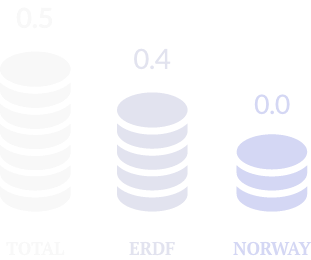
0.5 total // 0.4 ERDF // 0.00 Norway
Involved Countries
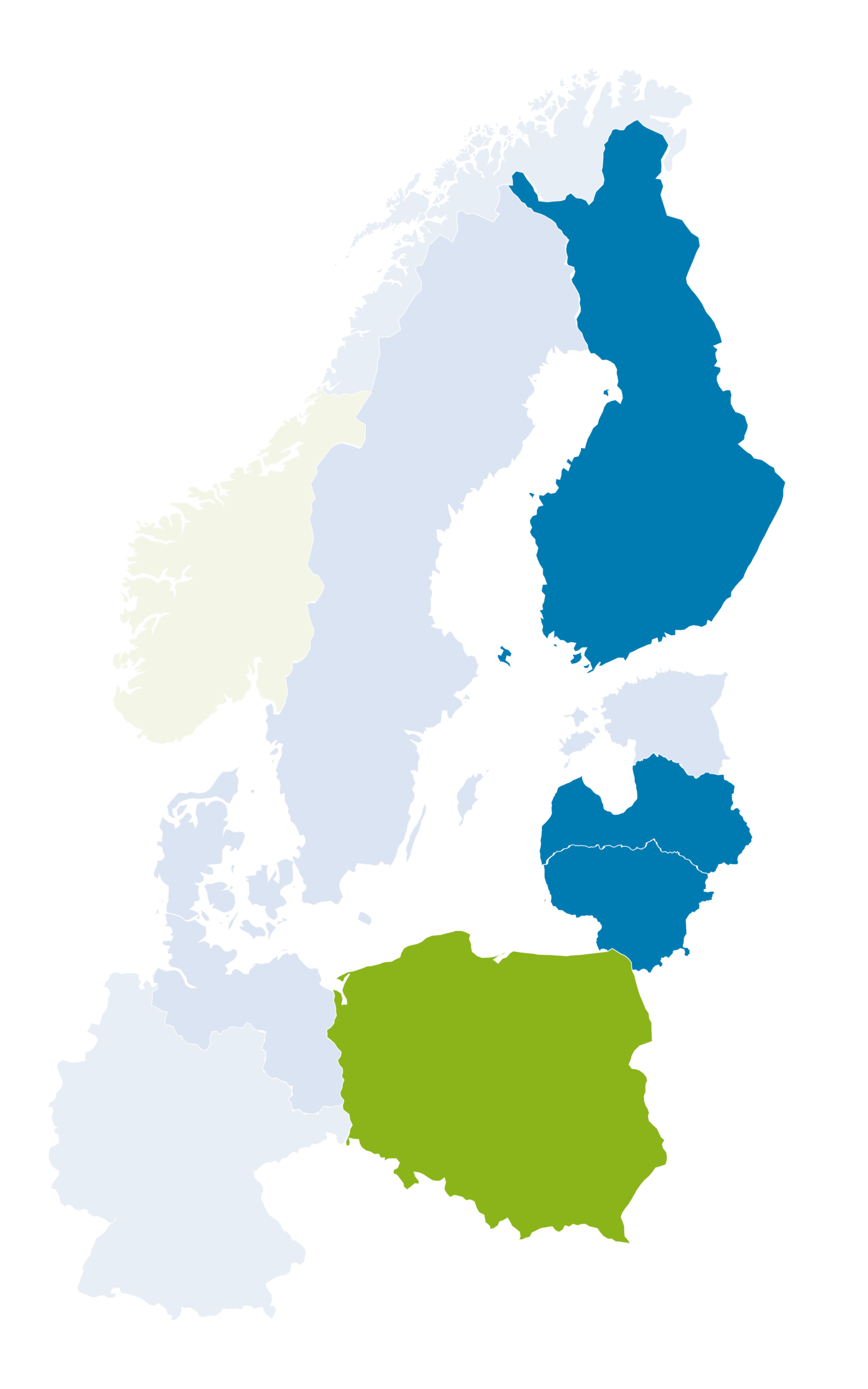
Lead Partner: Finland
Project Partners: Poland // Lithuania // Latvia
CITYA! platform
CITYA! platform
The common goal of municipalities and solution developers was to create a user-friendly virtual environment that supports more transparent, accessible and data-driven urban governance. The CITYA! platform integrates a range of digital services, including AI-assisted information points, augmented reality city navigation, visualisation of urban investment plans and participatory budgeting tools.
By combining these functionalities in a single platform, CITYA! helps municipalities reduce operational costs, improve service delivery and make better-informed decisions based on real-time data and citizen feedback. It also strengthens community engagement by providing modern digital services for residents and visitors.
The platform is the result of cross-sectoral cooperation established during the project. AR-GO Lab Oy (Finland), representing the IT sector and participating as a project partner, worked closely with Smiltene Municipality (Latvia) and the City of Radom (Poland) to ensure that the platform addressed the practical needs of public authorities.
The platform and its individual components were tested in both cities:
- AR City Guide and Tourism Platform – tested in Smiltene using smart benches as AR access points providing information on local attractions and services.
- AR Urban Visualisation Tool – tested in Smiltene to present planned infrastructure projects in AR and collect citizen feedback.
- Participatory Budgeting Platform – tested and used by the City of Radom during its annual participatory budgeting process.
Get inspired
Handbook & training course
Handbook & training course
The Handbook for Small Cities provides municipalities with both inspiration and practical guidance for public service innovation. It combines a collection of urban innovation case studies from across the Baltic Sea region (Finland, Lithuania, Poland, Latvia and Estonia) with a step-by-step roadmap for developing and implementing new solutions. The handbook helps cities address challenges such as demographic change, urban congestion, and social and economic inequalities through Public Service Innovation (PSI), enabling them to make better use of limited resources while improving the quality and accessibility of public services.
The handbook is complemented by a free online training course, “Innovative Decision-Making in Public Services”, designed for public sector professionals and changemakers. The self-paced course equips participants with innovation methods, project management tools and data-driven approaches to support more effective public service delivery. Through videos, quizzes and real-life case studies, learners gain practical skills that can be directly applied in their professional work. The course has been openly available on the CEPHEI online learning platform since March 2025.
Both the handbook and the training course were tested during a seminar held in Smiltene (Latvia) in June 2025, where representatives of municipalities and regional organisations, e.g. from Smiltene Municipality, Liepāja Municipality, Vidzeme Planning Region, Tartu City provided feedback that helped further refine the solution.
The greatest value of this transnational cooperation stemmed from its cross-sectoral nature, bringing together technological expertise and the practical experience of municipalities from different countries facing similar challenges, including limited resources, low innovation capacity and increasing societal demands. This collaboration led to the co-creation of advanced digital solutions tailored to the specific needs of small and medium-sized cities, as well as the development of an online course promoting Immersive, Intelligent and Innovative (3I) approaches to support data-driven, citizen-centred decision-making in the public sector.
Interreg pays off
Solutions in use
Interreg pays off: Solutions in use
The project has sparked the interest of 23 institutions from Lithuania, Latvia, Poland and Finland in adopting the developed solutions and rethinking their operational workflows to improve public service delivery. Municipalities and public organisations involved in the project intend to apply the “Innovative Decision-Making in Public Services” training course in their daily work, particularly by using tools such as Value Analysis (VA), TRIZ, PM² and open data practices to plan and manage local initiatives more effectively. To support further uptake, the Vidzeme Planning Region and the Mazovia Development Agency have actively promoted the training course through their respective networks.
Several project partners and associated organisations continue to use the AR-solutions developed and tested during the project. For example, Smiltene Municipality (LV) continues to use the AR City Guide and smart benches to provide real-time tourism and public service information, as well as AR visualisation tools for infrastructure planning. While the City of Radom (PL) continues to use the Participatory Budgeting solution to strengthen citizen engagement. The successful implementation of the AR-solution pilots has inspired other municipalities, including Joniškis and Tauragė (LT), as well as Garwolin (PL), to adopt the digital solutions developed within the project.
The project has strengthened cross-sectoral cooperation and public service innovation in small and medium-sized cities across the Baltic Sea region. Through the Hack the Future hackathon, public authorities, researchers, start-ups and students from Lithuania, Finland, Latvia and Poland co-created solutions to real public sector challenges. Some of these have already moved into further development.
For example, the Lithuanian Hydrometeorological Service and the Hidrum team continue working together on the “Hydro Idea” solution and are exploring Horizon Europe funding. The project also documented the methodology in a Hackathon Manual, enabling other cities and organisations to replicate the approach.
In numbers
16 organisations cooperating across borders
16 organisations directly benefitting
In focus
Small stories, big impact
In focus: Small stories, big impact
What if your city hall never closed?
Public services reimagined for a new digital era
For many people, taking part in local decision-making ends where the paperwork begins. In Radom, Poland, that is changing. Using the AI-powered CITYA! platform, residents can explore planned investments, visualise projects and vote in the city’s participatory budgeting process: all from their phone or computer. The result is a simpler, more engaging way to connect people with the decisions shaping their neighbourhoods.
CITYA! was developed through the Interreg Baltic Sea Region project 3I Solutions for PS, bringing together municipalities and technology experts from Finland, Latvia, Lithuania and Poland. While Radom tested the platform for participatory budgeting, for example, Latvian Smiltene used it to enhance tourism services. By combining technological expertise with the everyday needs of local authorities, the partnership created a practical digital platform now inspiring other municipalities across the Baltic Sea region.
Project
Details
Project type
Small project
Project duration
August 2023 – July 2025
Contribution to the EUSBSR
PA Innovation
Budget in million
EURO
Involved
Countries
Lead partner

Project partners