





Laboratory Test Reveals Gypsum's Remarkable Impact on Soil
18 February 2026
The experiment revealed remarkable changes in soil structure after gypsum treatment. In total, 224 small pots were prepared and filled with soil collected from agricultural fields of Poland, Latvia, Lithuania, Sweden, Denmark, Norway and the Åland Islands (Finland).
Cross Country Soil Experiment
Before the experiment began, the soils underwent the following preparation steps:
• Samples were shipped to Finland
• Dried, crushed, and sieved to remove roots etc.
• Water content was measured
• Pots were filled with the prepared soil
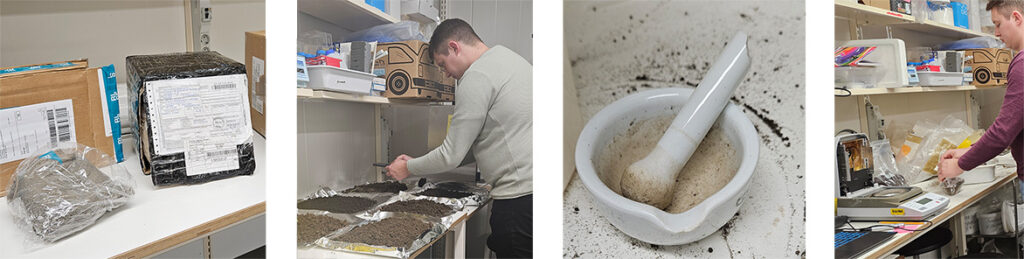
© Petri Ekholm
Half of the pots were left untreated as controls, while the other half received a standard gypsum dose, equivalent to 4 tonnes per hectare. The gypsums tested included phosphogypsum,two types of industrial by-product gypsum, natural gypsum and recycled gypsum. All pots were watered manually by sprinkling and incubated for three weeks at 10°C in the dark. The pots were watered weekly to maintain moisture.
The Gypsum Effect
For most gypsum treated soils, the structure visibly improved. Tiny soil particles began binding together, forming larger aggregates. This shift from micro-aggregation to macro-aggregation is a key indicator of healthier soil — better for water infiltration, erosion resistance, and nutrient retention.

In the center: soil samples from Åland, on the right: soil samples from Latvia. The pots in the front are controls and the ones in the back three weeks after the gypsum treatment. © Sari Mitikka and Petri Ekholm
What Happens Next?
The story doesn’t end with these visible changes. The soil samples have now been sent for laboratory analysis to determine water extractable phosphorus, which will help to determine how gypsum affects nutrient mobility.
The next phase of the experiment will focus on questions such as: How much phosphorus is lost through runoff? How does runoff differ between treated and untreated pots? How do results relate to soil characteristics such as clay content etc.?
Once the analysis results are ready, we will know more.

Additional links
details
-
Homepage
-
Project typeCore Project

-
ImplementationNovember 2023 - October 2026
-
StatusOngoing
-
Contribution to EUSBSRPolicy Area Nutri, Policy Area Bioeconomy

-
Target groups
- Interest group
- International governmental organisation
- National public authority
- NGO
- Regional public authority
-
Social media
-
Additional links
-
Tags