




Key Takeaways from the GYPREG Project in Poland
13 October 2026
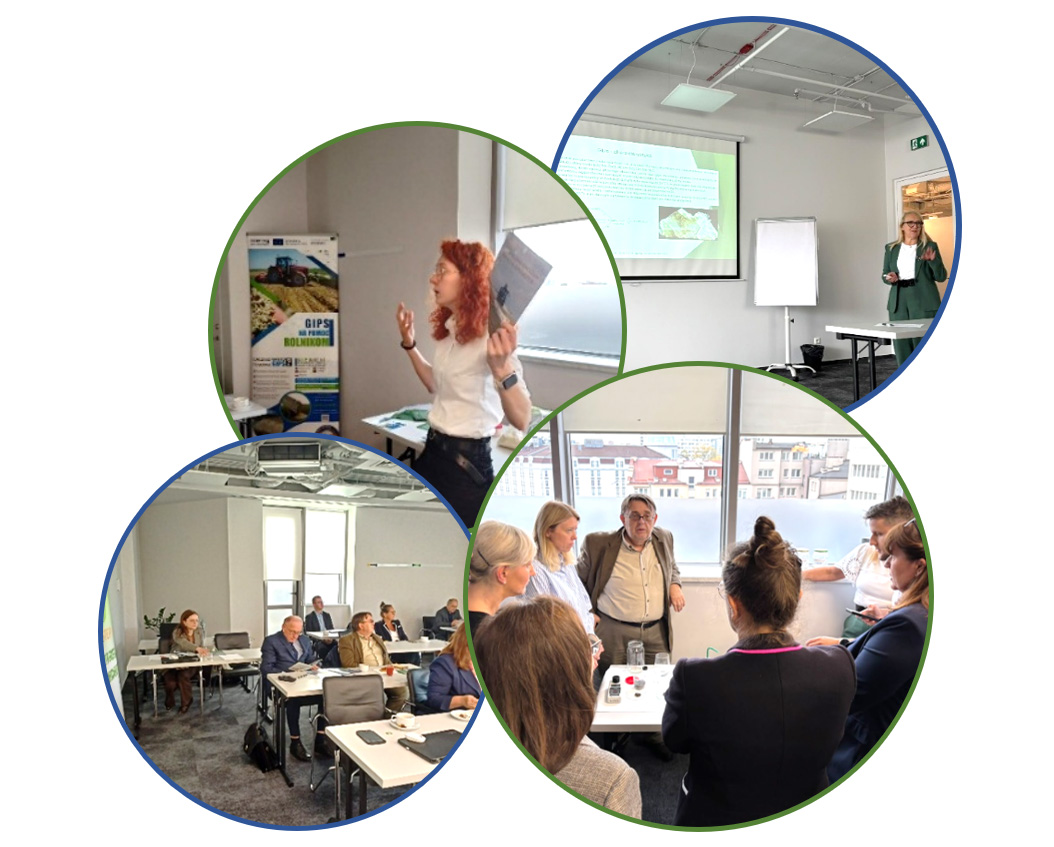
On 8 October 2026, stakeholders gathered at the Ministry of Agriculture and Rural Development in Warsaw to review the results of the international GYPREG project and discuss the future use of agricultural gypsum in Poland.
The event brought together representatives of the Ministry of Agriculture and Rural Development, including the Departments of Direct Payments, Strategy and Development, and Plant Protection Breeding, experts from Agricultural Advisory Centres, and the scientific community to review the results of the GYPREG project (2023-2026).
© ITP-PIB
Gypsum as a Tool for Reducing Phosphorus Losses
The meeting presented the results of laboratory and field studies carried out within the GYPREG project, including experiments demonstrating how gypsum application can reduce erosion in both clay and sandy soils. The findings provided strong evidence that agricultural gypsum can be an effective measure for reducing phosphorus losses from agricultural land while improving soil structure and stability.
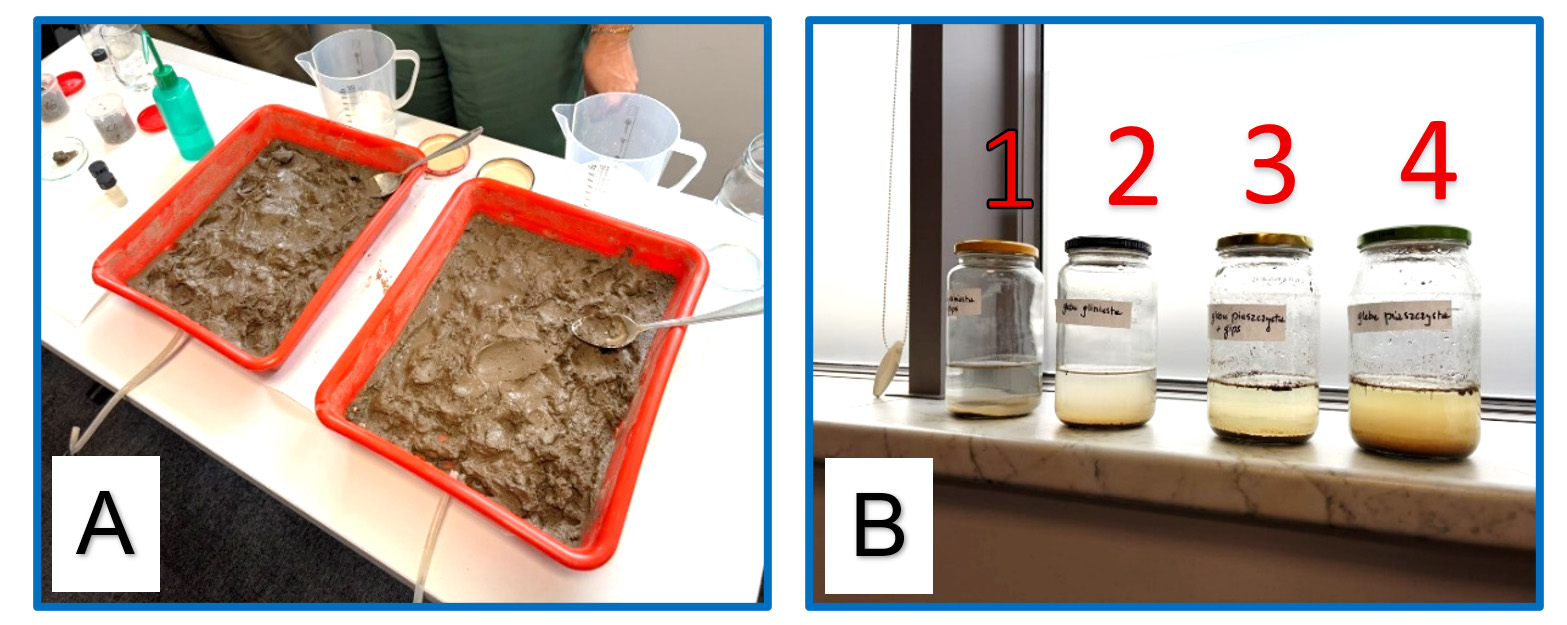
Experimental demonstration: A) clay soil with 4 t/ha of gypsum applied (left) and without gypsum (right); B) leachate from clay soil (1 = with gypsum, 2 = without gypsum) and from sandy soil (3 = with gypsum, 4 = without gypsum). © ITP-PIB
Participants also reviewed developments in the Polish gypsum market over the past two decades, certification requirements for gypsum products under Polish and European Union legislation, and strategic recommendations for the future use of gypsum in agriculture.
The results highlighted the potential of agricultural gypsum as a practical tool for improving soil quality, reducing erosion, and limiting phosphorus leaching into water bodies. Discussions focused on the opportunities for wider adoption of this measure in Poland, as well as the legal, organizational, and practical requirements needed to support its implementation.
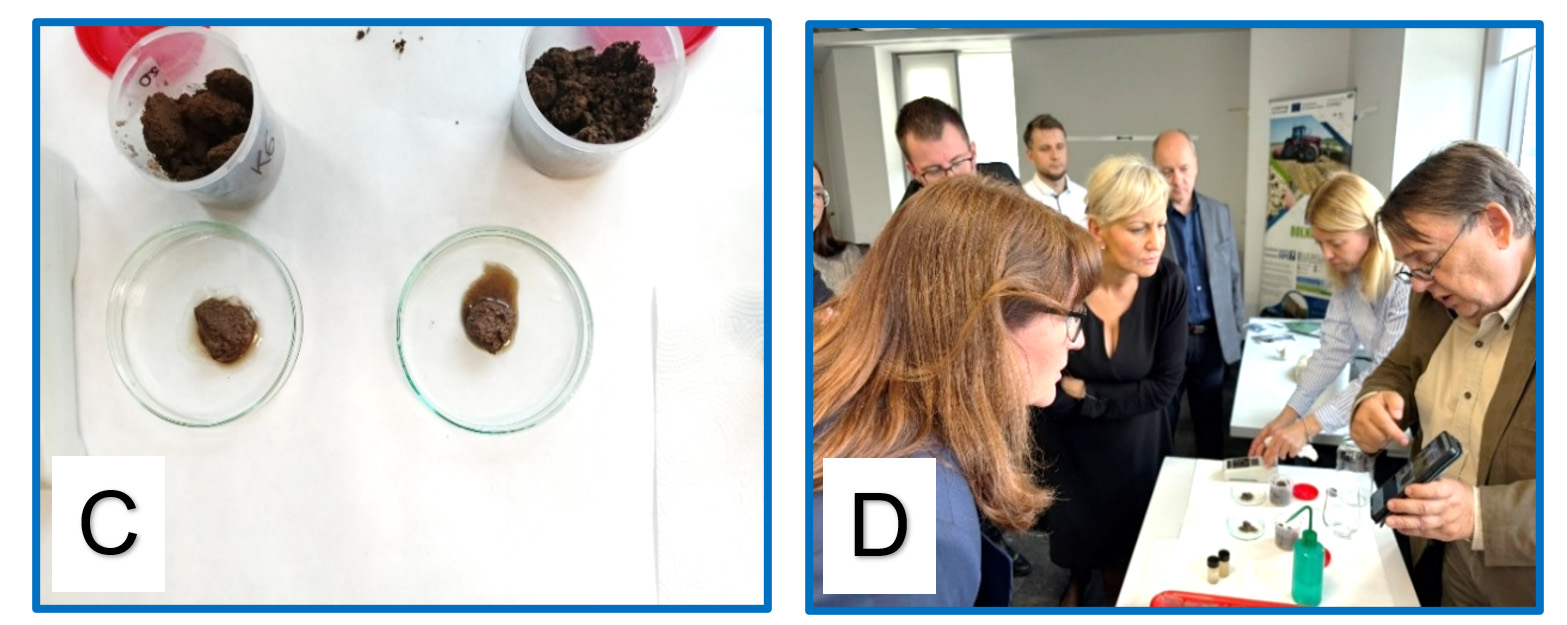
Experimental demonstration: C) comparison of soil aggregate stability; D) measurement of leachate turbidity. © ITP-PIB
Working Together to Protect Baltic Sea
Participants emphasized the importance of combining scientific research with practical farming experience and highlighted the need for close cooperation between public authorities, agricultural advisory services, researchers, and farmers. Both the benefits of gypsum use and the challenges associated with introducing the measure on a larger scale were discussed.
The key messages of the meeting:
- There is need for additional pilot studies in different regions due the wide diversity of Polish soils to develop detailed recommendations on gypsum application rates and to identify the most suitable areas for its use.
- A comprehensive agri-environmental measures and national recommendations for gypsum use can only be developed after sufficient evidence has been gathered from a wider range of soil types and farming conditions.
The meeting marked an important step in strengthening cooperation between the agricultural sector, researchers, and public authorities, while advancing practical solutions for sustainable soil management and the protection of water resources in the Baltic Sea region.

Additional links
details
-
Homepage
-
Project typeCore Project
-
ImplementationNovember 2023 - October 2026
-
StatusOngoing
-
Contribution to EUSBSRPolicy Area Nutri, Policy Area Bioeconomy

-
Target groups
- Interest group
- International governmental organisation
- National public authority
- NGO
- Regional public authority
-
Social media
-
Additional links
-
Tags