




Key takeaways from the GYPREG project in Åland
23 September 2026
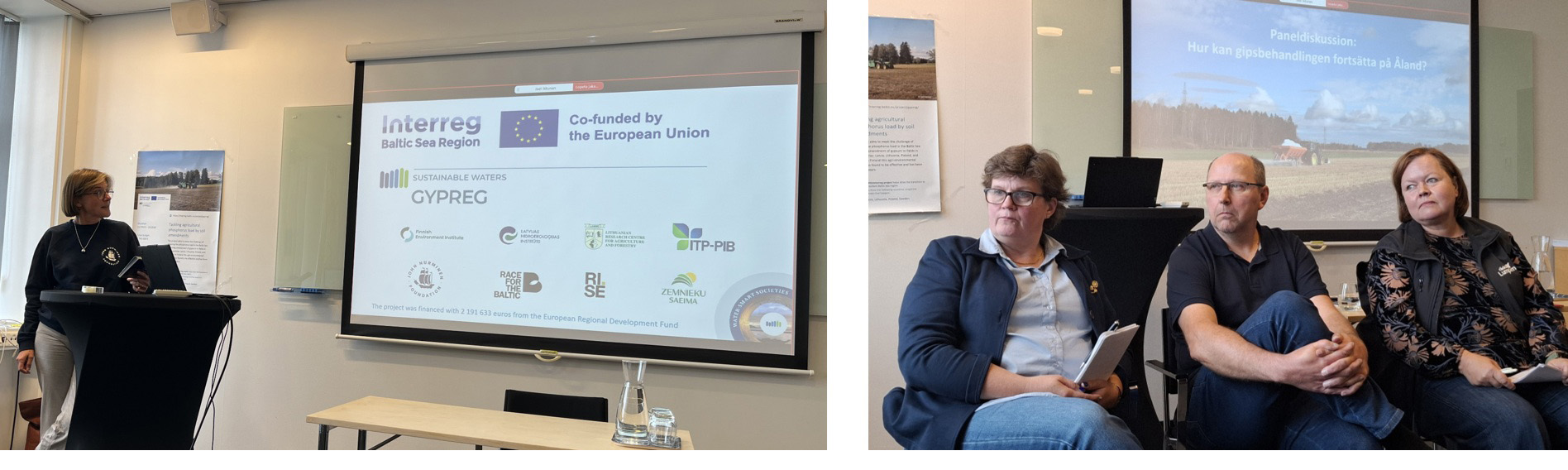
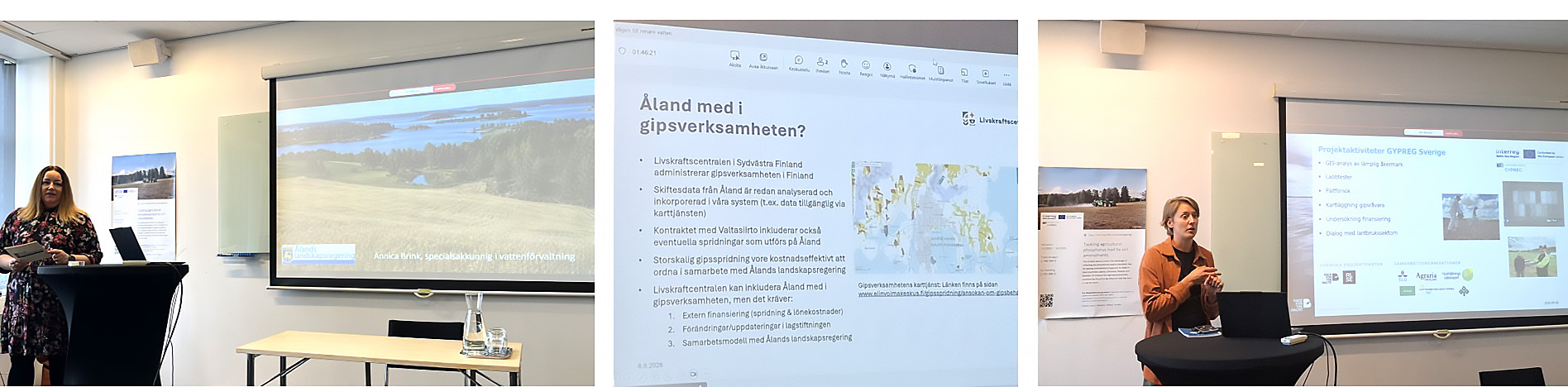
On 8 September 2026, the project’s findings were presented at a seminar in Mariehamn, bringing together farmers, authorities, advisors, environmental organisations and researchers involved in the project.
- A key outcome of GYPREG is a GIS-based assessment showing that approximately 12,900 hectares of agricultural land in Åland could potentially be suitable for gypsum treatment under current criteria.
- The project also found strong farmer interest, with nearly 70% of survey respondents indicating they would likely be willing to use gypsum treatment on their fields.
- Practical experience was gained through pilot applications on 18 farms, covering a total of 272 hectares. The pilots provided valuable information on implementation, logistics and costs under Åland conditions.
- Research results highlighted significant environmental benefits. Laboratory studies showed that gypsum reduced water-soluble phosphorus by an average of 30% in Åland soils, indicating considerable potential for reducing phosphorus losses to waterways.
- Field monitoring detected no negative impacts on crop growth, yields or crop quality. Although some decreases in soil magnesium and potassium levels were observed, nutrient levels remained adequate for agricultural production.
© John Nurminen Foundation
Laying the groundwork for future implementation
Beyond assessing environmental impacts, the project explored options for larger-scale implementation. GYPREG developed a preliminary model for integrating Åland into mainland Finland’s existing gypsum treatment system, where participation is voluntary and treatment costs are publicly funded.
While further work is needed on funding, administration and regulatory arrangements, the project has established a solid knowledge base for future discussions on wider use of gypsum treatment in Åland.
Shared efforts for healthier waters
The seminar also highlighted broader water protection initiatives in the Baltic Sea region. Anna-Leena Teppo, Head of Sustainability at Vaasan, presented collaborative water stewardship work in the Archipelago Sea catchment, where food industry and retail companies are working together to reduce nutrient loading from agriculture.
Discussions during the seminar emphasised the importance of cooperation between farmers, researchers, authorities and businesses, as well as the value of preventive measures in improving water quality. The GYPREG project has provided new knowledge, practical experience and evidence on the suitability of gypsum treatment in Åland, offering an important foundation for future decision-making.
Learn more: Seminar presentations and project materials are available at: https://johnnurmisensaatio.fi/en/our-work/projects/gypreg-project/
© John Nurminen Foundation

Additional links
details
-
Homepage
-
Project typeCore Project
-
ImplementationNovember 2023 - October 2026
-
StatusOngoing
-
Contribution to EUSBSRPolicy Area Nutri, Policy Area Bioeconomy

-
Target groups
- Interest group
- International governmental organisation
- National public authority
- NGO
- Regional public authority
-
Social media
-
Additional links
-
Tags