




Final national event in Latvia
22 December 2025
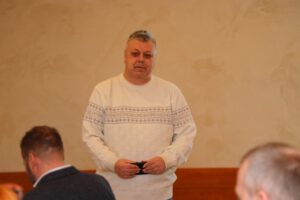
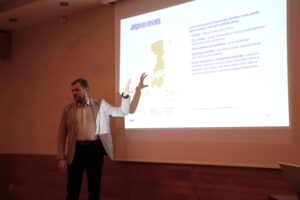
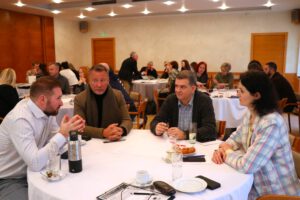
On 10 December, Zemgale Planning Region held its final meeting of the Climate, Energy and Environmental Coordination Working Group, bringing together experts from climate, energy, environmental and regional development sectors. The meeting reviewed progress made throughout the year, discussed current challenges, and outlined priorities for climate policy implementation in 2026.
Participants received updates on national climate policy developments, including emission reduction progress, key sectoral challenges, and the results of recent risk and vulnerability assessments in sectors such as transport, agriculture and forestry. The meeting also addressed public engagement in wind energy planning within the BIOWIND project, as well as the outcomes of the four-year IMPETUS project, which delivered a regional climate adaptation plan and an early flood warning system capable of alerting residents based on specific address-level risk.
A key focus of the meeting was the GreeIndustrialAreas project, which supports the transition of industrial territories toward greener, more resource-efficient, and more competitive development. As the project approaches completion in 2025, the region, together with partners from the Ministry of Smart Administration and Regional Development, is preparing a concluding seminar on 17 December, where the guidelines and practical tools developed during the project will be presented. As well as a comprehensive study on the current state and potential of green industrial areas in Zemgale has been completed, identifying development opportunities, investment prospects, and pathways for introducing a green certification system. These findings provide a strategic foundation for strengthening sustainable industrial growth and aligning regional development with long-term climate neutrality goals.
Additional updates covered capacity-building activities for municipalities—particularly training on circular economy and business development—as well as progress in the revitalisation of historical peat extraction sites, where over 40 potential areas have been identified and initial landowners have expressed interest in developing restoration strategies.
The meeting concluded with a shared commitment to continue strengthening climate resilience in the Zemgale region and to advance solutions grounded in sustainability and nature-based approaches in 2026.

Additional links
details
-
Homepage
-
Project typeCore Project

-
ImplementationJanuary 2023 - December 2025
-
StatusCompleted
-
Contribution to EUSBSRPolicy Area Energy

-
Target groups
- Business support organisation
- Infrastructure and public service provider
- Local public authority
- Regional public authority
- Small and medium enterprise
-
Social media
-
Additional links
-
Tags