




eRural Resilience: From Ideas to Impact – Practical Solutions for Stronger Rural Businesses.
04 November 2026
On 27–28 October, eRural Resilience partners gathered in Tartu, Estonia, and Valmiera, Latvia, to celebrate three years of cross-border cooperation, reflect on the project’s achievements and look ahead to how the developed solutions will continue supporting rural businesses.
The meetings marked an important milestone as the project’s implementation phase comes to an end. We are proud that all planned project outputs and solutions have been delivered, tested and piloted in partner regions, providing practical tools that are now ready for wider use and further development.
Reflecting on achievements, challenges and lessons learnt
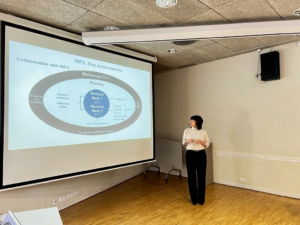 The first day in Tartu began with the project’s Monitoring Committee meeting, where Work Package Leaders presented an overview of activities, progress and results in their respective fields. The partners confirmed that all planned project results had been achieved.
Looking back, partners also identified several important lessons. Managing a large number of activities and detailed tasks within a tight timeframe required substantial coordination and sometimes diverted attention from the development and piloting of the main solutions.
The delayed availability of the online tool further reduced the time for digital testing, meaning that some of the methodology’s testing had to be conducted manually before the online version became available. Nevertheless, the project successfully involved over 100 business support organisations and bio-businesses in testing and piloting its solutions, exceeding the initial target. Their contributions provided valuable feedback and helped ensure that the developed tools respond to the practical needs of rural businesses and the organisations supporting them.
Discovering innovative bio-businesses and local entrepreneurship in Tartu County
The programme also offered an opportunity to explore inspiring examples of entrepreneurship and innovation in the region.
- Partners heard from Liina Joller-Vahter, CEO of Power Algae Ltd, who introduced the company’s activities as a biotechnology company developing innovative technologies for microalgae valorisation. The presentation demonstrated how biotechnology and the use of biological resources can create new business opportunities and contribute to the development of the bioeconomy.
- The study visit continued at Peninuki Distillery in Tartu, where partners discovered an example of creative entrepreneurship in the premium spirits sector. The company’s innovative approach to product development and its ambition to challenge traditional expectations offered an interesting perspective on building a distinctive local business.
- The day concluded in Varnja, at Samovar House (Samovarimaja), where partners were introduced to the traditions of the Old Believer community, the cultural identity of the Onion Route (Sibulatee) and the important role of local food and cultural heritage in developing regional tourism.
These visits highlighted the diversity of rural entrepreneurship and the potential of combining local resources, traditions, innovation and new business ideas.
Bringing eRural Resilience solutions to a wider audience at Bioregion Forum 2026
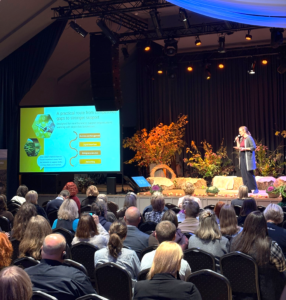
On the second day, partners particiapted in Bioregion Forum 2026, an event bringing together around 200 participants to discuss regional development, bioeconomy and sustainable business opportunities. This provided an excellent opportunity to present eRural Resilience’s practical solutions and the results of their testing and piloting to a wider audience.
Hanna Holtinkoski from Into Seinäjoki presented the project’s main solutions and shared insights into their practical application and the experience gained during the piloting process.
Participation in the forum helped extend the project’s reach beyond the and demonstrated how developed methodologies and tools can contribute to strengthening business support systems and promoting bioeconomy development in rural areas.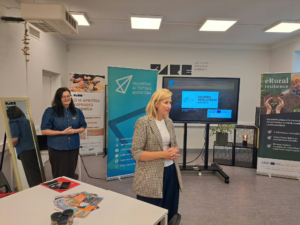
The programme also included an introduction to the work of project partner Valmiera Development Agency, highlighting its activities and business support services for local entrepreneurs.
Two practical tools to support rural bio-business development
One of the main achievements of eRural Resilience is the development of two practical solutions designed to strengthen the capacity of business support organisations and help rural entrepreneurs explore and develop bio-business opportunities.
Solution 1 – Methodology for Assessment of e-Bio-Business Supporters
How well are you prepared to support e-bio-business development? This online assessment tool helps business support professionals evaluate their knowledge and competencies in areas relevant to bio-business development.
👉 Take the assessment at www.ebiobusiness.eu/assessment/
Solution 2 – Online Tool for Supporting e-Bio-Business Launching
This tool helps assess a company’s readiness to launch or develop a bio-business. Through a structured assessment, businesses can identify their strengths, development needs and practical next steps towards turning bio-based ideas into business opportunities.
👉 Explore the online tool at diagnostic.erural.eu
Both solutions are designed to be practical and accessible, enabling business support organisations and entrepreneurs to apply the project results in their everyday work.
Building cooperation beyond the project
Although the project’s implementation phase has come to an end, the cooperation established during the past three years will continue.
Throughout eRural Resilience, partners have built a network of Knowledge HUBs dedicated to supporting small and medium-sized enterprises, particularly those operating in the bioeconomy. The network connects organisations with different expertise, experience and regional knowledge, creating opportunities for continued learning, knowledge exchange and business support.
To ensure the sustainability of this cooperation, all 14 project partners have signed a Long-Term Cooperation Agreement, committing to maintaining the Knowledge HUB network for at least three years after the project’s final payment.
This commitment ensures that the project’s achievements will not remain limited to its implementation period. Instead, the partnership will continue sharing knowledge, connecting expertise and supporting rural businesses in exploring new opportunities in the bioeconomy.
🌱 Explore the eRural Resilience Knowledge HUB network and contact list to discover the organisations and experts who will continue supporting rural business development.
From project results to future opportunities
Three years of cooperation have demonstrated the value of bringing together business support organisations, regional development agencies, research institutions and other stakeholders from across the Baltic Sea Region.
eRural Resilience has delivered practical methodologies, digital tools and a lasting cooperation network to strengthen the capacity of rural regions to support bio-business development.
The project may be coming to an end, but the cooperation, knowledge and solutions created through eRural Resilience will continue to make a difference.
🎥 Watch the video to revisit the final partner meeting in Tartu and Valmiera, discover the project’s achievements and see how partners are taking their cooperation forward!
👉 [Watch the video – eRural Resilience: Three Years of Cooperation and Results](VIDEO LINK)

Additional links
details
-
Homepage
-
Project typeCore Project

-
ImplementationNovember 2023 - October 2026
-
StatusCompleted
-
Contribution to EUSBSRPolicy Area Bioeconomy

-
Target groups
- Business support organisation
- Local public authority
-
Social media
-
Additional links
-
Tags