




Transforming Nytorget into a greener and more resilient urban square in Stavanger
18 December 2025
University of Stavanger is following up the progress of Nytorget that was chosen as a pilot in City Blues project. There nature-based solutions (NBS) are integrated into a dense, historic environment with strictly limited space.
From historic marketplace to modern vision
Nytorget’s transformation is the result of a comprehensive planning process that began more than a decade ago. The square has long been part of Stavanger’s identity. By the 2010s, it had become traffic-dominated and underused, prompting the municipality to launch a comprehensive redevelopment process in 2013.
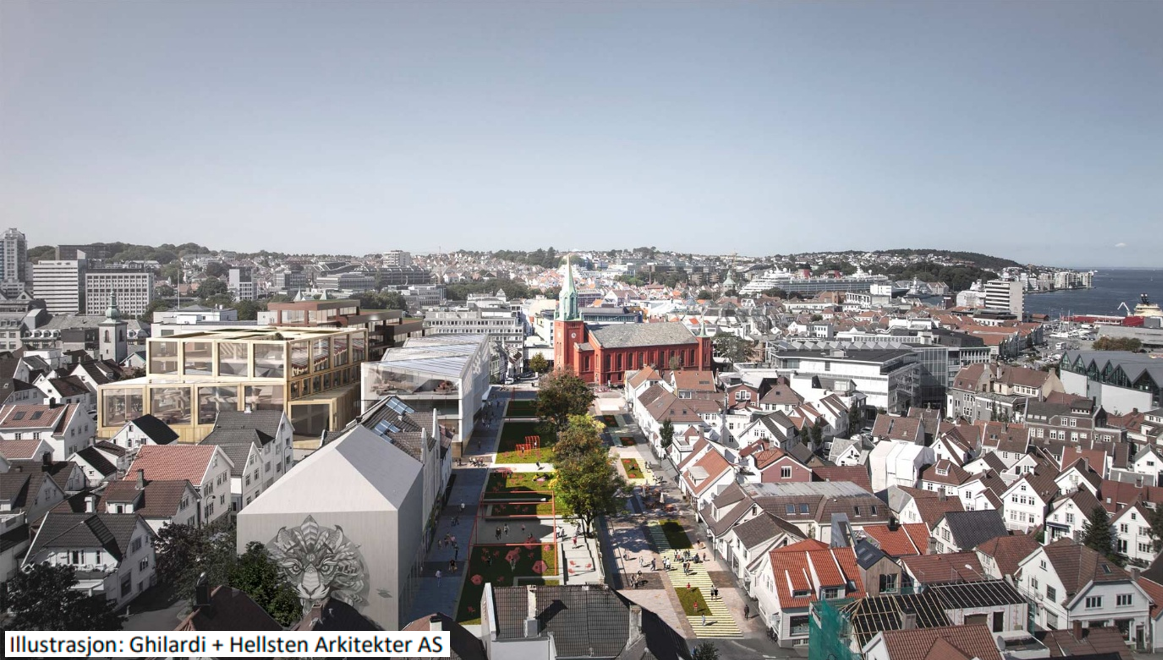
A change came with the 2018–2019 architectural competition. The winning proposal preserved local heritage while improving green qualities and public spaces. The design reinforced Nytorget’s status as a cultural and social hub that supports sustainable mobility goals. The renewal plan of Nytorget focuses on eliminating private car traffic to prioritise pedestrians, recreation, and play.
Design and infrastructure: the blue-green core
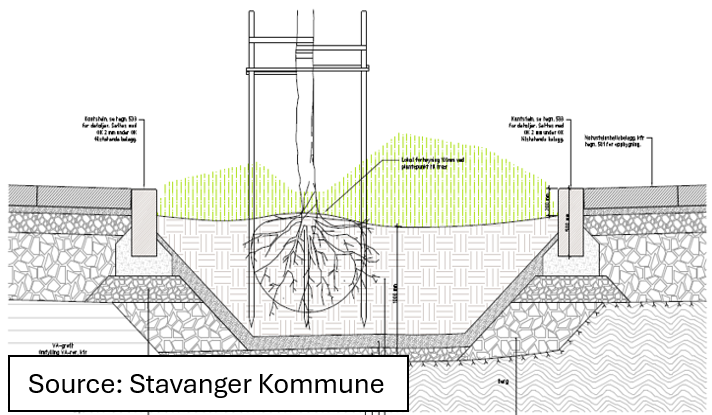
Nytorget has become a vital pilot for integrating nature-based solutions into a dense, historic environment with strictly limited space. The redesigned square incorporates a network of rain gardens that make up at least 80% of the blue–green infrastructure, supported by permeable surfaces covering around 60% of the future park.
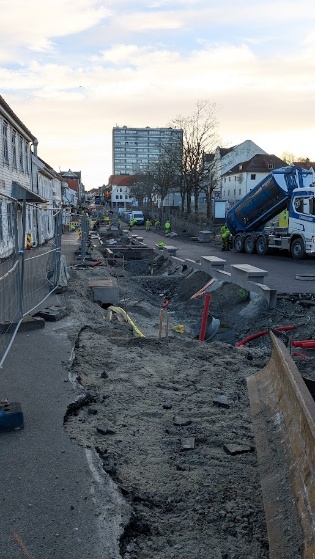
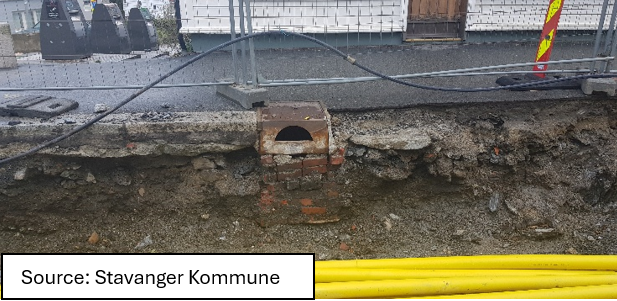
Implementing the vision required overcoming technical challenges. Excavation revealed a dense, ageing underground network of pipes and cables, some more than a century old, and undocumented rock formations encountered during construction, which pushed the schedule back by months.
Contaminated soil from the former use required remediation. Utility providers coordinated closely to replace old infrastructure and prepare the site for modern stormwater systems. Technical limitations, such as shallow soil and low infiltration, led to the development of innovative rain bed designs and the need to replace century-old underground infrastructure.
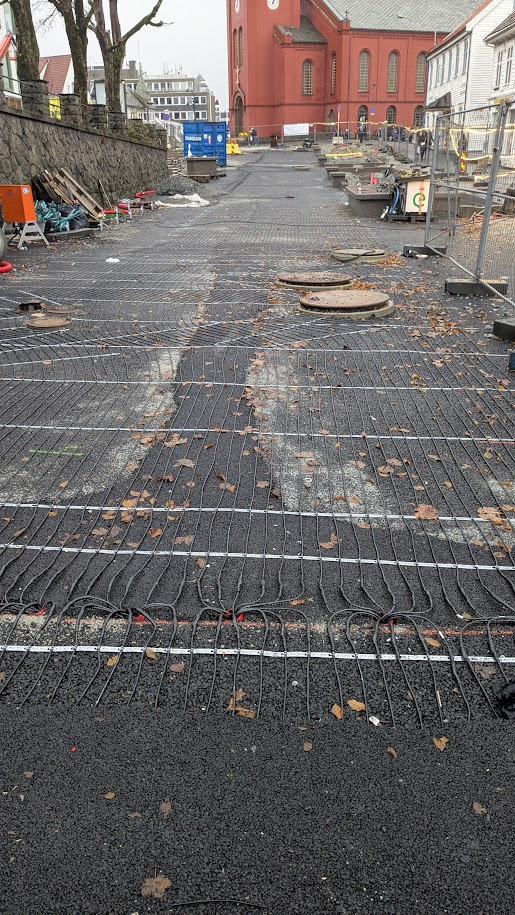
The commitment to using local granite and reused cobblestones is matched by a snow-melting system that eliminates the need for road salt, protecting the long-term function and ecological health of the rain gardens.
Palleparken: a temporary park shaping the future square
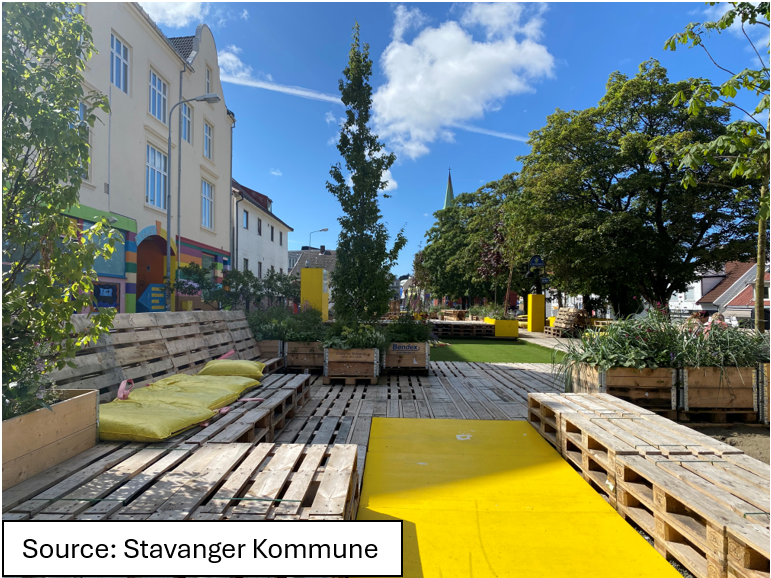
A defining feature of the Nytorget process was the temporary park, Palleparken. Created in 2020, initially as a living lab for co-creation, it became important when the COVID-19 pandemic limited engagement methods. Built from pallets and planting boxes, the installation turned a parking area into a meeting place where residents could test and experience elements of the planned redevelopment.
The public response was very positive. Residents appreciated the planting, informal seating, and opportunities for play. Palleparken also served as a communication tool, conveying Nytorget’s long-term vision during a period of change.
A long journey of dialogue and co-creation
Participation was central throughout the process, starting in 2015. Young people, in particular, called for more art, play, and greenery, and were successfully incorporated into the final design. Businesses played an essential role in shaping practical aspects, such as the distances between rain gardens and building façades to support outdoor dining. The municipality documented and responded to all formal feedback, maintaining an accountable record throughout the process.
To maintain trust during disruption, the municipality implemented a proactive communication strategy, including door-to-door visits, QR-coded information posters, and a dedicated neighbourhood contact.
Key lessons from the Stavanger pilot
The experience from Nytorget offers important lessons for cities working with blue–green infrastructure and complex urban renewal.
Historic city centres require contingency planning due to the complex geology and poorly mapped infrastructure. Maintaining a good, proactive relationship with neighbours and businesses is essential for sustaining trust during a long, disruptive period.
The project also confirms the necessity of strong, cross-departmental alignment from the outset, integrating mobility, cultural heritage, and climate adaptation into a single, coherent vision. Establishing clear design principles early helped avoid costly late-stage revisions.
Together, these insights show how NBS, targeted participation, and proactive risk management can shape resilient, people-centred urban spaces.
Supporting climate adaptation
The renewal of Nytorget forms part of Stavanger’s broader strategy to handle a projected 20–40% increase in precipitation, making climate adaptation central to its urban renewal efforts.
The city’s journey toward resilience began some years ago, formalising under EU projects like UNaLab and the adoption of tools like the blue-green factor. This structured approach has positioned Stavanger close to a “water cycle city”, according to the City Blues project transition scale.

details
-
Homepage
-
Project typeCore Project

-
ImplementationNovember 2023 - October 2026
-
StatusOngoing
-
Contribution to EUSBSRPolicy Area Nutri

-
Target groups
- Infrastructure and public service provider
- Interest group
- Local public authority
- NGO
-
Social media
-
Additional links
-
Tags