




BATS Heads to Denmark! Partners Explore Year-round Active Mobility from Kalundborg to Copenhagen
15 April 2026
The meeting opened fittingly in Kalundborg, BATS’s Danish city partner, with a bike ride. Guided by the local team, partners cycled along the city’s BATS experiment corridor, a cycling route that has been quietly transformed into a testing ground for year-round active mobility.
Kalundborg’s challenge is a familiar one in many mid-sized cities: cycling infrastructure exists, but helping people navigate it, especially in the dark months, is a different matter. Taking inspiration from urban metro systems, Kalundborg designed a wayfinding concept based on a network of named stops and a schematic route map displayed along the path. A series of red dots painted on the ground confirms to cyclists that they are on the right track. To navigate the winter darkness, a set of solar-powered lighting poles now marks the way forward in confusing, windy stretches of the route.
It is a low-cost, high-legibility approach, and riding through it with partners from across the Baltic Sea Region brought the concept to life far more vividly than any slide deck could.
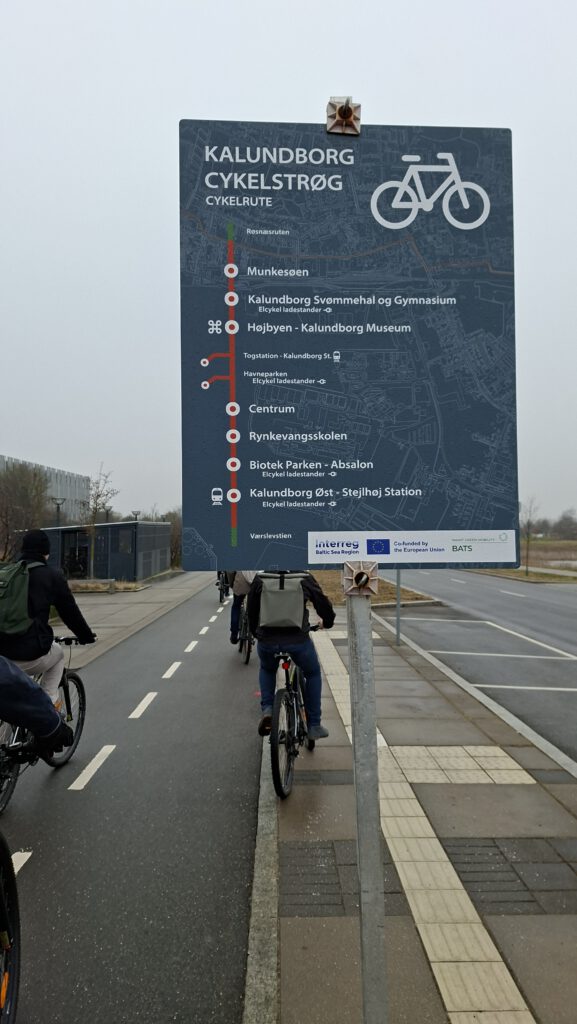
BATS partners had the opportunity to explore Kalundborg’s cycling network.
The second day saw the partnership relocate to Albertslund, a satellite town west of Copenhagen and home to Gate21, another of the project’s Danish partners. This was the setting for the first test of the BATS transfer workshop, something we have been long working towards. This format is designed to share the project’s tools and findings with external organisations beyond the partnership itself.
Danish municipalities and stakeholders joined BATS partners for the session. After a round of city presentations, covering everything from interactive lighting projections in Klaipeda to community-driven winter monitoring in Umeå, the afternoon moved into hands-on working sessions. Mixed groups of Danish guests and BATS cities worked through the YRAM Toolkit, the project’s strategic planning tool for year-round active mobility, testing the planning canvases to develop approaches to winter cycling challenges. The energy in the room reflected what the project has been aiming for, with knowledge shared and applied between a diverse range of stakeholders.
Following the workshop, partners were treated to a thought-provoking presentation by Lars Kjær from LYS A/S on smart, biodiversity-conscious lighting for active mobility. The focus was not just on illumination but on ecological impact. Partners were interested to learn how different light colours and intensities have measurable effects on local wildlife.
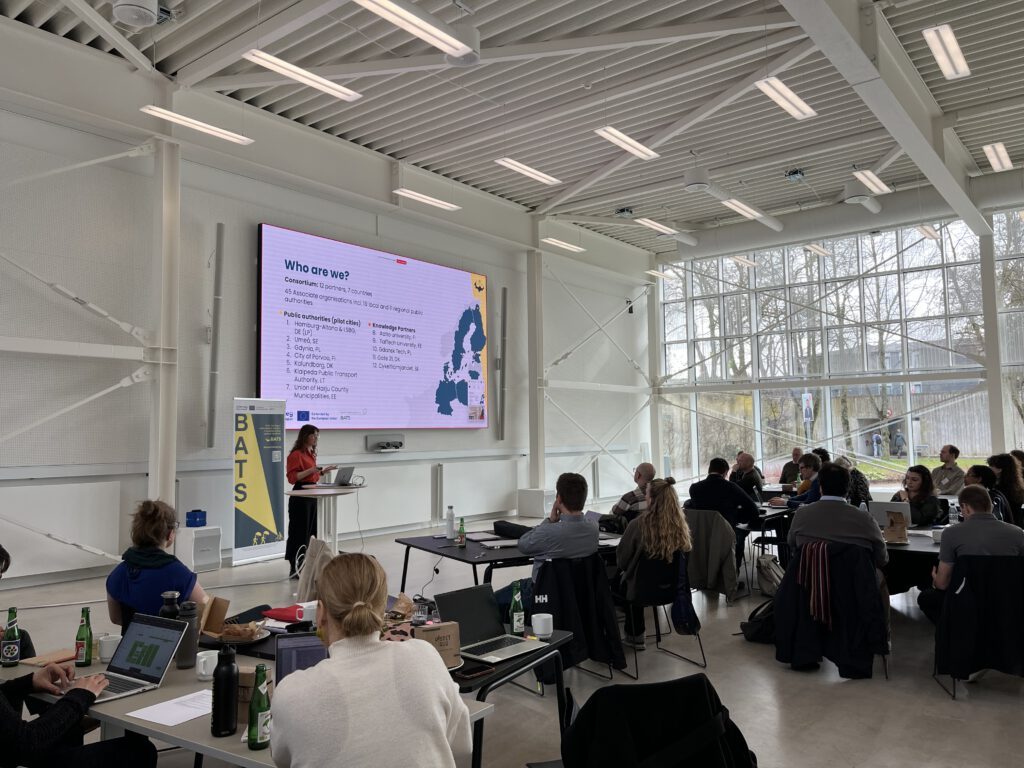
The main facility of BATS partner Gate21 provided the setting for the second day of the trip to Denmark.
The day ended with a walking tour of Albertslund itself, led by Gate21’s Sif Enevold. The town was built in the 1960s as part of Copenhagen’s five-finger regional planning model, designed to accommodate rapid population growth. What makes it remarkable is its vertical separation of traffic: car roads and active mobility paths run on entirely different levels. The result is a town with almost no traffic lights and a dense network of underpasses for cyclists and pedestrians. Sixty years on, the design still shapes daily mobility habits, though it also reveals the constraints of bold modernist planning. Limited space in the town centre now makes it difficult to properly separate cycling and pedestrian flows. A lesson, perhaps, in designing for flexibility as much as for ideals.
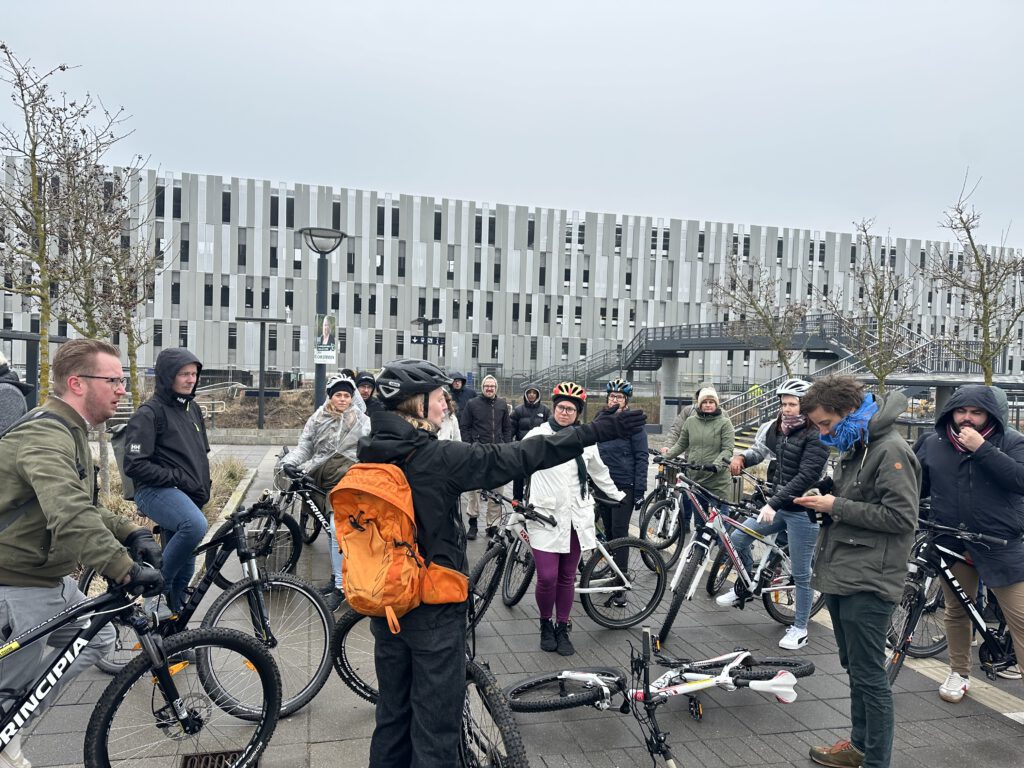
Partners had plenty of opportunities to spend time outside!
The evening ended fittingly with a night bike ride back into Copenhagen, following the cycle routes that thread through the Danish suburbs like arteries.
The final day brought partners into the heart of Copenhagen, one of Europe’s most celebrated cycling cities, for a session with the municipality’s active mobility team.
Oskar Funk, who manages Copenhagen’s winter maintenance operations, gave a frank and detailed account of how the city organises the ploughing, salting and clearing of its cycling network when temperatures drop. Legal frameworks, contracts with private operators, response times, and the politics of prioritisation: it was a window into the institutional machinery that keeps 390 kilometres of cycling infrastructure usable year-round.
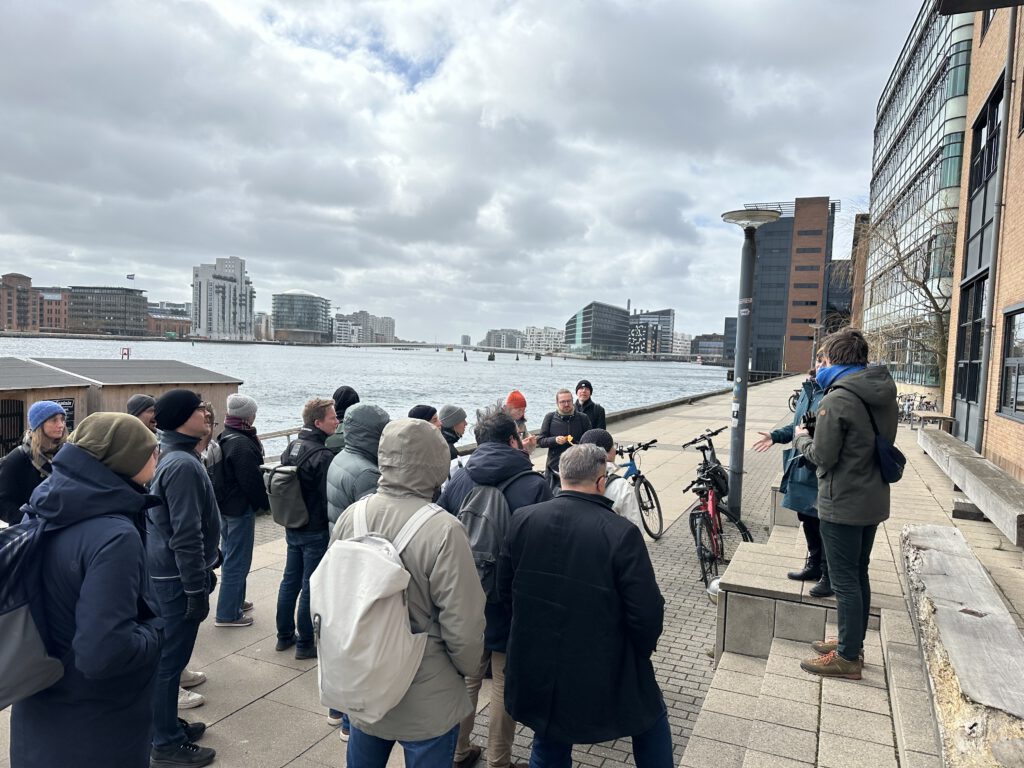
Copenhagen was a superb location for an enjoyable walking tour.
Anna Lassen, a cycling planner at the municipality, then led partners on a walking tour of the revitalised harbour district, a landscape of new active mobility bridges, waterfront promenades, and infrastructure designed around people rather than cars. Projects like the Cykelslangen cycle bridge and the connections across the canals have become iconic.
BATS is now entering its final project period, and the Denmark meeting was shaped by that awareness. Alongside the site visits and workshops, partners worked through what lies ahead: local action plans to be developed in each city, transfer workshops to be organised across the partnership, finalisation and publishing of the project’s main outputs, and a set of year-round active mobility policy recommendations for decision-makers at multiple levels of governance.
The partnership will reconvene online at several points in the coming months, concluding with the final conference in Gdynia, Poland.

Additional links
details
-
Homepage
-
Project typeCore Project

-
ImplementationNovember 2023 - October 2026
-
StatusOngoing
-
Contribution to EUSBSRPolicy Area Transport

-
Target groups
- Infrastructure and public service provider
- Local public authority
- Regional public authority
-
Social media
-
Additional links
-
Tags