




Turku, Finland
28 April 2026
Turku is a coastal city in southwest Finland and one of the country’s major urban centres, with approximately 210 000 inhabitants. As the core city of the Turku region, it plays an important role in education, employment and transport. Turku has set an ambitious goal of becoming carbon neutral by 2029, and sustainable mobility is a central element of this transition.
Within the SUMPs for BSR project, the city ran two active mobility pilots, one on data collection and a small-scale experiment.
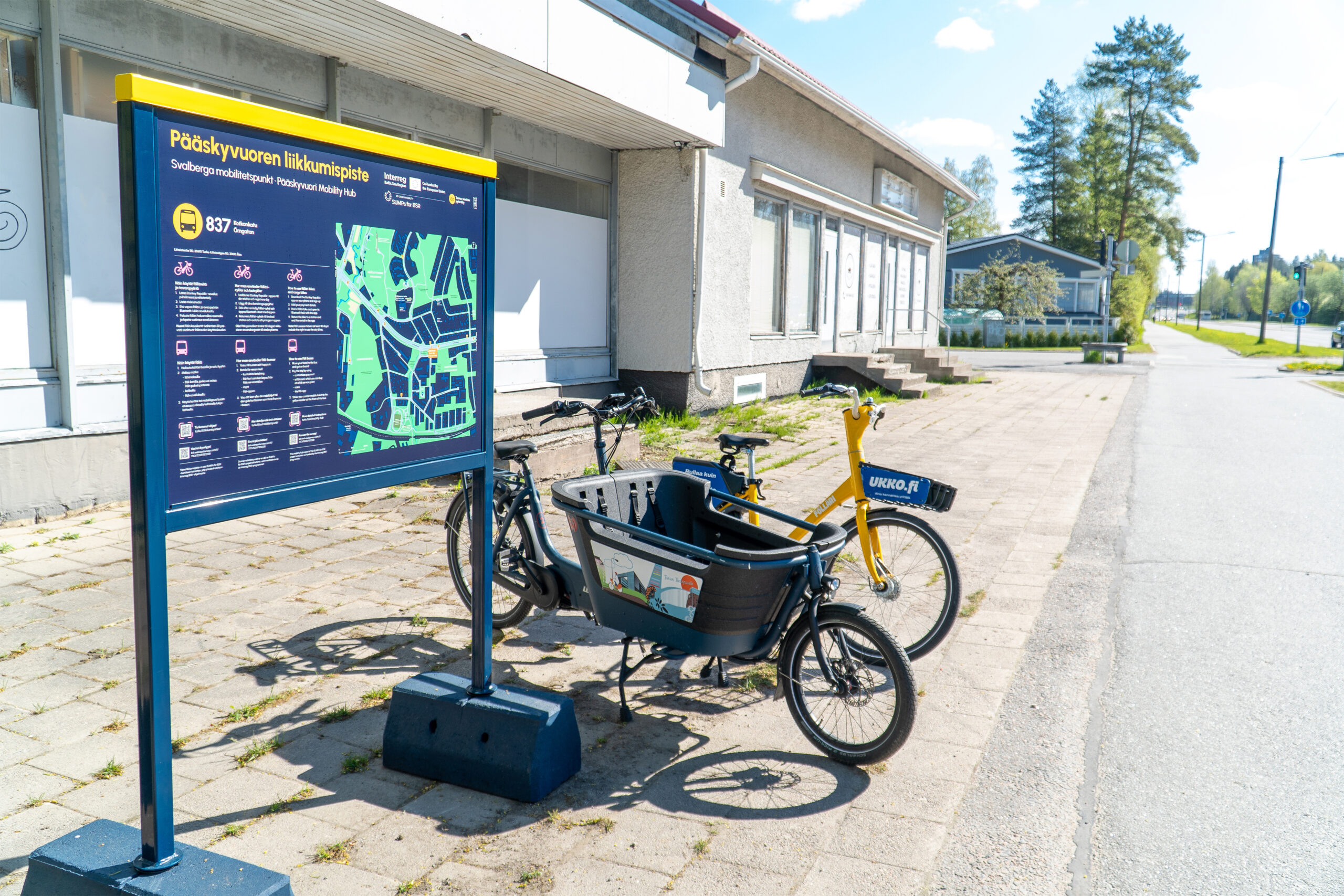
The mobility hub has a large sign and room for several e-cargo bikes and Fölläri city bikes. A bus stop can be found right next to it. Photo: Iiris Yli-Junnila / City of Turku.
Implementing a neighbourhood mobility hub to support everyday commute
The mobility hub included a combination of services and facilities intended to support different travel needs. These included bicycle parking, space for shared mobility services and clear information on sustainable travel options.
The small-scale experiment explored how a neighbourhood mobility hub could support more sustainable everyday travel and reduce reliance on private cars. The target was also to collect feedback and usage data to assess how residents interact with the hub and to generate lessons for scaling up similar solutions elsewhere in Turku. Although the pilot did not aim to produce immediate modal shift, 64% of respondents reported that the services in the mobility hub had replaced the use of their private car. It also strengthened the city’s understanding of user needs and operational considerations. The experiment got positive reactions from families regarding convenience and accessibility.
Citizens’ panel and mobility data collection
The other pilot consisted of a citizens’ panel and a data collection initiative. The panel gathered residents’ experiences and opinions on mobility-related topics and provided qualitative insights for improving the SUMP. For data collection, new sensors were installed to measure pedestrian, cyclist and e scooter movements at selected locations.
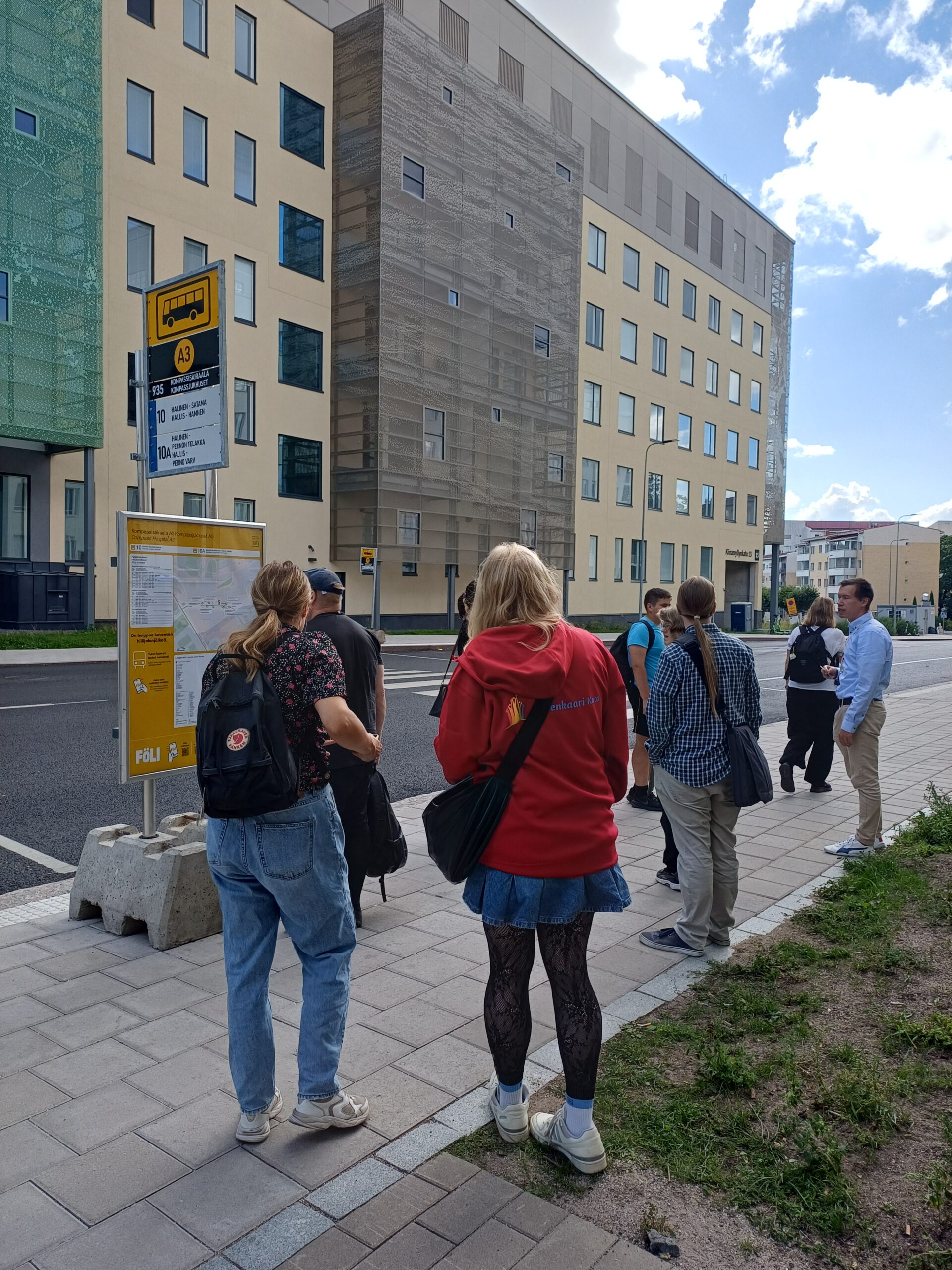
Pilot area in Turku. Photo: Oona Uusitalo / City of Turku.
The combined results of the citizens’ panel and the data collection initiative strengthened Turku’s capacity for evidence-based and participatory mobility planning. Turku received greater insight into citizens’ perceptions of accessibility, safety and convenience and was also able to strengthen cooperation between departments and with residents. Panel participants reported that they gained a deeper appreciation of how mobility planning works and felt motivated to share their new knowledge within their communities. City experts, in turn, valued the opportunity to test ideas and validate plans directly with users. The new sensor data also allowed Turku to move away from assumptions toward data-based policy design. It supported validation of measures already included in the SUMP and provided a solid foundation for future updates.

Interactive map showing pilot locations. Use the arrow keys to move the map view and the zoom controls to zoom in or out. Press the Tab key to navigate between markers. Press Enter or click a marker to view pilot project details.
details
-
Homepage
-
Project typeCore Project

-
ImplementationNovember 2023 - October 2026
-
StatusOngoing
-
Contribution to EUSBSRPolicy Area Spatial Planning

-
Target groups
- Local public authority
- National public authority
-
Social media
-
Additional links
-
Tags