




Panevėžys, Lithuania
28 April 2026
Panevėžys, the fifth-largest city in Lithuania, is situated in the northern part of the country along the Via Baltica highway. With a population of approximately 85 000, it serves as a key regional centre for industry, education, and culture. In recent years, the city has taken active steps towards more sustainable urban development, with a growing focus on active mobility, traffic safety and the quality of public space.
Within the SUMPs for BSR project, the city ran two active mobility pilots, one on data collection and a small-scale experiment.
Installing bicycle and scooter racks at schools to promote active mobility
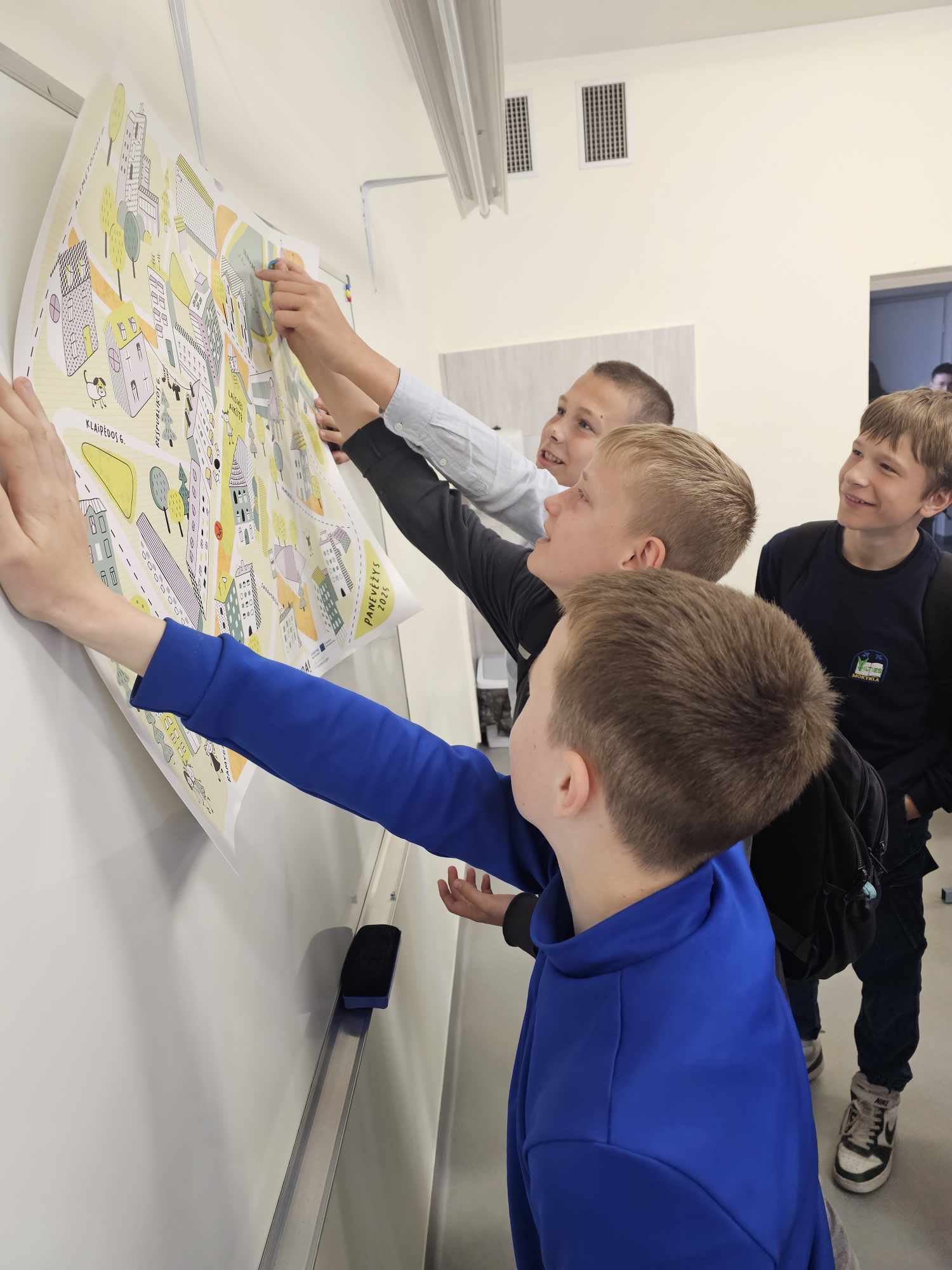
Students taking part in the “Our School Moves” initiative, placing cycling and scooter trip stickers on a city map. Photo: Panevėžys city municipality administration.
The small-scale experiment focused on installing bicycle and scooter racks at ten selected schools, accompanied by promotion and monitoring activities. The city organised two competition-style campaigns, where students got a sticker to put on the poster each time they cycled to school. At the end of each campaign, the class that had collected the most stickers was rewarded with a sustainable mobility education course. Simple tools and templates allowed schools and municipal staff to collect information on rack usage and user perceptions. The pilot was designed to be simple, resource efficient and easy to integrate into existing municipal and school processes.
The visibility of cycling and scooting as normal travel options to school increased and pupils and staff gave positive feedback on the convenience of the racks. Panevėžys got concrete evidence on how school-based infrastructure can support active mobility. While not all pupils changed their travel behaviour, the experiment generated clear learning outcomes for planning and implementation.
Open data sources and school-based research for active mobility
The evaluation and data collection was closely coordinated with the small-scale pilot project involving the installation of bicycle and scooter racks at selected schools, creating operational and financial synergies for efficient use of resources. Key activities included situation analysis, indicator development, stakeholder consultations, monitoring activities and also evaluation and recommendations. To optimise resources, the pilot was built on a deliberately simple and cost-efficient methodology, relying on existing municipal capacity and requiring no special permits or costly technologies.
Data from ten schools included modal split, peak-hour traffic flows, noise levels near the schools, and bicycle and scooter rack occupancy, proving valuable input for decision-making and monitoring Panevėžys SUMP monitoring. In addition, the pilot revealed variability in traffic patterns not captured by existing monitoring, highlighting areas for further investigation and potential opportunities for targeted interventions. It also identified data gaps and proposed recommendations for both further SUMP-related data collection integration of data from other projects and monitoring initiatives in Panevėžys.
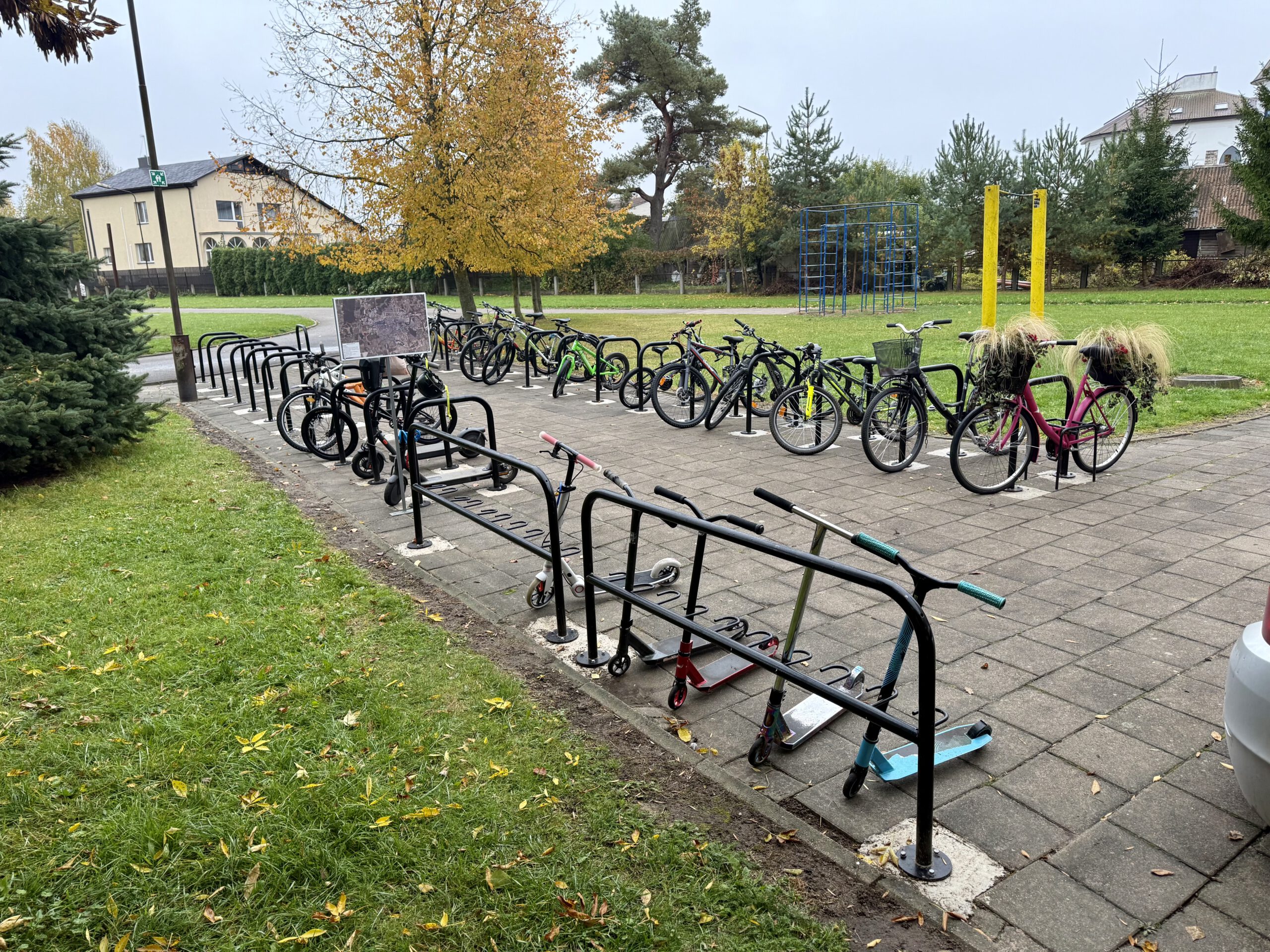
Installed bicycle and scooter racks at pilot schools. Photo: Panevėžys city municipality administration.

Interactive map showing pilot locations. Use the arrow keys to move the map view and the zoom controls to zoom in or out. Press the Tab key to navigate between markers. Press Enter or click a marker to view pilot project details.
details
-
Homepage
-
Project typeCore Project

-
ImplementationNovember 2023 - October 2026
-
StatusOngoing
-
Contribution to EUSBSRPolicy Area Spatial Planning

-
Target groups
- Local public authority
- National public authority
-
Social media
-
Additional links
-
Tags