




Gdynia, Poland
28 April 2026
Gdynia is a coastal city in northern Poland and part of the Tricity metropolitan area together with Gdańsk and Sopot. With around 245 000 inhabitants, the city plays an important role as a transport hub, port city and centre for innovation and education. Over recent years, Gdynia has strengthened its commitment to sustainable urban development, placing increasing emphasis on active mobility, high-quality public spaces and citizen involvement in planning processes.
Within the SUMPs for BSR project, the city ran two active mobility pilots, one on data collection and a small-scale experiment.
Using digital tools to support public space transformation
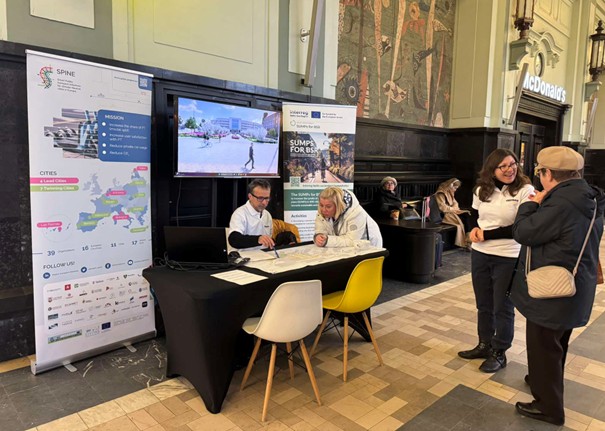
Consultation point at Gdynia Main Railway Station where digital materials related to Constitution Square were presented and discussed with residents.
Photo: City of Gdynia, 2024
The small-scale experiment focused on developing and testing digital materials that illustrated potential changes to a central public space. A virtual tour of Constitution Square was created using panoramic images and digital visualisation techniques and it presented the existing situation alongside proposed changes to the layout of the square. Gdynia also prepared a short explanatory video presenting the background, objectives and key ideas of the planned transformation.
Digital tools are effective for explaining complex ideas, but they work best when combined with clear messaging and complementary participation formats. It became clear that visualisation is critical for communicating spatial change. Digital engagement lowered participation barriers but did not replace dialogue entirely.
AI-based monitoring, surveys and an educational campaign for schools
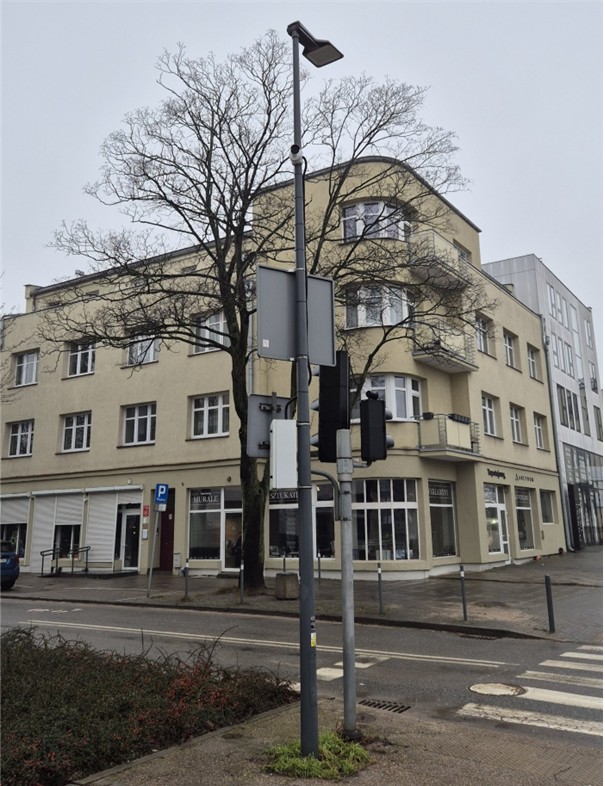
AI-based camera installed near school area (Aleja Zwycięstwa / Orłowska Street), spring 2025. Photo: City of Gdynia, 2025.
The evaluation and data collection pilot explored how upper secondary school students travel and what influences their choices. The pilot started with a citywide mobility survey in upper secondary schools, followed by workshops to better understand the attitudes and expectations of students. The technical part of the pilot included testing an AI-based camera at a key intersection near several schools and later launching a broader automated monitoring service using relocatable counting stations. A cycling promotion campaign in high schools complemented the research and monitoring activities and generated additional behavioural data through an app-based competition.
The collected data showed that a significant share of pupils walk or use public transport, while cycling remains comparatively limited. Observations and AI data confirmed peak-hour congestion that helped to identify locations with potential for targeted improvement. The cycling promotion activities increased visibility of active travel and stimulated short-term behavioural engagement among participating students. The findings directly support Gdynia’s SUMP update and provide evidence-based foundation implementation and inform future planning of school access routes, cycling facilities and awareness initiatives.

Interactive map showing pilot locations. Use the arrow keys to move the map view and the zoom controls to zoom in or out. Press the Tab key to navigate between markers. Press Enter or click a marker to view pilot project details.
details
-
Homepage
-
Project typeCore Project

-
ImplementationNovember 2023 - October 2026
-
StatusOngoing
-
Contribution to EUSBSRPolicy Area Spatial Planning

-
Target groups
- Local public authority
- National public authority
-
Social media
-
Additional links
-
Tags