




Gävle, Sweden
30 April 2026
Gävle is a medium-sized city on the east coast of Sweden, with around 104 000 inhabitants. It is an important regional hub for business, education and transport. The city has a long-standing commitment to sustainable urban development, demonstrated through its climate neutrality goal for 2030 and its participation in national and international projects that promote low-carbon mobility.
Within the SUMPs for BSR project, the city ran two active mobility pilots, one on data collection and a small-scale experiment.
Digital campaign to promote cycling for short-distance commuting
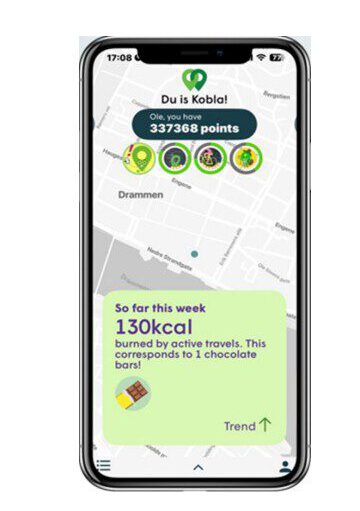
A digital application to track daily commuting. Photo: City of Gävle.
The digital, app-based campaign encouraged employees to replace short car trips with cycling and walking. The small-scale experiment was focused on individual motivation rather than physical infrastructure changes.
The pilot gave valuable insight into the role and limitations of digital campaigns in promoting active commuting. While the behavioural impact was modest, the experiment clarified what conditions are needed for success. Digital tools alone are unlikely to trigger large-scale behaviour change, but an app with incentives has potential for nudging users in that direction. The experiment confirmed that employer involvement is necessary but not sufficient without incentives. It also offered a clearer understanding of participant motivation and engagement dynamics.
Active mobility data collection through a mobile application
Gävle monitored real-life travel behaviour through a GPS-based mobile application among employees of local companies that had signed the city’s climate contract. The pilot tested how digital tools could complement traditional data collection methods, such as tube counters and surveys, and how they could help municipalities track active mobility more accurately. The application encouraged walking and cycling by allowing participants to visualise their travel activity and receive rewards for sustainable choices.
The pilot provided quantitative data on walking and cycling behaviour, filling an existing gap in mobility knowledge. It gave the city a deeper understanding of how participants perceive app-based monitoring, rewards and gamification. While the pilot’s direct policy impact was limited due to its experimental nature and small sample size, it served as a valuable learning exercise. The experience will inform future campaigns aimed at encouraging sustainable commuting and expanding the city’s data-driven approach to mobility planning.

Interactive map showing pilot locations. Use the arrow keys to move the map view and the zoom controls to zoom in or out. Press the Tab key to navigate between markers. Press Enter or click a marker to view pilot project details.
details
-
Homepage
-
Project typeCore Project

-
ImplementationNovember 2023 - October 2026
-
StatusOngoing
-
Contribution to EUSBSRPolicy Area Spatial Planning

-
Target groups
- Local public authority
- National public authority
-
Social media
-
Additional links
-
Tags