




Umeå, Sweden
03 August 2026
Umeå is the largest city in northern Sweden, in the province of Västerbotten. The city breathes culture, history and natural beauty. Umeå Municipality has a population of roughly 130,000 and is home to Umeå University and its some 35,000 students, giving the city a rather young population.
BATS partner Umeå Kommun works towards environmental goals centred on increasing sustainable travel and reducing the number of people who travel alone by car. With several street reconstruction projects under way across the city, developing new ways for residents to move around has been a priority.
Umeå sees a steep drop in cycling and walking over the winter, driven by heavy snow and, at this northern latitude, very short daylight hours. Within the BATS project, Umeå Kommun ran local experiments to keep active mobility safe, visible and attractive through the winter months, as well as to foster an uptake of winter active mobility users.
Winter maintenance, contractors, and winter agents
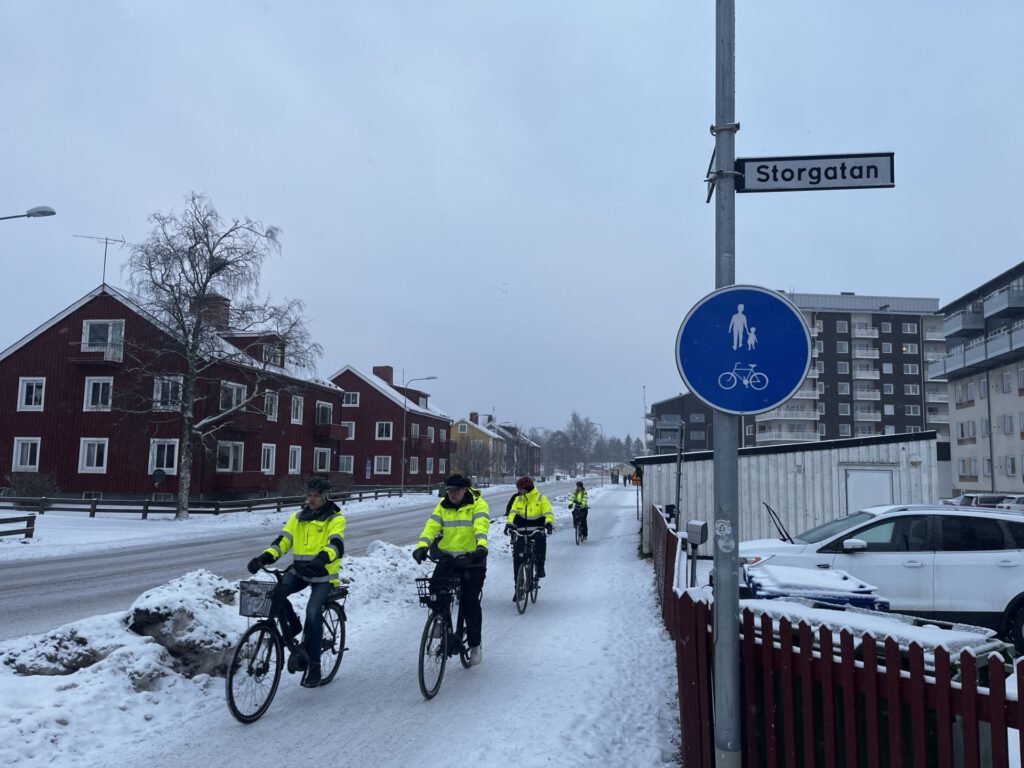
Umeå worked to improve both the winter maintenance of cycling and walking routes and the communication around it, running two strands in parallel. A winter agents programme recruited a diverse group of citizens (77 agents across age groups and genders) who, over the winter, checked the real street conditions in terms of snow/ice clearance and filed reports through a dedicated section of the municipal feedback app. Winter maintenance contractors were then contractually required to address these reports.
Alongside this, the city organised a winter cycling activity that brought winter maintenance department staff together with one of its principal contractors (who cover most of the city centre maintenance). Through riding the main cycle corridors, intersections and known problem spots over one morning, these stakeholders got to experience YRAM conditions first-hand and openly discuss them in a more informal setting.
Additionally, Umeå also produced winter marketing films to promote winter cycling on social media.
Results & Lessons. The winter agents’ reports fed directly into maintenance practice. For example, after agents flagged that scrapping was tearing some cycling paths, crews adjusted to smoother steel blades. Agents responded very positively, with most of them wanting to continue the following winter and valuing the early-season insight into how maintenance actually works. The main lesson was to anchor this citizen-contractor collaboration in procurement, so the practice outlasts the project.
In parallel, the winter cycling activity with contractors proved to be a very effective measure of communication across stakeholders: contractors better understood the experience of cyclists and pedestrians during winter (many are car drivers), and the municipality got deeper insights into specific ploughing details that would otherwise go uncommunicated in more formal settings.
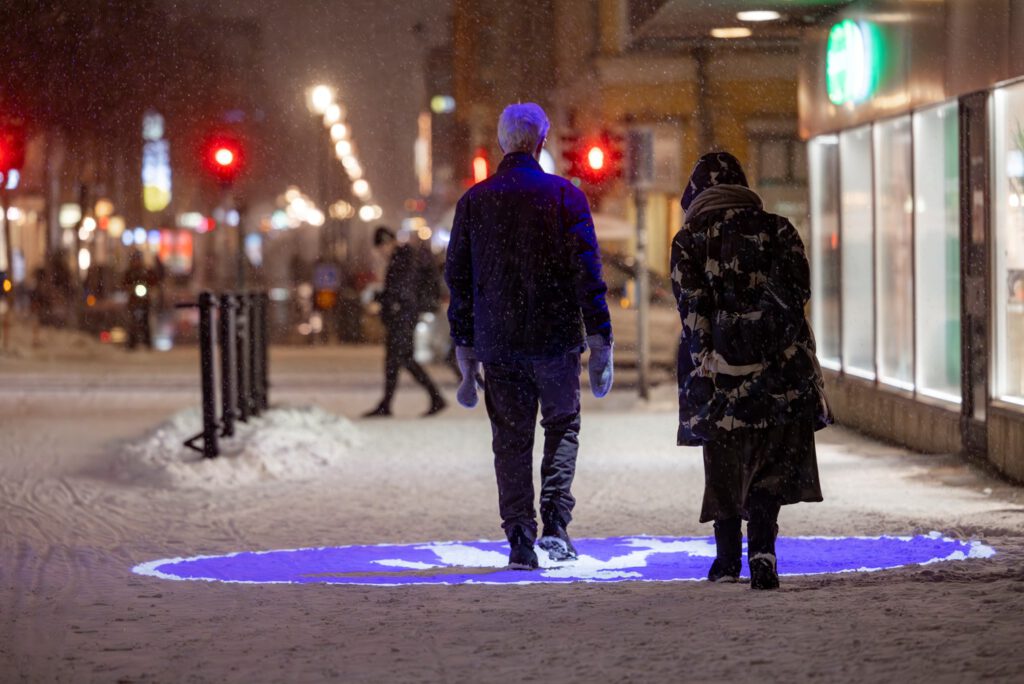
Traffic sign projections for year-round visibility
To keep lane markings visible when snow and darkness hide traditional paint, Umeå installed gobo projectors that beam traffic symbols directly onto the ground. Seven projectors were placed across seven streets (Brogatan, Kungsgatan, Akademileden, Hemvägen, Östra Kyrkogatan, Storgatan and Dragongatan). These sat along commuter routes, near the university campus and in spots where pedestrians and cyclists struggle to tell their lanes apart, each showing a clear separation between the footpath and the cycle lane.
Results & Lessons. For the gobo projectors, Umeå gauged public opinion through peak-hour interviews on Brogatan and an Instagram poll that reached over 13,500 people. The evaluation revealed a positive reception by the majority of the population.
The practical lesson was that the units are more site-dependent than expected, so installations are best planned around fixed, well-calibrated points rather than treated as movable.
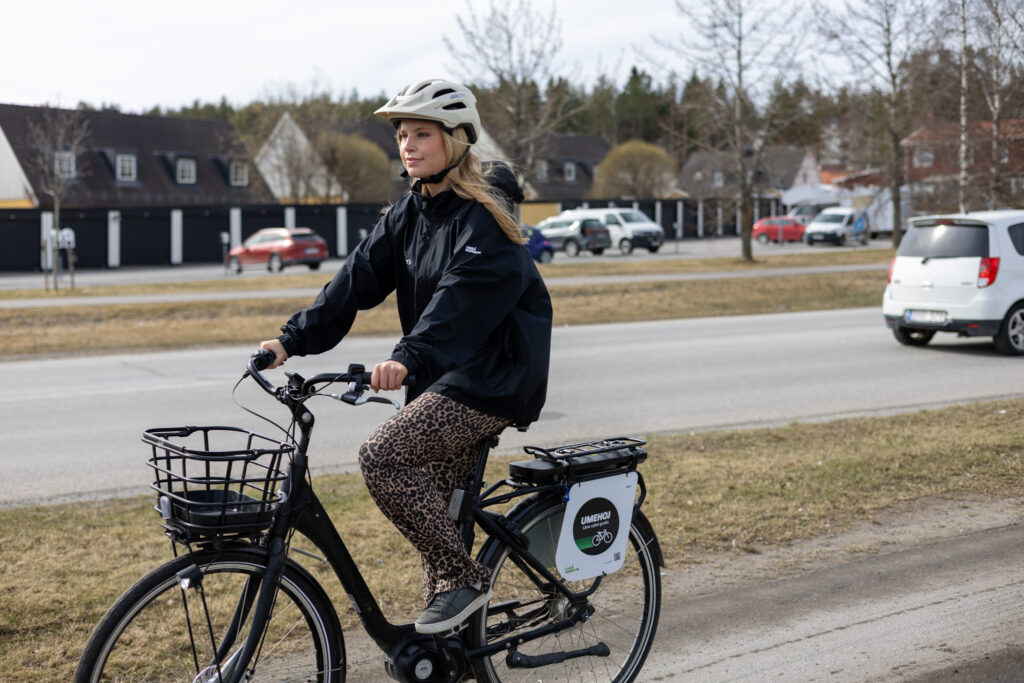
Loan of e-bikes to foster cycling uptake
Umeå offered residents the chance to borrow an e-bike free of charge and try year-round cycling for themselves. Seventeen municipally owned e-bikes were distributed across three local bike shops, which handled bookings and maintenance, and each participant could keep a bike for around two and a half weeks. The trial ran over a full year and continued through the winter, though with lower uptake than in summer. Every participant was asked to complete a follow-up survey, which about half returned.
Results & Lessons. The e-bike trial reached a balanced mix of cyclists and car users, mostly aged 25 to 35. The majority of users voiced an intention of purchasing an e-bike after the trial. There was no theft or vandalism, but some bikes were returned late and a few keys were lost, which pointed to a modest, cost-reflective fee in future loan programmes. Bike shops also struggled with maintaining (manual) booking operations on top of their daily business activities; future iterations should consider using a professional booking tool.

Interactive map showing pilot locations. Use the arrow keys to move the map view and the zoom controls to zoom in or out. Press the Tab key to navigate between markers. Press Enter or click a marker to view pilot project details.
Additional links
details
-
Homepage
-
Project typeCore Project

-
ImplementationNovember 2023 - October 2026
-
StatusOngoing
-
Contribution to EUSBSRPolicy Area Transport

-
Target groups
- Infrastructure and public service provider
- Local public authority
- Regional public authority
-
Social media
-
Additional links
-
Tags