




Porvoo, Finland
03 August 2026
Porvoo is a bilingual city, located around 35 kilometres east of Finland’s capital Helsinki. Porvoo’s city centre lies along the river Porvoo, but alongside the urban centre and suburbs, the city of Porvoo also consists of rural landscapes to the east, north and west, as well as archipelago and sea areas to the south. The municipality houses around 52.000 inhabitants.
BATS partner City of Porvoo set out to make walking and cycling a credible choice throughout the Finnish winter. Within the BATS project, Porvoo ran experiments that improved their active mobility winter maintenance practices, as well as their planning capacities before implementation of cycling infrastructure..
Maintenance supporting year-round active mobility (YRAM)
Maintenance plays a significant role in whether people walk and cycle at all, particularly during winter, so Porvoo’s first experiment combined better maintenance practice with a stronger citizen voice.
The city started by tackling a structural problem: parts of the walking and cycling network belonged to the city and parts to the state, which meant a single route could be ploughed to different standards, at different times, by different organisations. Porvoo negotiated a series of agreements with the owner of the national roads to shift from an organisation-by- organisation approach to a route-based winter maintenance, prioritising how citizens actually move rather than what was most efficient for each authority. In practice, that meant a cycling route crossing several jurisdictions would be ploughed as one continuous path.
Alongside this, Porvoo introduced a lighter version of the winter agents model. The city ran quick, map-based QR-code surveys for continuous feedback, added a profile survey that grouped users into personas based on their daily mobility habits, and convened a citizen panel drawn from the most engaged respondents. To make sense of it all, Porvoo held a monitoring workshop and drew up a first set of Key Performance Indicators for winter maintenance, developed with different organisational sectors and experts.
Results & Lessons. The negotiations produced concrete change: maintenance responsibilities were swapped between the city and the state, and the city acquired a new type of snow-clearing machine better suited to cycle lanes and pedestrian paths. The surveys proved their worth by pinpointing exactly the problems that discourage winter cycling, such as severe slipperiness, excessive snow and the ploughing embankments left across intersections.
Three lessons stand out. The first is procedural: acute maintenance reports (a sudden icy patch) must be kept clearly separate from long-term quality monitoring, or citizens’ expectations about response times become impossible to manage. The second is cultural: citizens turned out to be eager to take part, while maintenance professionals were wary of the change, which suggests that bringing operational staff along is as important as recruiting the public. The third lesson concerned the “light” winter agents model itself: response rates and attendance were much lower than expected, showing that if a winter agents programme ambition exists, it might be best to implement it to its fullest extent.
Cycling simulator for all seasons
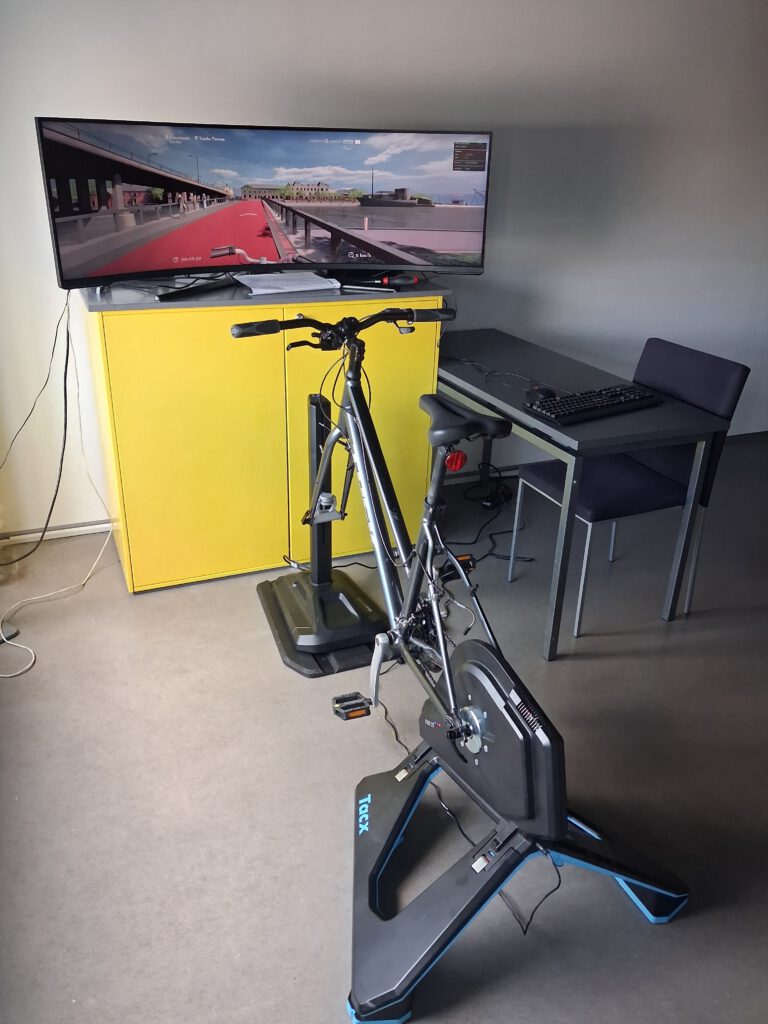
Porvoo’s second experiment addressed a familiar planning problem: it is genuinely difficult to understand how an infrastructure project will feel until it has been built. The city set out to adapt existing simulator technology, originally designed for training purposes, into a planning tool for active mobility, letting people compare an existing street with a planned one. By connecting a standing bicycle to an interactive 3D model, the simulator made it possible not merely to look at a proposed design, but to ride through it, and to experience the difference between two options in a realistic way.
The case chosen was the future cycling connection over the Porvoo river. The 3D environment was built from existing imaging data and raw photos in a game engine, with the future infrastructure modelled on the city’s own preliminary plans, and the whole experience wrapped in a structured workshop designed with the help of the project’s monitoring guidance and the Citizen Activation Guide.
Results & Lessons. Building the simulator proved considerably harder than anticipated, leading to delays. Once running, it was tested first with colleagues and local planners, then offered to Porvoo’s citizens. The most valuable insight was conceptual: the simulation worked as a shared reference that planners, decision-makers and residents could all step into and discuss on equal terms, turning an abstract design argument into a common experience.
For any city considering something similar, the honest advice is to budget generously for the technical integration (the trainer-to-engine link is the hard part), and to value the tool as much for the conversations it enables as for the visualisation itself.

Interactive map showing pilot locations. Use the arrow keys to move the map view and the zoom controls to zoom in or out. Press the Tab key to navigate between markers. Press Enter or click a marker to view pilot project details.
Additional links
details
-
Homepage
-
Project typeCore Project

-
ImplementationNovember 2023 - October 2026
-
StatusOngoing
-
Contribution to EUSBSRPolicy Area Transport

-
Target groups
- Infrastructure and public service provider
- Local public authority
- Regional public authority
-
Social media
-
Additional links
-
Tags