




Gdynia, Poland
03 August 2026
Gdynia is a dynamic port city on the Baltic coast of Poland, part of the so-called Tri-City agglomeration alongside Sopot and Gdańsk. It is known for its distinctive modernist architecture, its seafront and its role in maritime logistics.
BATS partner Gdynia Municipality is an experienced promoter of active mobility. With motorisation and congestion still growing across the city, encouraging residents to walk, cycle and use public transport (and to leave the car at home) has been a clear priority.
Adverse weather and the darker, colder months tend to push people away from walking and cycling, whether through long waits at busy crossings or the pull of the car on the school run. Within the BATS project, Gdynia Municipality ran local experiments to keep active mobility safe and attractive in all weather conditions, and to build active travel habits from an early age.
Weather-responsive traffic signals for pedestrians and cyclists
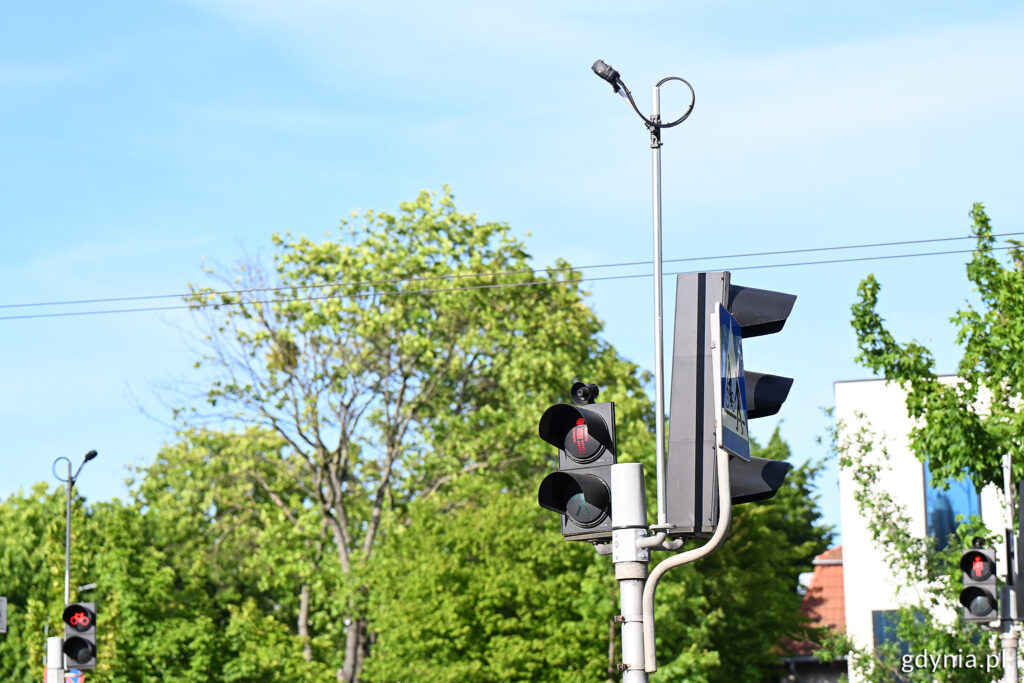
Gdynia focused on a busy crossing where the EuroVelo 10/13 cycling route meets a five-lane car artery and the pedestrian pavements (the intersection of Aleja Zwycięstwa and Orłowska), where long waits at the lights were making walking and cycling less attractive. Working with BATS partner Gdansk University of Technology and the traffic authority, the municipality installed three thermal sensors that detect pedestrians and cyclists by body heat, linked them to a meteorological station reading real-time conditions, and built a new set of traffic signal interval programmes (eight in total). The aim was to cut waiting times for pedestrians and cyclists in adverse weather (rain and snow, but also heat) while keeping the effect on car traffic within acceptable limits. Over the course of a year, the programmes were switched manually so the team could observe how people behaved, calibrate the timings and estimate their effectiveness before handing control to an automated system.
Results & Lessons. The setup was successfully finalised, with semi-automatic operation as a final step. The hardest part was connecting the sensors, the weather data and the traffic light controller, so the main lesson was to tackle that integration first rather than leaving it to the end. The change to adaptive traffic signals reduced the average waiting time of pedestrians and cyclists, and improved their mobility experience at that specific crossing.
Thermal sensors proved a strong choice: they pick up both pedestrians and cyclists, they are relatively cost-effective, and they avoid data-protection concerns by reading body heat rather than identifiable images. The signal algorithms and timings can be fed to a central traffic management station, but because sensor placement is specific to each crossing (angle, direction, traffic volume), Gdynia advises replicating the approach one crossing at a time.
Campaigns in kindergartens and schools
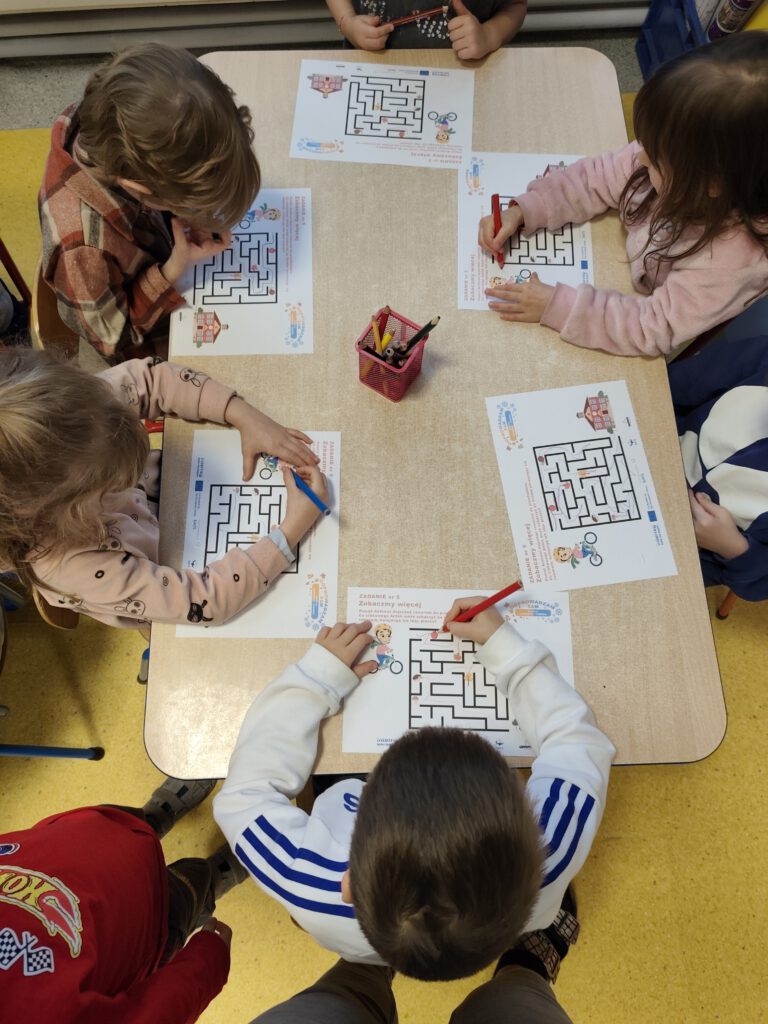
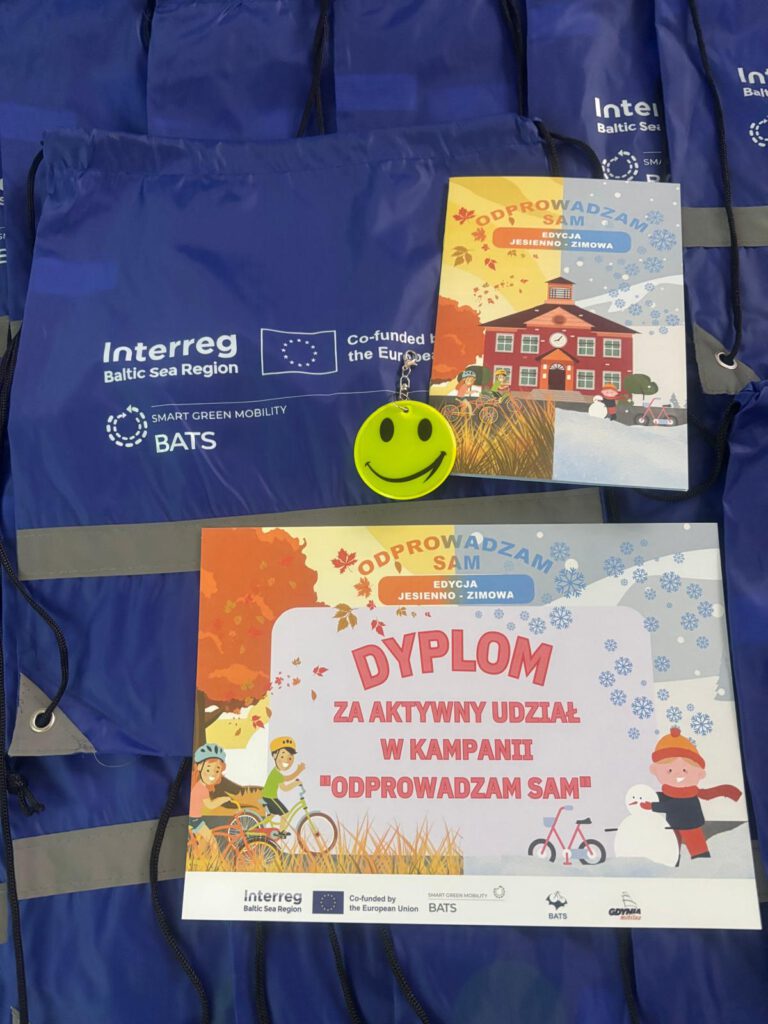
Gdynia is an experienced campaigner for active mobility, and for BATS it adapted its usual approach to the autumn and winter months, when many parents drive their children to kindergartens and schools (adding to congestion and pollution around schools and shaping car-dependent habits early in life). Running between October and mid-December each year, the campaign reached 48 pre-schools and 20 schools over two years. Activities were tailored to each age group: kindergartners took part in visual, practical actions (such as adding a sticker to a poster each time they arrived by an active mode), schoolchildren received creative traffic education for dark and cold conditions alongside gamified challenges. The municipality also ran one-day events to frame walking and cycling as the normal way to get around, and made cargo bikes available to borrow free of charge.
“Kids can be very persistent, successfully convincing parents to switch transport modes to reach their school”
-Pawel Kimel, City of Gdynia
Results & Lessons. Gdynia ran a comparative study, measuring how children reached school before and after the campaign. The baseline survey showed that a majority of schoolchildren lived within feasible walking or cycling distance. After the campaign’s implementation, walking rose while car use increased only slightly, which the municipality counted as a success for a first winter campaign. However, cycling did dip over the colder months.
A recurring pattern worth mentioning was the “last-mile” habit of combining the car with a short walk, hinting at a parent-child compromise between wanting to walk to school while still opting for the comfort of a car for most of the trip. This showed a promising start to changing habits, but a general resistance to a full shift towards active mobility by the parents.
Parents and teachers found the campaign necessary and valuable, but asked that future editions fit better around families’ real-life routines, communicate more clearly, and offer ready-made teaching materials and workshops that involve both children and parents.

Interactive map showing pilot locations. Use the arrow keys to move the map view and the zoom controls to zoom in or out. Press the Tab key to navigate between markers. Press Enter or click a marker to view pilot project details.
Additional links
details
-
Homepage
-
Project typeCore Project

-
ImplementationNovember 2023 - October 2026
-
StatusOngoing
-
Contribution to EUSBSRPolicy Area Transport

-
Target groups
- Infrastructure and public service provider
- Local public authority
- Regional public authority
-
Social media
-
Additional links
-
Tags