




09 October 2023
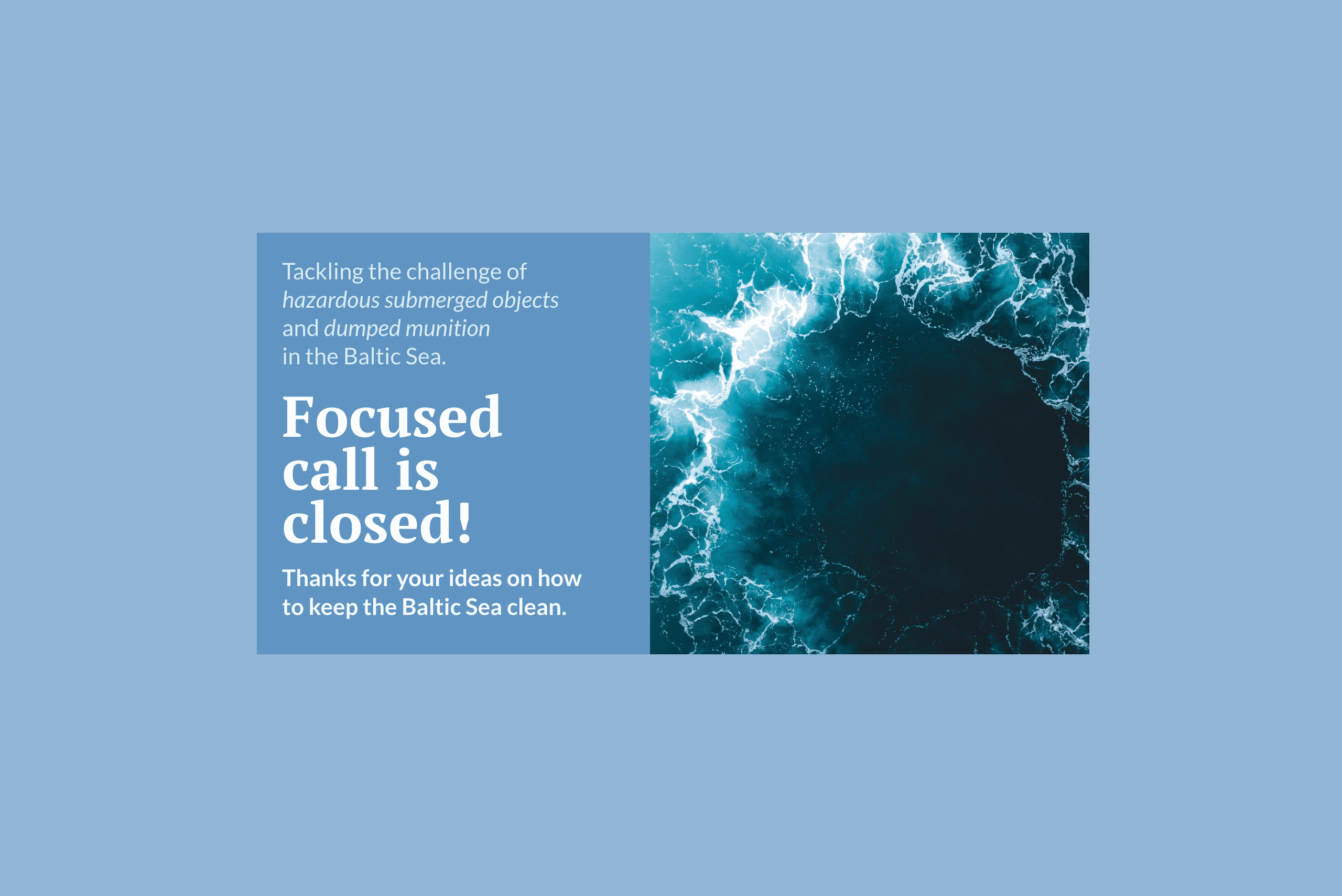
Call for projects tackling dumped munition closed.
By Viktoria Nilsson
On 5 October, the Interreg Baltic Sea Region Programme closed the focused call for core project applications on how authorities can better handle hazardous submerged objects and dumped munitions in the Baltic Sea.
One application received
By the deadline, the MA/JS received one project application which gathered 17 partners from all Programme countries. The application is currently undergoing an admissibility check and quality assessment. The Monitoring Committee of the Programme will decide on its selection in the beginning of December.
What is the call about?
Due to the urgency of environmental risks from the dumped objects on the bottom of the Baltic Sea, the Interreg Baltic Sea Region Programme conducted a focused call for core project applications under the Programme priority water-smart societies. The aim was to collect ideas for tackling hazardous submerged objects and dumped munitions. In the call, the Programme especially encouraged the national and regional authorities from the Programme countries to connect, share expertise and jointly generate smart ideas.
Some Interreg projects addressed the topic of dumped munitions even before. Do not miss out to check the previously developed solutions by e.g. DAIMON, DAIMON 2, and CHEMSEA.
#DidYouKnow
Core projects are the Programme’s main tool to deliver change in the Baltic Sea region. How? Partners in projects prepare, pilot, and transfer practical and durable solutions to the challenges in the region. This is how they can respond to core needs in the region to make it green and resilient.
Check out!
More recent news
Continuing the dialogue with the EUSBSR on future transnational cooperation
What should Interreg Baltic Sea Region, as a transnational cooperation programme, address after 2027? As work on the future Programme progresses, dialogue with regional stakeholders helps us further develop the cooperation needs identified by the Programme countries. The EUSBSR is of particular importance in this process, bringing the macro-regional strategic perspective and helping to ensure that future cooperation needs are firmly rooted in the updated EUSBSR Action Plan and its implementation. The opening of the Danish EUSBSR Presidency provided a timely opportunity to bring this perspective into the ongoing Programme development dialogue.