




Day of Life Sciences, Biotechnology, and Bioeconomy
Project: DIVERSE_GENE_WATCH
Physical Meeting
13. May 2026
11:30 - 22:00 (EEST)
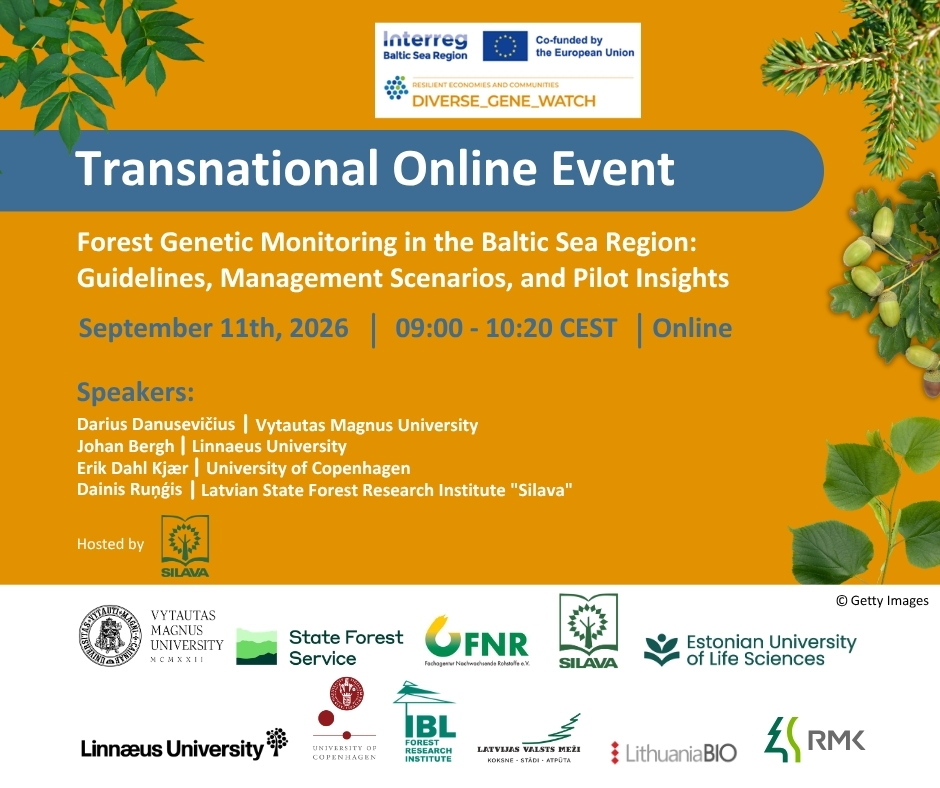
DIVERSE_GENE_WATCH is organising a transnational online event to share emerging knowledge and practical solutions for Forest Genetic Monitoring in the Baltic Sea Region.
The event, hosted project partner Latvian State Forest Research Institute "Silava", will present the project’s progress in developing and transferring Forest Genetic Monitoring approaches, with a focus on guidelines, forest management scenarios, and insights from piloting activities across participating countries. It will provide an opportunity to learn how genetic diversity can be monitored and considered in forest management planning, supporting long-term forest adaptability and resilience.
The session will bring together experts from the DIVERSE_GENE_WATCH consortium to introduce the project, present approaches for enriching forest genetic diversity, share Forest Genetic Monitoring guidelines for the Baltic Sea Region, and highlight practical experiences from pilot implementation.
The event is open for those working in forest genetic resources, forest monitoring, biodiversity conservation, forest management, research, policy, and related fields.
Recording of the event is available on youtube: Forest Genetic Monitoring in the Baltic Sea Region: Guidelines, Management Scenarios, and Piloting
Project: DIVERSE_GENE_WATCH
Physical Meeting
13. May 2026
11:30 - 22:00 (EEST)
Project: DIVERSE_GENE_WATCH
Virtual Meeting
27. November 2025
09:00 - 12:30 (CET)
Project: DIVERSE_GENE_WATCH
Virtual Meeting
02. October 2025
09:00 - 12:00 (CEST)