



Environmental Impact Assessment in ChemClimCircle Procurement
Project: ChemClimCircle-2
Virtual Meeting
16. November 2026
13:00 - 14:30 (CET)
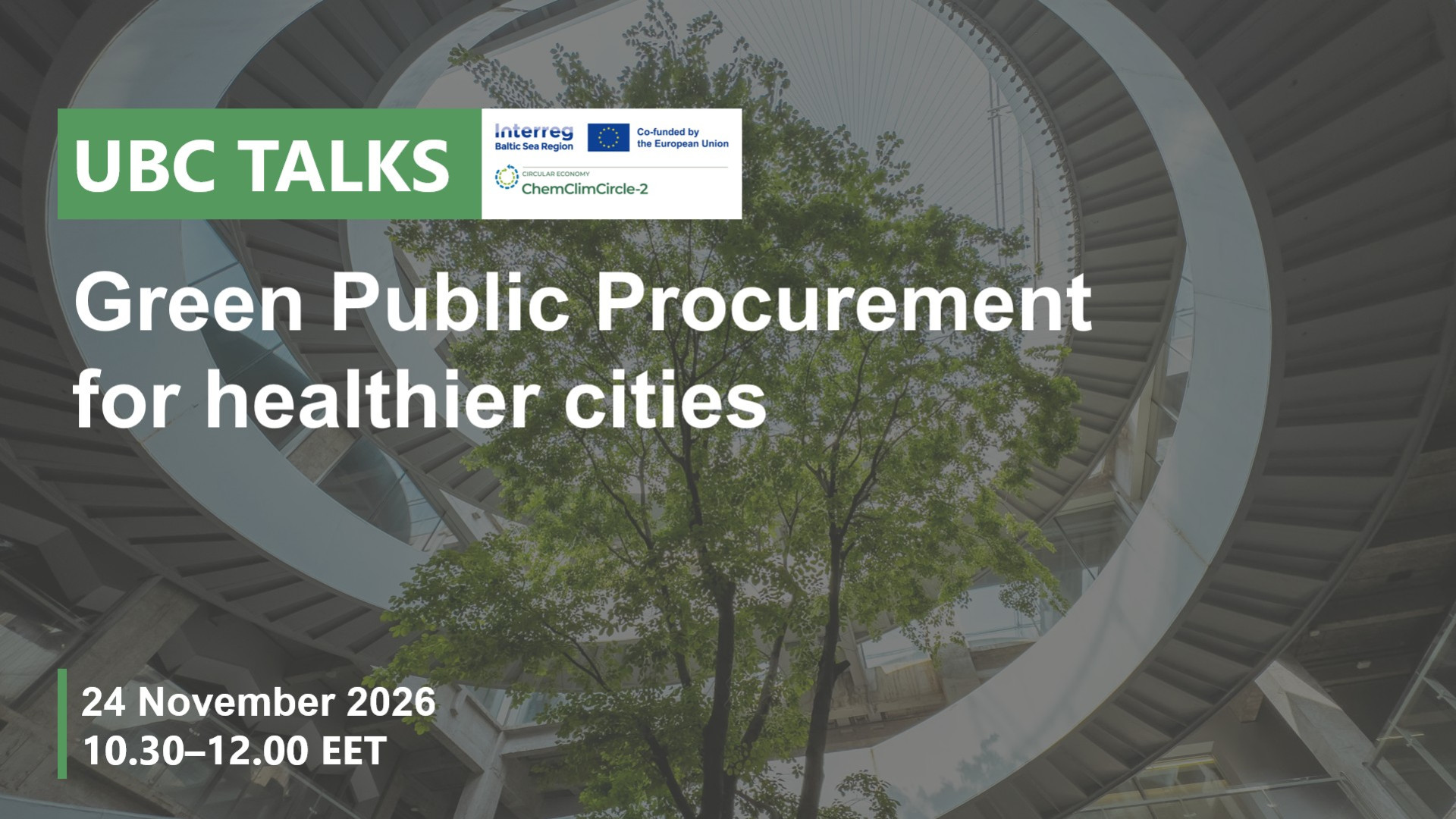
How can cities use public procurement to drive the green transition?
Every year, cities make purchasing decisions that shape markets, public services and the places where people live, work and spend time. Green public procurement can be much more than choosing products with a lower environmental footprint — it can become a practical tool for creating healthier cities, reducing harmful chemicals, supporting circular solutions and cutting climate impacts.
Join the UBC Talks webinar to explore how public procurement can drive change beyond traditional environmental criteria. Discover the ChemClimCircle approach, hear real-life examples from cities, and learn about practical tools that help integrate chemicals, circularity, and climate considerations into everyday procurement decisions.
Don't miss this opportunity to gain fresh insights, learn from pioneering cities and explore how procurement can deliver change beyond traditional green criteria!
More information: https://www.ubc-sustainable.net/events/ubc-talks-about-public-procurement
Project: ChemClimCircle-2
Virtual Meeting
16. November 2026
13:00 - 14:30 (CET)
Project: ChemClimCircle-2
Physical Meeting
02. - 03. December 2026
09:00 - 15:00 (EET)
Project: ChemClimCircle-2
Physical Meeting
03. - 04. December 2026
13:00 - 18:00 (EET)
Project: ChemClimCircle-2
Virtual Meeting
19. October 2026
13:00 - 14:30 (CET)
Project: ChemClimCircle-2
Virtual Meeting
21. September 2026
13:00 - 14:30 (CET)
Project: ChemClimCircle-2
Virtual Meeting
15. June 2026
13:00 - 14:30 (CET)