




Besides technology, energy communities need trust, time and a reason to act
05 October 2026
What makes people decide to produce and share energy together? Technology and financial savings matter, but they are only part of the answer. Building an energy community also requires trust, time, and a reason for people to act together.
These questions were at the center of the StartSun final conference’s panel discussion “Challenges and solutions for stronger collaboration”, where Xavier Simón from the University of Vigo, Kirils Gončarovs from Tartu Regional Energy Agency and Uppsala University, and Maie Kiisel from the University of Tartu discussed what helps energy communities take shape in practice and what can prevent them from moving forward.
Throughout the discussion, one message kept returning: an energy community is not created simply by installing solar panels or designing a financially attractive model. Before people can share energy, they need to see why cooperation makes sense and feel that they can rely on the people and institutions involved.
A community needs a reason to act together
Kirils Gončarovs pointed out that a successful energy community often needs a purpose that goes beyond pure economic benefits. Financial savings can motivate people, but shared environmental values, local interests or a desire to achieve something together can provide a stronger foundation for long-term cooperation.
Maie Kiisel added that people also need to feel that they are capable of achieving something together. Trust, complementary skills and a sense of control over the process all play a role. But trust cannot simply be created as a separate project of activity. If it is not there yet, starting with a smaller common task may be more realistic than immediately asking people to commit to a complex energy initiative.
Trust also exists on several levels. Gončarovs noted that people may trust their neighbors while having little confidence in their municipality or other institutions. That can be enough to slow down or stop collective action. Building an energy community therefore means working not only with relationships between residents, but also with the relationship between communities and the organizations around them.
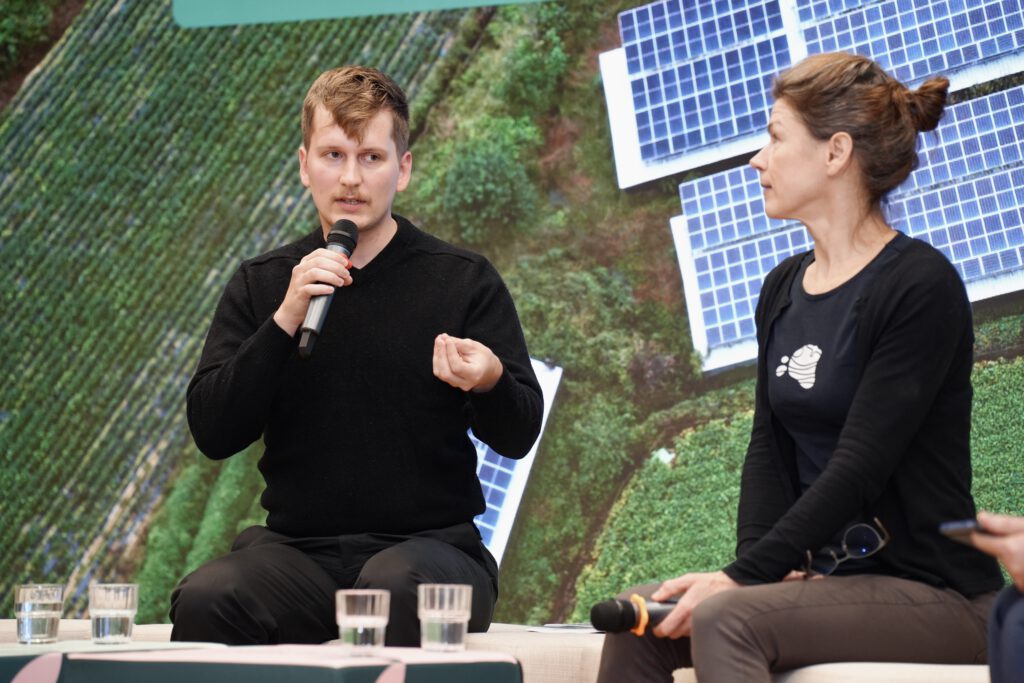
Kirils Gončarovs and Maie Kiisel. Photos by Sander Pärn and Laura Killak (EMÜ)
Do not arrive with a suitcase full of solutions
For Xavier Simón, one of the most important ingredients is time.
Experts may understand the technology, but that does not mean they already understand the community. Simón warned against arriving in a local area with what he described as a “suitcase full of solutions” and then looking for problems that fit them.
Instead, the process has to begin with local needs and with language that people understand. Building confidence can take years rather than months, particularly when the concept itself is unfamiliar. Seeing examples from similar communities can help, because an idea becomes easier to trust when people can see that it has already worked somewhere else.
This also changes the role of experts. Their task is not only to explain how an energy system works, but to listen, translate technical ideas into everyday terms and allow enough time for people to consider whether the model fits their community.
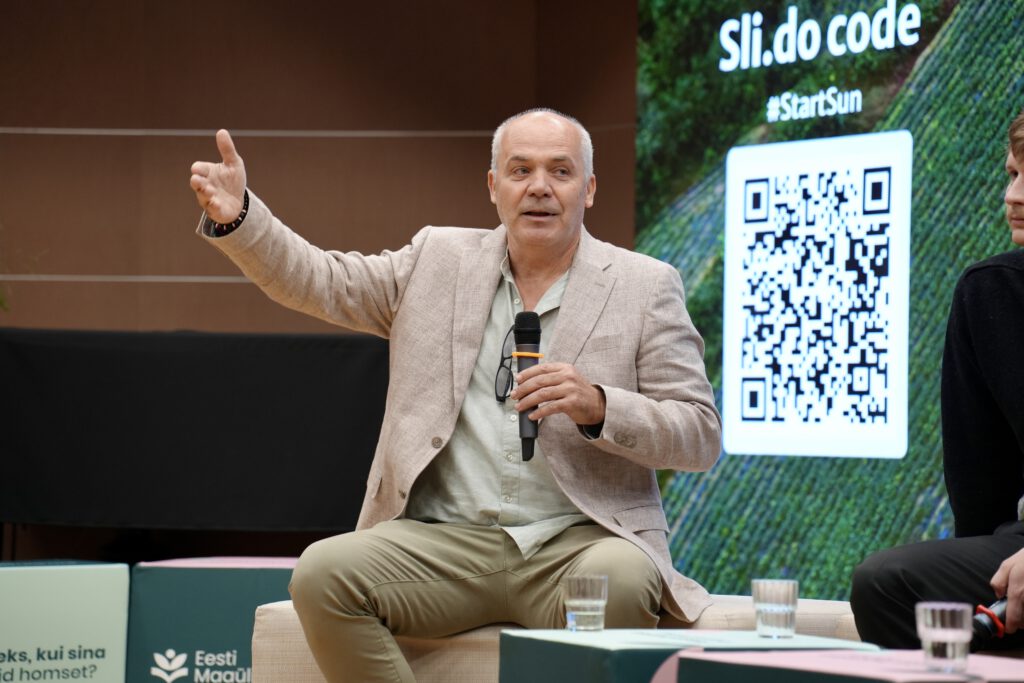
Xavier Simón. Photos by Sander Pärn and Laura Killak (EMÜ)
Bottom-up does not mean without leadership
Energy communities are often described as bottom-up initiatives, but the panel discussion showed that someone still needs to initiate and support the process.
Gončarovs noted that municipalities often have an important role because they are close to residents and understand many of the challenges a community faces. However, simply hiring a project manager for a limited period may not be enough. The person leading the process should ideally already know the local community and have relationships there.
Simón also highlighted the potential role of local action groups. By bringing together municipalities, businesses, organizations and residents, they already provide a setting where different local interests can meet and where new forms of cooperation can begin.
The discussion therefore suggested that bottom-up action and institutional support should not be seen as opposites. A community may provide motivation and local knowledge, while municipalities and other organizations can help remove practical barriers and keep the process moving.
Participation must fit people’s real lives
Another challenge is making sure that energy communities are not limited to people who already have enough money, time, and knowledge to participate.
Gončarovs questioned the idea of describing some residents simply as “less active”. People with lower incomes may also have less free time and fewer opportunities to attend meetings or take part in voluntary activities. Sometimes even practical details, such as the time of a meeting, can determine who is able to participate.
Kiisel added that not everyone wants to become an active community organizer, and that should not automatically be seen as a problem. Some people expect municipalities or service providers to manage complex systems well and prefer to participate without taking responsibility for organizing them. In some situations, removing the organizational burden may actually make participation possible for more people.
This is particularly important if energy communities are expected to make the energy transition more inclusive. A model that works only for people who have the resources to invest money, attend meetings, and understand a complicated energy system of risks leaving others behind.
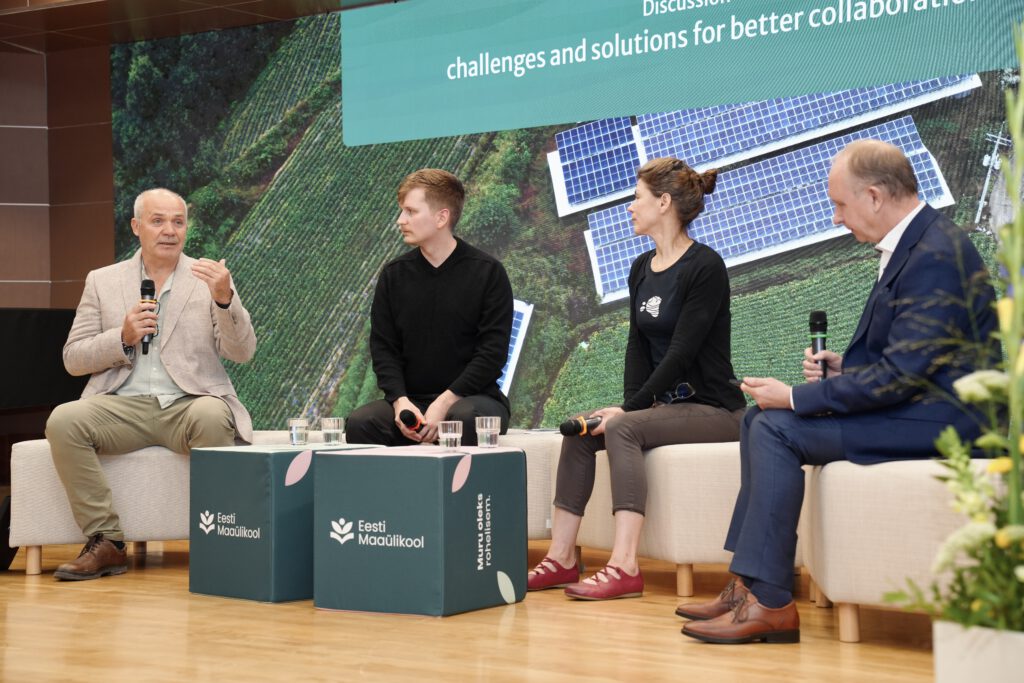
Panelists of the StartSun final conference’s panel discussion. Photos by Sander Pärn and Laura Killak (EMÜ)
Technology may be ready before the community is
The discussion returned repeatedly to the same conclusion from different directions.
The technology for local renewable energy already exists. Electricity use can be measured, solar panels can be installed, and different models for sharing energy can be developed. But none of these automatically creates a functioning energy community.
People first need to recognize a shared need, understand what is being proposed, and see a reason to cooperate. They need time to build confidence in both ideas and each other. And they need people and organizations around them who can support the process without taking it over.
The challenge of building an energy community is therefore not only technical. In many cases, the harder part is creating conditions in which people are willing and able to act together.
Want to learn more?
This panel discussion was part of the Interreg-funded StartSun final conference “From Concept to Community: Launching Solar Energy Communities”, which took place on 22 September 2026 at the Estonian University of Life Sciences. Access the PDF files and full recordings of each presentation here.

Additional links
details
-
Homepage
-
Project typeCore Project
-
ImplementationNovember 2023 - October 2026
-
StatusOngoing
-
Contribution to EUSBSRPolicy Area Energy

-
Target groups
- Interest group
- Local public authority
- National public authority
- Small and medium enterprise
-
Social media
-
Additional links
-
Tags