




Reuse in Focus: Change(K)now! at Community Events in Hamburg
05 October 2026
How can we prevent waste in everyday life and promote a more conscious use of resources? In September 2026, as part of the Interreg project Change(K)now!, Baltic Environmental Forum Germany took part in three very different community events in Hamburg to engage directly with citizens about reusable packaging and alternatives to single-use products. From a vegan barbecue to a youth camp and a public clean-up, each event offered a chance to explore how reuse can become part of everyday life.
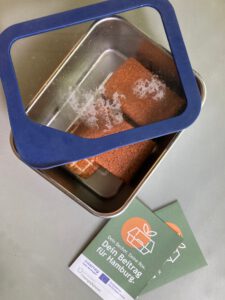
The month began on 5 September with a vegan barbecue at KulturKlinker Barmbek, where plant-based food was not the only topic on the agenda. The event also provided an opportunity to explore how shared meals and community events can work with less single-use packaging. BEF Germany took part with an information stand, inviting visitors to learn more about reusable solutions and ways to prevent packaging waste. Different reusable food containers provided practical examples of how reusable solutions can be used when shopping for, transporting and storing food. Visitors could also take part in reuse-themed games and learn more about reuse and waste prevention in an interactive way. The informal setting created opportunities for direct conversations, questions and the exchange of personal experiences about which reusable solutions work well in everyday life.
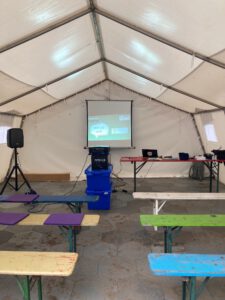
A week later, from 13 September, the focus moved to young people at the annual Coastal Cleanup Camp organised by NAJU Hamburg, which brings together participants aged 16–27 to explore environmental and marine protection. The three-day camp has been held for many years at ElbeCamp on the banks of the Elbe in Hamburg-Wittenbergen. During a dedicated workshop, introduced with a screening of the Change(K)now! image film, participants explored the role of reuse in preventing waste and discussed practical ways of integrating reusable solutions into everyday life. Using concrete examples from the project, they discussed where single-use packaging can be avoided in everyday situations and what conditions are needed to make reusable solutions convenient and easy to use. The connection to the Coastal Cleanup Camp was a natural one: collecting litter provides a direct impression of how much waste ends up in our environment, while also raising the question of how this waste can be prevented in the first place.
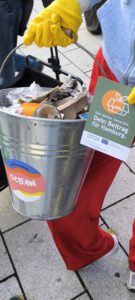
The same connection was at the heart of the last event, a public clean-up organised by Oclean on 16 September. Oclean regularly organises public clean-ups that bring together people who want to contribute to a cleaner and more liveable city. By collecting litter together, participants get a direct impression of the amount of waste accumulating in public spaces – and of the importance of preventing waste in the first place. BEF Germany distributed information materials on reusable solutions and talked to participants about reusable food packaging, single-use waste and practical ways to reduce packaging waste in everyday life. The conversations also addressed how reuse can work in practice and why accessible and convenient reuse systems are important for making reusable solutions part of everyday routines.
The three events demonstrated how different forms of environmental engagement can complement each other: while collecting litter makes the waste problem immediately visible, conversations about reuse can shift the focus towards practical solutions and waste prevention. Waste prevention starts before disposal – with the choice to use reusable rather than single-use products and packaging.
Change(K)now! promotes the transition from single-use to reusable and circular systems in food delivery. Alongside political and structural changes, direct engagement with citizens plays an important role: reusable solutions are more likely to become part of everyday routines when they are accessible, convenient and easy to understand. Such low-threshold, face-to-face activities are an important part of the Change(K)now! campaign and help make reusable solutions more visible and accessible in everyday life.

Additional links
details
-
Homepage
-
Project typeCore Project

-
ImplementationNovember 2023 - October 2026
-
StatusOngoing
-
Contribution to EUSBSRPolicy Area Innovation

-
Target groups
- Business support organisation
- Interest group
- Local public authority
- Regional public authority
- Small and medium enterprise
-
Social media
-
Additional links
-
Tags