




APRIORA Final Conference in Helsinki: From pilot results to practical tools for cleaner waters
30 September 2026
On 14–15 September 2026, project partners, environmental authorities, water utilities and researchers from across the Baltic Sea Region gathered in Helsinki for the APRIORA Final Conference. After three years of work on pharmaceutical pollution, they took stock of the project’s results and explored how these can inform the next steps in water protection.
The conference was organised back-to-back with the annual meeting of the HELCOM Expert Group on Hazardous Substances (EGHaz). This created a valuable opportunity to present APRIORA’s approach to national experts from across the Baltic Sea Region and to connect them with ongoing regional efforts on hazardous substances.
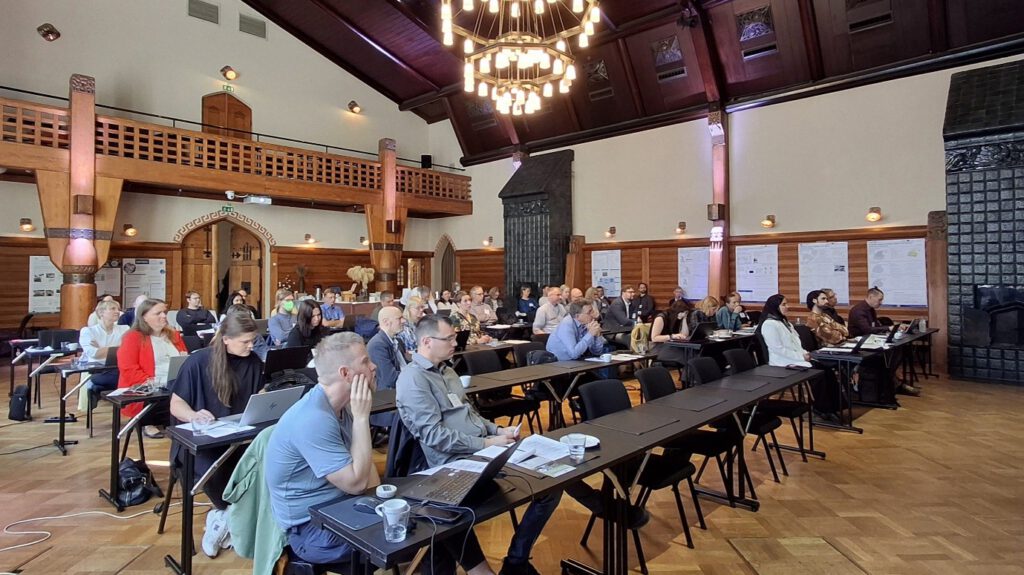
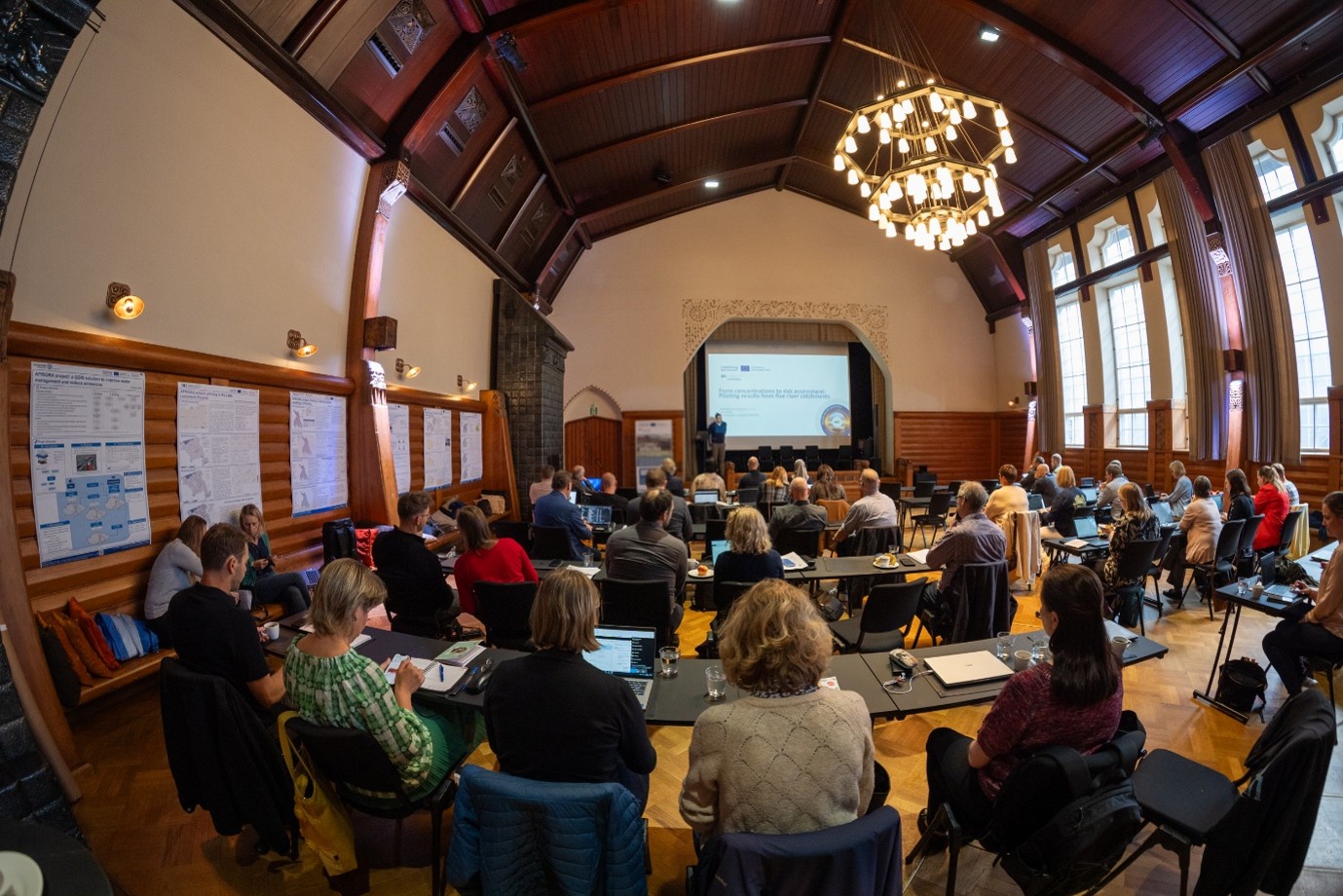
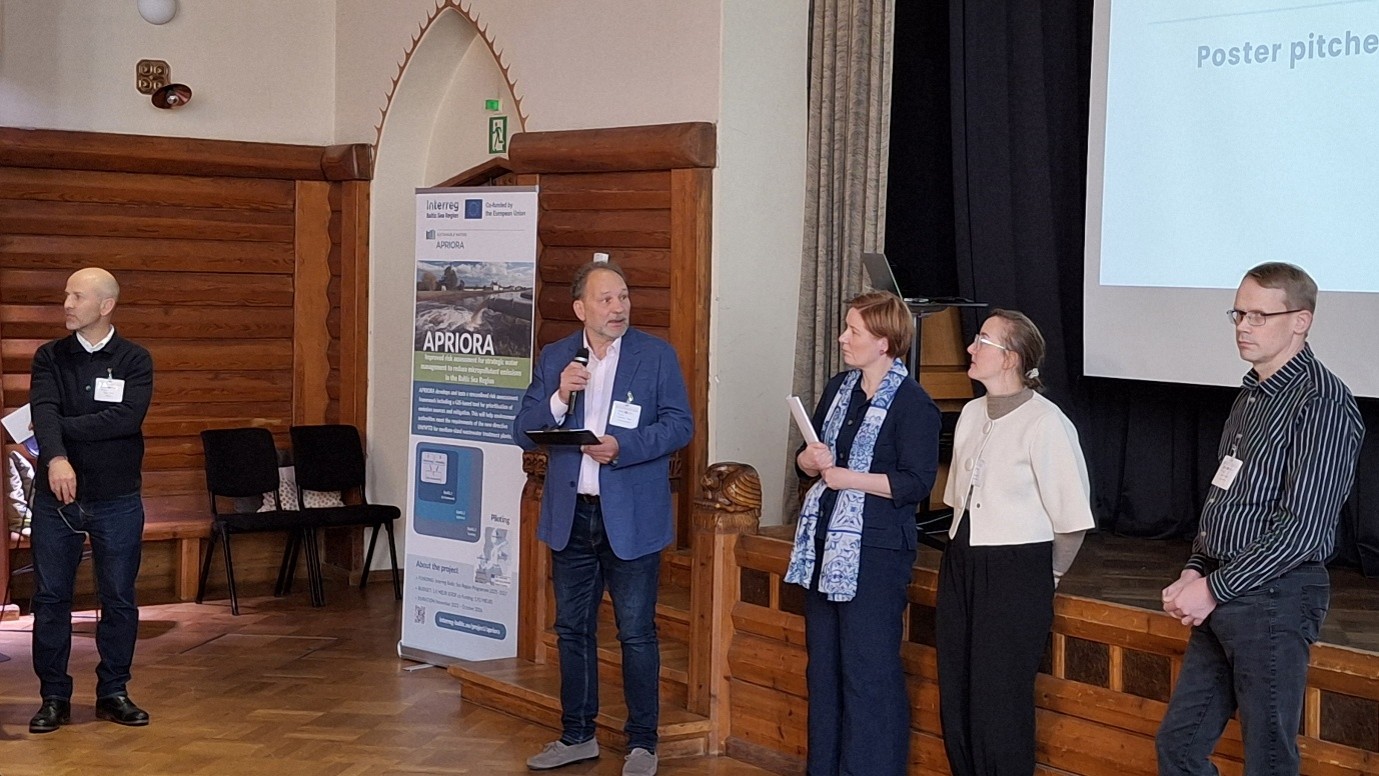
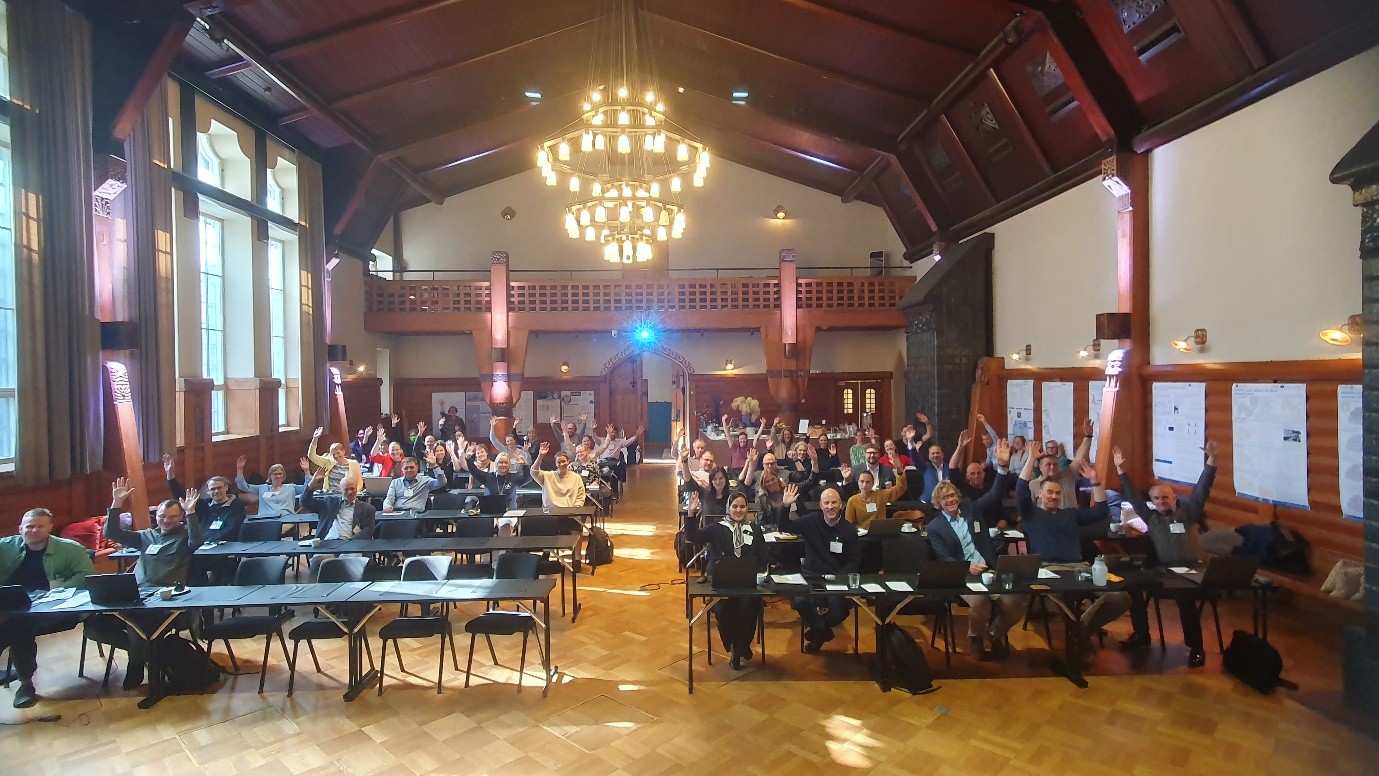
Attentive audience during the APRIORA Final Conference. Photo: Eija Järvinen
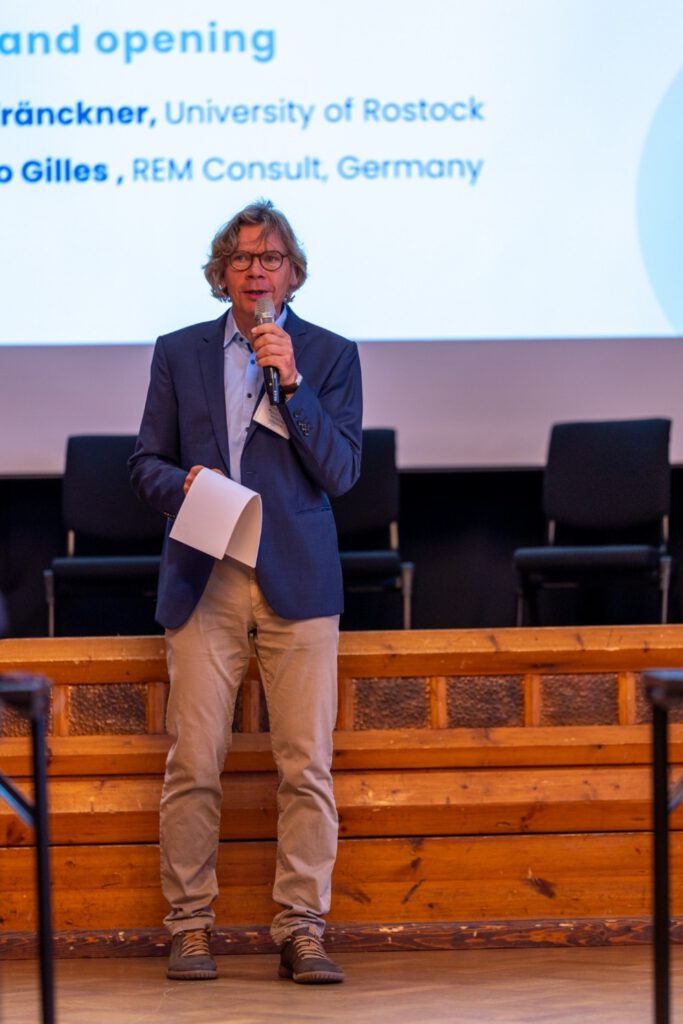
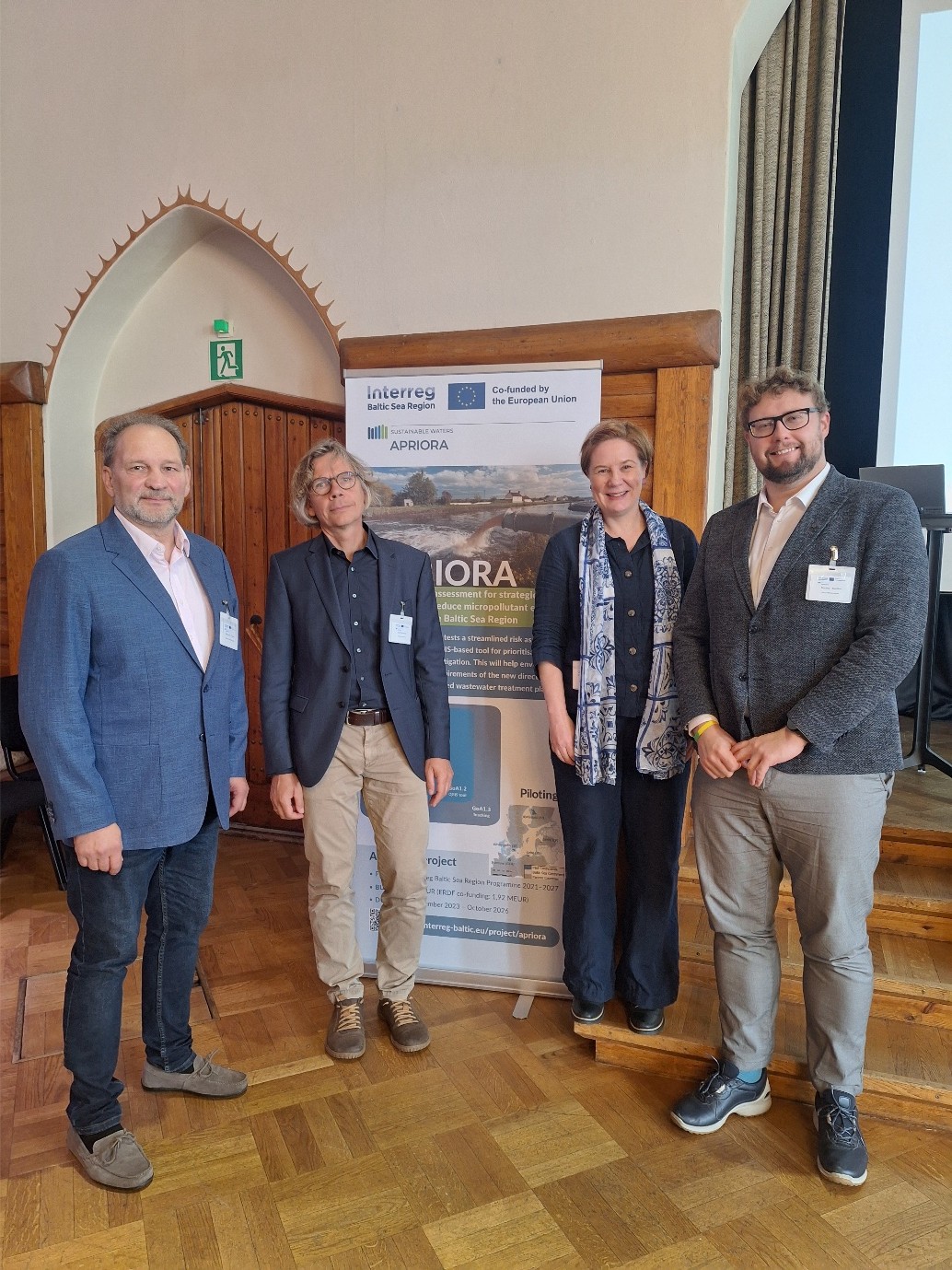
Project leader Jens Tränckner opening the conference. Photo: Olli Leino
A directive that calls for smart decisions
The revised EU Urban Wastewater Treatment Directive sets new requirements for removing micropollutants from wastewater and is expected to drive substantial investment in advanced (quaternary) treatment in the coming years. The central question of the conference was how to direct these investments where they can deliver the greatest benefit for the environment. APRIORA addresses this challenge by looking beyond individual treatment plants to entire river basins, helping authorities and water utilities to prioritise measures based on risk.
Environmental authorities and water utilities opened the discussions with perspectives from those who will share responsibility for putting the directive into practice. Their contributions set the scene for the rest of the programme and highlighted the need for reliable, harmonised decision support.
What APRIORA has delivered
Over two days, the partners presented the project’s results and lessons learned. Participants heard how monitoring data and modelling can be combined to build a clearer picture of pharmaceutical pollution and its associated risks, and how these approaches were tested in five river catchments around the Baltic Sea Region. The programme also explored risks associated with antimicrobial resistance, challenges in securing robust input data, and experience from scaling up pharmaceutical monitoring from pilot studies to the national level.
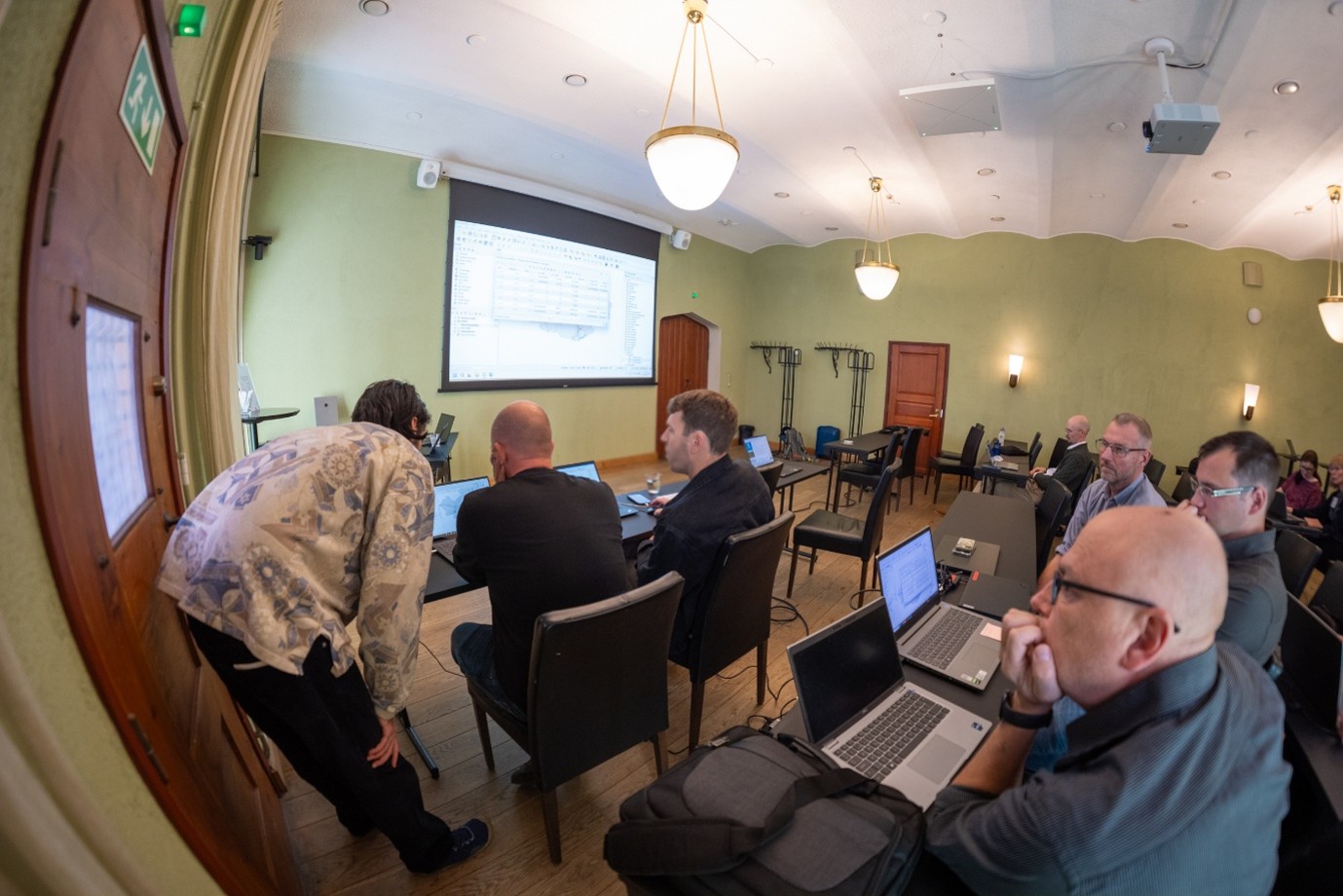
The APRIORA QGIS plugin brings these insights together in an open-source decision-support tool. It helps users model and map risks at catchment scale and explore the potential effects of upgrading treatment plants before investment decisions are made. During an afternoon hands-on workshop, participants had the chance to work with the tool themselves and to share their feedback on its practical use.
The plugin is freely available in the official QGIS repository, together with a step-by-step user manual. More information about its release and first applications can be found in this news article and on the APRIORA project page.
Key takeaways from three years of APRIORA
River-basin scale matters. Water-quality and mass-flow modelling can reveal where measures are most needed and support more targeted investment in advanced wastewater treatment.
Risk-based approaches are essential. Pharmaceutical residues and antimicrobial resistance call for an integrated understanding of sources, pathways and risks, alongside potential mitigation measures.
Solutions need to be context-specific. Piloting across five river catchments showed that approaches and priorities vary by region. The pilots also generated transferable lessons for the wider Baltic Sea Region.
Treatment is only part of the solution. Advanced end-of-pipe treatment should sit within a comprehensive strategy that also tackles hazardous substances upstream through targeted source-control measures.
Digital tools can support implementation. The hands-on session with the APRIORA QGIS plugin demonstrated how data and modelling can be translated into practical decision support for water management.
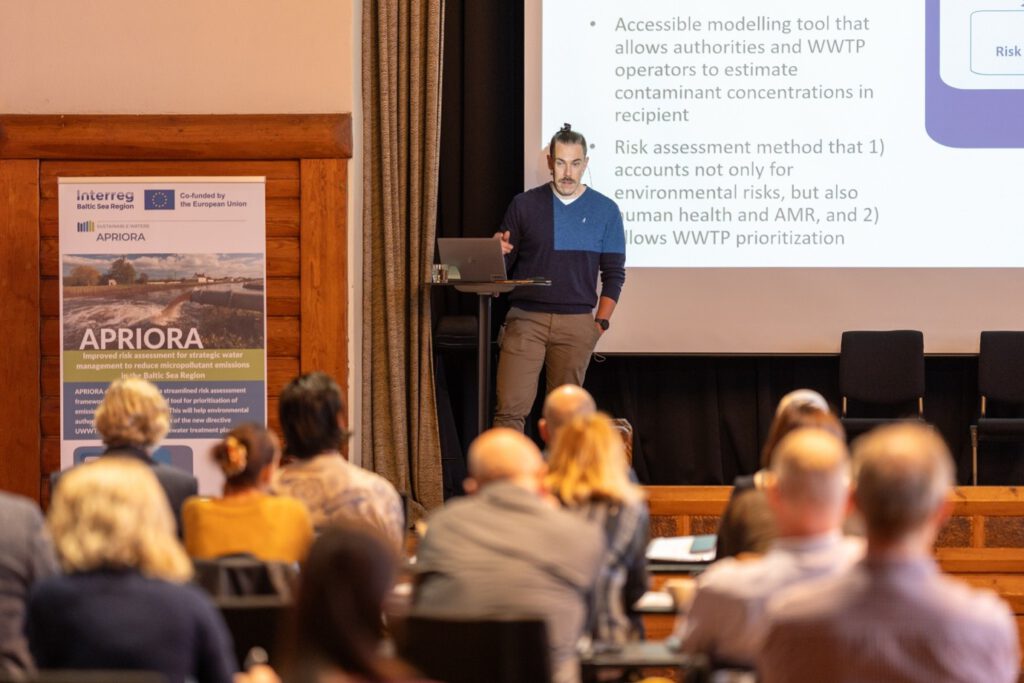
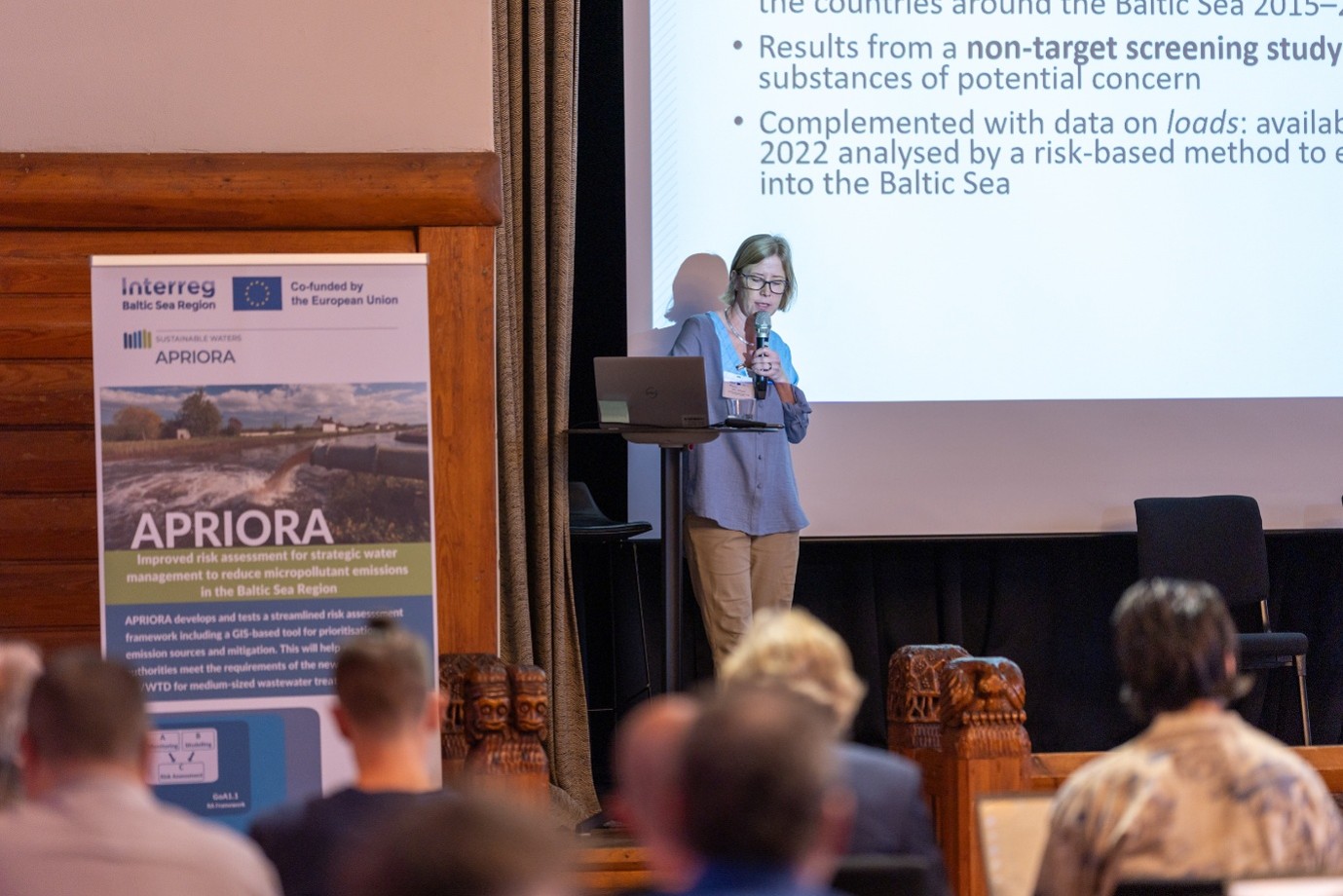
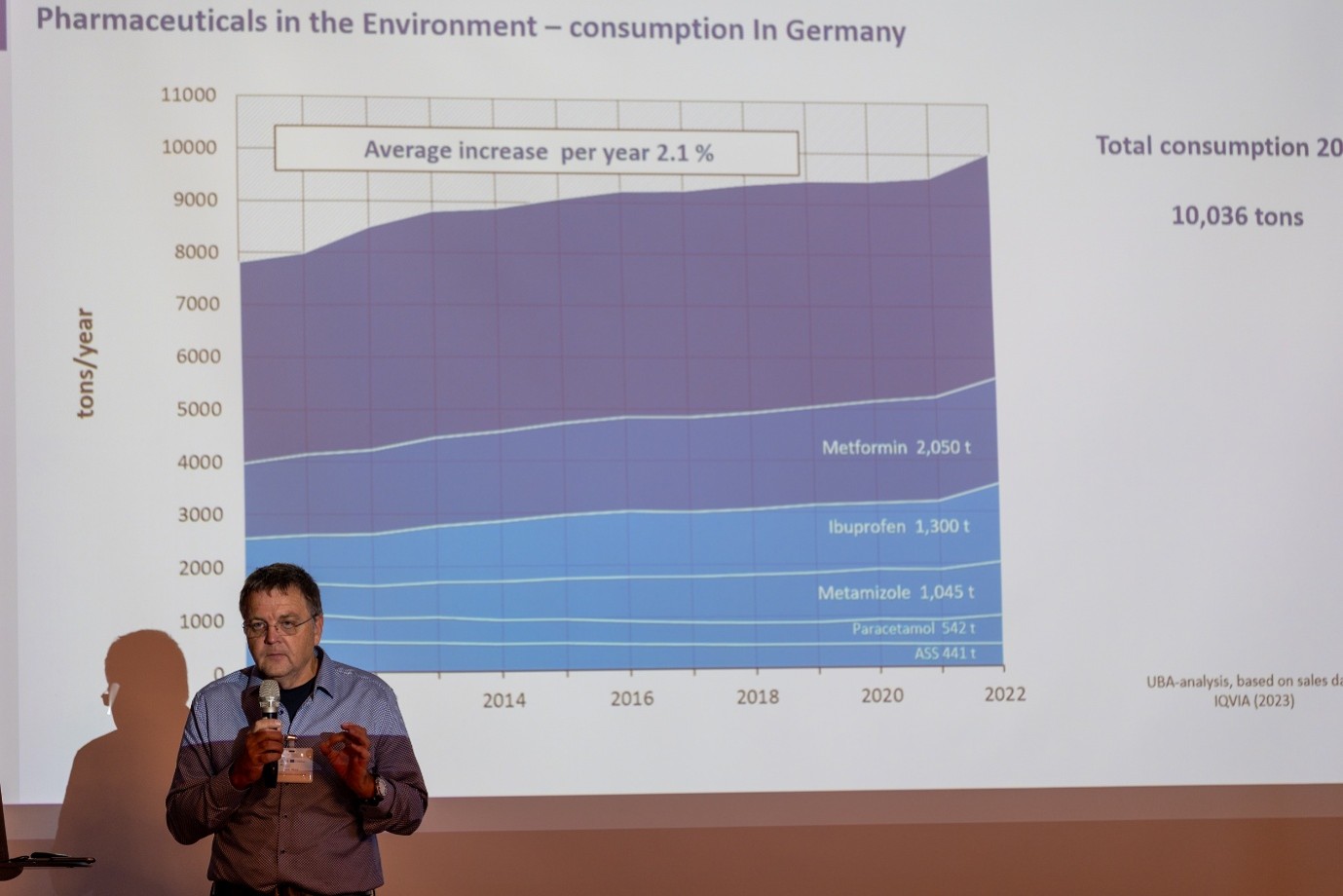
Lauri Äystö of the Finnish Environment Institute presenting pilot results from five river catchments. Photo: Olli Leino
Cost, financing and the bigger picture
A lively podium discussion with representatives of water utility associations and environmental agencies from several Baltic countries addressed how advanced treatment can be implemented in a cost-efficient and sustainable way. Participants broadly agreed that harmonised, evidence-based approaches and tools such as APRIORA can help. Financing end-of-pipe measures, however, remained one of the most debated issues.
Invited experts widened the discussion to consider mixtures of pharmaceuticals and other hazardous substances in the marine environment, and their effects on aquatic life. The message was clear: advanced wastewater treatment is an important part of the response, but must be embedded in a broader strategy that starts upstream with targeted measures at the source.
The HAZGONE platform, which connects knowledge and solutions on hazardous substances, was also introduced. APRIORA is already part of the HAZGONE community, helping ensure that the project’s knowledge and tools can continue to support regional cooperation beyond the project lifetime.
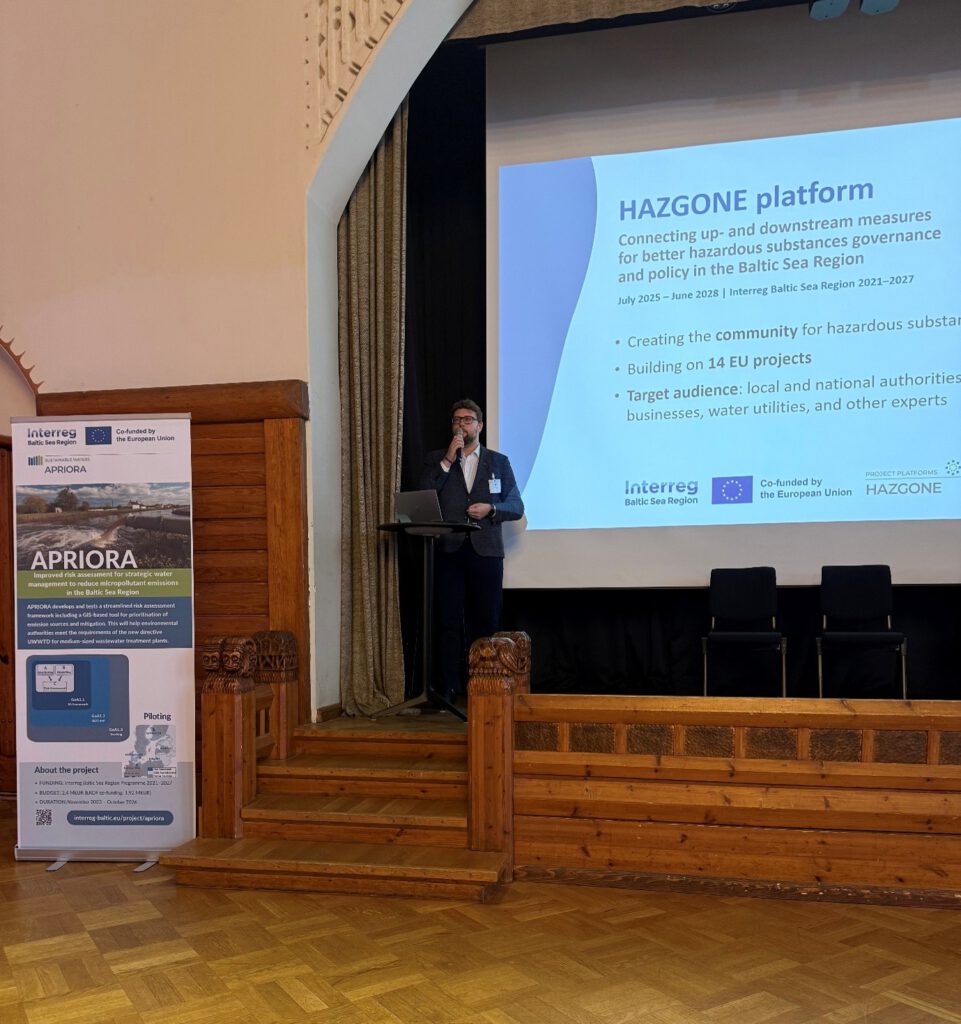
Markus Raudkivi of HELCOM presenting the HAZGONE platform on hazardous substances. Photo: Olli Leino
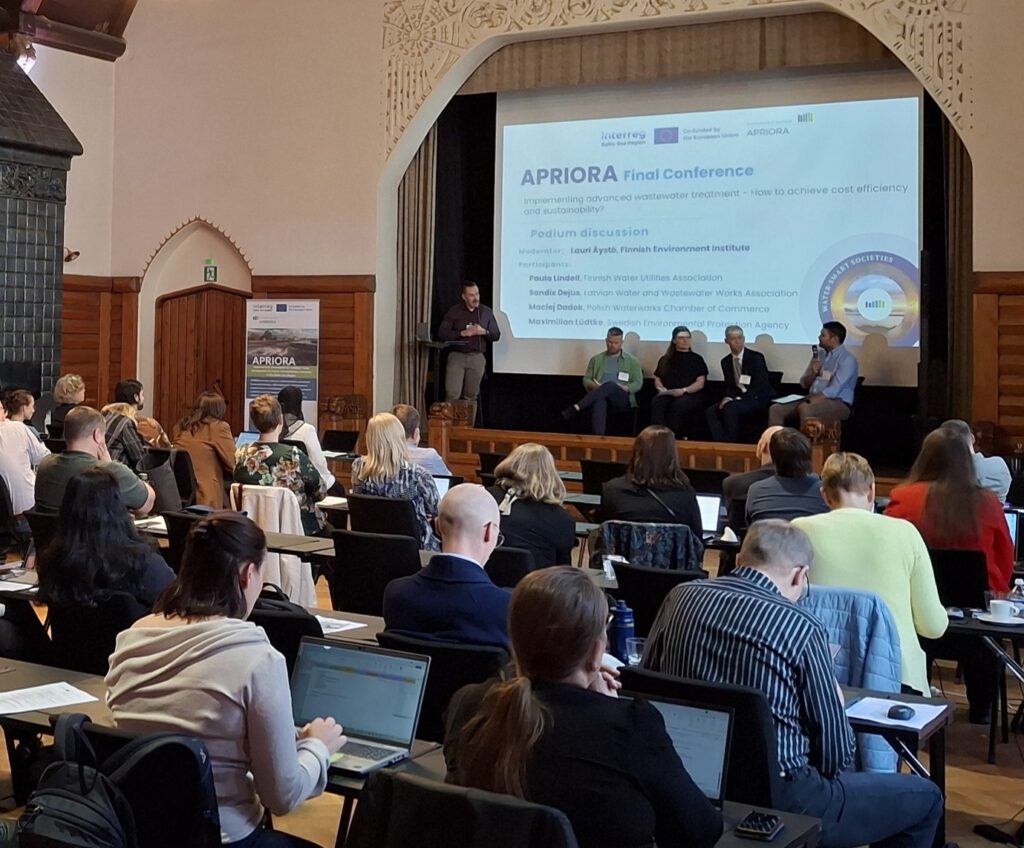
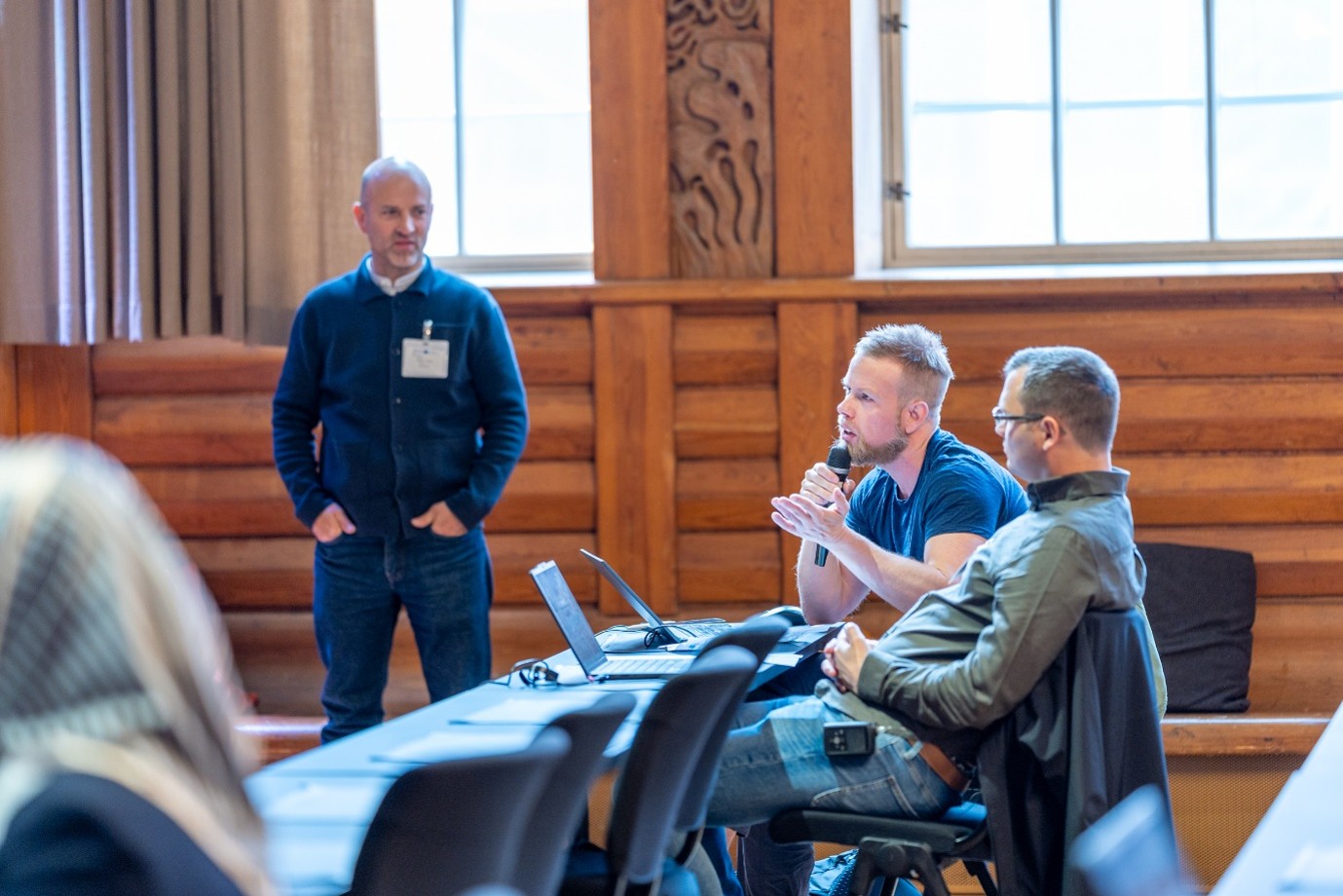
Podium discussion on advanced wastewater treatment. Photo: Eija Järvinen
Looking ahead
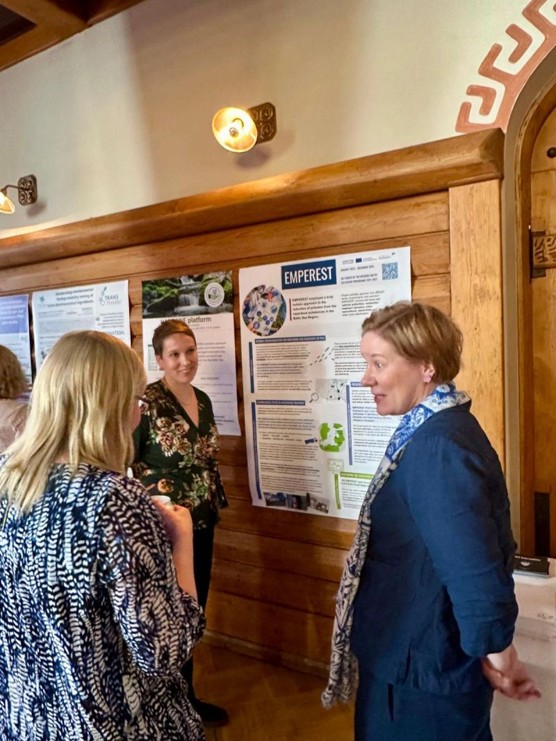
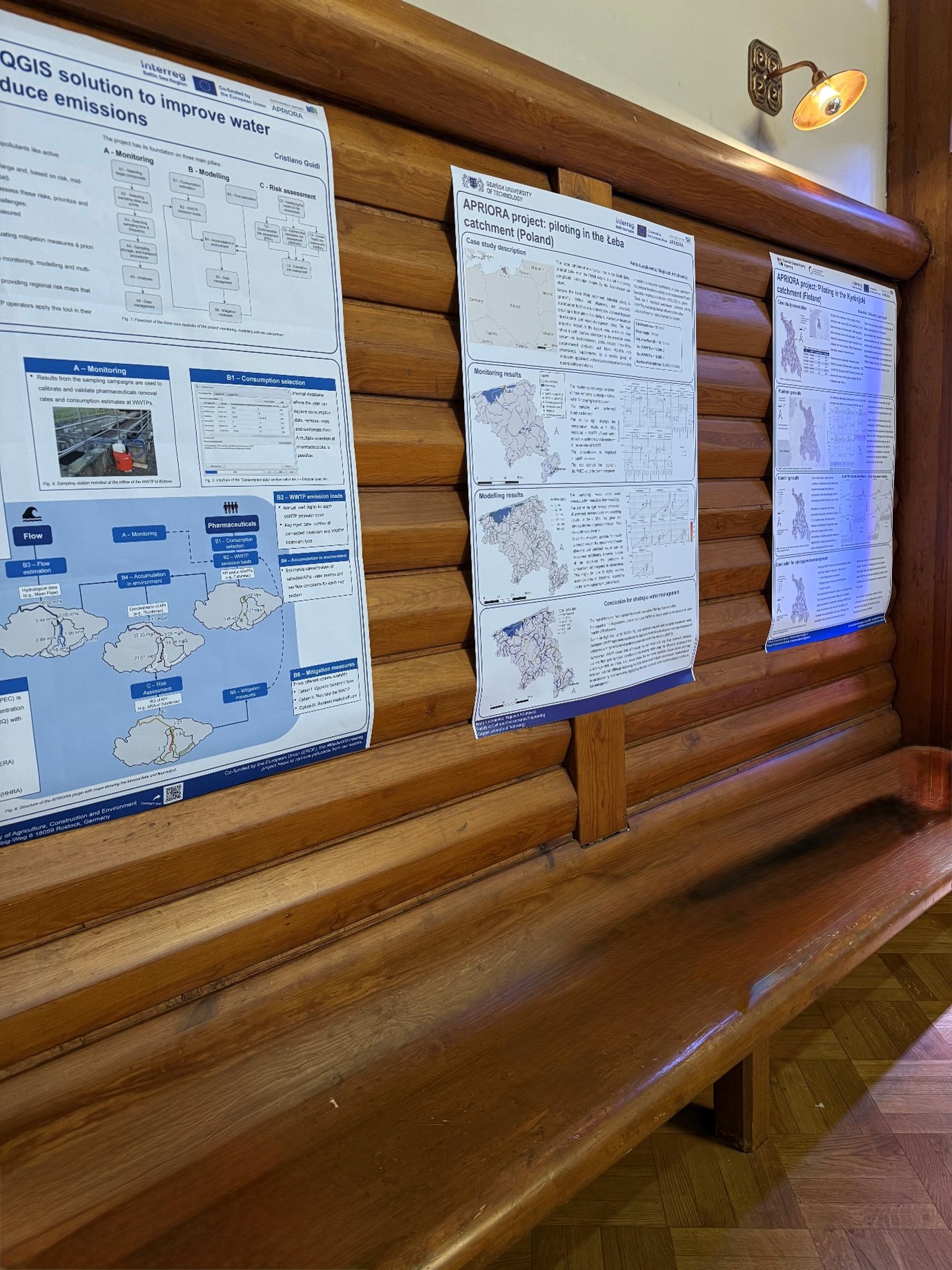
Poster sessions, lively discussion and networking made the conference a meeting place for people working to reduce micropollutant emissions to Baltic waters.
APRIORA partners thank the Interreg Baltic Sea Region programme, co-funded by the European Union, for its support; HELCOM for the opportunity to join forces with the EGHaz meeting; SYKE for hosting the event; REM Consult for moderating the event; and all speakers and participants who contributed to its success.
APRIORA’s results and tools remain available to support authorities and utilities as they implement the new directive across the Baltic Sea Region and beyond.

Additional links
details
-
Homepage
-
Project typeCore Project
-
ImplementationNovember 2023 - October 2026
-
StatusOngoing
-
Contribution to EUSBSRPolicy Area Hazards

-
Target groups
- Infrastructure and public service provider
- Sectoral agency
-
Social media
-
Additional links
-
Tags