




Baltic Active Mobility 2026 Brings Together 165 Participants from 16 Countries
30 September 2026
On 8-9 September 2026, the Baltic Active Mobility 2026: Shaping Future Cities conference brought active mobility practitioners, planners, policymakers, researchers and city representatives from across Europe to Gdynia, Poland, to exchange ideas, experiences and practical solutions for more sustainable and resilient urban mobility. Together with the UBC Sustainable Cities Commission meeting on 7 September, the event welcomed 165 participants from 70 organisations, representing 16 countries.
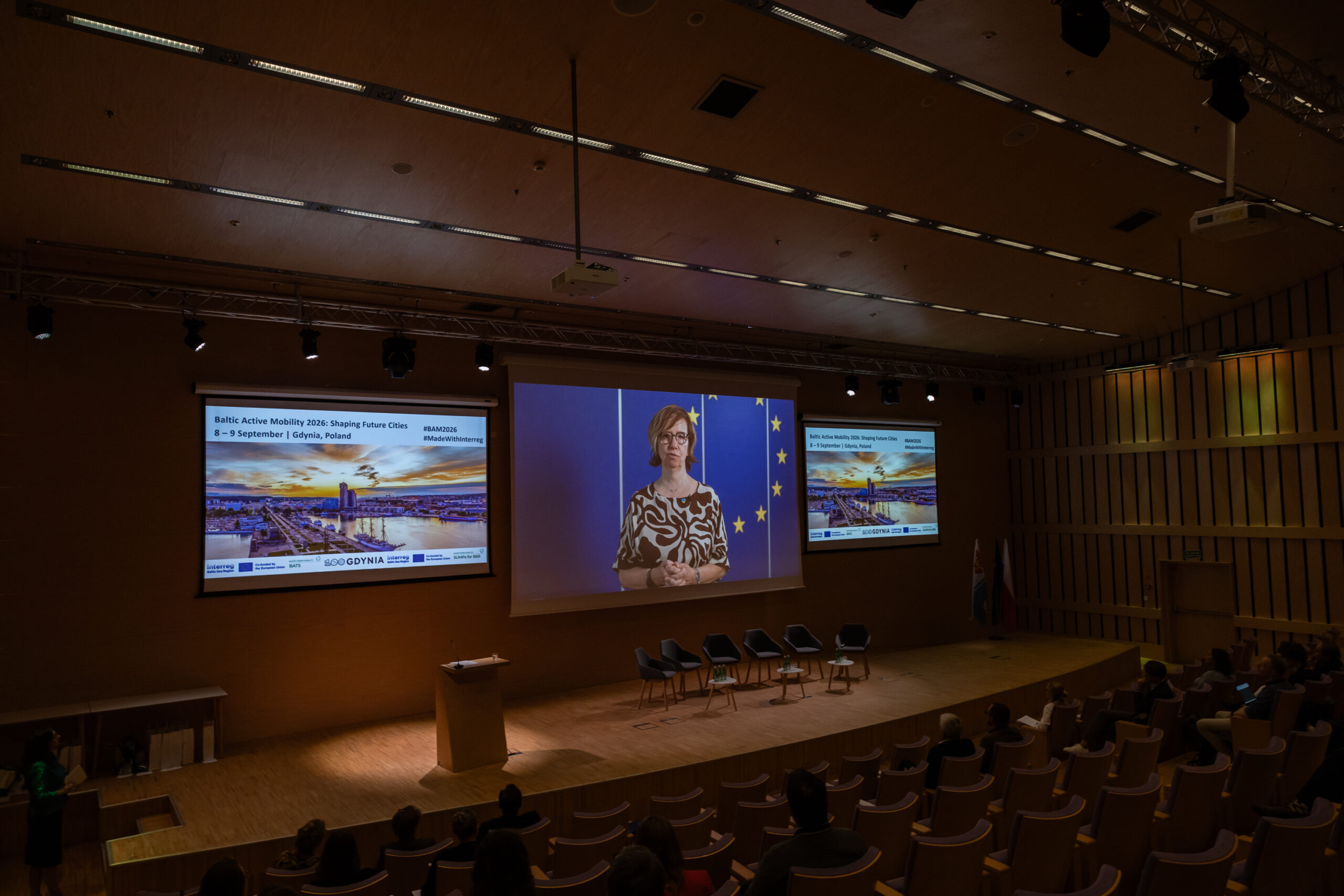
Magda Kopczyńska, Director-General, Directorate-General for Mobility and Transport, European Commission, gives her opening speech
Organised by the Interreg Baltic Sea Region projects SUMPs for BSR and BATS together with the City of Gdynia, the two-day conference examined year-round active mobility, Sustainable Urban Mobility Planning (SUMP), monitoring and evaluation, implementation challenges, and cooperation across governance levels and sectors. Keynotes, panel discussions, peer learning and networking centred on a shared ambition: making walking and cycling attractive and accessible choices for everyone.
On 8 September, the conference focused on the policy, governance and strategic conditions needed to accelerate this transition. Discussions explored the influence of EU mobility goals and the revised TEN-T regulation, the contribution of walking and cycling to climate objectives and quality of life, and the importance of cooperation across cities, regions and national borders. The programme also highlighted how stronger monitoring and evaluation could support evidence-based decisions and help cities move from short-term pilots towards safe, attractive and year-round active mobility.

Panel discussion: The role of sustainable mobility in reaching the climate and environmental goals and improving the quality of life
On 9 September, the focus shifted to practical solutions, local experiences and peer learning. Participants explored tools developed through the SUMPs for BSR projects: the Monitoring and Evaluation Framework, the SUMP training programme and the model for experimenting with active mobility measures. In parallel sessions, cities provided concrete lessons on resilient infrastructure, behavioural change and indicators, while the concluding discussions looked ahead to cross-border cooperation, continued capacity building and the BSR SUMP Competence Centre as a lasting source of knowledge and support for cities across the region.
Resilience Starts with Travel Choices
The connection between active mobility and resilience was a recurring theme throughout the conference. During the opening high-level panel discussion, audience members were invited to reflect on which sustainable mobility actions could also contribute to making cities more resilient. Their responses highlighted walkability, public transport, people-centred planning, multimodality, cycling infrastructure, green spaces and citizen engagement, demonstrating a broad understanding of resilience that extends beyond transport infrastructure alone.
The discussion showed how diverse mobility options can help cities adapt to disruptions and crises, with walking, cycling and public transport forming complementary parts of a resilient system. Speakers drew on the COVID-19 pandemic, when active mobility provided flexible and reliable alternatives as everyday travel patterns changed rapidly.
In an audience poll, a clear majority agreed that the current geopolitical and economic context has changed how sustainable mobility should be discussed. The result opened up a discussion about how resilience, security, health and quality of life may complement traditional sustainability narratives when discussing urban mobility.
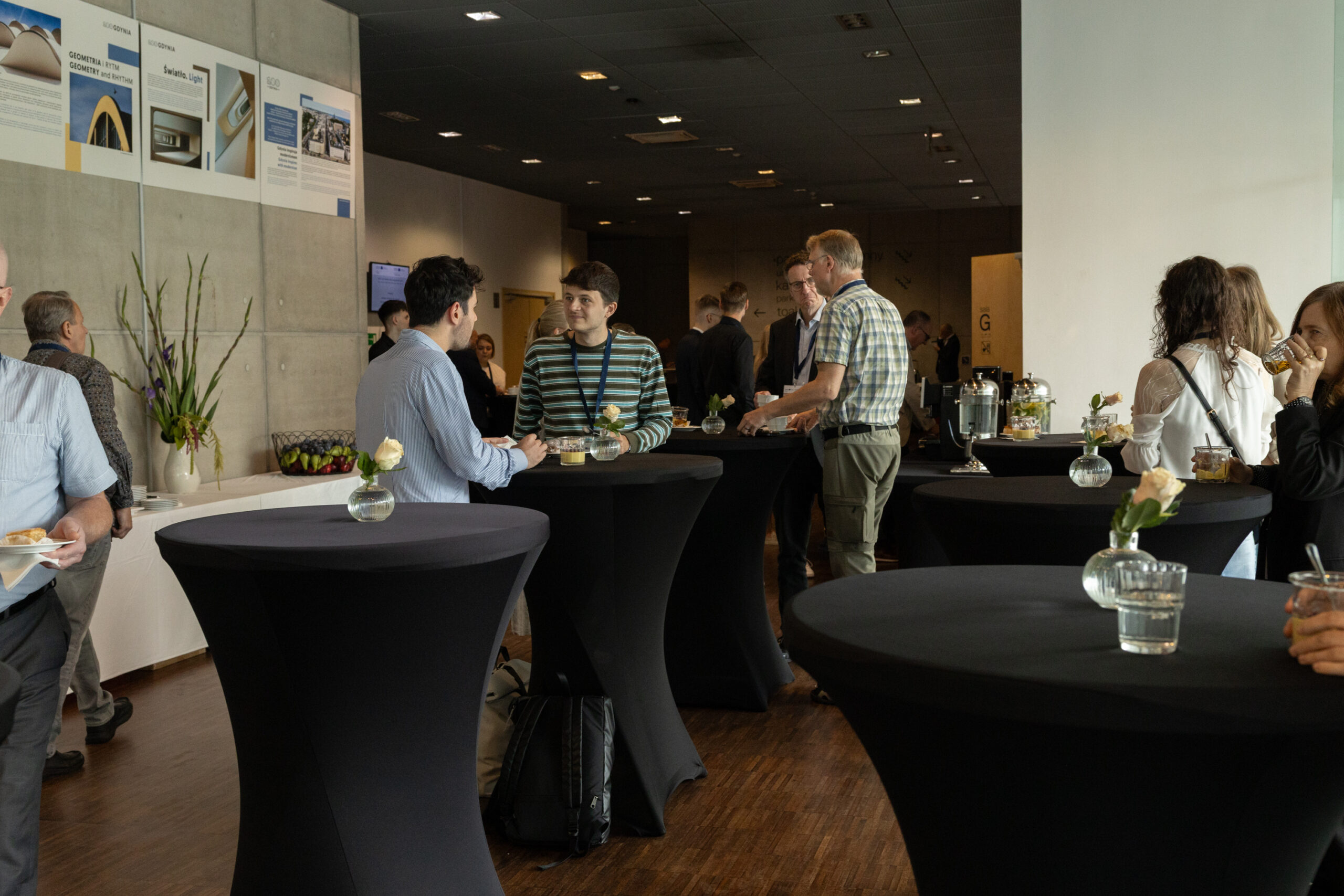
BAM2026 Networking in action
From Planning to Implementation
A recurring question throughout the conference was how cities can turn their Sustainable Urban Mobility Plans into action.
The SUMPs for BSR presentation, Beyond Pilots: What is measured can be managed, stressed that SUMP is a continuous process rather than a one-off document. Implementation requires clear objectives, measurable targets, reliable baseline data and regular monitoring, but data collection alone is insufficient: cities must also be able to analyse, communicate and use evidence to guide decisions and build political and public support.
A dedicated session on indicators, monitoring and evaluation found that most participants already monitor cycling to some extent, while walking is monitored less often. Asked what would most strengthen future monitoring, participants most frequently selected a better connection between data collection and decision-making, underlining the need to use evidence to guide action.
The conference also openly addressed barriers to implementation. Discussion in the panel “Local and Regional Cooperation through Governance Innovation” as well as audience responses pointed to familiar obstacles including financing, political support, political will, ownership, lobbying, resourcing and short political cycles. These barriers echoed many experiences shared by cities throughout the conference and reinforced the need for long-term commitment and cross-sectoral cooperation to turn plans into concrete action.
Speakers also shared , showing that progress does not always require large-scale interventions. SUMPs for BSR partner Cēsis municipality shared experiences on how manageable actions, testing, learning from results and gradually building support can give even the smallest municipalities a practical route to implementation.
Learning Together Across Borders
The value of transnational cooperation emerged as one of the strongest messages throughout the conference. Across discussions, workshops and informal conversations, participants highlighted how much cities benefit from learning directly from one another’s successes, challenges and experiences.
In the cross-border collaboration panel, participants associated the added value of international cooperation with knowledge exchange, new ideas, inspiration, trust, good practices, mutual understanding, and stronger connections between people and regions. They also stressed practical benefits: avoiding mistakes, testing solutions in different contexts and transferring approaches between cities and countries.
These reflections mirrored experiences from SUMPs for BSR and other Interreg Baltic Sea Region initiatives. Cities valued peer support, expert mentoring and structured learning that connects local pilots with broader planning processes; smaller cities especially benefit from expertise and networks that would otherwise be difficult to access.
One participant captured the value of Baltic Sea Region cooperation in a nutshell: “Mobility doesn’t stop at borders. You do not feel alone with your challenges.” The comment underscores why transnational collaboration remains essential for shared mobility challenges.
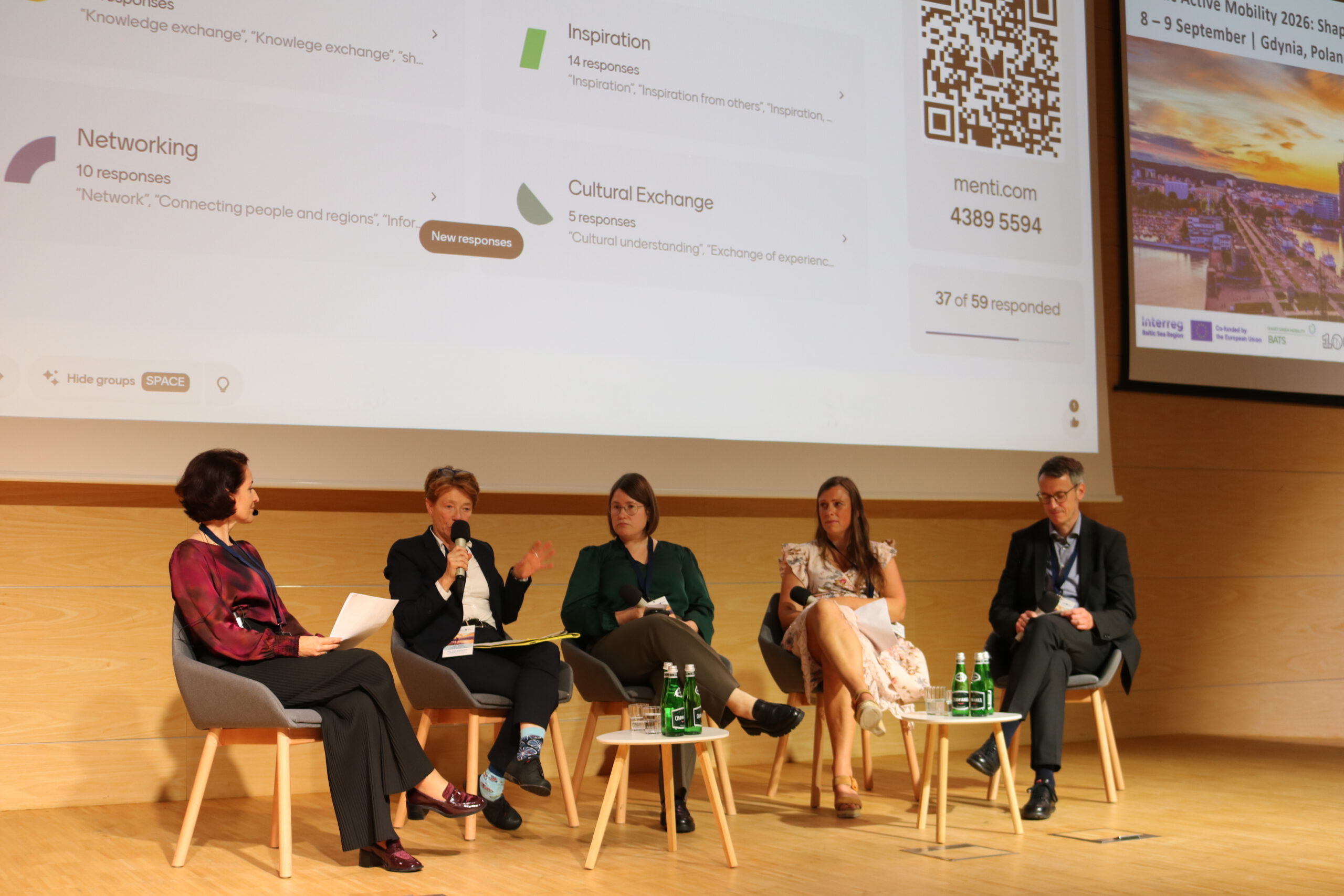
Cross-Border Collaboration opportunities for active mobility – the way forward
Looking Ahead
Alongside achievements across the Baltic Sea Region, the conference pointed to the work ahead: strengthening implementation, improving monitoring and evaluation, building local capacity, and ensuring that cities can meet ambitious European mobility and climate objectives.
The Baltic Sea Region SUMP Competence Centre supports this work with tools, guidance, training materials and documented experiences for cities’ own planning processes. Looking towards 2030 and beyond, participants envisioned more walkable neighbourhoods, fewer cars, safer streets, more cycling, greener cities and, perhaps most notably, more smiling pedestrians.
Together, these aspirations reflect the conference’s broader message: active mobility is not only about emissions or transport infrastructure, but about healthier, more resilient and liveable cities where people can enjoy moving through their everyday environments. As one participant’s final takeaway simply put it: “It’s possible.”

Additional links
details
-
Homepage
-
Project typeCore Project

-
ImplementationNovember 2023 - October 2026
-
StatusOngoing
-
Contribution to EUSBSRPolicy Area Spatial Planning

-
Target groups
- Local public authority
- National public authority
-
Social media
-
Additional links
-
Tags