




Finding the Common Ground – the Outcomes of the Project Meeting in Dobele County, Latvia
02 June 2026
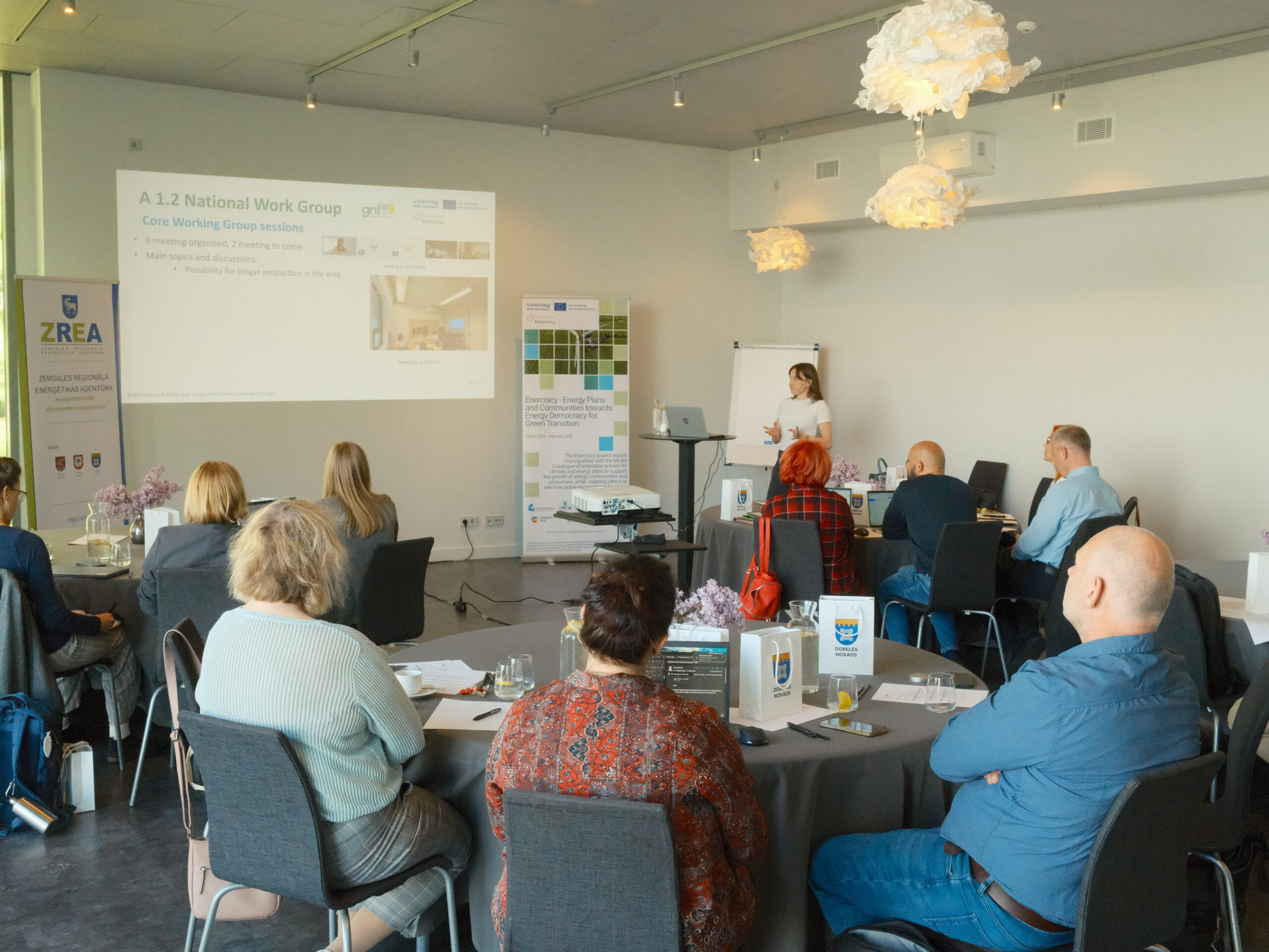
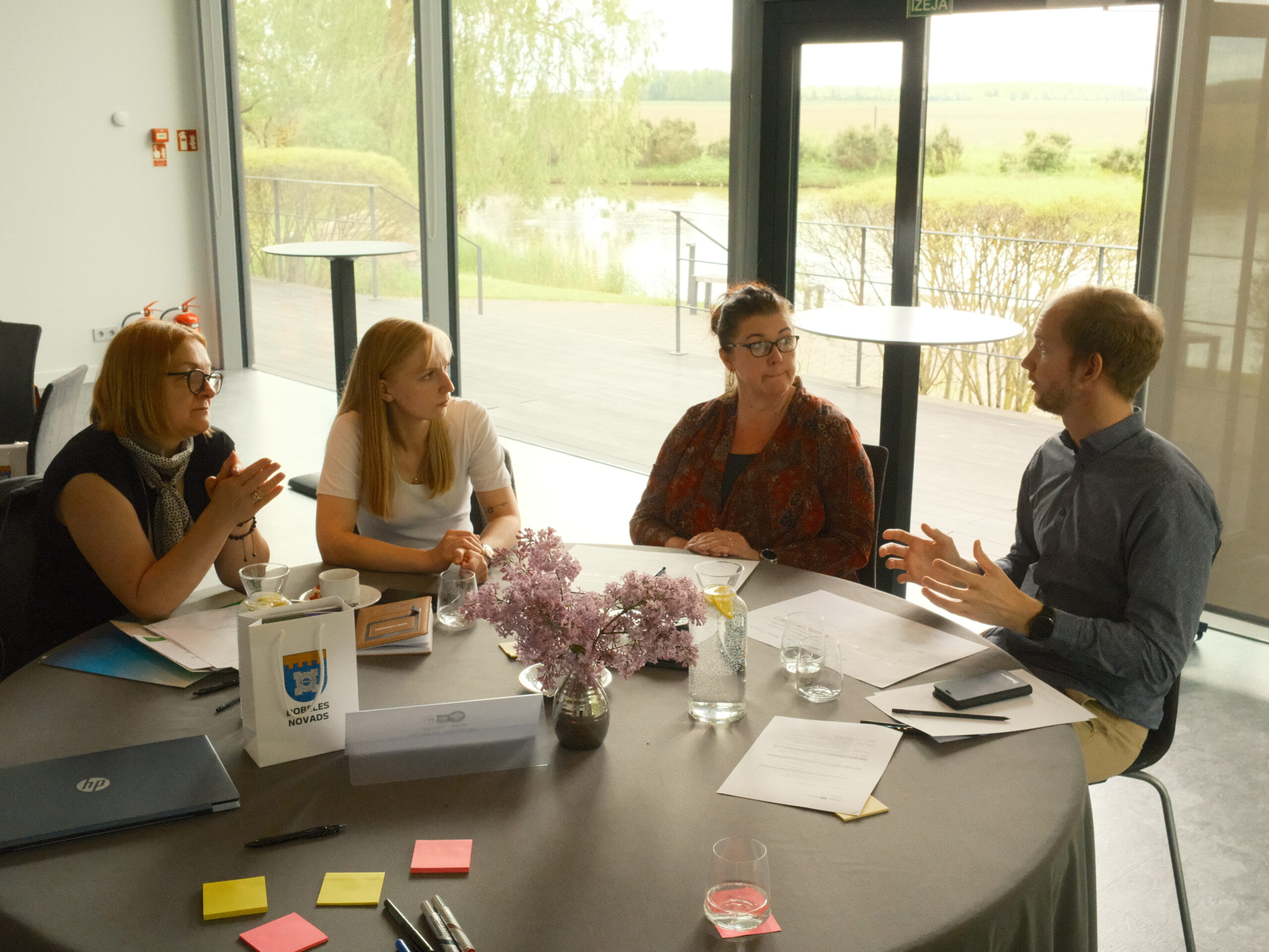
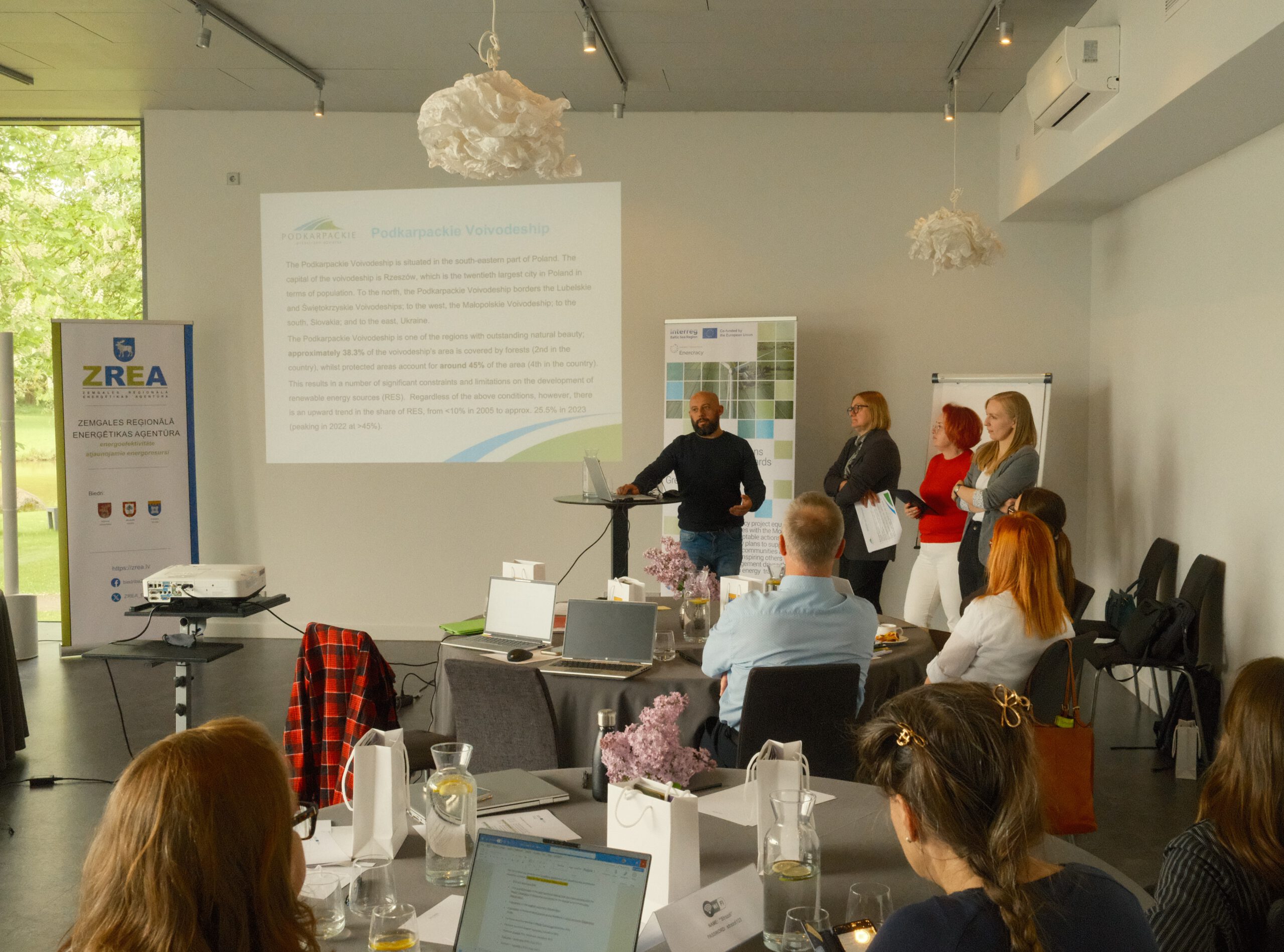
On May 26-27, the Enercracy project consortium – gathering participants from Estonia, Finland, Latvia, Poland, and Sweden – met for an intensive two-day event hosted by Zemgale Regional Energy Agency and Dobele County Municipality. This time, the project consortium focused on a key question: how can outcomes from local climate and energy planning be made interpretable across borders, despite varying legislative and regulatory frameworks? To address this question, representatives from five countries participated in an intensive series of workshops to work in groups on identifying divergent and convergent elements of local climate and energy planning.
Unequal data infrastructures
The first part of the group discussions highlighted differences in data access not only between countries but also within sectors. For instance, the building sector across the implementation countries has the best data access for climate and energy planning, whereas other sectors have wider gaps between the countries. In some implementation countries, the transportation sector is seen as a gatekeeper for local climate and energy planners. Examples include Sweden, where detailed transportation data for energy and climate planning was previously available but is no longer; Estonia, where such data is available only to researchers; and Latvia, where overall transportation data infrastructure is insufficient for climate and energy planning. Other sectors, such as land use, play very different roles in local energy and climate planning and, consequently, in the data available. The project consortium identified that only in Finland is land-use data actively used in local climate and energy planning, whereas in the other countries, land-use emissions are assessed only at the national level. In such light, the differences in data access and use can lead to substantial differences in the way, how the key elements of climate and energy plans are tackled across the cases
Differences in the national energy and climate frameworks
Data is not all the problems. During the discussions, we observed fundamental differences in the overall approaches to energy and climate planning across the countries, shaped by past legacies and current work. This is particularly evident in differences in transposing and adopting EU legislation, such as the Energy Efficiency Directive, the Energy Performance of Buildings Directive, and others. For instance, implementing EED requirements for local heating and cooling plans is the most challenging in Latvia, as it lacks a historical national framework for heating planning. However, these challenges appear not only in the paths of EU legislation adoption. In Poland, national legislation has very different frameworks for local climate and energy planning that, in many cases, do not comply with EU-led frameworks, such as the Covenant of Mayors. This results in the need to compartmentalise different aspects of planning for renewable energy adoption, prosumerism, and energy communities across very different planning documents, causing confusion among peers from other countries.
So, why is it a problem?
Mapping the difference between the countries may seem counterintuitive. However, in cases where the solution goes beyond the borders, these differences are crucial. As the municipalities and technical partners of the Enercracy project currently use the Draft Model Catalogues of Measures to assist in the development or updates of relevant climate and energy planning documents, these experiences must inform their improvements while accounting for local limitations. Because of this, the Enercracy project consortium identified four core takeaways of how to tackle such differences:
- Do not compare! Even though the metrics across countries and sectors may be similar, they fundamentally reflect very different realities.
- Number is not the only solution! When tackling complex questions, such as the local climate and energy planning, you cannot make everything into a numbers game. Some of the goals or measures are qualitative, while others may not be quantified due to insufficient data infrastructure.
- Go back to the unifying status quo! In many instances, the only way to obtain interpretable results is to identify the common denominator in terminology or sources.
- Be aware of the differences! Understand that there is no one-size-fits-all solution, and that different municipalities may address the same goals in very different ways based on local specifics.
The road ahead in the Enercracy project is shaped by what we have learned together. As we will turn to reviewing the developed and updated planning documents, these insights will guide us — a reminder that meaningful change in climate and energy planning grows from collaboration, shared knowledge, and the courage to keep refining our approach.


Additional links
details
-
Homepage
-
Project typeCore Project

-
ImplementationMarch 2025 - February 2028
-
StatusOngoing
-
Contribution to EUSBSRPolicy Area Energy

-
Target groups
- Infrastructure and public service provider
- Interest group
- Local public authority
- Regional public authority
- Small and medium enterprise
-
Social media
-
Additional links
-
Tags