




The HyTruck Diary
31 March 2026
Hello! My name is Sven. I have been the project coordinator of HyTruck the last nearly three years. Coming aboard, I have been new to the team. Although having dealt with zero-emission mobility projects before, hydrogen in heavy-duty transport has been rather new to me.
Knowing European transport policy, cross-border and transnational cooperation from prior engagements, I could very well follow the fundamental project aims: Overcoming the chicken & egg problem to ramp-up the market for hydrogen in heavy-duty transport by collaborating across borders. I realised that the Alternative Infrastructure Regulation posed enormous pressure onto member states, since it obliges them to set-up hydrogen re-fuelling stations at a distance of every 200 kilometres along major European highways. But politics and the market weren’t too enthusiastic about hydrogen as a fuel. In Norway, Sweden, Denmark or Germany first generation hydrogen re-fuelling stations dedicated to personal cars were being closed-down or struggling hard due to lack of a mature market. And in Germany technology neutrality was high on the political agenda, hoping e-fuels could save the combustion engine.
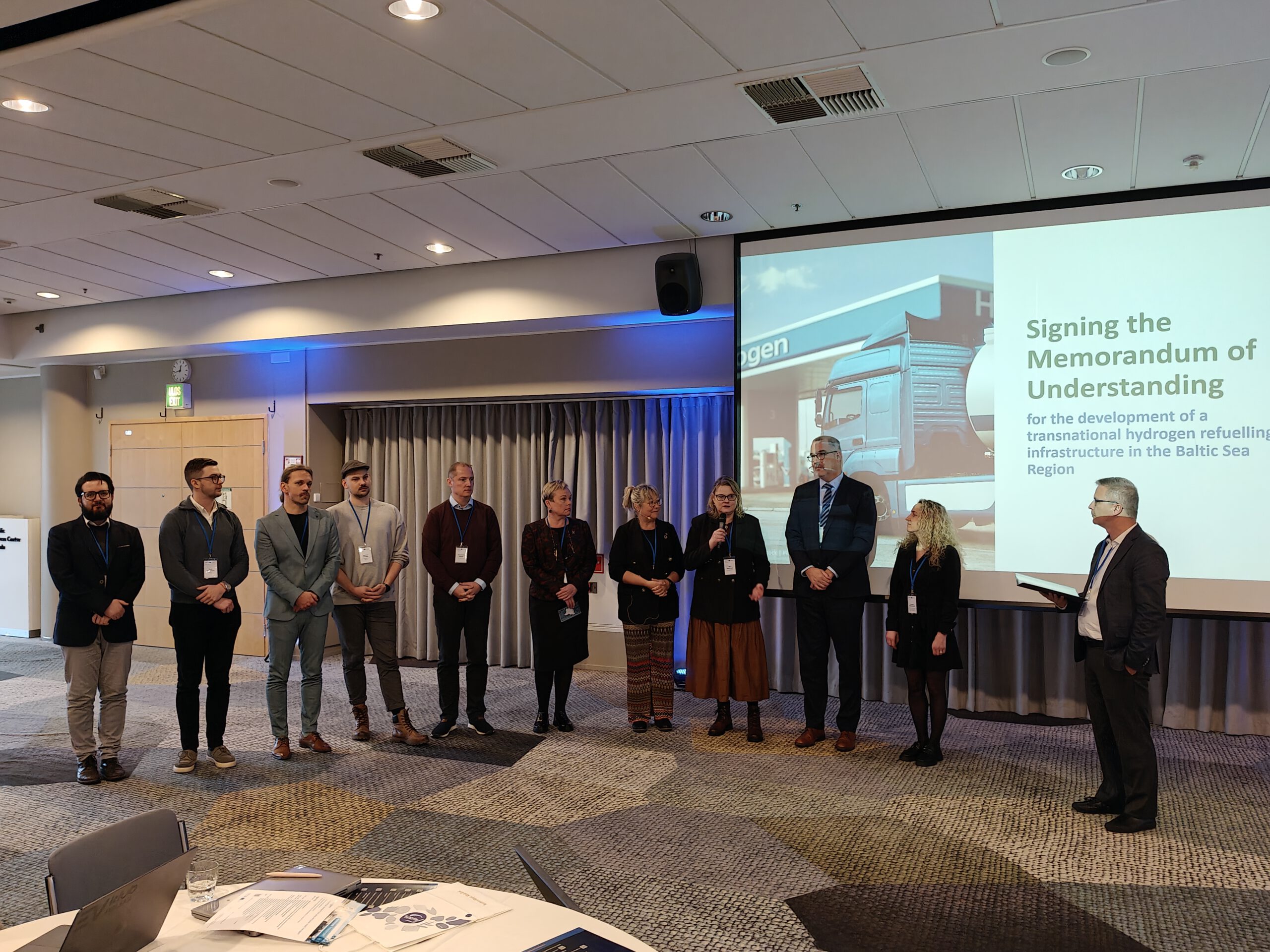
So, how could this project make a change? How can these ten partners from Sweden, Germany, Poland, Lithuania, Latvia, Estonia and Finland representing research, national and regional administration, business support organisations and expert networks contribute as core-partnership? Partners with a very different background: some with advanced knowledge – some starting from scratch to implement AFIR in their country or region. Could this partnership make a difference?
Two and a half years later I can say: Yes, the partnership – we – could!
Although not building a single hydrogen re-fuelling station or purchasing any hydrogen-powered truck: the partnership succeeded in establishing a platform dedicated to hydrogen in the heavy-duty transport ecosystem which wasn’t there before.
We did not succeed because all partners timely delivered what was expected from them according to the application. We succeeded because the partners managed to form a community, sharing knowledge and tools.
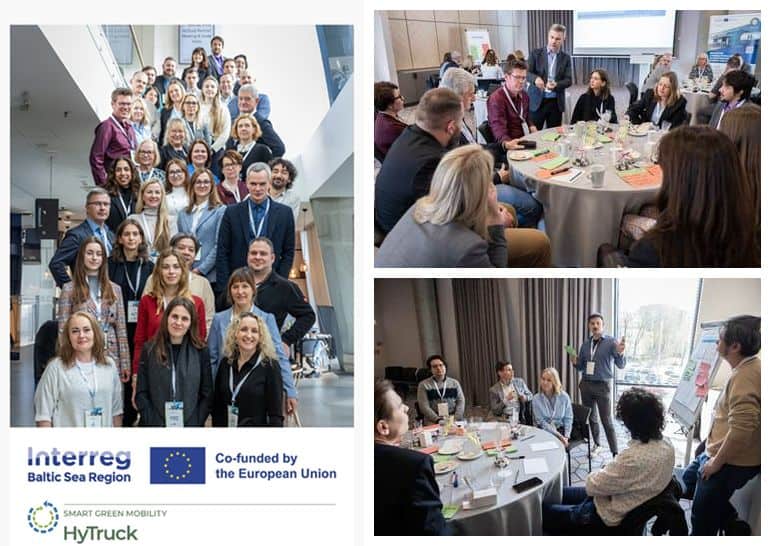
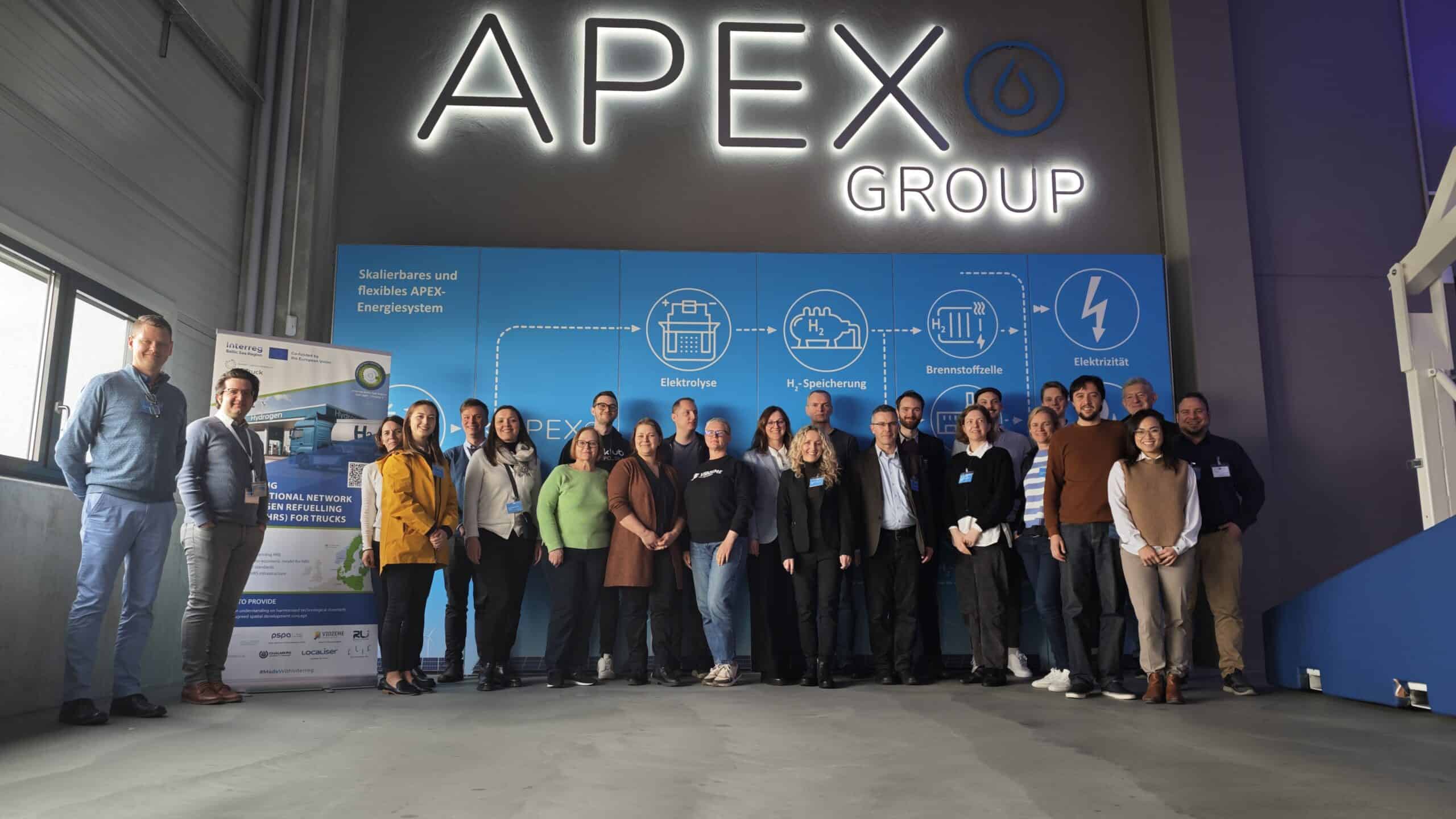
The HyTruck breakfast briefings, monthly organised by CLIC Innovation Oy made the current status and challenges of market developments in hydrogen powered mobility transparent: Technical standards, security issues, developments and public support instruments in the national markets. At our partner meetings, we could take a deeper look into the real world when visiting hydrogen re-fuelling stations and talking to the operators.
This mixture of partners – those acting on the market and those doing research – benefited them mutually. Whether the spatial planning toolkit developed by University of Tartu was improved by explaining what spatial criteria need to be considered in practice, the models developed and adjusted by Chalmers University of Technology and RISE Research Institutes of Sweden, the catalogue of technological standards compiled by the Polish New Mobility Association or the planning guideline developed by Reiner Lemoine Institute giving practical advice on the hydrogen in heavy-duty transport-ecosystem: through the dialogue, the added value could get increased for both sides.
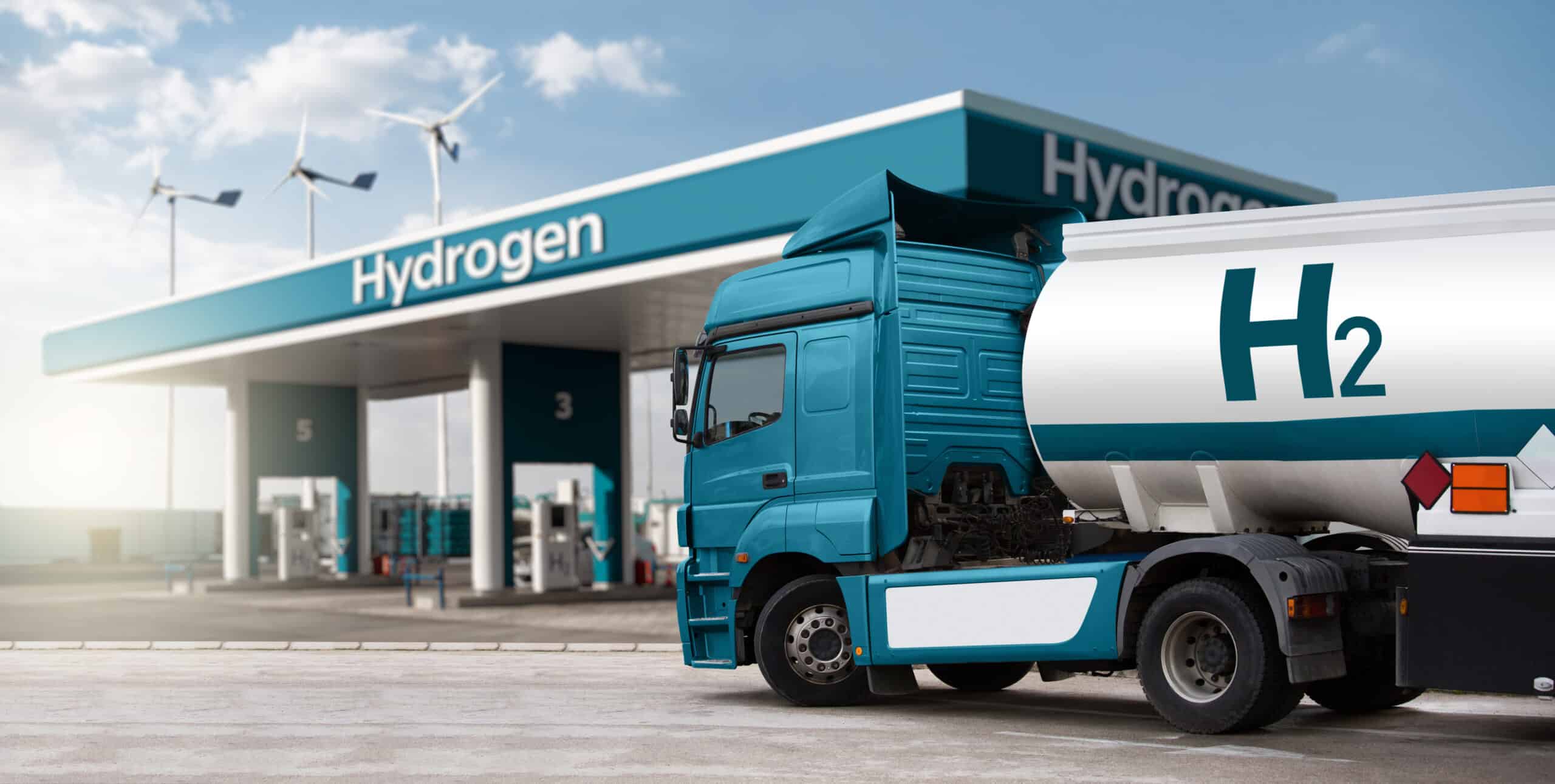
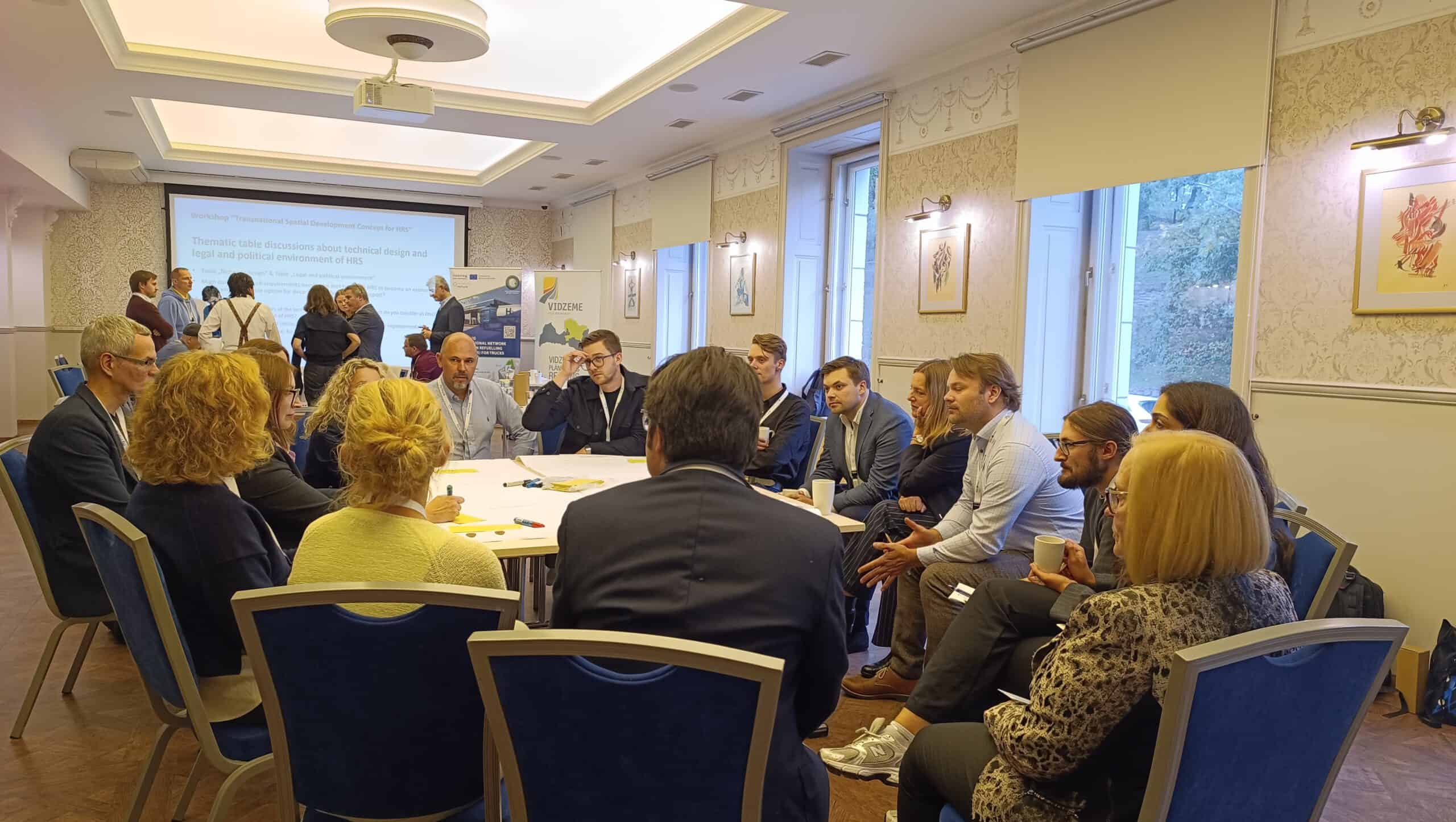
When testing tools within our five pilot regions; Rostock region, Wielkopolska region, Kaunas and Panevezys regions, Vidzeme Planning region and Helsinki region, a close regional dialogue with relevant stakeholders – producers of green hydrogen, operators and technology providers for hydrogen re-fuelling stations, heavy-duty fleet operators and public authorities – was realised. Questions were raised, questions were answered, new questions popped up. In the end, HyTruck led to a better understanding of the entire ecosystem associated with hydrogen in heavy-duty transport.
Can we say that the pathway to H2 is now straight ahead?
Honestly, if you would ask me where hydrogen as a fuel in heavy-duty transport will be within five, ten or twenty years – I would still have difficulties to say. At the moment, hydrogen is still very expensive and also in the future it will never reach the price-level of battery electric vehicles. However hydrogen has its operational advantages like its long range, fast re-fuelling, lower vehicle weights, a more flexible infrastructure with less dependency from high performance electricity grids. In the end, vehicle fleet operators will make an individual decision based on economic and operational criteria.
But the decision cannot be left to the operational level alone. Results of modelling performed at Chalmers University of Technology suggest that hydrogen will play a crucial role at energy system level – without hydrogen it will not be possible to fully decarbonise heavy-duty transport in the future. We have no time to waste! Global warming is progressing more rapidly as expected. If we don’t want to lose control, political decisions need to push decarbonisation in any sector, also in heavy-duty road transport, contributing 6% of total GHG-emissions in the European Union.
The implementation of the EU emissions trading system EU-ETS2 including also emissions from transport will be key as well as support schemes facilitating market ramp-up and integrating deployment of hydrogen re-fuelling stations with purchase of hydrogen-powered vehicles. The Netherlands provided a blueprint with their SWiM-programme which has been adopted in Germany later. In the long-run, sufficient capacities to produce green hydrogen from renewables require sustained investments into renewable energy production.
Another challenge to overcome are insufficiently harmonised technological standards and complex permission procedures.
Although, there is still a long way to go, HyTruck can be proud to have contributed to the formation of a community dedicated to the deployment of hydrogen in heavy-duty road transport. And I know, partners increased their “institutional capacity” as one would say in the world of European Territorial Collaboration.
Yes, we all learnt a lot, being now capable of making use of it for the better – made possible by the Interreg Baltic Sea Region Programme! Thank you!

Additional links
details
-
Homepage
-
Project typeCore Project

-
ImplementationJanuary 2023 - December 2025
-
StatusCompleted
-
Contribution to EUSBSRPolicy Area Transport

-
Target groups
- Higher education and research institution
- Infrastructure and public service provider
- National public authority
- Regional public authority
- Small and medium enterprise
-
Social media
-
Additional links
-
Tags