




Investments in nutrient recycling solutions
13 March 2026
CiNURGi is helping turn nutrient recycling from concept into practice by supporting business investments in commercial nutrient recycling technologies. In collaboration with industry partners, the project is enabling four companies across the Baltic Sea Region to plan, procure, and implement innovative nutrient recycling systems. These investments focus on improving how nutrients are measured, recovered, and reused, demonstrating how circular nutrient solutions can work under real operational conditions. Through this approach, CiNURGi connects research, industry, and practical implementation to accelerate the transition toward more efficient and sustainable nutrient management.
Implementing nutrient recycling solutions in real commercial settings is needed to understand how companies can integrate circular nutrient management into their operations. Through these investments, CiNURGi supports partnering companies throughout the planning and implementing process. As many nutrient recycling technologies are still emerging, companies benefit from access to a peer-review group of experts who provide guidance on planning, procurement, installation and commissioning of nutrient recycling solutions.
CiNURGi combines research on nutrient recycling with practical demonstrations. When the project consortium was formed, four companies were selected as partners to implement actual nutrient recycling solutions. These companies already work with utilizing nutrients in various organic waste streams and were actively seeking collaboration to further develop their operations to increase nutrient recycling.
The four commercial investments supported by CiNURGi focus on to complementary areas of nutrient recycling: real-time measurement of nutrient contents and the production of recycled nutrient fertilizers. Together, these solutions address both sides of nutrient management challenges, improving the understanding of nutrient flows while also enabling the production of new circular fertilizer products.
Real-time measurements of nutrient content
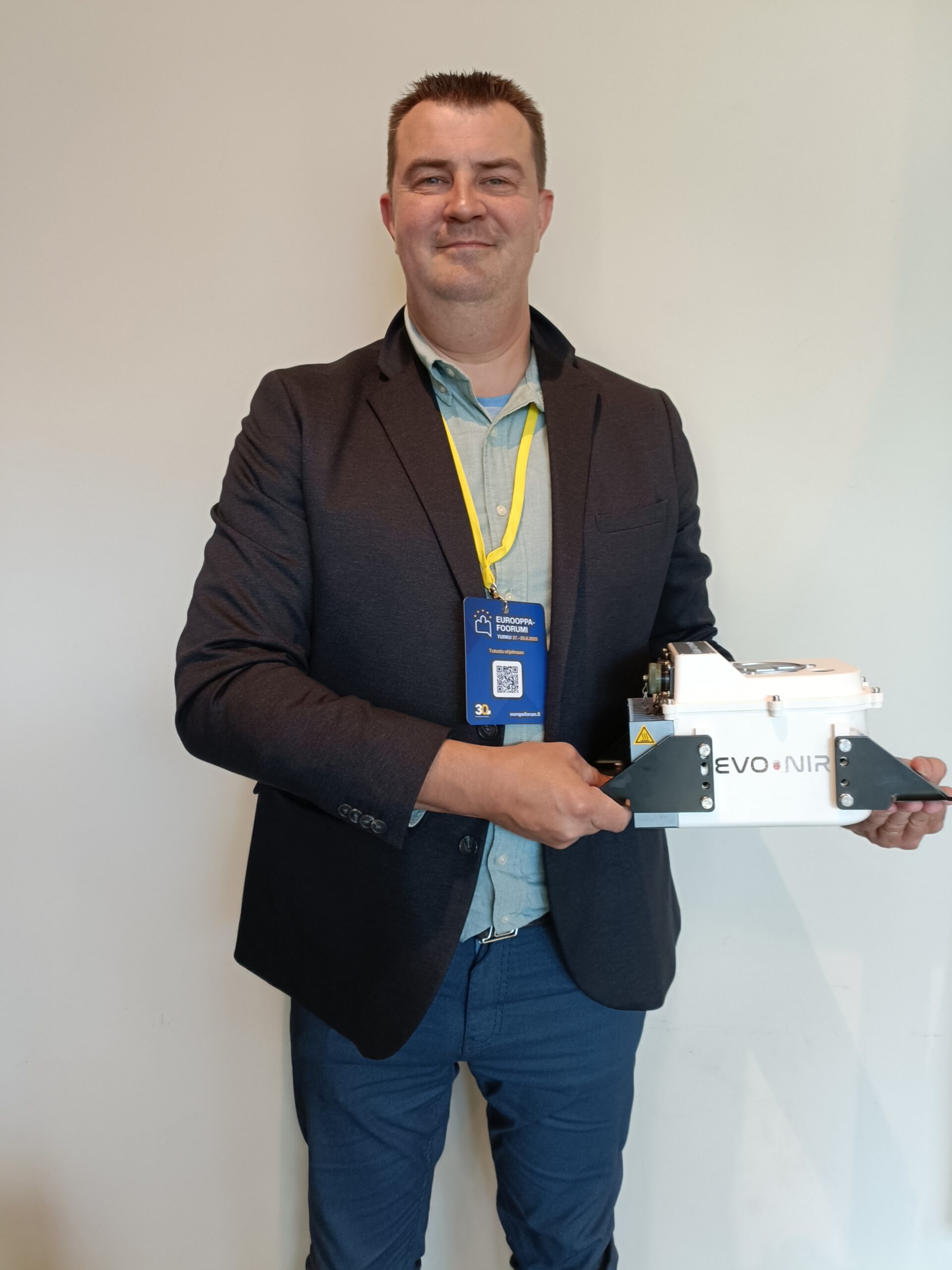
Having access to real-time measurements of nutrient content is possible using technology such as Near Infrared Spectrometry (NIR). NIR technology uses the light reflected from particles to analyse the content under observation. All chemical elements reflect light in different ways, making it possible to focus on finding out the phosphorus, potassium or nitrogen content from sources like digestate or manure. It is not the analysis but the speed of it that is the innovation in this context. Finding out the nutrient content of manure or digestate used to be a process involving lots of waiting. Samples were sent to laboratories to be analysed on the post. Having a NIR meter on hand means samples are analysed instantaneously and results are available via internet connection.
Two CiNURGi partners, Br. Göransson and Tero Liukas Kuljetus, have invested in NIR technology to improve how nutrient content in manure and digestate is measured during handling and application. While both companies operate in the agricultural logistics chain, they apply the technology in different ways that reflect their roles in the sector.
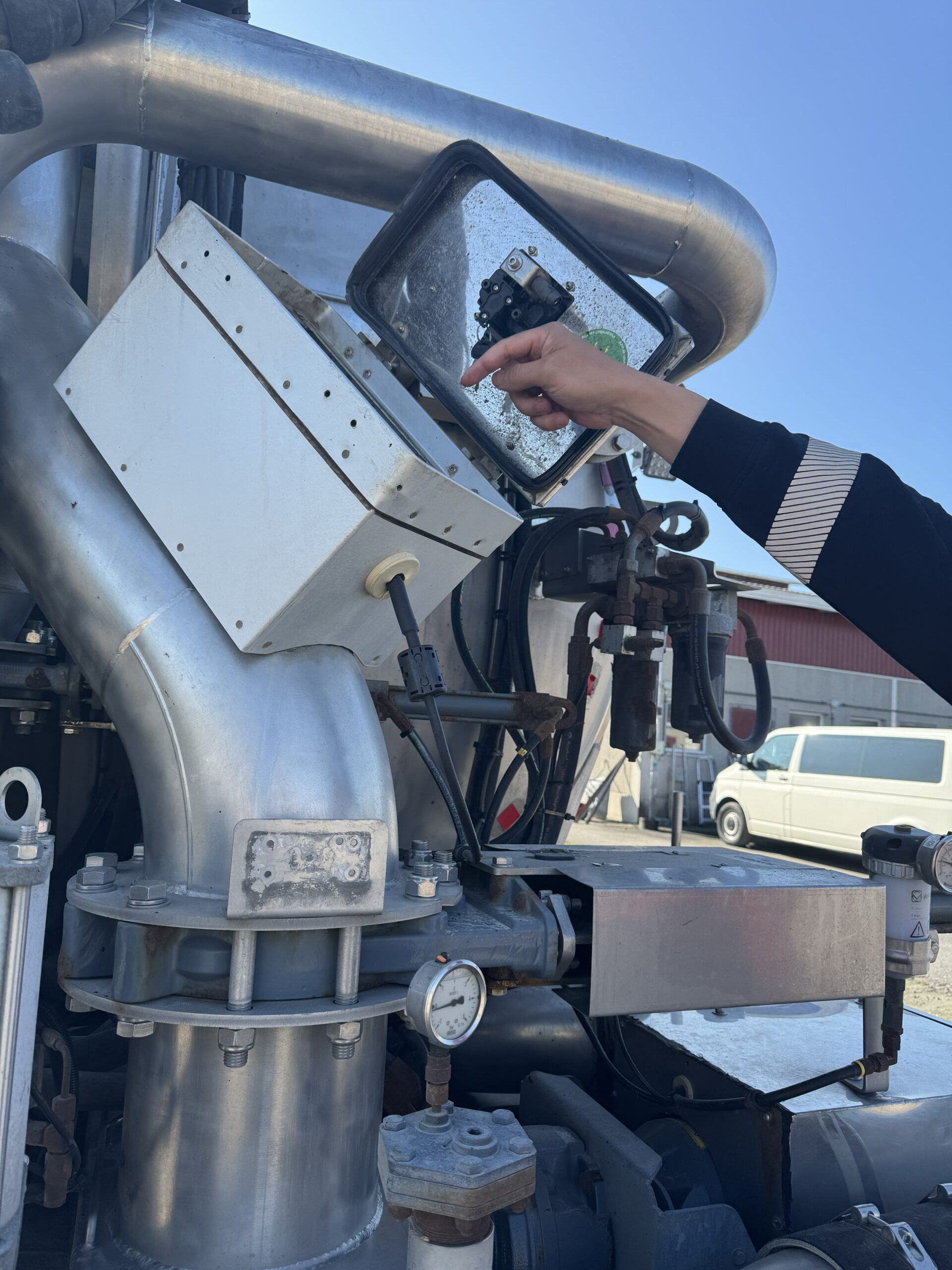
Tero Liukas Kuljetus is a transportation company in Finland that regularly moves slurry from farms to biogas plants and returns digestate from the plants back to farmers. By installing an NIR meter on a semi-trailer used for manure transport, the company can analyse the nutrient content of each load in real time during loading. This provides immediate information on key parameters such as dry matter and nutrient content, giving both biogas plants and farmers better insight into the materials they send and receive. Access to real time nutrient data can improve transparency in nutrient flows and support more efficient management of manure and digestate within the biogas value chain.
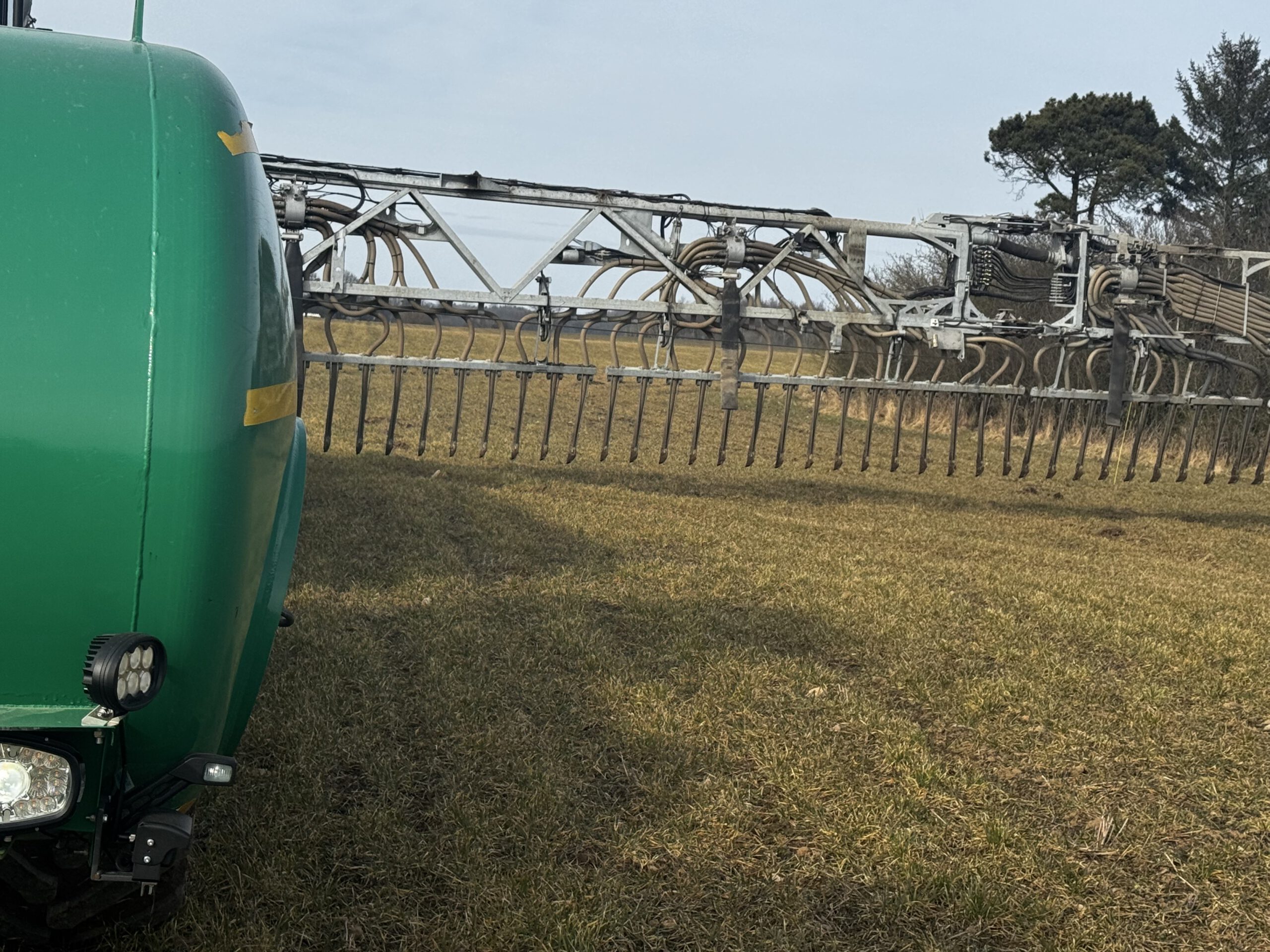
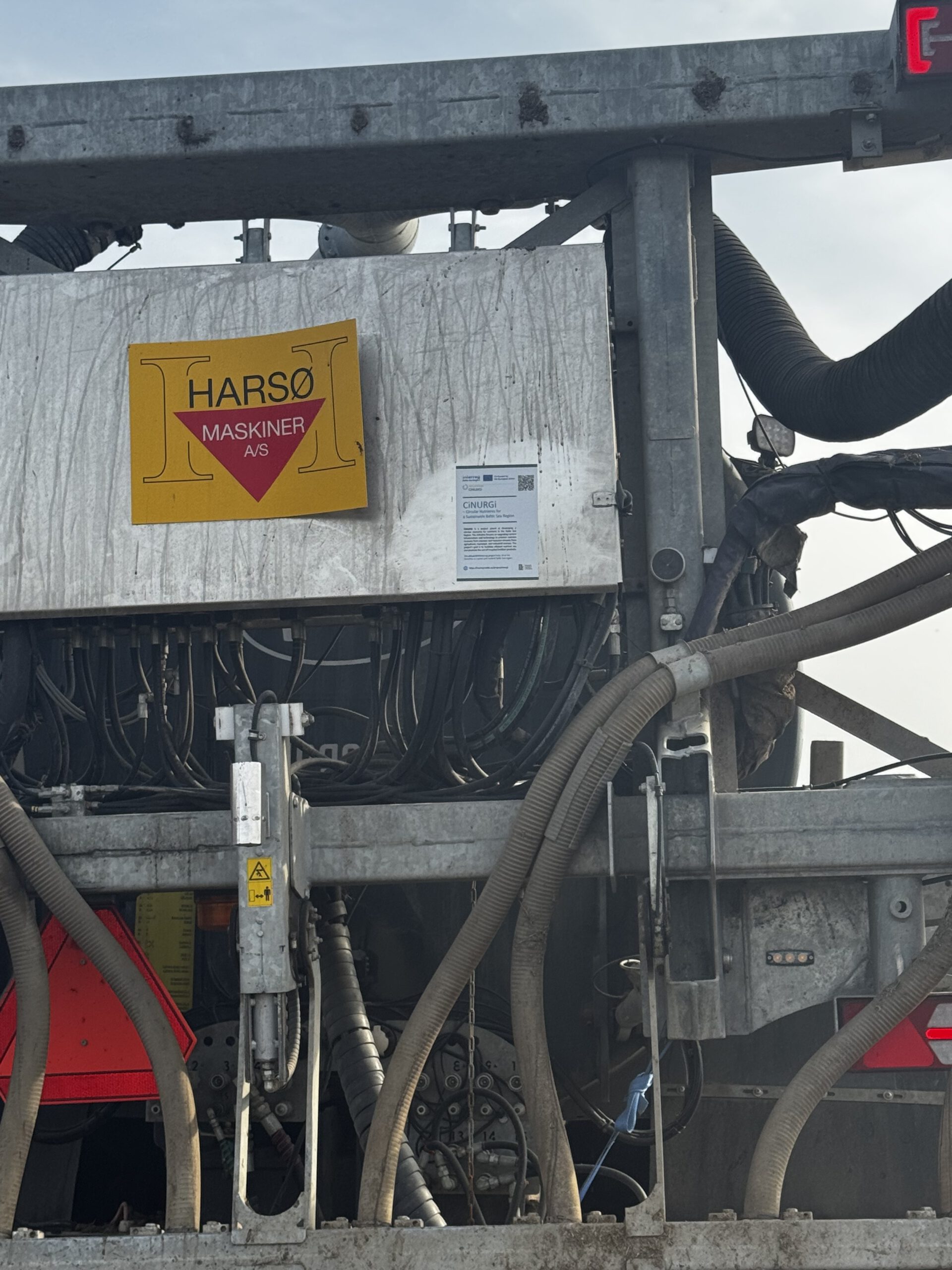
Br. Göransson, an agricultural service contractor providing manure spreading and other field services to farmers in Southern Sweden, has integrated the NIR technology into a slurry tanker with a trailing shoe slurry applicator used for manure application in the field. The real time nutrient measurements are combined with EmissioN (Biocover.dk) technology, which accounts for current weather conditions during spreading to estimate the effective nitrogen actually delivered to the crop. Together with GPS data, this creates detailed field maps showing the exact amount of nitrogen applied. These maps can then be integrated into precision fertilization systems, allowing farmers to better balance manure nutrients with mineral nitrogen applications and improving overall nutrient use efficiency.
Production of recycled nutrient fertilizers
CiNURGi has partnered with two companies producing recycled nutrient fertilizers to test out how they through investments can improve and increase nutrient recycling.
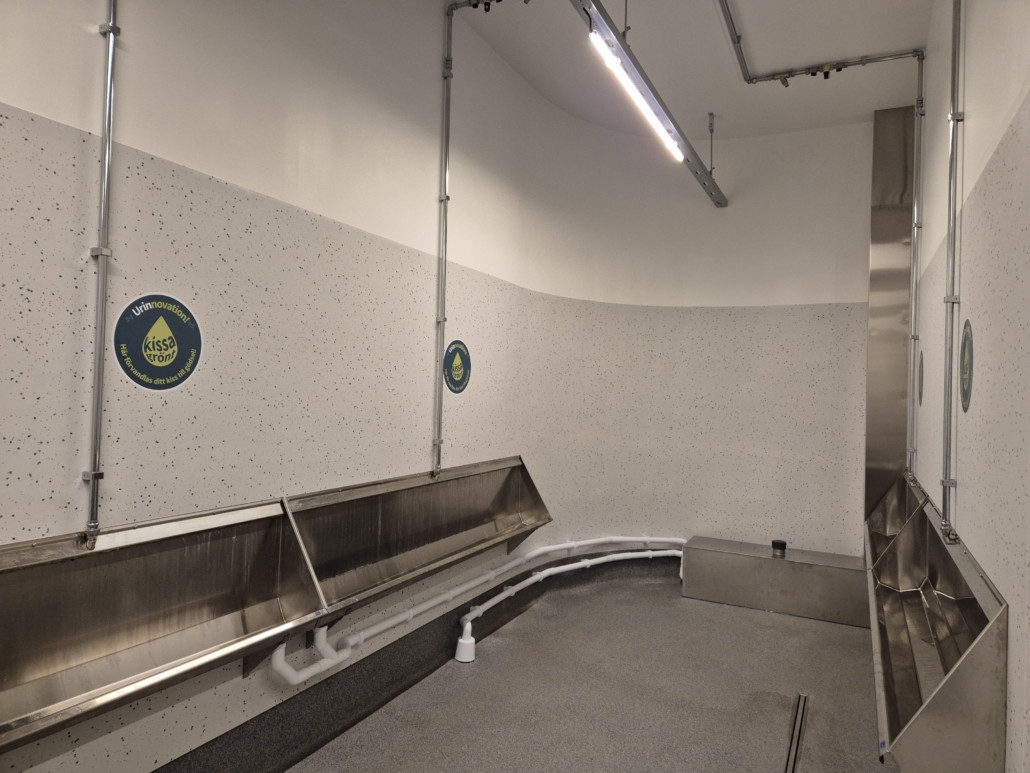
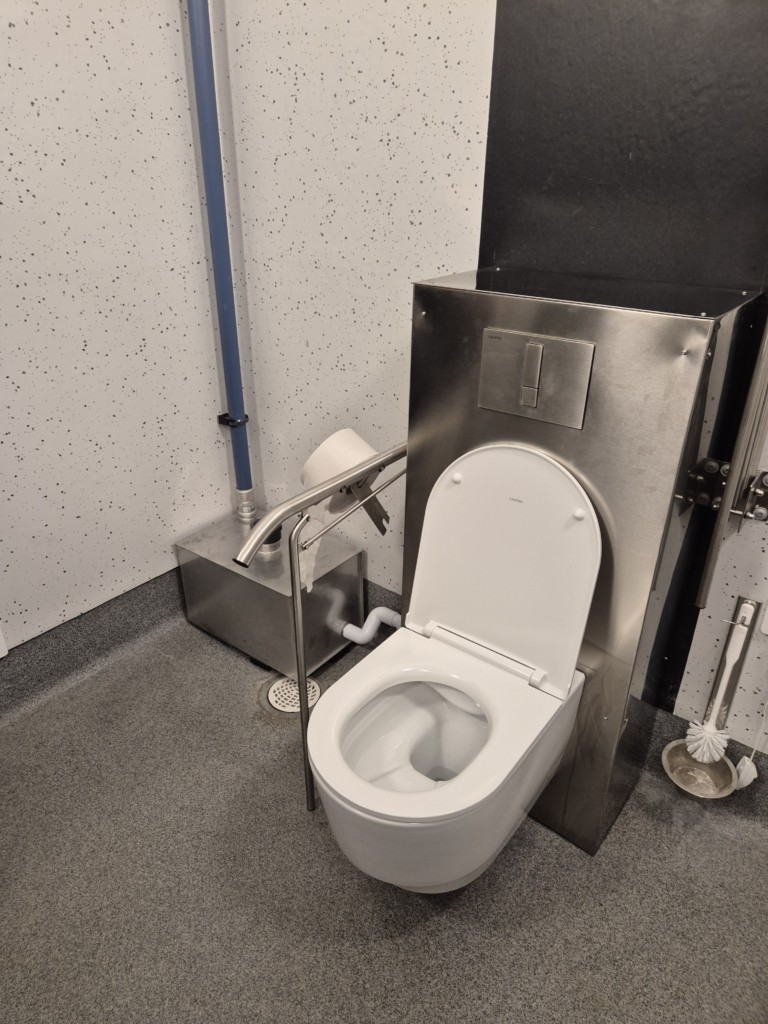
Sanitation360 is an SME that has developed an innovative technology to recycle nutrients from urine into high-quality fertilizer. At the Studenternas football arena in Uppsala, Sweden, Sanitation360 is collecting urine during every event from over 200 m of urinals and seven newly installed urine-diverting toilets. The collected urine is transported via vacuum pump to the processing facility on-site, currently being installed adjacent to the arena. There, the urine will be concentrated – the nitrogen concentration will increase from <1% to >15%. The concentrated urine will then be granularized to produce a concentrated NPK fertilizer that works with conventional farming equipment. While the urinals and urine-diverting toilets and urinals are standard, commercially available models, the drying system represents the first commercial installation of its kind. Through this CiNURGi project, Sanitation360 aims to demonstrate that large-scale source separation and production of recycled fertilisers is both feasible and impactful.
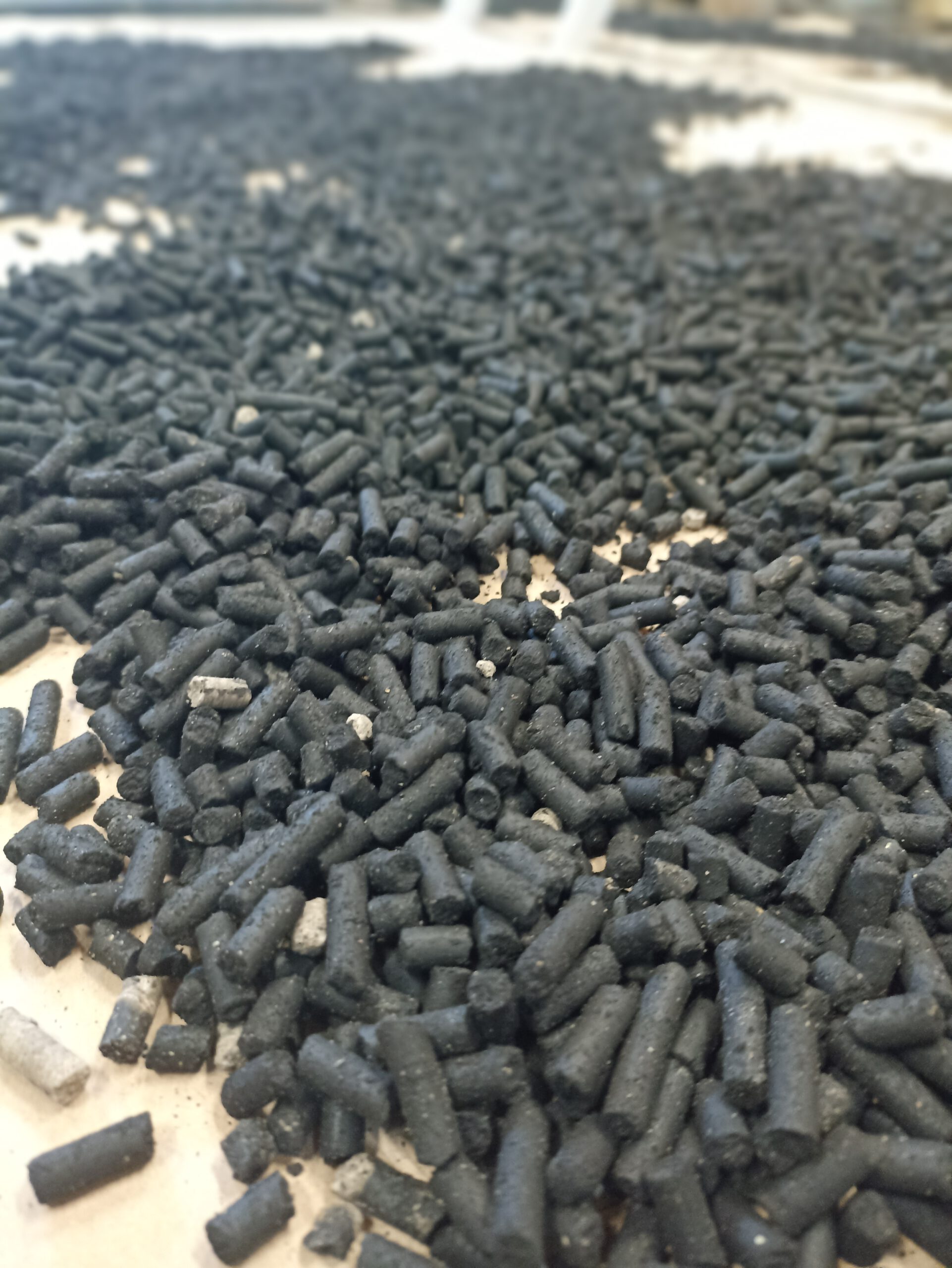
Rendben is a start-up producing ash-based recycled nutrient fertilizers from incineration of biomass for energy conversion. The high content of nutrients and minerals in ashes from biomass gives good potential for recycling into circular usage.

Interactive map showing pilot locations. Use the arrow keys to move the map view and the zoom controls to zoom in or out. Press the Tab key to navigate between markers. Press Enter or click a marker to view pilot project details.
Additional links
- Read about the project
- CiNURGi News Article: One football game at a Time Towards a Circular Economy
- CiNURGi News Article: One Truckload at a Time Towards a Circular Economy
- Gas1 blog post about Tero Liukas participating in CiNURGi partner SBB seminar 16-17.9.2025.
- Link to Spotify: Konepodi-Koneviestin podcast channel interviewing Tero Liukas
- RENDBEN Poster
details
-
Homepage
-
Project typeCore Project
-
ImplementationNovember 2023 - October 2026
-
StatusOngoing
-
Contribution to EUSBSRPolicy Area Nutri

-
Target groups
- Interest group
- National public authority
- Small and medium enterprise
-
Social media
-
Additional links
-
Tags