




Local Innovation Partnership Pilot Case Results
15 January 2026
Over the past three years, the KISMET project has worked across the Baltic Sea Region to strengthen sustainable, resilient, and locally rooted food systems. Through its Local Innovation Partnership (LIP) pilots, KISMET has brought together municipalities, businesses, schools, producers, researchers, and civil society turning ambition into concrete change.
Behind every pilot lies dedication, motivation and close collaboration. From food waste reduction and data-driven policymaking to plant-rich menus, bio-districts, and local food branding, each region has tested tailored solutions that respond to its unique challenges whilst contributing to a shared regional vision for sustainable food systems.
Visual One Pagers: Capturing Impact at a Glance
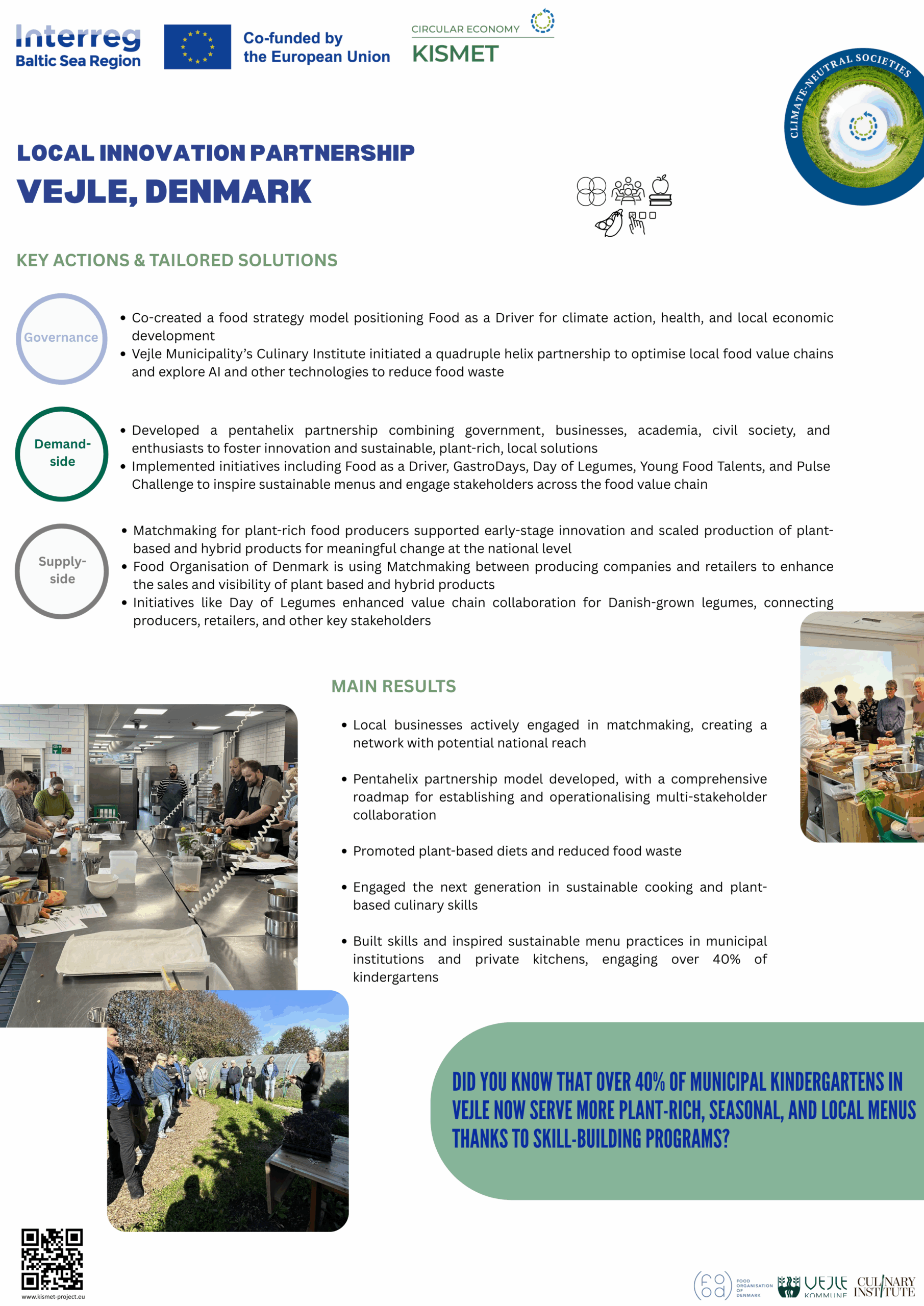
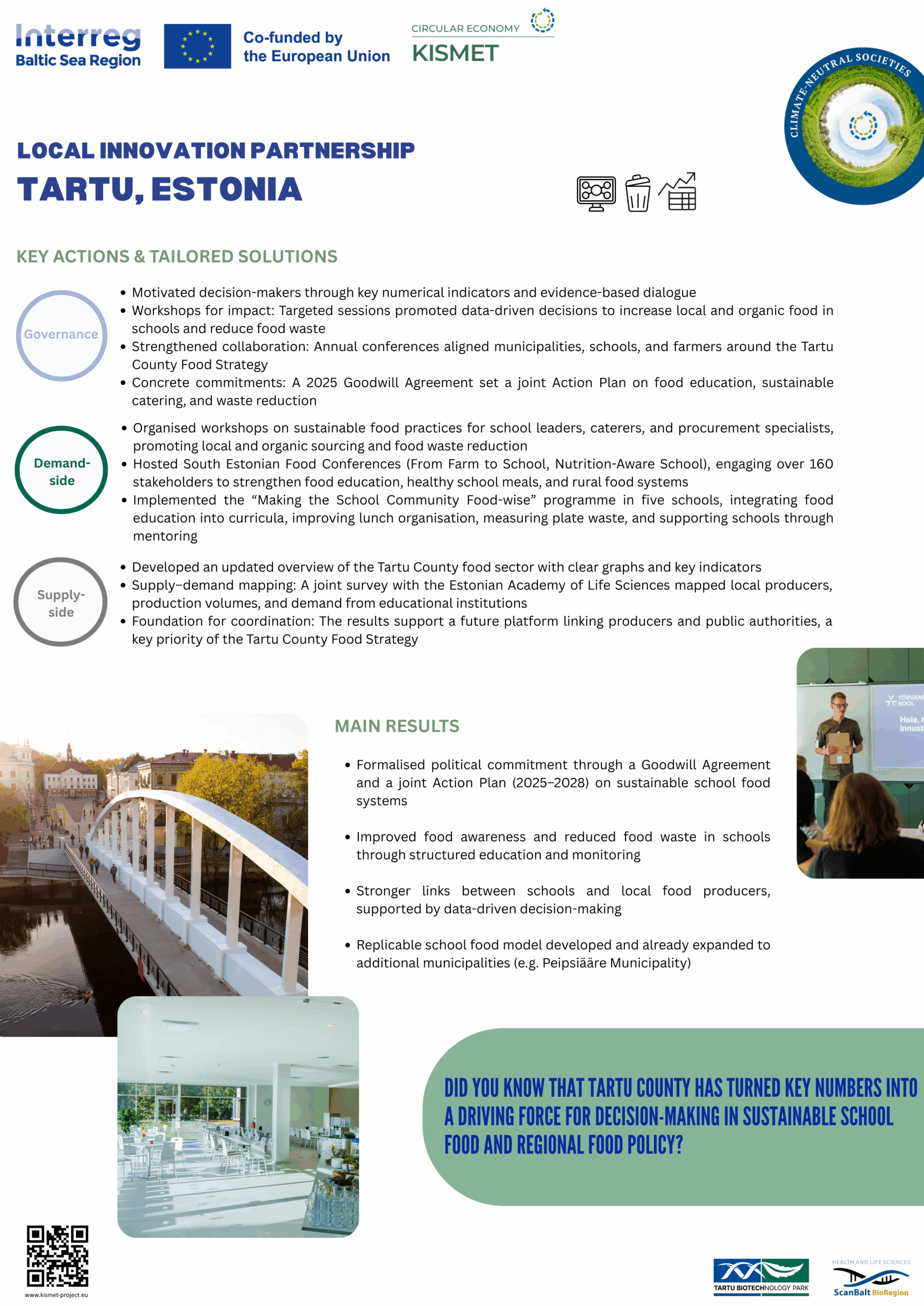
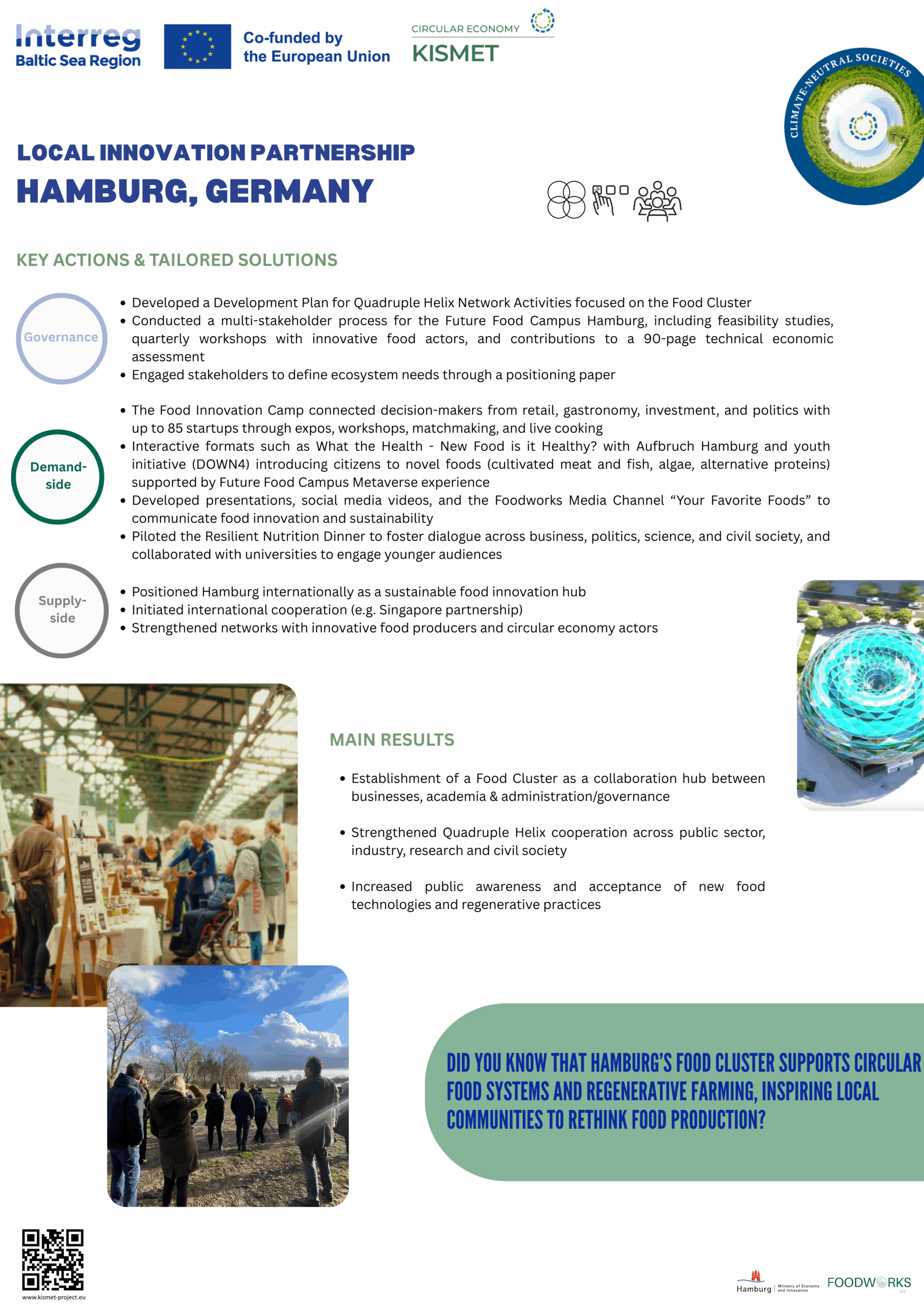
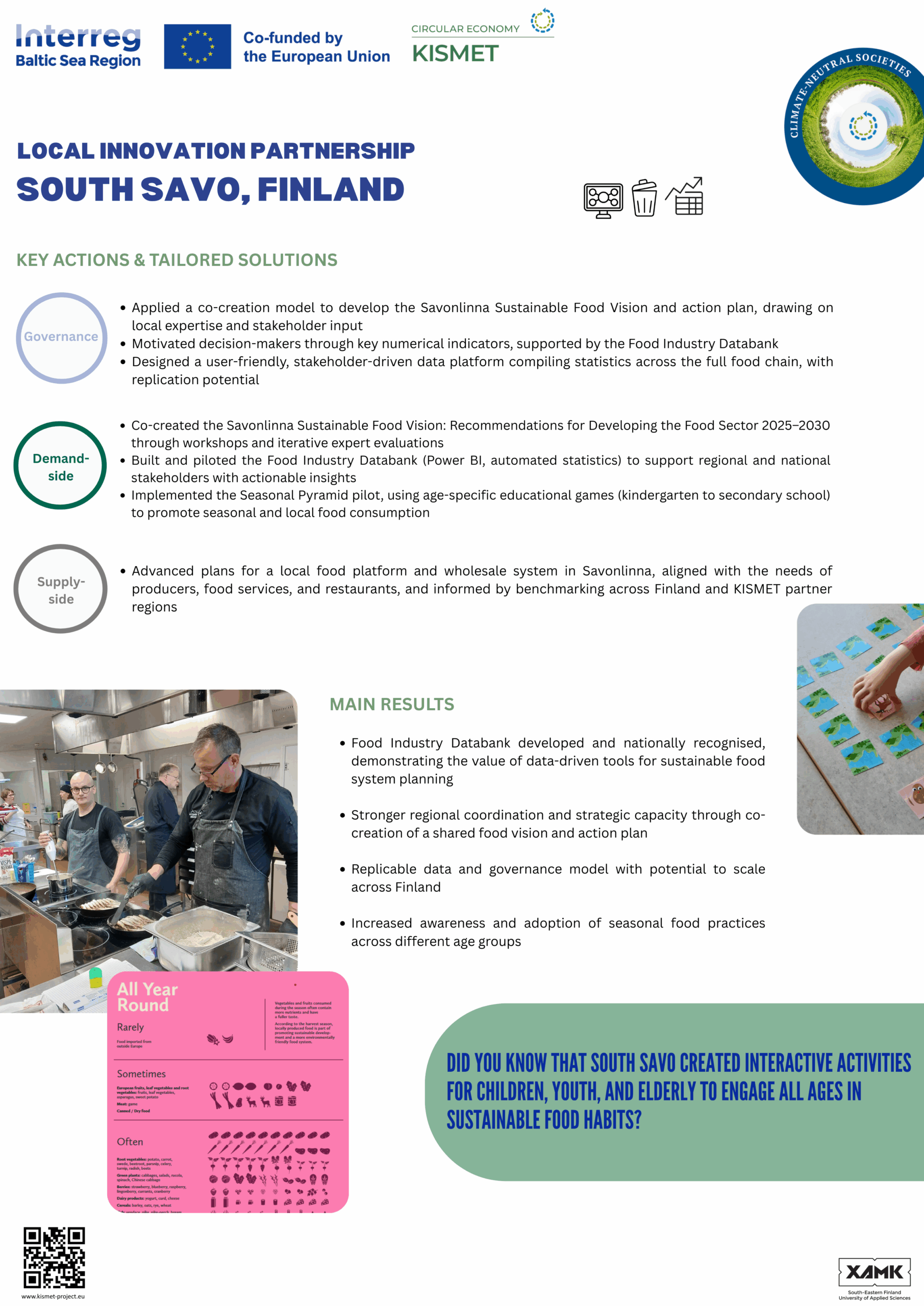
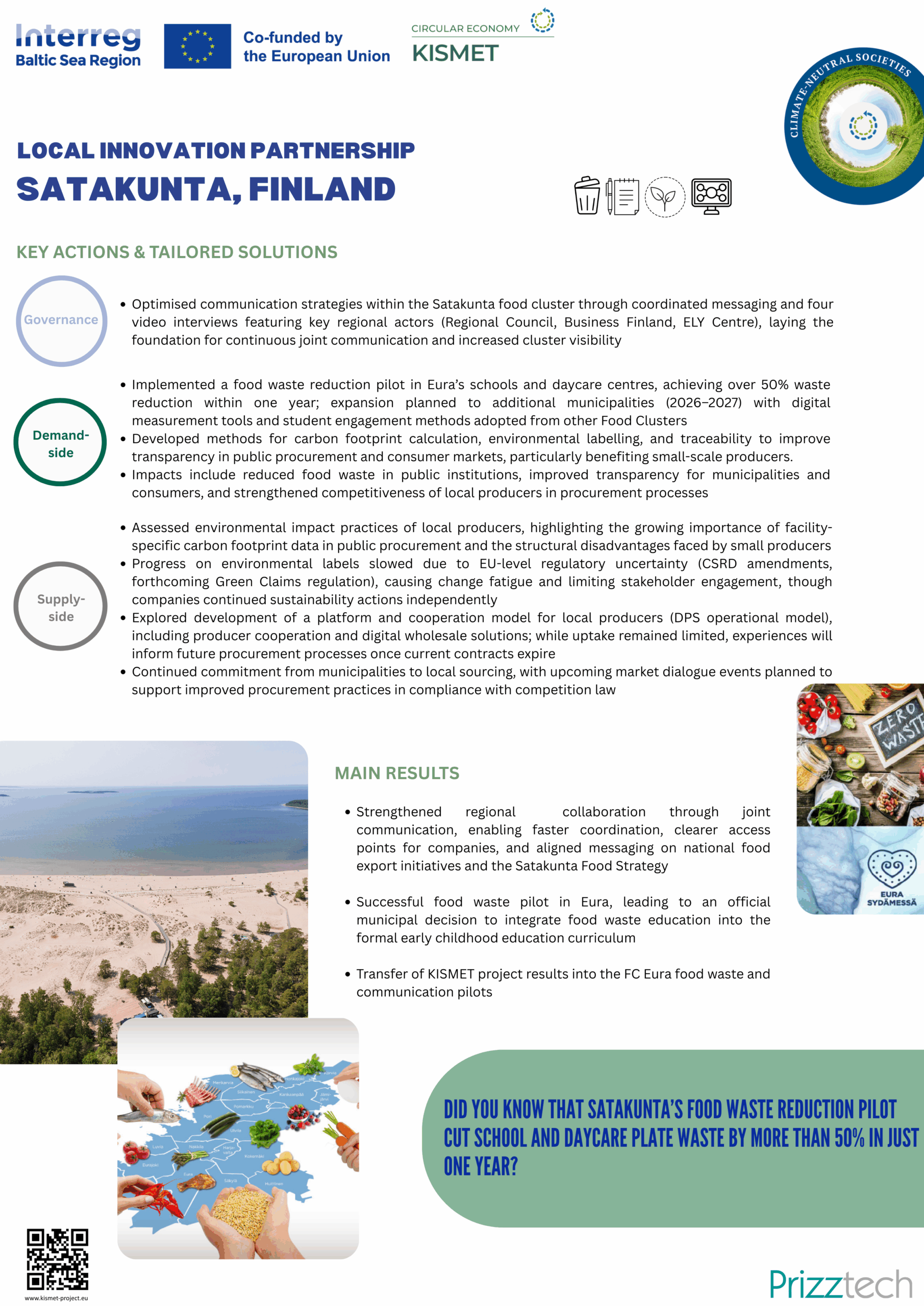
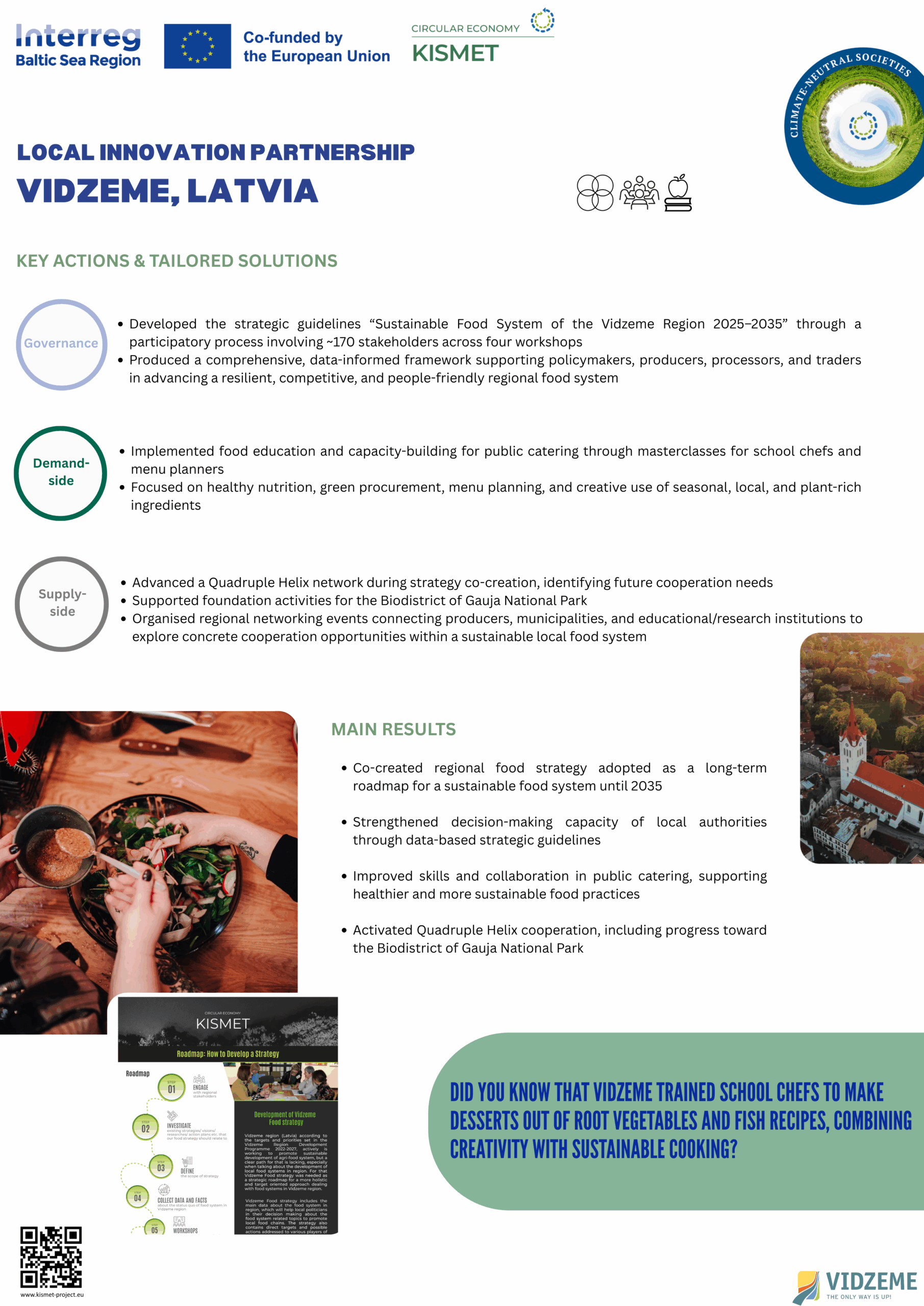
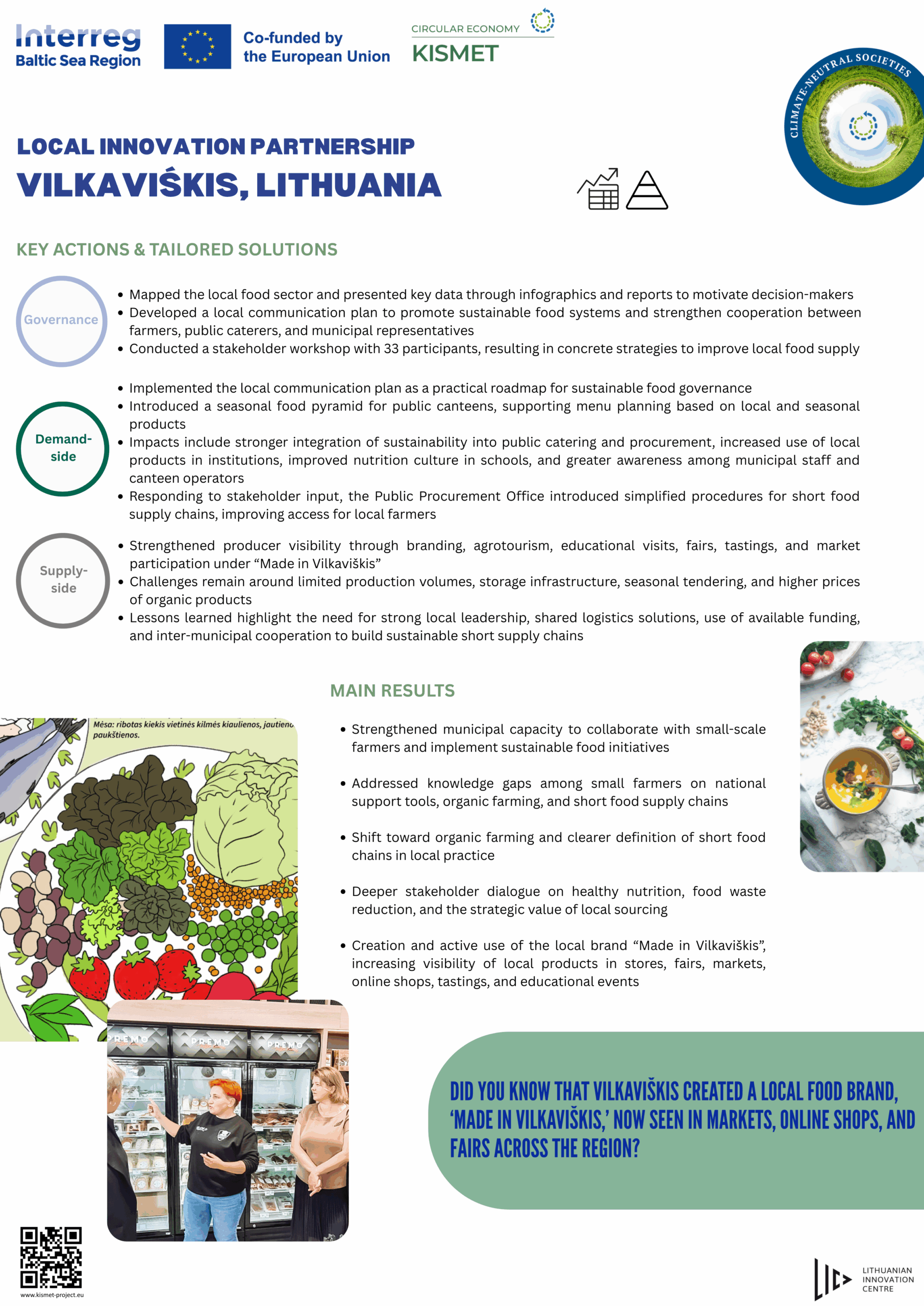
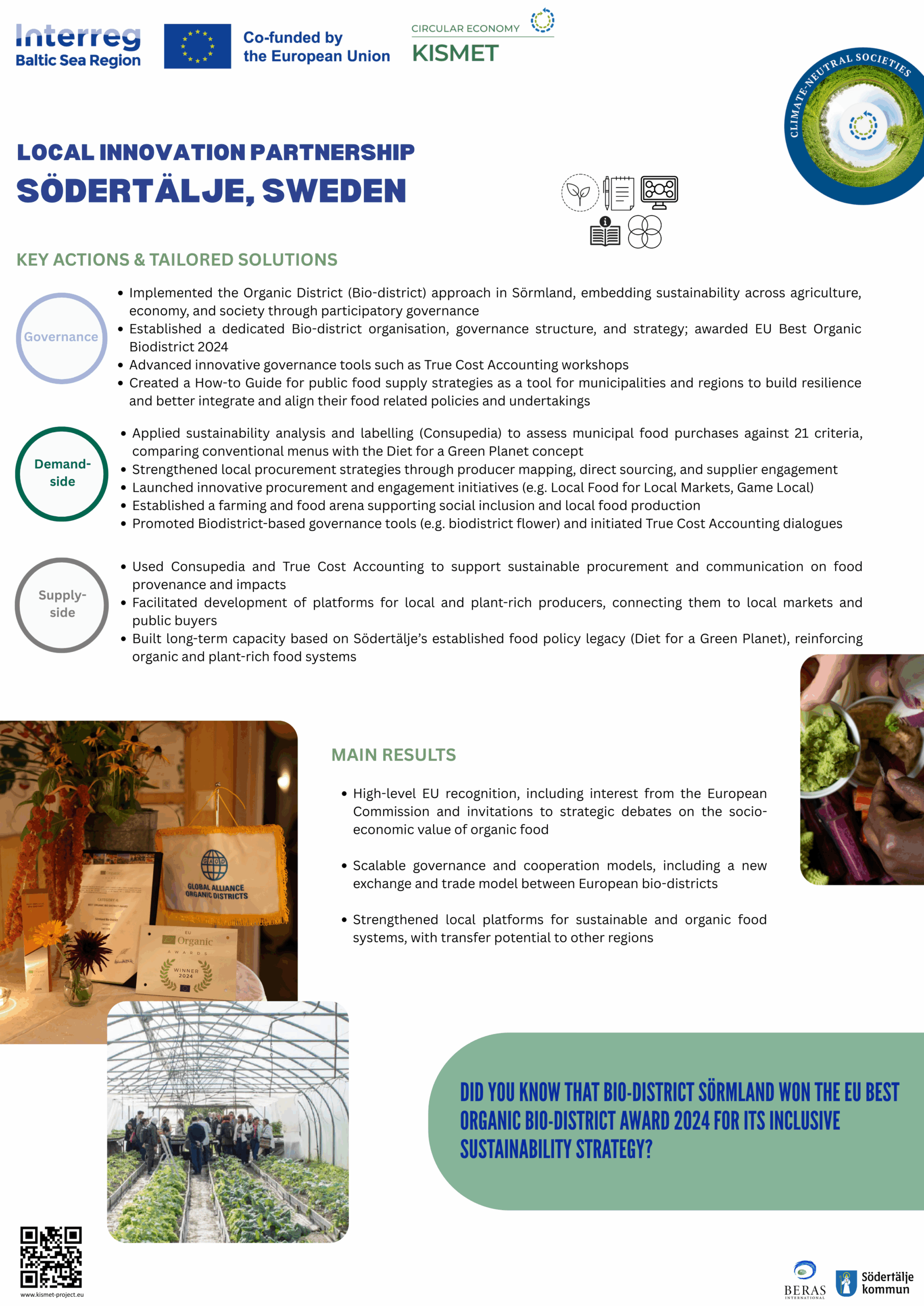
To highlight these achievements, KISMET now presents a series of visual One Pagers, each showcasing a pilot’s main results, key actions, and tailored solutions in a clear, engaging, one-page format. These One Pagers make it easy to explore how innovation, governance, and local partnerships can deliver real-world impact.
What We’ve Learned
Taken together, the pilots demonstrate that sustainable food system transformation requires more than technical fixes. KISMET’s key solutions include for instance:
-
Stronger governance and political commitment, supported by data, strategies, and long-term roadmaps
-
Local Innovation Partnerships that connect public authorities, businesses, researchers, and citizens
-
Demand-side change, from school food reform to public procurement, food education, and waste reduction
-
Supply-side innovation, supporting local producers, short supply chains, organic farming, and plant-based markets
-
Replicable tools and models, such as databanks, bio-district frameworks, food strategies, and matchmaking platforms
-
Capacity-building and awareness, empowering chefs, decision-makers, students, and communities to adopt sustainable food practices
From Pilots to Lasting Impact
KISMET’s pilot results show that local action can drive systemic change. By combining evidence-based policymaking, stakeholder engagement, and practical experimentation, the project has built lasting institutional capacity ensuring that the progress continues.
Explore the KISMET LIP Pilot Case Results One Pagers to discover how our regions across the Baltic Sea are shaping the future of sustainable food systems.

Additional links
details
-
Homepage
-
Project typeCore Project

-
ImplementationJanuary 2023 - December 2025
-
StatusCompleted
-
Contribution to EUSBSRPolicy Area Bioeconomy

-
Target groups
- Business support organisation
- Local public authority
- Regional public authority
-
Social media
-
Additional links
-
Tags