



Telling the GYPREG story...
27 January 2026
BLOG 4. – March 2025: Åland Islands and questionnaires
Mid-March 2025, meant a visit to the Åland Islands organized for the John Nurminen foundation staff and few of us from Syke. There was first Bondedag, a big farmers’ event held every other year. There, John Nurminen’s staff had a stand where GYRPREG project was presented.
The following day they arranged a GYPREG meeting for advisory panelists and interested farmers. In addition to presenting the status of GYPREG in Åland, the programme included presentations from Finnish KIPSI project. The KIPSI project aims to get gypsum spread for significant acreages in Finland and has many years of experience both with gypsum use and with engaging farmers in spreading gypsum on their fields.
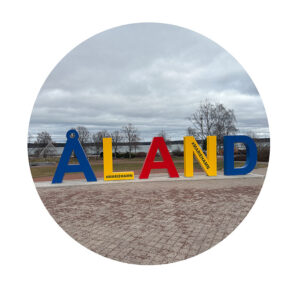
© Sari Väisänen
It hardly comes as a surprise that farmers want to be sure that anything they spread on their fields – the core of their livelihood – is safe for the soil and the crops growing in it. This applies to farmers in all countries. This is also one of the biggest challenges faced by GYPREG. That is why we are trying to find out how gypsum works in different soils across different countries, and where gypsum can be sourced in each region.
As part of solving the challenge of getting the farmers interested in gypsum, we are making surveys in each partner country. We want to know what the farmers think of this material and the idea of applying it to their fields.
In Finland, we sent the survey to all Åland farmers. Beside asking questions, we told facts about using gypsum on fields. Although a couple of farmers in Åland have applied gypsum on their fields at some point, two out of three respondents still learned at least something new about the topic from this survey. Also, about two out of three might be willing to try gypsum on their fields. Most respondents felt that using gypsum seems to be a fairly simple water-protection method and a good way to improve the condition of nearby waters. But even though improving water quality was seen very important incentive for using gypsum, the most important motivation was the possibility of receiving gypsum free of charge.
Other partner countries will also carry out their own surveys. Some will follow the Finnish model and target farmers directly, while others will tailor survey for agricultural advisors. In time, we will see what those results will tell us…
Blog by Sari Väisänen, Finnish Environment Institute (Syke)

Additional links
details
-
Homepage
-
Project typeCore Project
-
ImplementationNovember 2023 - October 2026
-
StatusOngoing
-
Contribution to EUSBSRPolicy Area Nutri, Policy Area Bioeconomy

-
Target groups
- Interest group
- International governmental organisation
- National public authority
- NGO
- Regional public authority
-
Social media
-
Additional links
-
Tags