



Successful APRIORA stakeholder workshop in Berlin
04 December 2025
The APRIORA team works currently with all their might on piloting activities to implement the prepared risk assessment approach in a practical tool and to teach it internally. In accordance with the European Urban Wastewater Treatment Directive, the risk assessment tool helps to prioritise upgrades with quaternary treatment techniques at mid-sized wastewater treatment plants. Focused on strategic water management, users can test mitigation options reducing the pollution in our waters á priori.
The partners are piloting the approach in five different BSR countries (Finland, Germany, Latvia, Poland, Sweden) and having been taught by the developer on how to apply the tool step-by-step. As a result, it is now ready to be tested by potential end-users outside the project team, namely our target groups:
- sectoral agencies like environmental protection agencies,
- wastewater treatment plant operators and
- water management related experts.
Time to transfer the solution: Taking the chance in Berlin
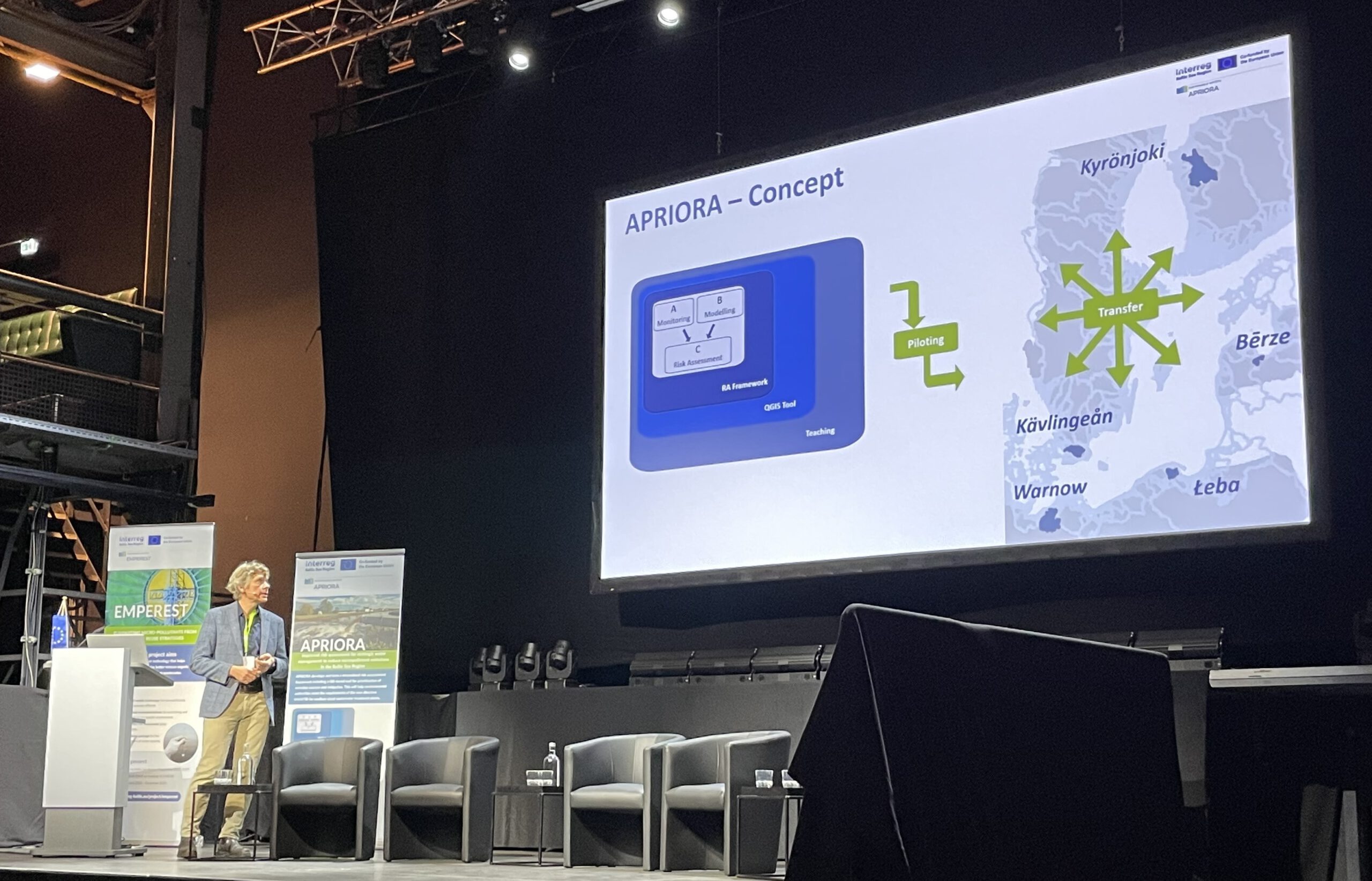
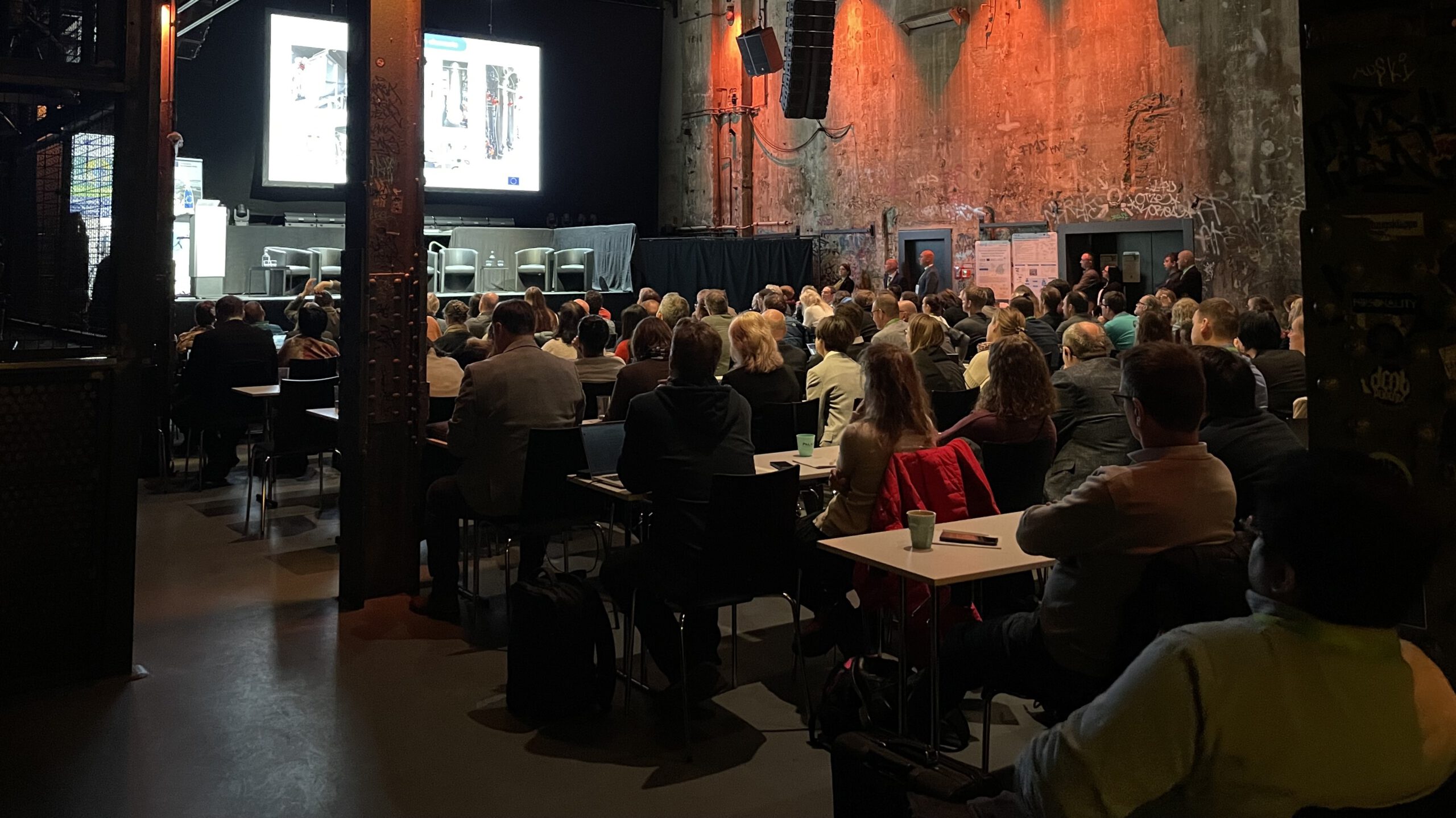
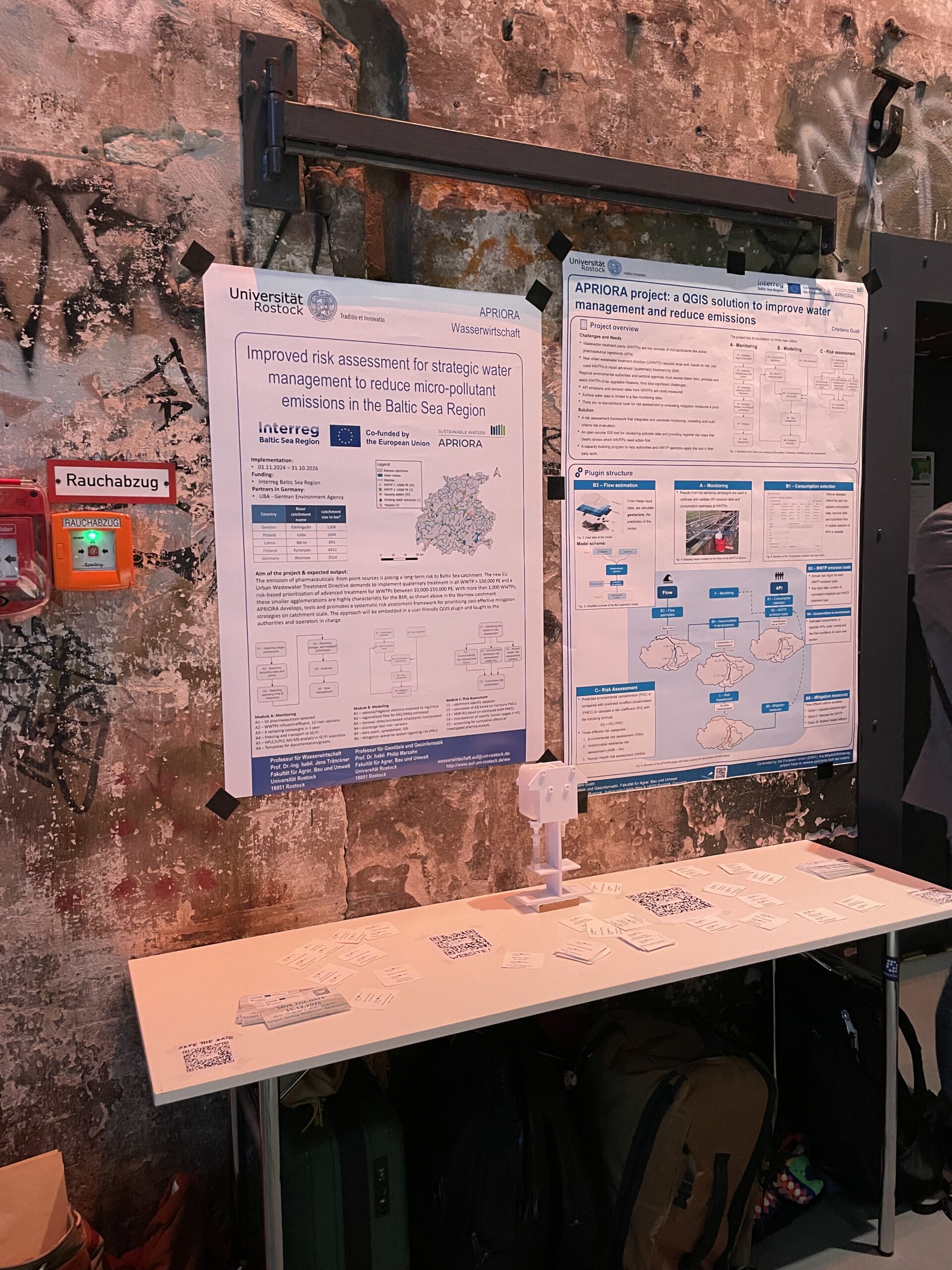
Our close collaboration with our sister project EMPEREST has led to the joint event in Berlin, titled ‘The Future of Water in the Changing World: Innovations in PFAS and micropollutants’ on 19-20 November 2025. The successful conference attracted around 170 participants, including local and national experts from Germany, water utilities, water associations and environmental agencies, researchers and representatives from related sister projects (see this EMPEREST article). Our project leader Jens was invited to present the APRIORA approach to this impressive audience.
As a special, the APRIORA team organised a practical stakeholder workshop for end-users of the developed risk assessment tool. Good planning is required for a professional workshop involving both participants and the APRIORA team: How did we tackle this exciting challenge?
Preparation is half the battle: Getting ready to share
Once the date had been set, the whole team started brainstorming ideas, formats and materials, as well as considering what was already on the table: Our partners’ piloting experiences and an established teaching team we had formed during the project’s second year. This team, composed of representatives from each partner country, received training from the tool developer, who led several sessions on the application, with the aim of training future teachers. This so-called ‘teach-the-teacher’ team is now our internal expertise and is capable of transferring hands-on knowledge to other regions and stakeholders. With this core team, the format of our workshop became clear: While Cristiano, the developer, will present the content and demonstrate the tool, the teaching team will be present in the audience to support participants.
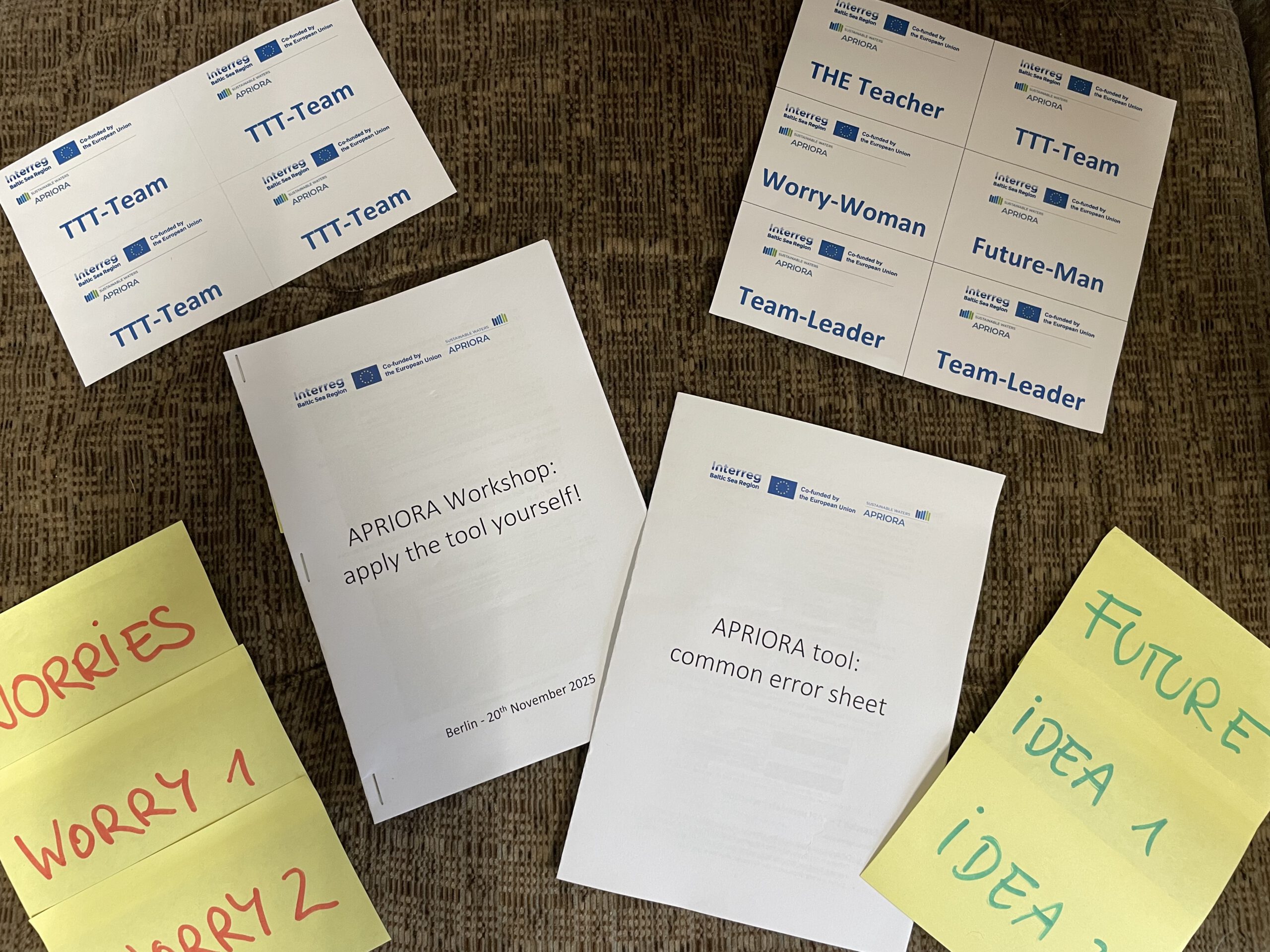
With the partners involved, we started preparing the agenda, introduction slides, practical exercises, name tags, common bug list and tools for gathering feedback from outside the partnership. A promotional description of the workshop was included in the conference registration link to attract more participants.
Time to get practical: Applying the tool yourselves!
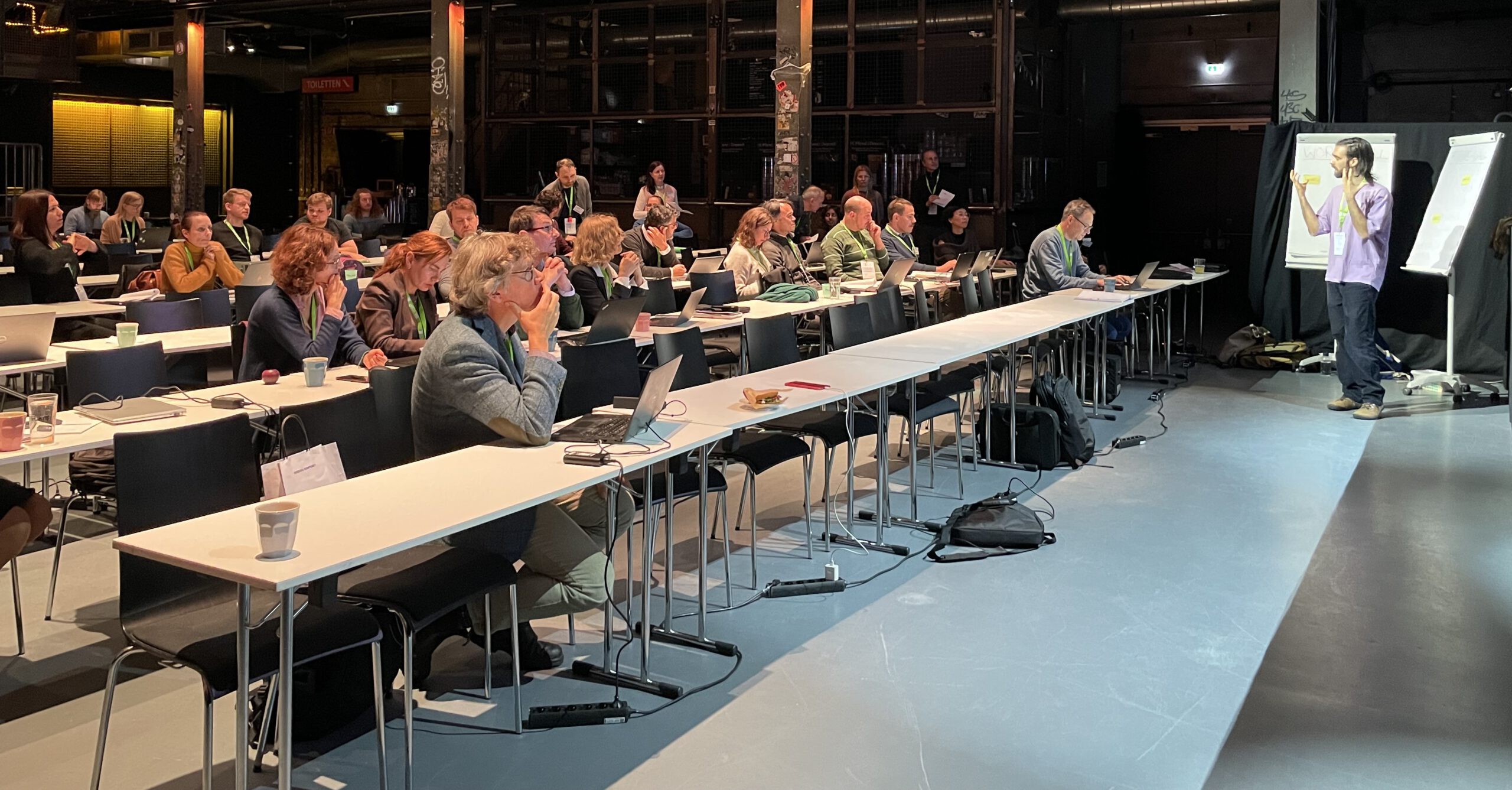
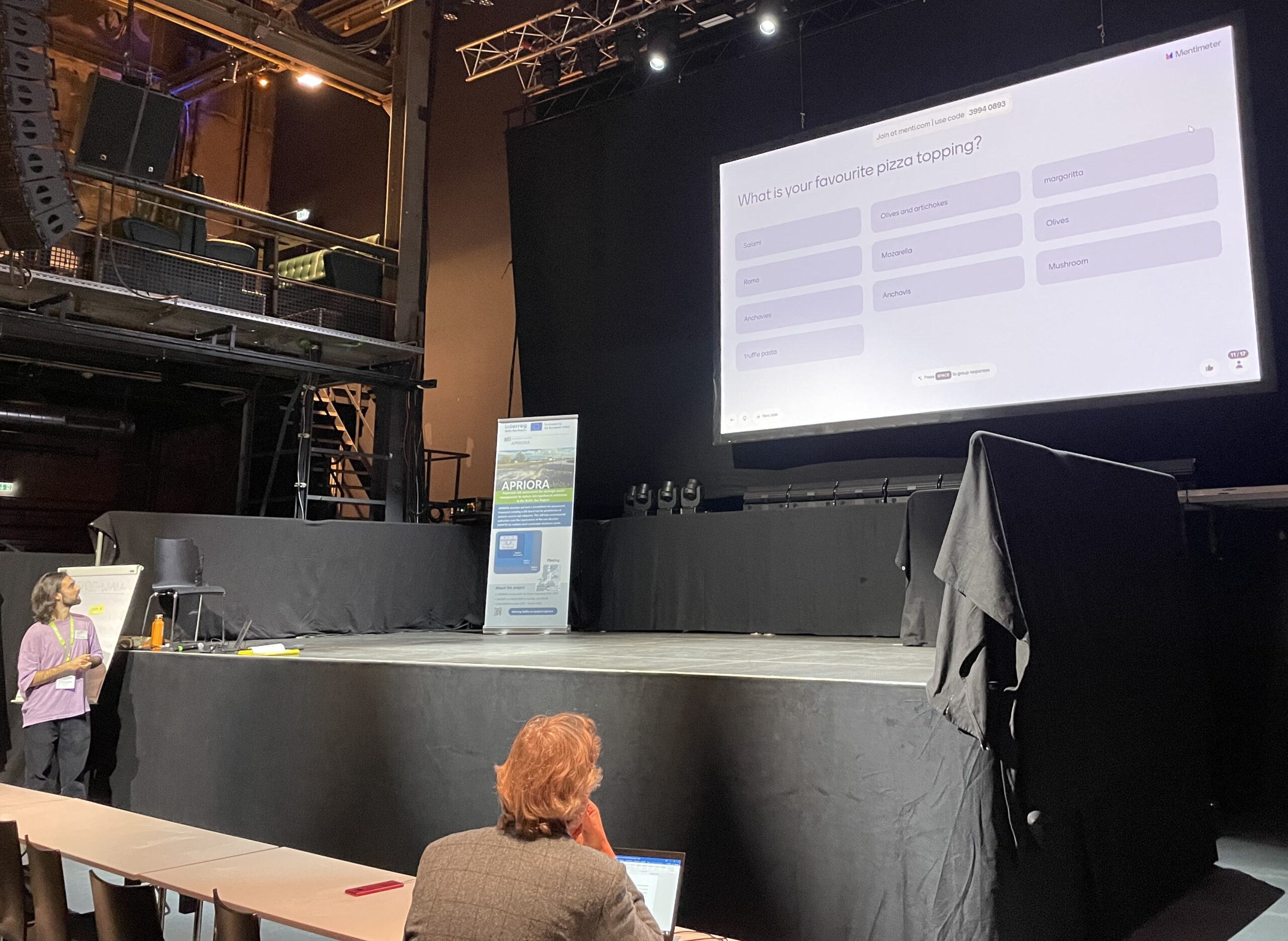
We were delighted to welcome around 30 participants eager to explore the pharmaceutical risk assessment path within our QGIS tool, and to meet the developer and experts. Firstly, we set the scene by introducing the workshop: This involved introducing the APRIORA team and their roles, installing the QGIS software where needed, providing extra devices for the participants, and showing the material that would be covered over the next 2.5 hours. Ice-breaker Mentimeter questions encouraged everyone to interact and share their initial thoughts on pizza toppings or QGIS experiences.
Following an introduction to the main aim and functions of the APRIORA tool by its developer the practical session began. Led by Cristiano and his teaching team, the members of the workshop were guided through the step-by-step application of the tool. Using the open-source QGIS software on their own devices, the participants gained practical experience. Four prepared exercises accompanied the process from pharmaceutical consumption to risk maps of catchments. To help them understand the tool’s functionalities, a catchment dataset was provided. Users were able to apply the tool using integrated data pools of pharmaceuticals, as well as add custom substances such as caffeine, which we included as an example.
The teacher-team’s direct support proved to be very beneficial: As many in the audience had no experience of using the QGIS software, issues were resolved quickly and easily through direct interaction. The exercise handout was another well-prepared piece of material. If a participant lost track of the current exercise or was ahead of it, they could catch up or explore the application in more depth. At the same time, interruptions had less of an impact on the overall progress of the workshop.
Curious now? If you want to the tool and exercises that we did at the workshop, you can do it with the material that you can find here!
Collecting feedback from end-users: WORRY and FUTURE walls
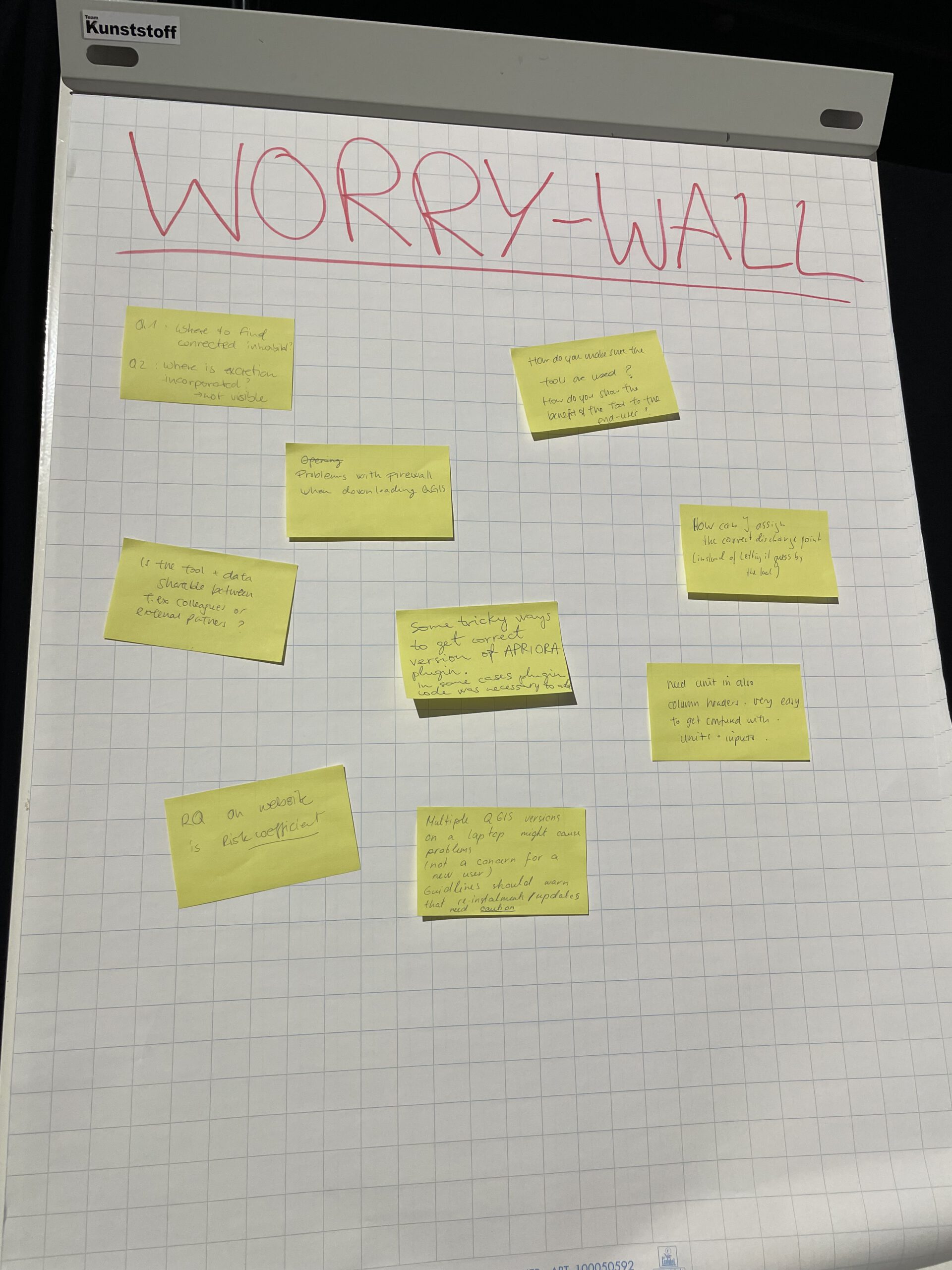
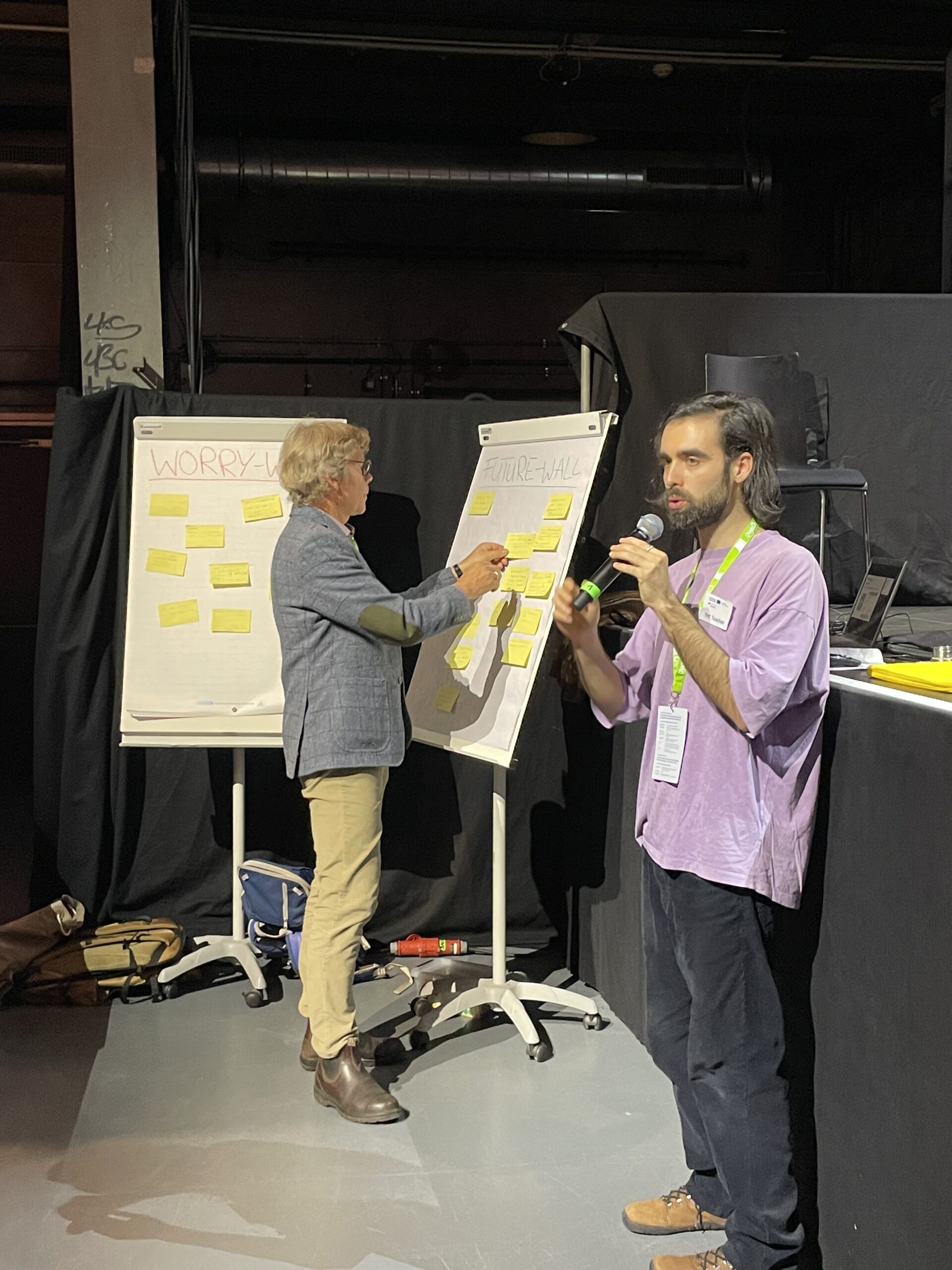
Our aim was to collect feedback from all participants who were using the APRIORA tool for the first time. In addition to the usual questionnaire at the end of the workshop, we came up with the following approach during the workshop: We set up WORRY and FUTURE walls. These two flipcharts were places where participants could share their thoughts and comments on hurdles and potential ideas for improving the tool in the future. Supported by the teaching team, our ‘WORRY woman’ Alena and ‘FUTURE man’ Angelo collected sticky notes with comments from participants throughout the workshop.
At the end, Cristiano and Jens, presented the WORRY and FUTURE walls, initiating a final discussion with the whole group. It transpired that the new perspective from outside the partnership provided valuable insights into how to adapt the tool. Some hurdles were considered easy to avoid by making small changes to the manual or the tool itself. However, we all see a lot of potential for this risk assessment tool in the future, especially when more boundary conditions are set by European actors for this task.
Acknowledgements: Special thanks to EMPEREST and our participants
We would like to express our gratitude to our sister project, EMPEREST, for inviting us to co-organise this event in Berlin. It is a unique opportunity to present a workshop to such a large potential audience representing many relevant stakeholders, and we are grateful for the wonderful collaboration within the Baltic Sea Region Interreg family. It is good to know that we will continue with the HAZGONE platform project in future!
Last but not least, we would also like to thank all our active and open-minded participants! You provided valuable insights and feedback on our tool, and made this workshop a real success and a lot of fun. 🙂

Additional links
details
-
Homepage
-
Project typeCore Project
-
ImplementationNovember 2023 - October 2026
-
StatusOngoing
-
Contribution to EUSBSRPolicy Area Hazards

-
Target groups
- Infrastructure and public service provider
- Sectoral agency
-
Social media
-
Additional links
-
Tags