





Rail-Ferry Resilience Highlighted at the European Intermodal Summit
03 December 2025
The Blue Supply Chains project took part in the 6th edition of the European Intermodal Summit, an annual event that gathers policymakers, logistics experts, intermodal operators, and industry leaders to discuss the future of freight transport in Europe. This year’s summit placed a strong emphasis on capacity, competitiveness, safety, interoperability and resilience – all key elements for building a modern and sustainable transport system.
BSC Contribution: The Role of Rail – Ferry Connections in Building Resilient Transport
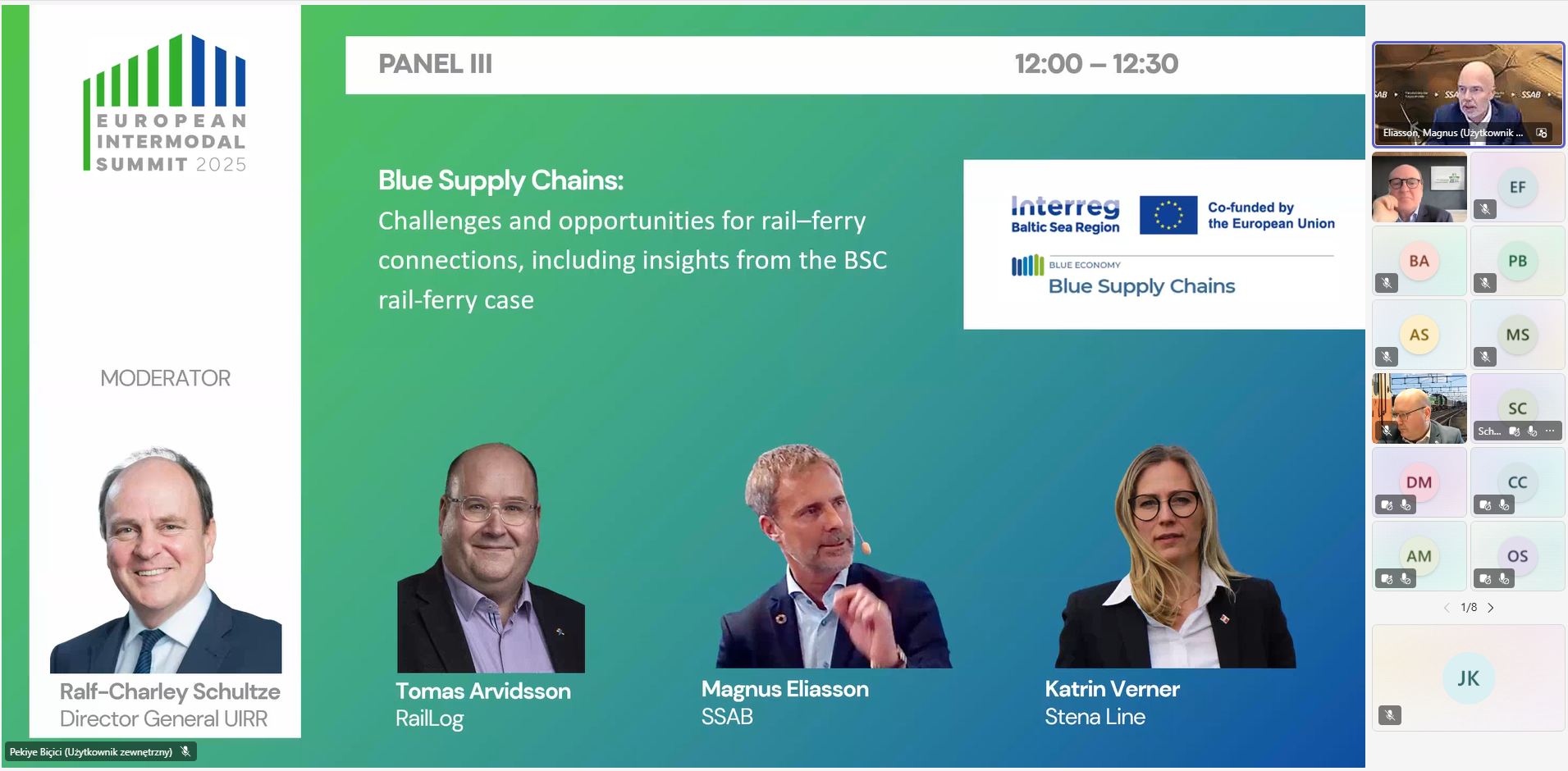
Blue Supply Chains was featured in Panel III: Resilience, where representatives from RailLog, SSAB and Stena Line presented insights from the BSC rail-ferry case in the Baltic Sea Region.
Their contributions demonstrated how well-functioning rail–sea corridors: the Rostock–Trelleborg link – help strengthen the stability of supply chains by offering:
-
infrastructure alternatives when primary corridors face congestion, capacity limits, or construction,
-
operational flexibility during disruptions caused by strikes, extreme weather, or geopolitical tensions,
-
modal shift opportunities that reduce emissions and support the EU’s climate objectives,
-
and improved connectivity across borders, enhancing the efficiency of northern European logistics.
Why Resilience Matters for Blue Supply Chains
As highlighted in the session, resilience is increasingly vital for freight transport across the Baltic Sea Region. The BSC project demonstrates that integrating rail and maritime transport can significantly boost a corridor’s ability to adapt to pressure and maintain continuity – especially in times of uncertainty.
The discussion also reflected broader European efforts, such as the Military Mobility initiative, which recognises the importance of flexible and coordinated infrastructure for both civil and strategic needs.

Additional links
details
-
Homepage
-
Project typeCore Project

-
ImplementationJanuary 2023 - December 2025
-
StatusCompleted
-
Contribution to EUSBSRPolicy Area Transport, Policy Area Ship

-
Target groups
- Business support organisation
- Infrastructure and public service provider
- National public authority
-
Social media
-
Additional links
-
Tags