




Innovative monitoring approaches for nature-based solutions
03 December 2025
At the start of City Blues project, partner cities were asked about their main challenges in monitoring and maintaining their NBS. First of all, maintenance is not always considered early enough in the planning phase and responsibilities between municipal departments remain often unclear. Then there are operational challenges: different technical standards and tools, missing monitoring infrastructure, unstructured documentation, limited staff and budgets, and many small NBS scattered across the city are difficult to equip with sensors. Retrofitting existing NBS with monitoring devices can also be complicated.
Four easy to use monitoring approaches
While the planning-related issues need to be addressed early in the life cycle of an NBS, many of the operational challenges can be tackled with new, practical monitoring approaches. In City Blues, KWB and the partner cities are therefore testing approaches that are easy to use, cost-effective and suitable for many different types of NBS. Ideally, these methods will help municipalities establish a shared technical standard and collect reliable data over large areas in a minimally invasive way.
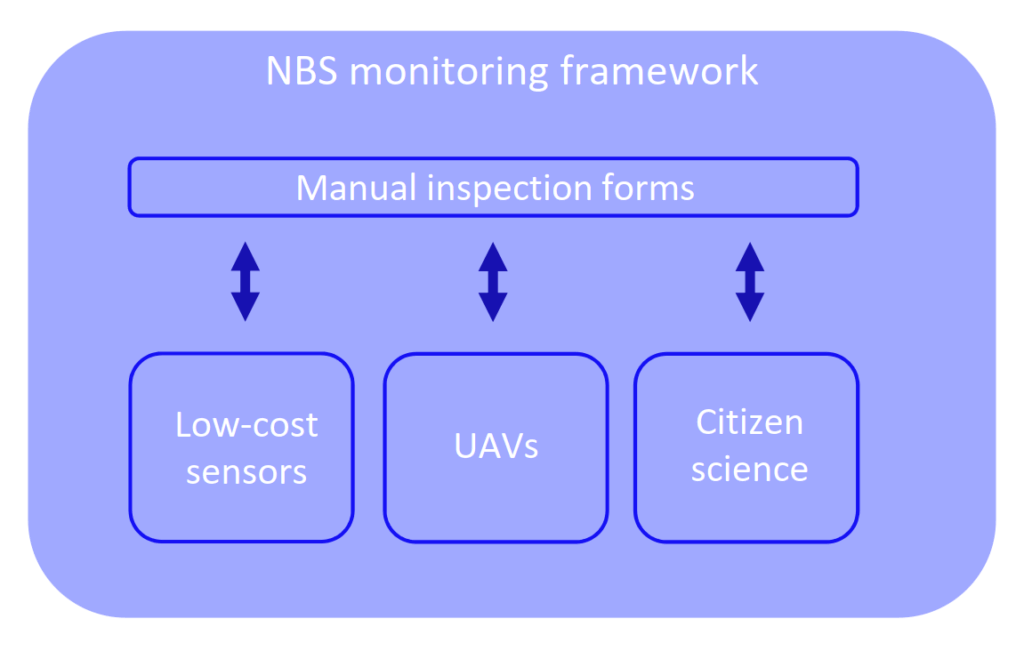
Based on the cities’ needs, City Blues is piloting four complementary monitoring approaches:
- Digital manual inspection forms as a low-tech option that any city can use to document maintenance needs and visible failure modes on site.
- LoRaWAN low-cost sensors that monitor, for example, water levels, soil moisture or local climate conditions and transmit data over long distances with minimal energy use.
- Unmanned aerial vehicles (UAVs or drones) equipped with RGB and multispectral cameras to quickly survey large areas and assess structural condition and vegetation health.
- Citizen science, where residents help to report observable changes or problems in NBS, allowing cities to cover more locations with limited resources.
Currently monitoring campaigns are ongoing in Aarhus, Malmö and Tampere. The experiences and lessons learned will be later integrated into the NBS model, project’s main output.
LoRaWAN low-cost sensors campaign in Aarhus
In Aarhus, City Blues is testing whether low-cost LoRaWAN sensors can help municipalities monitor infiltration basins more efficiently than manual inspections. The focus is on detecting especially signs of clogging, which can significantly reduce infiltration capacity. The campaign began in May 2025 and is ongoing.
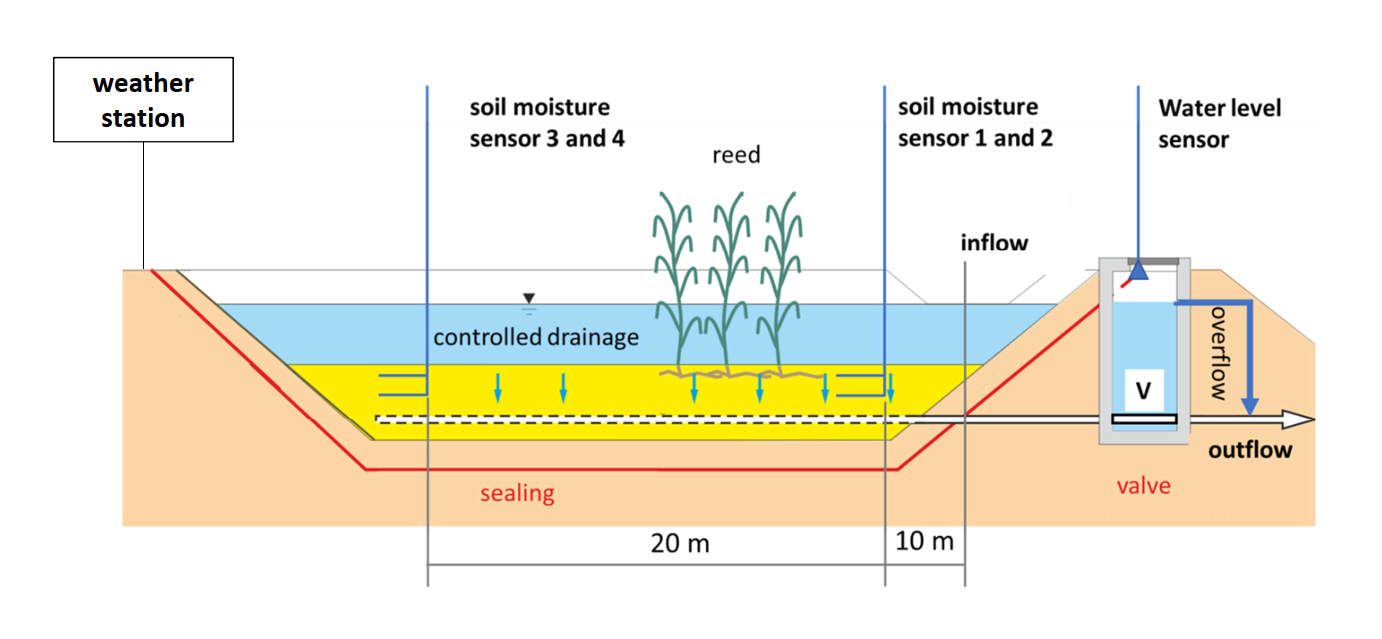
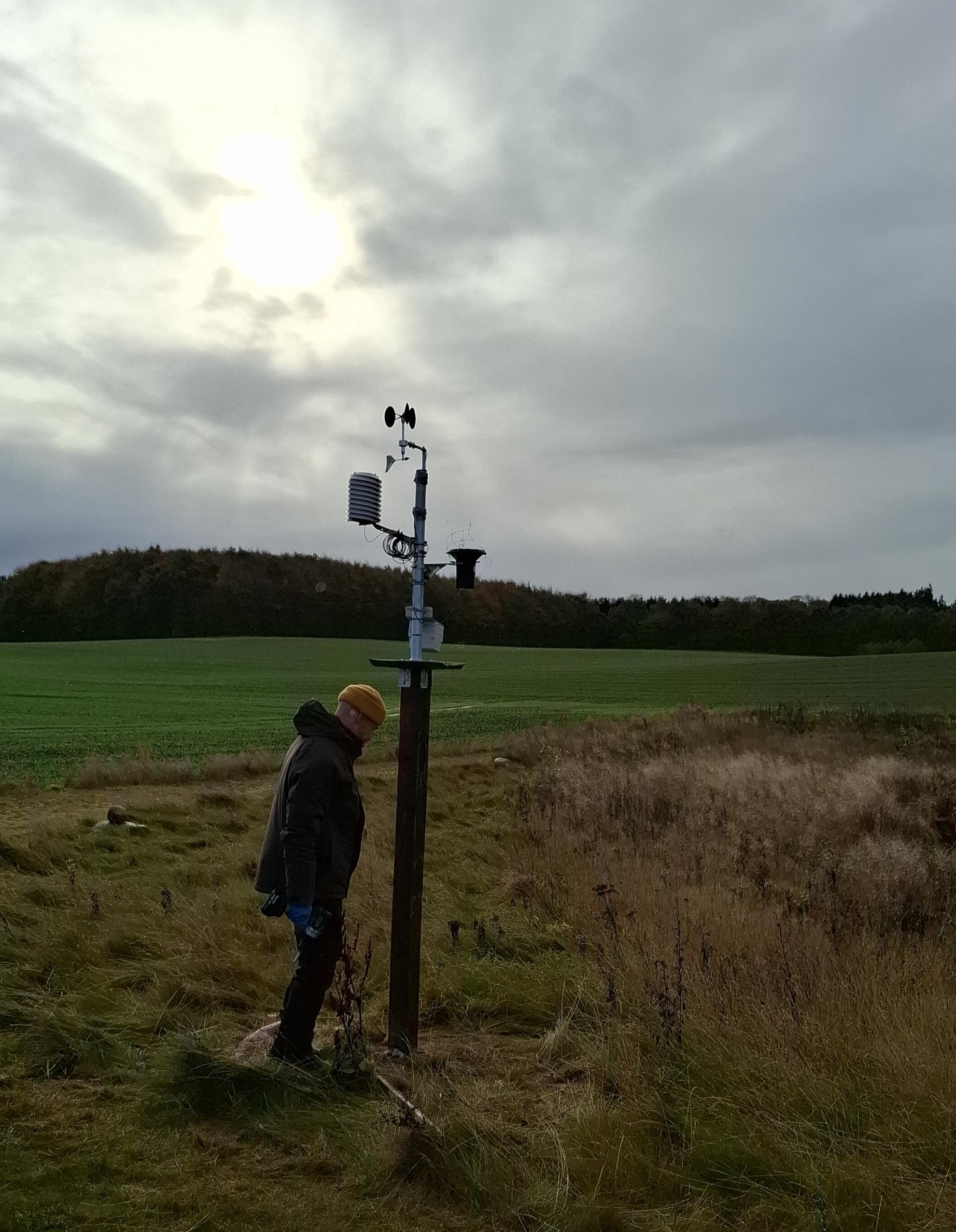
Two infiltration basins were selected as pilot sites. Each site is equipped with soil moisture sensors at two depths (10 and 30 cm) and water level sensors in the manholes to measure inflow. Furthermore, one weather station is placed in the area for local climate data. All devices transmit data via LoRaWAN, allowing long-range, low-energy communication suitable for distributed NBS. Sensor data will later be compared with digital manual inspections to assess how well low-cost sensors can support municipal monitoring routines.
The data will be fed into a simple model, which continuously compares planned and actual infiltration capacity. This makes it possible to identify decreasing performance early and trigger maintenance before problems become visible.
In Malmö the monitoring campaign utilizes drones
In Malmö, City Blues is exploring whether drones can provide faster and more precise condition assessments of nature-based solutions than traditional manual inspections. The team is monitoring three types of NBS: a green roof, an urban wetland and a swale.
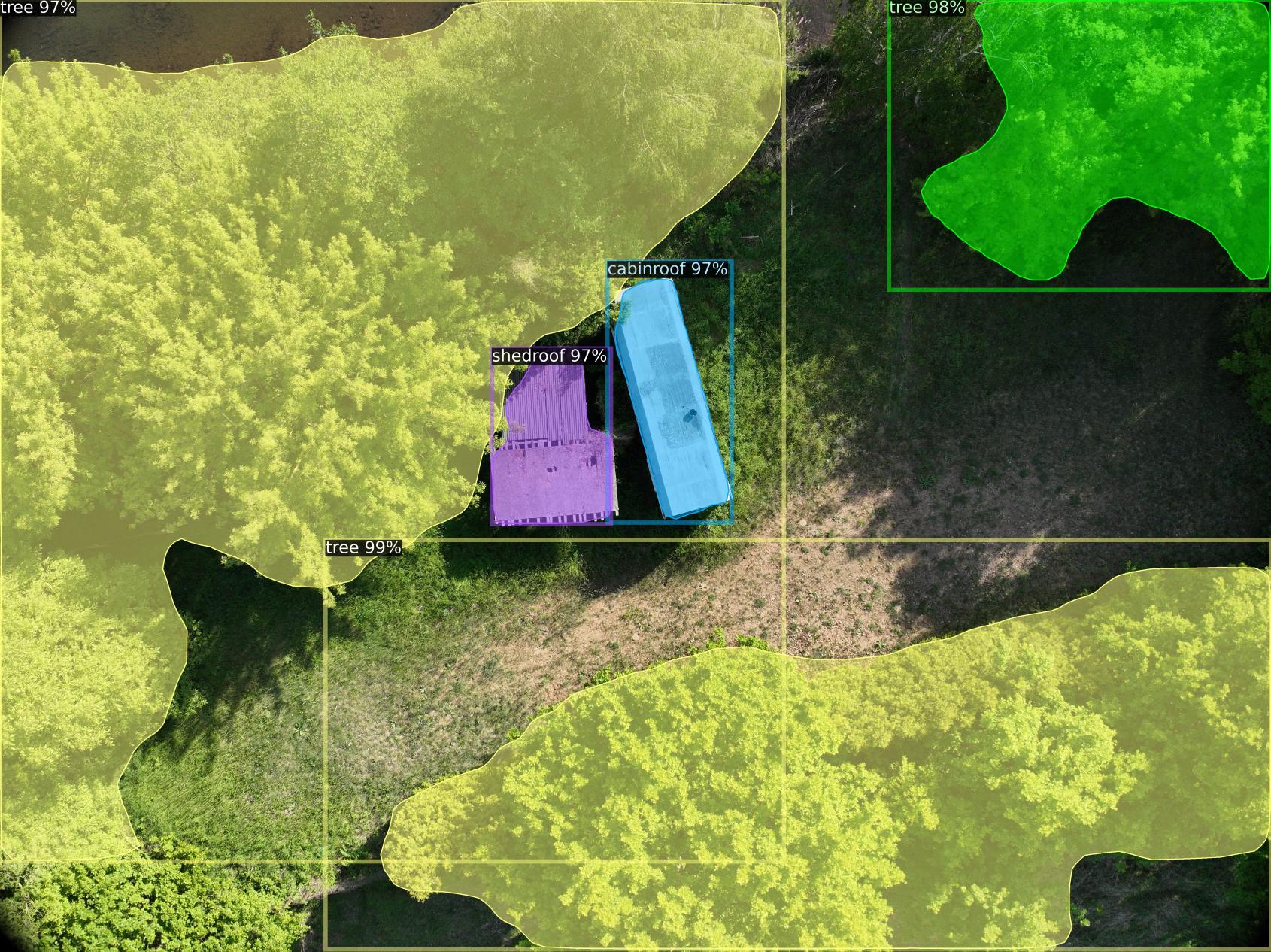
For the campaign, a DJI Mavic 3M is used, equipped with both a high-resolution RGB camera and a multispectral sensor. This combination makes it possible to identify visible structural issues as well as assess vegetation health through indices such as NDVI. The goal is to develop a fully automated workflow in which objects are detected, failure modes are classified and a written evaluation report is generated automatically.
The monitoring began in May 2025, and all flights have been completed. At the moment, the project team is waiting for final approval from Swedish authorities before analysing the data. A first demonstration of object recognition was created using example drone data from Brandenburg. Next the Malmö results will be compared with manual inspection data to evaluate how effectively drones can support municipal maintenance of NBS.
Citizen science campaign in Tampere
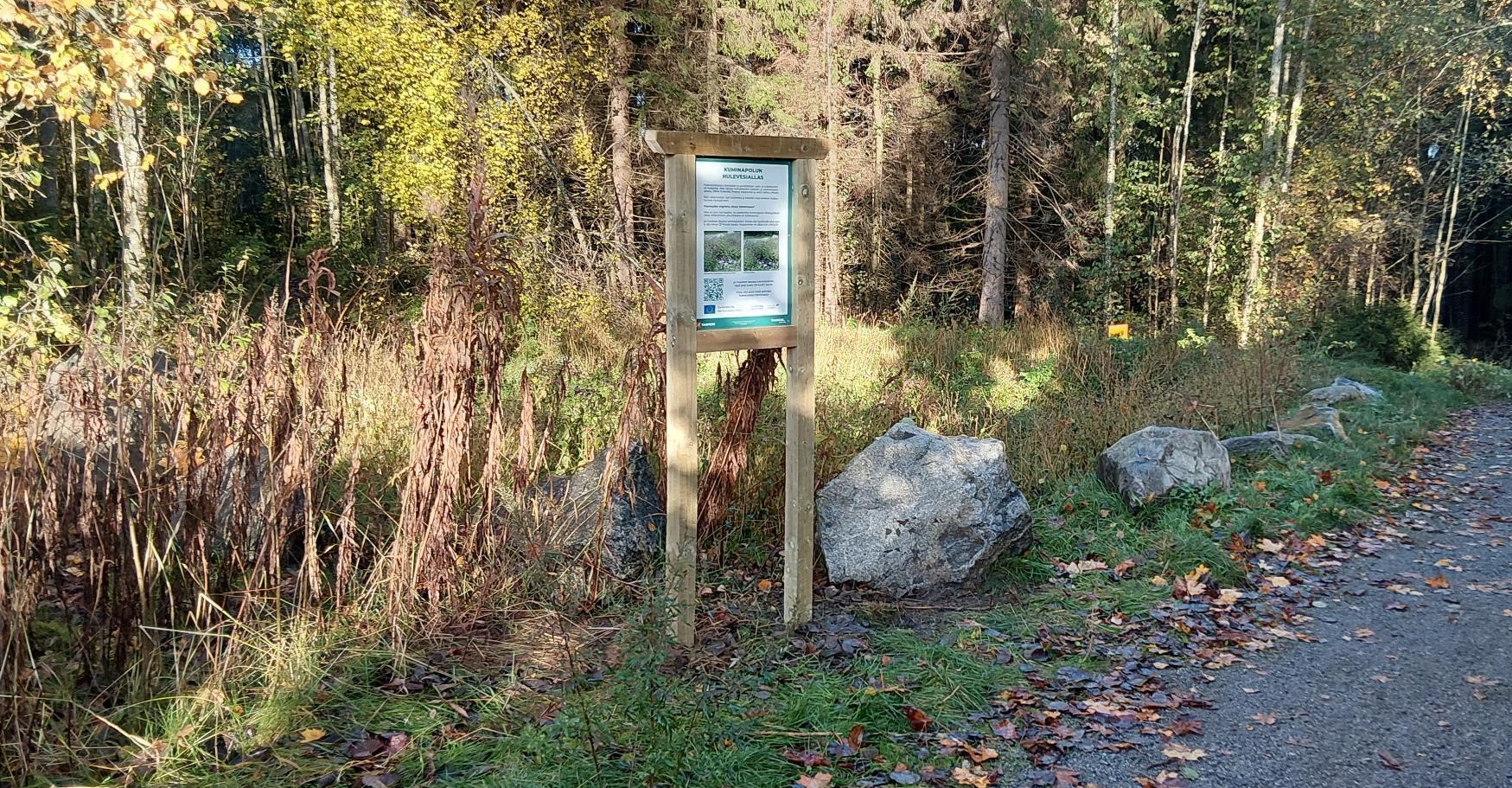
In Tampere, City Blues is testing how citizen science can support municipalities in monitoring nature-based solutions. The aim is to understand whether residents can help detect visible failure modes and provide reliable input for maintenance planning. For the campaign, two signs were installed at selected NBS sites, a retention basin and a flood meadow.
Each sign includes simple guiding questions and example images that help citizens identify issues such as sediment accumulation, damaged structures or poor vegetation condition. Residents can report their observations directly to the local authorities via digital link or by contacting via email or phone.
The campaign started in September 2025 and data collection is ongoing. The results will help determine to what extent citizen science can complement existing municipal monitoring and expand coverage with minimal additional resources.
Looking ahead – strengthening NBS through smarter monitoring
The City Blues campaigns examine how sensors, drones and citizen engagement can give cities new, practical tools to understand how their NBS perform over time. In the next project phase, the collected data will be analysed and translated into clear guidance that municipalities can easily apply in their daily work.
By testing these approaches in real urban settings, City Blues supports cities in moving from simply building NBS to maintaining them as reliable, long-lasting assets. Better monitoring enables earlier action, smarter planning and more resilient NBS.

Additional links
details
-
Homepage
-
Project typeCore Project

-
ImplementationNovember 2023 - October 2026
-
StatusOngoing
-
Contribution to EUSBSRPolicy Area Nutri

-
Target groups
- Infrastructure and public service provider
- Interest group
- Local public authority
- NGO
-
Social media
-
Additional links
-
Tags