




This wrap-up has been compiled by the Programme
Priority 2 Water-Smart societies
Objective 2.1 Sustainable waters
Lakes connect:
Wrap-up of project achievements
There was limited cooperation between local authorities, scientific organisations and NGOs in Latvia, Lithuania and Poland working on lake protection. The Interreg project Lakes connect created a networking hub with knowledge-based solutions to exchange experience, reduce water pollution and support sustainable practices in tourist regions.
Highlights
Lakes connect
Highlights
Lakes connect
The project Lakes connect established a networking hub for local authorities, scientific organisations and NGOs in Latvia, Lithuania and Poland to initiate joint work on reducing the impact of tourism on lakes in Poland, Lithuania and Latvia.
To achieve that, the project developed the following:
- The model of transnational cooperation between local authorities to improve lakes protection
- Transnational cooperation model for local authorities, science units and other organisations
- Green concepts for municipalities to prevent lake pollution
Project
Details
Project type
Small project
Project duration
October 2022 – May 2024
Contribution to the EUSBSR
PA Tourism
Budget in million
EURO
Involved
Countries
Lead partner
Project partners
Project Details
Project type
Small project
Project duration
October 2022 – May 2024
Contribution to the EUSBSR
PA Tourism
Budget in million EURO
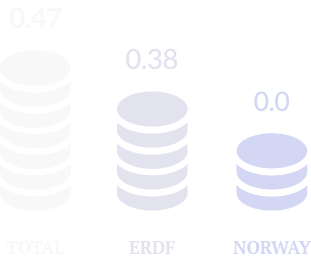
0.47 total // 0.38 ERDF // 0.0 Norway
Involved Countries
Lead Partner: Poland
Project Partners: Latvia // Lithuania // Poland
Model for local authorities
Model for local authorities
Lakes connect developed a model for transnational cooperation for local authorities in Poland, Lithuania and Latvia to facilitate dialogue, plan common actions, and jointly assess lake pollution linked to tourism. The model includes recommendations, tools, strategies, and information on funding sources that help local authorities work together more effectively. A key component is a database of contacts of authorities in Poland, Latvia and Lithuania interested in lake protection activities across borders.
Several organisations beyond the project partnership already use the model in practice, such as the Regional Environmental Protection Inspectorate in Olsztyn, Delegation in Giżycko, Polish Waters, River Basin Authority in Giżycko (Poland), which were also involved in its development. Their feedback and data were crucial for refining the model so that it responds to regional environmental challenges and aligns with regulatory requirements.
The database and recommendations help local government officials expand their transnational networks and implement effective measures to reduce the impact of tourism on the lakes in Baltic countries and beyond.
Cooperation model for authorities, science units and others
Cooperation model for authorities, science units and others
Lakes Connect designed a transnational cooperation model for local authorities, science units and other organisations, involved in the protection of water resources.
The model consists of:
- an online interactive map that visualises the distribution of organisations interested and involved in lake protection from Poland, Latvia and Lithuania,
- a video on how to use the map and
- instructions on how to involve organisations in the network.
The model serves as a networking hub for connecting decision-makers, scientific units, NGOs in partner countries to mitigate water pollution in tourist lakes.
The model is already in use. For example, Polish municipalities involved in the Foundation for the Protection of the Great Masurian Lakes apply the model to facilitate joint environmental projects and policy-making. It helps Municipal Authorities of Giżycko and Mikołajki to improve tourism management and environmental protection in the area. Pozezdrze Municipality uses the model to enhance public education and increase community engagement in lake conservation, particularly around Lake Krzywa Kuta.
Green concepts for municipalities to prevent lake pollutions
Green concepts for municipalities to prevent lake pollutions
Local authorities from Poland, Latvia and Lithuania, together with research organisations and NGOs, developed green concepts for municipalities to prevent lake pollution. These are online tools, such as the guide on responding to lake pollution across borders. Local authorities are equipped with best practices and green solutions, for example, sample green infrastructure projects and community engagement initiatives, which have been implemented in Poland, Lithuania, and Latvia.
Based on the practical studies of the environmental status of ten selected lakes in Latvia, Lithuania and Poland carried out by the researchers, Lakes connect developed green concepts for the municipalities of Telsiai, Gulbene and Giżycko. These municipalities, as well as others, utilise the outcomes of studies and green concepts to, for example, develop lake protection plans and make decisions on tourism-related development.
Educational and awareness-raising activities
Educational and awareness-raising activities
To support the further use of the project outcomes, partners developed:
- Workshop scenario to serve as a framework for ongoing collaborative efforts, facilitating the dissemination of best practices and fostering a network of professionals to protect our water resources
The scenario was tested during a practical workshop by scientists, representatives from the ministries and municipal offices.
- Leaflets that cover topics like the effects of lake pollution, the impact of tourism, and possible solutions to mitigate these issues
- Outdoor Posters that were installed at strategic locations near lakes in Poland, Latvia and Lithuania. The posters highlight the importance of sustainable tourism and the protection of aquatic ecosystems, providing visitors with information on how to reduce the environmental impact of tourism.
Educational efforts pay off already. Students from the University of Latvia’s Environmental Science and Biology programs learn about methods and results from Lakes connect pilot studies. In Poland, the project initiated cooperation with the largest educational centre in Poland, the Copernicus Science Centre, which led to the inclusion of this topic of microplastics in their educational program. In Lithuania, there are plans to educate pupils about microplastic pollution at the Nature School.
Interreg pays off
Lakes connect solutions in use
Interreg pays off: Lakes connect solutions in use
A key achievement of Lakes connect is the creation of a cross-sectoral networking hub and practical cooperation models that enhance joint efforts to reduce water pollution in lakes.
The project brought together more than 20 municipalities. This was largely achieved through the Polish partner, the NGO Foundation for the Protection of Great Masurian Lakes, which unites municipalities from the lakes area. Beyond the consortium municipalities of Gulbene (LV), Telsiai (LT), Giżycko and Mikołajki (PL), the partners also engaged with Trakai Region and Klaipėda District Municipality (LT), as well as the municipalities of Pozezdrze and Stawiguda (PL) and the municipalities of Balvu, Ventspils and Cēsu (LV). The project also worked with the NGOs: Great Masurian Lakes 2020 Association, Wiatrowskaz Sailing Club (PL), “Usmas krasts” association (LT), and Panevezys Chamber of Commerce (LV).
The project also interacted with national and regional authorities, including the Ministry of Climate and Environment and Ministry of Development Funds and Regional Policy (PL), Kurzeme planning region and Nature Conservation Agency (LV), and the Environmental Protection Agency and Samogitia Protected Areas Directorate (LT). Recommendations for mitigating pollution and enhancing lake management reached governmental bodies and attracted the interest of, e.g., the Polish Ministry of Climate and Environment.
Thanks to Lakes connect, Lithuanian Environmental Protection Agency strengthened its monitoring of water tributaries flowing into Lake Mastis, particularly focusing on the Durbinis stream. In Latvia, the Municipality of Gulbene district enhanced lake supervision and daily monitoring practices.
The project also had an impact on sustainable tourism practices. For example, the Gulbene Municipal Agency “Gulbene Tourism and Cultural Heritage Center,” an associated partner, adopted new tools and strategies for balancing mass tourism with the preservation of natural values.
In numbers
10 organisations cooperating in the project across borders
23 organisations directly benefitting from project solutions
Project Wrap-Up
Thanks to Interreg and transnational cooperation, the project Lakes connect project brought together local authorities, NGOs, and researchers from Poland, Latvia, and Lithuania. It created a shared space for exchange and learning, supporting the development of sustainable practices to reduce the impacts of tourism on lake waters. In this way, it contributed to safeguarding and enhancing the region’s natural resources for future generations.