




This wrap-up has been compiled by the Programme
Priority 2 Water-Smart societies
Objective 2.1 Sustainable waters
BEACON:
Wrap-up of project achievements
The Baltic Sea marine environment is constantly exposed to a wide range of contaminants, yet the combined effects of these mixtures on marine organisms remained largely unknown. The Interreg project BEACON equipped national authorities and experts in the region with practical tools and guidance to integrate biological effects methods into monitoring programmes, paving the way for a more harmonised system for monitoring pollution in the Baltic Sea.
Highlights
BEACON
Highlights
BEACON
BEACON enhanced the application of biological effect methods across the Baltic Sea region by developing a biological effect data integration tool, producing a guideline on their use, and conducting a survey to identify key challenges in applying these methods in practice. The project relied on close cooperation between public authorities and research institutions in Finland, Latvia, Estonia, and Sweden, with HELCOM as a key partner. By working alongside other projects and initiatives within a thematic cluster, the project helped raise the profile of biological effect methods on the environmental agenda of the Baltic Sea region.
In a nutshell, the project developed:
- Guidance for the implementation of biological effects monitoring in the Baltic Sea
- iBEC tool and workflow
- Stakeholder survey
Project
Details
Project type
Small project
Project duration
October 2022 – September 2024
Contribution to the EUSBSR
PA Hazards
Budget in million
EURO
Involved
Countries
Lead partner
Project partners

Project Details
Project type
Small project
Project duration
October 2022 – September 2024
Contribution to the EUSBSR
PA Hazards
Budget in million EURO
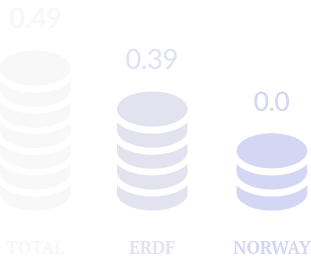
0.49 total // 0.39 ERDF // 0.0 Norway
Involved Countries
Lead Partner: Finland
Project Partners: Estonia // Denmark // Sweden // Finland
iBEC tool and Guidance for biological effects monitoring
iBEC tool and Guidance for biological effects monitoring
Biological effect methods, applied across various biological levels, offer a unique ability to assess the cumulative risks posed by complex mixtures of contaminants. They address a critical gap that chemical analysis alone cannot fill. By capturing biological responses, these methods provide a more comprehensive understanding of environmental risks, particularly under real-world conditions where organisms are exposed to multiple interacting stressors.
The guidance provides national authorities responsible for monitoring the quality of the marine environment in the Baltic Sea region with an overview of the various methods used to assess biological effects in the region. It recommends the most adequate monitoring methods depending on the context.
In addition, BEACON developed a new data integration tool, Integrated Biological Effects of Contaminants (iBEC). The Excel-based tool applies biological effect methods to assess contaminants in the Baltic Sea. It guides users step by step, from raw data to results, and includes pilot assessments carried out for the Bothnian Sea and Gulf of Riga.
Download links
10 organisations cooperating across borders
12 organisations directly benefitting from project solutions
Stakeholder survey
Stakeholder survey
BEACON conducted a survey on the application of biological effects methods in monitoring chemical contaminants to identify obstacles to their wider uptake. Based on 118 responses from diverse groups, including public authorities at different governance levels, the business sector, researchers, and NGOs in Denmark, Estonia, Finland, Germany, Latvia, Lithuania, Poland, and Sweden, the project identified four main barriers:
- lack of legal requirements
- financial constraints
- limited availability of information
- methodological difficulties
Across countries and sectors, a clear majority of respondents supported making biological effects monitoring a mandatory element of monitoring programmes in the Baltic Sea region, indicating that limited application is driven mainly by external conditions rather than by a lack of acceptance. The survey also highlights the importance of transnational exchange and cross-sectoral engagement in overcoming these challenges, providing a solid knowledge base to inform future regional policy development and coordinated implementation efforts.
Baltic Sea Biological Effects Cluster
Baltic Sea Biological Effects Cluster
BEACON joined a cluster of thematic activities and projects to disseminate its results more widely and engage with key partners working on biological effects methods. The cluster was initiated by HELCOM’s Expert Group on Hazardous Substances and its sub-team on biological effects.
The cluster brings together several projects, including BEACON, Detect2Protect, and H-BEC, and serves as a regional platform for advancing effect-based methods (EBM) in chemical–biological monitoring and assessment across the Baltic Sea. For example, the BIODIVERSA+ project Detect2Protect is further testing the iBEC tool developed by BEACON.
By connecting partners from multiple countries and sectors, the cluster lays the groundwork for long-term, practical approaches to monitoring and managing chemical pollution. These coordinated efforts support competent players in the field, particularly public authorities, in ensuring the effective protection of the Baltic Sea ecosystem across borders and promoting consistent, science-based environmental governance throughout the region.
As a concrete outcome, a study group was established to update and harmonise EBM guidelines across both the HELCOM (Baltic Sea) and OSPAR (North-East Atlantic) regions.
Interreg pays off
BEACON solutions in use
Interreg pays off: BEACON solutions in use
BEACON was built on close cooperation between public authorities and research institutions in Finland, Latvia, Estonia, and Sweden, with HELCOM as a key partner. Through stakeholder engagement, the project also benefited from input from other countries in the Baltic Sea region, leading to a better understanding of regional differences in species distribution, applied methods, available resources, and existing knowledge gaps.
At national levels, BEACON results are being applied in Estonia, Latvia, Finland, and Sweden to develop, improve, or harmonise biological effects monitoring across the region, for example:
- In Estonia, Tallinn University of Technology is using project results to develop a biological effect (BE) monitoring plan for the Estonian marine area, which will be implemented over the next two years. Input from the Estonian associated partner during the project, combined with knowledge gained on BE methods, data, and pilot study results, was essential in this process. Tallinn University of Technology used the project results to develop a biological effects (BE) monitoring plan for the Estonian marine area, which will be implemented over the next two years;
- In Latvia, the Latvian Institute of Aquatic Ecology is applying the project results to improve national BE monitoring;
- In Finland, the Finnish Environment Institute is using the project results to negotiate with the national Ministry of the Environment on extending BE monitoring in the Finnish sea area;
- In Sweden, the Universities of Stockholm and Gothenburg have already been applying BE methods for many years and will use the BEACON solutions to better harmonise monitoring with other Baltic Sea countries.
BEACON supported the HELCOM Expert Group on Hazardous Substances working on biological effects and laid a solid foundation for future assessments under the HELCOM Baltic Sea Action Plan (BSAP) 2021. One of the BSAP aims is to facilitate a reliable biological effects assessment by 2028. This progress will contribute to improved marine monitoring in the Baltic Sea and will be relevant for cooperation with ICES, OSPAR, and the EU MSFD Expert Network.
Get inspired
Project Wrap-Up
Thanks to Interreg funding and transnational cooperation, the BEACON project advanced effect-based monitoring in the Baltic Sea region and laid the foundation for harmonised monitoring, supporting future assessments of the Baltic Sea marine ecosystem and, in the longer run, better protection of the Baltic Sea from pollution.