




This wrap-up has been compiled by the Programme
PROGRAMME 2021-2027
Priority 1 Innovative societies
Objective 1.2 Responsive public services
StratKIT+
Wrap-up of project achievements
Institutional, knowledge, or even psychological barriers hindered the shift towards healthy and sustainable public catering. The Interreg project StratKIT+ expanded the Sustainable Public Meal Toolkit+ to support public authorities, meal providers and others in implementing green catering procurement in schools, hospitals, and other public institutions.
Highlights
StratKIT+
Highlights
StratKIT+
StratKIT+ united municipalities, catering providers, schools, research institutions and SMEs in Denmark, Estonia, Finland, Germany, Latvia, Lithuania, Poland and Sweden to test and further develop the Sustainable Public Meal Toolkit+ for healthier and organic public meals in schools, hospitals, day-care centres and other public institutions. The project also strengthened a community of experts dedicated to this field.
Main project’s outputs/solutions:
- Expanded Sustainable Public Meal Toolkit+ featuring 11 new tools, available in 9 languages
- Crisis Management Support Package adds five new tools and a template for action plans
- Training and capacity building activities, including national and transnational training events, audio-visual materials and four piloting videos.
Project
Details
Project type
Small project
Project duration
October 2022 – March 2024
Contribution to the EUSBSR
PA Bioeconomy
Budget in million
EURO
Involved
Countries
Lead partner
Project partners



Project Details
Project type
Small project
Project duration
October 2022 – March 2024
Contribution to the EUSBSR
PA Bioeconomy
Budget in million EURO
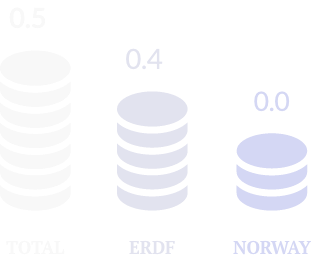
0.5 total // 0.4 ERDF // 0.0 Norway
Involved Countries
Lead Partner: Finland
Project Partners: Estonia // Sweden // Germany // Denmark // Poland // Lithuania // Latvia
Sustainable Public Meal Toolkit+
Sustainable Public Meal Toolkit+
The project developed 11 new tools and a Crisis Management Support Package, which were added to the existing Sustainable Public Meal Toolkit+. Originally created under the Interreg StratKIT project, the toolkit offers practical guidance for policymakers, procurers, caterers, producers, suppliers, consumers and others on setting sustainability criteria for food procurement. This collection supports the transition towards healthier, organic public meals in schools, hospitals, day-care centres and other public institutions.
The toolkit is available in nine languages, ensuring that professionals from all countries in the Baltic Sea region can easily access them. The toolkit offers a range of tools to make public meals more sustainable, resilient, and resource-efficient, covering, e.g., sustainable school meals, a campaign to drink tap water, composing climate-friendly dishes, community gardening, and ways to reduce CO2 emissions.
Partners from all eight project countries jointly developed the toolkit. Its components were tested through 21 pilot activities involving over 200 organisations. The process also included lectures as well as national and transnational workshops, bringing in input from a wide range of professionals and ensuring a strong transnational and cross-sectoral perspective.
Get inspired
Crisis Management Support Package
Crisis Management Support Package
The Crisis Management Support Package helps public authorities, meal providers, and others in the Baltic Sea region prepare action plans to manage public meal provision during crises. It includes concrete, step-by-step resources to help organisations plan before, respond during, and recover after disruptions (whether ecological, health-related, logistical, or economic).
The support package was developed in dialogue with experts and food sector professionals from all eight countries. In pilot activities run in each participating country, tools were tested to prepare plans for “providing school meals in crises”, “strategic crisis communication”, “organising social kitchens” and “connecting with local suppliers” during disruptions. A guide on developing action plans is an integral part of the support package.
Training & Networking Programme for Kitchen Professionals
Training & Networking Programme for Kitchen Professionals
StratKIT+ efforts also involved long-term transforming kitchen workflows, influencing procurement decisions, and selecting meal ingredients that prioritise higher sustainability (organic, seasonal, tasty, and cost-sensitive). The Training and Networking programme provided kitchen professionals across the Baltic Sea region with opportunities for peer learning, skill exchange, and the capability to integrate sustainable practices into their daily operations.
The programme was tested, for example, in Berlin (Germany) and Rybnik (Poland), alongside national training activities in other countries. Kitchen professionals analysed together kitchen operations and identified areas where change is feasible (e.g. in menus, procurement, methods). They tried out modifications (for example, including more regional/organic products, reducing waste, and adjusting portions) and evaluated them to prepare for the next steps. The training involved interdisciplinary teams (chefs, policy experts, communication/education professionals).
Kitchens that took part expressed interest in continuing the use of sustainable practices, and several municipalities are considering integrating this training into their standard professional development programmes for catering staff.
Interreg pays off
StratKIT+ solutions in use
Interreg pays off: StratKIT+ solutions in use
Already during the project’s lifetime, the Sustainable Public Meal Toolkit+ attracted 3,500 new visitors from 126 countries and over 220 downloads, indicating growing interest from multiple audiences. Audiovisual guidance (four piloting videos and a training video) was produced in multiple languages, making the tools more accessible.
The Toolkit+ is already in use by municipalities and catering organisations in several countries of the Baltic Sea region, with follow-up commitments to integrate its tools into local strategies, procurement guidelines, and staff training. This includes, for example, the municipality of Södertälje (Sweden), which will continue its Diet for a Green Planet initiative, and the Lithuanian municipality of Lazdijai (Lithuania), inspired by the guide on crisis management. The city of Rybnik (Poland) continuously strives for more sustainable meal provision. For its sustainability efforts, it became a finalist in the Innovation in Politics Awards.
In numbers
25 organisations cooperating across borders
73 organisations directly benefitting
Project Wrap-Up
Thanks to Interreg funding and transnational cooperation, StratKIT+ helped public kitchens and local authorities across the Baltic Sea region move closer to greener, healthier and more resilient catering services — offering local, sustainable and nutritious meals to citizens of all ages on a daily basis.
.