




This wrap-up has been compiled by the Programme
PROGRAMME 2021-2027
Priority 1 Innovative societies
Objective 1.1 Resilient economies and communities
UrbanTestbeds.JR:
wrap-up of project achievements
How to improve the low engagement of young people in urban design? The Interreg project UrbanTestbeds.JR equipped local public authorities, schools, and cultural organisations from Denmark, Germany, Latvia, and Sweden with AI-supported engagement methods to better engage youth in urban and climate planning.
Highlights
UrbanTestbeds.JR
Highlights
UrbanTestbeds.JR
The project UrbanTestbeds.JR brought together local public authorities, higher education institutions, cultural organisations, and community groups from Denmark, Germany, Latvia, and Sweden to test new ways of actively involving young people in urban planning using innovative technologies, such as artificial intelligence-based participatory methods, virtual technology, and storytelling.
In a nutshell, the project developed:
- Playbook – UrbanTestbeds.JR: guide for co-creation and engagement of young citizens in urban planning
Download links
Project
Details
Project type
Small project
Project duration
October 2022 – September 2024
Contribution to the EUSBSR
PA Spatial Planning
Budget in million
EURO
Involved
Countries
Lead partner

Project partners


Project Details
Project type
Small project
Project duration
October 2022 – September 2024
Contribution to the EUSBSR
PA Spatial Planning
Budget in million EURO
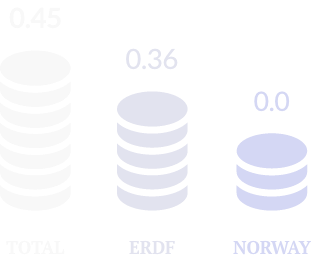
0.45 total // 0.36 ERDF // 0.0 Norway
Involved Countries
Lead Partner: Germany
Project Partners: Sweden // Denmark
Playbook UrbanTestbeds.JR
Playbook UrbanTestbeds.JR
The Playbook – UrbanTestbeds.JR is a practical guide designed for local public authorities, teachers, community groups, and cultural actors to empower young people in co-creating urban spaces. The Playbook offers example-based guidance and presents innovative methods, including the application of artificial intelligence, to facilitate the constructive engagement of young citizens in decision-making processes.
The playbook is structured around four core sections:
- Engaging Young Citizens – explores the youth culture, ethical considerations, and how to design inclusive and effective engagement processes;
- Urban Experimentation – shows how to incorporate local issues, urban data and climate plans into youth-led city development projects;
- Using Artificial Intelligence – explains how AI can support idea generation, storytelling, and data analysis, making complex topics more accessible;
- Real-life Examples – presents test cases from Germany, Denmark, Latvia, and Sweden, where young people co-developed solutions to local challenges.
Explore
Pilot activities
Pilot activities
A series of workshops in Hamburg (Germany), Aarhus (Denmark), and Luleå (Sweden) demonstrated methods recommended by the playbook in real conditions. During these events, the participants explored how participatory methods, combined with digital tools such as UrbanistAI, ChatGPT, and virtual reality, can enhance children’s and youth engagement in urban planning.
- in Aarhus (Skødstrup School), children reimagined their neighbourhood using UrbanistAI. They chose locations, wrote prompts, generated AI visuals, and shared their ideas. The workshop promoted creativity, ownership, and democratic thinking
- in Hamburg (Central Library):
- younger children explored local issues by creating maps and describing places they liked or disliked in the city, and then worked together to develop ideas for improvements using images generated by artificial intelligence. Their work focused on liveability and environmental awareness;
- older students explored ethical issues related to the use of AI in urban planning and development. With the support of local institutions, they experimented with various prompting techniques and reflected on the impact and limitations of this technology.
- in Luleå, children redesigned their school routes using traditional, VR, and AI-based methods, showing how combining analogue and digital tools can make urban planning more tangible.
These pilots informed the playbook’s methods and confirmed that digital tools, when combined with inclusive facilitation, significantly enhance youth engagement. The project partners reviewed and discussed the insights gained, which became a core part of the UrbanTestbeds JR Playbook.
Interreg pays off
Spin offs
Interreg pays off: Spin offs
The project has sparked further initiatives in several partner countries:
- in Hamburg (Germany): federal funds were used to scale up the project’s methods across the municipal library system and within the Ministry of Culture.
- in Aarhus (Denmark): the Central Library has integrated the project’s engagement formats into its IRIS Lab.
- in Luleå (Sweden): Luleå University of Technology has embedded creative urban thinking into its curriculum and continues co-creation work with schools and the municipality
In numbers
14 organisations cooperating across borders
10 organisations directly benefitting from project solutions
Project Wrap-Up
Thanks to Interreg funding and transnational cooperation, UrbanTestbeds.JR developed new participatory methods, including the use of AI and VR to address the challenge of youth engagement in urban planning in Baltic Sea region cities. Now, public authorities, educators, and cultural actors can apply tested, practice-based approaches to meaningfully involve young citizens in decision-making, making urban development more inclusive, innovative, and future-oriented.