




23 January 2026
Climate-neutral future at hand for Baltic Sea region cities
Climate-neutrality on the horizon
Managing a city is like operating a machine: all elements must work in harmony. With climate neutrality targets set for 2050, city budget planning across the Baltic Sea region faces new challenges: Which decisions or investments to prioritise? What will the financial implications be? How will it affect emissions? And which scenarios will deliver the best results?
Learning from peers in other countries has proven to be both an efficient and an inspiring way to find answers to these questions. This is how cities can avoid reinventing the wheel when others have already explored certain pathways and worked through challenges. This idea lies at the heart of the Climate-4-CAST project.
Do it smart, do it together
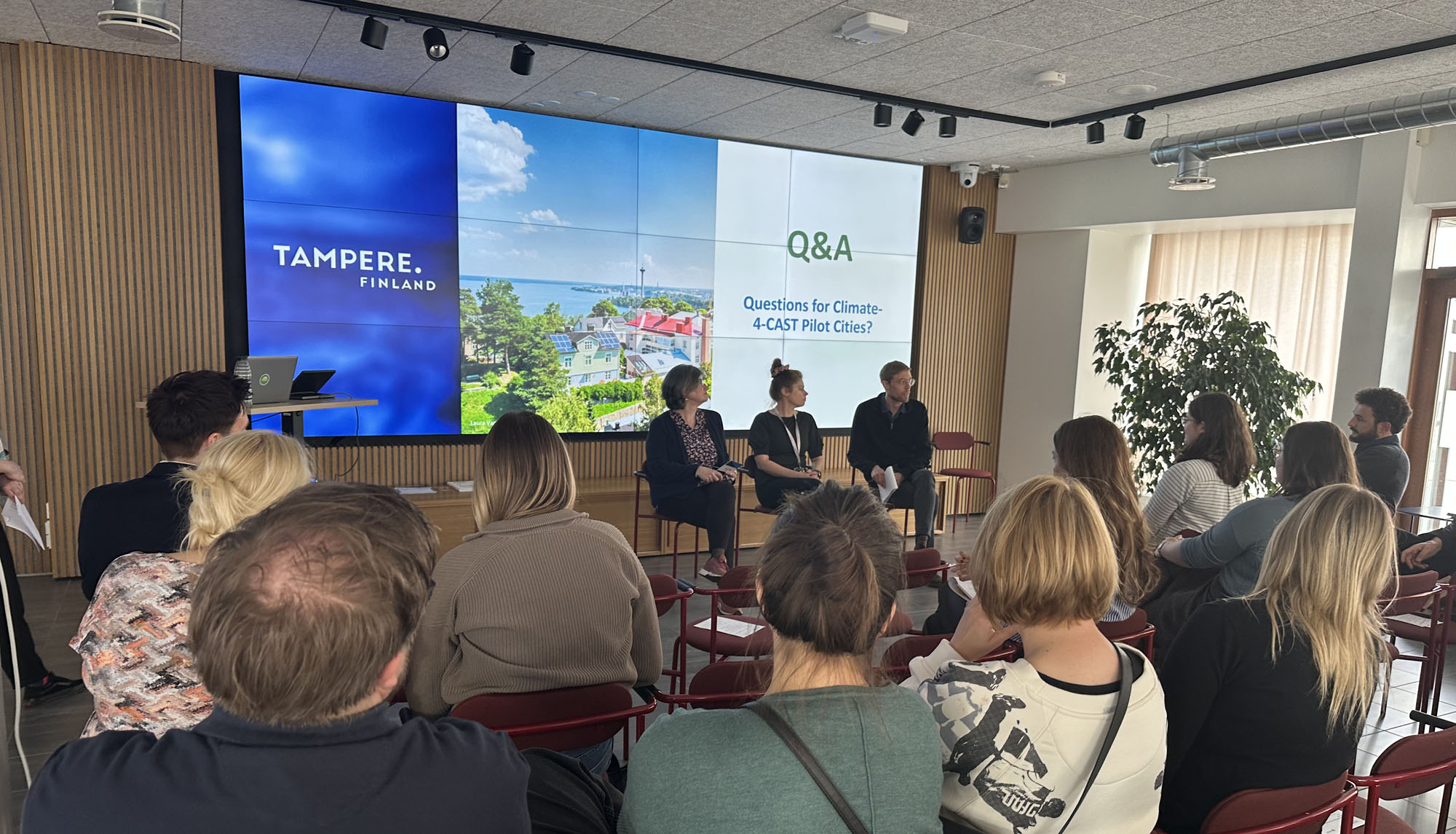
One of the many opportunities for joint work and exchange took place in May, when all roads led to Finnish Tampere for the Interreg Baltic Sea Region Programme Conference. At the Tampere Bus Station, right where discussions on urban development and planning take place, the Climate-4-CAST project demonstrated how exchange across borders and a smart digital tool can support better decisions on climate actions in city budget planning.
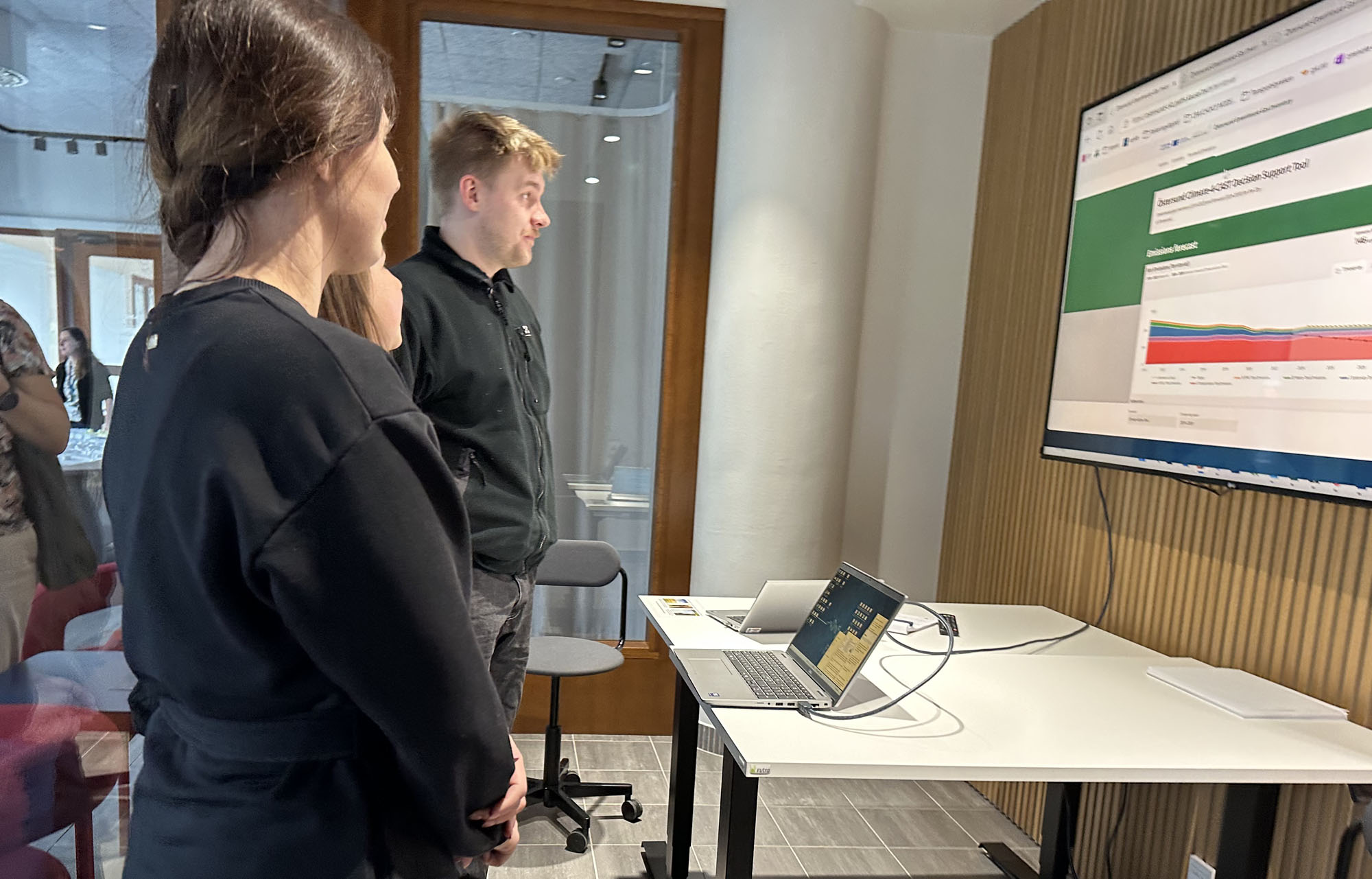
Based on examples from three pilot cities, Tampere (Finland), Riga (Latvia), and Östersund (Sweden), participants explored how the Climate Action Decision Support (CADS) tool works in practice. The tool allows cities to visualise different scenarios and understand their practical implications, such as required resources and expected emission reductions. This makes it possible to model and compare actions across sectors, including energy, transport, waste, and land use, and to select the most suitable and efficient options for local conditions.
IB.SH
Exchange across borders brings benefits regardless of a city’s level of experience with climate budgeting. In the Swedish municipality of Östersund, for example, the project opened up new opportunities to practice climate budgeting, ‘to see how others do it’, and draw inspiration from cities that are a few steps ahead.
At the same time, cities already familiar with climate budgeting and the CADS tool, such as Tampere, used the project to further build their knowledge and resources. Among other things, through Climate-4-CAST, they were able to upgrade the tool to include economic effect in it.
The Climate-4-CAST project manager Donald Alimi from HafenCity University Hamburg highlighted yet another important dimension of the project that compliments practical takeaways of the project.
Donald Alimi, Climate-4-CAST project manager
An example of transfer between partner cities has been not only on the methodologies and calculation of emissions or cost implications, but also on the processes behind: for example, how to introduce this tool to decision makers and adapt it to their needs.
Good climate for climate budgeting!
From testing climate budgeting in real conditions, sharing practical knowledge to exchanging on effective strategies to actively engage decision makers: the project Climate-4-CAST helps cities around the Baltic Sea to translate climate goals into actions. Inspired by pilot activities in all in all six countries: Denmark, Finland, Germany, Latvia, Sweden and Poland, the project has proven that cooperation makes meeting climate goals easier – when working together.
#DidYouKnow
Are you interested in climate budgeting? Are you curious about CADS? Now you can join the training designed for local authorities, decision-makers and sustainability and climate experts to learn more! The next training event takes place on 29 January 2026. Here you can find more information.
More recent news

New season, new standards: how to make your event more sustainable
11 March 2026 New season, new standards: how to make your event more sustainable WRITTEN BY: SUSIE HACQUIN Public events bring people together, and...

Grand results of the first round of small projects!
Despite the winter scenery, the results of 17 finalised Interreg Baltic Sea Region projects are in full bloom! And behind them lie two years of intensive work across borders, mutual learning and inspiration, and connections that last.
Designing Interreg Baltic Sea Region that belongs to everyone
10 December 2025 Designing Interreg Baltic Sea Region that belongs to everyone Written by Eeva Rantama What if the next Interreg Baltic Sea Region...
Monitoring the Programme’s progress: transnational cooperation in the making
Representatives from nine Programme area countries gathered in Berlin on 19-20 November 2025 to review the progress of the Programme’s implementation and start preparing for the post-2027 period.