

This wrap-up has been compiled by the Programme
PROGRAMME 2021-2027
Priority 1 Innovative societies
Objective 1.1 Resilient economies and communities
MainPotRe:
Wrap-up of project achievements
Small-scale, non-commercial growers often have limited access to disease-free seed potatoes of heritage and locally bred varieties. To address this, the Interreg project MainPotRe brought together research institutions, local and national authorities, NGOs and local communities to protect and restore local potato varieties and make their distribution legally possible, strengthening biodiversity and food self-sufficiency in Finland, Estonia and Latvia.
Solutions
MainPotRe
Highlights
MainPotRe
In a nutshell, the project delivered the following:
- An action plan to increase the availability of small quantities of disease-free seed potatoes of local and heritage varieties
- A practical toolbox guiding the deposition and distribution of plant material from gene banks to non-commercial users
- Guidelines for marketing and promoting small quantities of seed potatoes to improve visibility, communication and cooperation among growers, producers and end users
Project Details
Project type
Small project
Project duration
August 2023 – July 2025
Contribution to the EUSBSR
PA Culture
PA Bioeconomy
Budget in million EURO
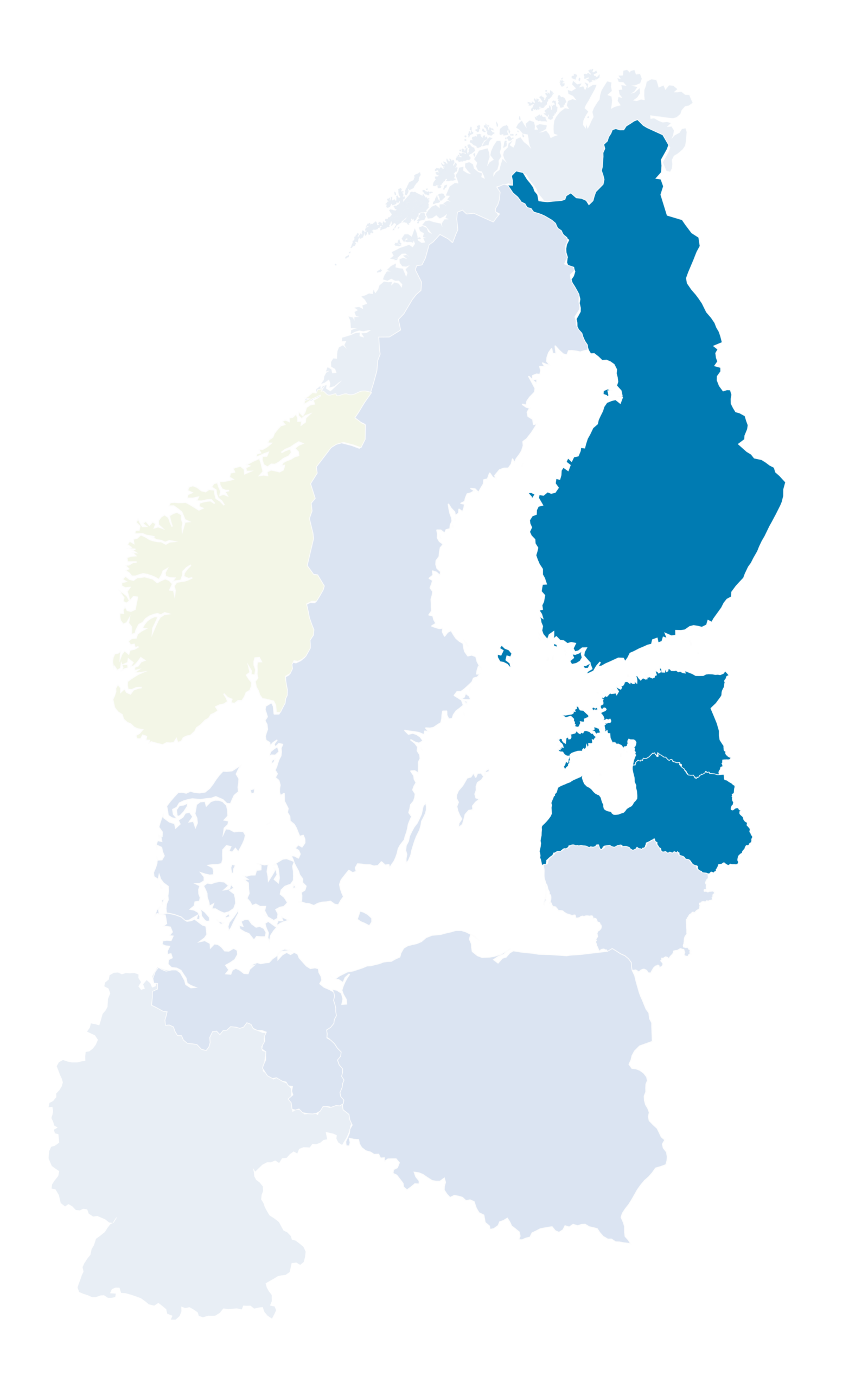
0.5 total // 0.4 ERDF // 0.0 Norway
Involved Countries
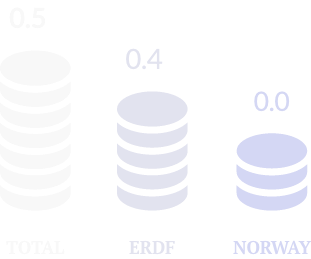
Lead Partner: Latvia
Project Partners: Estonia // Finland
Action plan
Action plan
To increase the availability of disease-free seed potatoes of local & heritage varieties
The project prepared an Action Plan for national authorities and sectoral agencies responsible for seed legislation, food security and agricultural policy to improve the availability and sustainable use of local potato varieties in Latvia, Estonia and Finland.
Designed as a practical, evidence-based roadmap, the Action Plan combines detailed analysis, policy recommendations and a Policy Brief highlighting the key measures needed to improve access to healthy planting material. Turning research into practical action helps increase the supply of disease-free seed potatoes while strengthening the connection between traditional food culture and sustainable agriculture.
The project actively engaged national authorities responsible for plant variety registration and seed regulation, research institutions, gene banks, universities, local authorities, NGOs, and community growers across Latvia, Estonia, and Finland. Its results have already attracted interest from national authorities, research institutes, municipalities, and NGOs in all three countries
Latvia
- The Latvian Institute of Agricultural Resources and Economics (AREI) used elements of the draft Action Plan to improve access to healthy seed potatoes of heritage varieties and committed to implementing additional actions from 2025 onwards.
- The Latvia University of Life Sciences and Technologies (LBTU) integrated project topics into study programmes, tested a new in situ preservation method, and supported student projects.
- The Latvian Permaculture Association organised community awareness events and contributed to collecting heritage potato material.
- The Latvian State Plant Protection Service (VAAD) and the Ministry of Agriculture are expected to use the Action Plan when reviewing national procedures for registration, certification, and trade.
Estonia
- The Centre of Estonian Rural Research and Knowledge (METK) used the draft Action Plan to improve access to healthy seed potatoes of heritage varieties and committed to implementing additional actions from 2025 onwards.
- The Estonian University of Life Sciences (EMU) integrated project topics into study programmes, tested a new in situ preservation method, and supported student projects.
- The Estonian Permaculture Association organised community awareness events and contributed to collecting heritage potato material.
By now, the project has attracted interest from national authorities, research institutes, municipalities, and NGOs across the three countries. AREI, METK and LUKE will keep and expand heritage variety collections and continue genetic identification and documentation, using the Action Plan as a framework for working with gene banks, growers, and educational institutions. They will also use the proposed promotional and awareness-raising activities in their daily work. National authorities Latvian State Plant Protection Service (VAAD), Latvian Ministry of Agriculture, Estonian Agriculture and Food Board and Finnish Food Authority are expected to use the Plan as a reference when reviewing national procedures for registration, certification, and trade
Get inspired
MainPotRe Toolbox
MainPotRe Toolbox <
The project developed a shared practical guide to help gene banks, researchers, and community organisations collect, preserve, and share local and heritage potato varieties across Latvia, Estonia, and Finland. The guide includes: a detailed manual for gene banks and research institutions; a simplified, illustrated version for growers and community organisations; practical templates and agreements for depositing and distributing plant material.
Together, these resources standardise documentation, identification, health testing, and dissemination procedures, while helping institutions comply with international and European plant health rules. By harmonising practices across the three countries, the guide makes cross-border cooperation easier and reduces administrative uncertainty.
Latvia
- AREI and the Latvian State Plant Protection Service (VAAD) use the guide to collect, document, maintain, and exchange heritage potato varieties.
- The municipality of Cēsis and the Latvian Permaculture Association contributed to developing practical procedures and community engagement.
Estonia
- METK and the Estonian Agriculture and Food Board use the guide in their work on collecting, documenting, maintaining, and exchanging heritage varieties.
- The municipality of Lääne-Nigula (or Lemi, if correct in your original) and the Estonian Permaculture Association helped ensure the guide works in practice for local communities.
Finland
- LUKE and the Finnish Food Authority apply the guide in maintaining heritage potato collections and reviewing procedures for exchanging unprotected varieties.
Today, the guide is actively used by AREI, METK, and LUKE in their daily work. National authorities use it when reviewing procedures for exchanging and distributing unprotected varieties, while NGOs rely on the simplified version during training events and seed exchange initiatives. Together, these efforts have strengthened coordination between national collections and helped secure the long-term availability of unique local potato varieties.
Discover more
Guidelines for marketing and promotion
Guidelines for marketing and promotion
To improve visibility, communication and cooperation among growers, producers and end users
The project developed practical marketing guidelines to help small-scale growers, seed producers, municipalities, and advisory organisations promote and distribute local and heritage seed potatoes in Latvia, Estonia, and Finland. The guidelines explain national legal requirements in a simple way; identify barriers to selling small quantities of seed potatoes;provide practical recommendations on communication, labelling, visibility, and cooperation between growers, producers, and consumers.
By combining legal guidance with hands-on communication tools, the project helps make the small-scale marketing of local potato varieties safer, more transparent, and easier to understand.
The guidelines were developed jointly by research institutes, municipalities, NGOs, and local cooperation organisations, allowing partners to compare different national systems and identify common challenges and solutions.
Latvia
- AREI developed new marketing approaches for local varieties.
- The municipality of Cēsis will continue promoting small-scale cultivation, community gardening, and local food traditions.The Latvian Permaculture Association will continue outreach activities and support growers and community gardens.
Estonia
- METK developed new marketing approaches for local varieties.
- The municipalities of Jõgeva and Tartu will continue promoting small-scale cultivation and local food traditions.
- The Estonian Permaculture Association and the Jõgeva County Cooperation Chamber will continue informing growers and consumers about seed health and local varieties.
Finland
- LUKE has shared the guidelines with Finnish companies.
- The municipalities of Eura and Lemi will continue promoting small-scale cultivation, self-sufficiency, and local food traditions.
The guidelines are available as a full version in English and summary versions in English, Latvian, and Estonian, making them accessible across the Baltic Sea Region.
Discover more
Interreg pays off
Follow-ups
Follow-ups
The project’s impact will continue long after the funding has ended. The Action Plan has already been integrated into national genetic resources and agrobiodiversity programmes in Latvia, Estonia, and Finland. The new workflows developed for potato gene banks are now fully embedded in the daily work of national gene banks. Partners will continue to document and preserve heritage potato varieties collected from farmers and local communities, while conducting comparative studies across the three countries.
In Finland, cooperation between LUKE, the Finnish Food Authority, and the Municipality of Lemi has supported the preparation of the first national registration of the conservation variety Lemin Punanen, helping secure the long-term availability of healthy seed for this unique local potato variety. The project’s impact is also reaching beyond the three partner countries. NordGen (the Nordic Genetic Resource Centre) is expected to use the project’s documentation within the Nordic–Baltic genebank network, extending the shared approach to managing plant genetic resources across the wider region.
The project has also inspired follow-up initiatives such as the Perunagalleria2026 in Finland, promoting potato heritage regionally and Skolu dobes 2025 in Latvia, fostering educational gardens and crop diversity awareness in Sigulda´s schools and communities. Further, the transnational expert network on heritage potato conservation, seed systems and agrobiodiversity management that the project established will support hobby growers and small farmers in using conservation varieties, subject to future regulatory updates on cross-border marketing.
In numbers
12 organisations cooperating across borders
22 organisations directly benefitting
In focus
Small stories, big gains
Small stories, big gains
Potatoes with Baltic passports
Old potato varieties reveal the Baltic Sea region’s shared history
Some of the most valuable clues to the Baltic Sea region’s history are still growing in people’s gardens. Partners in the Interreg Baltic Sea Region project MainPotRe discovered that heritage potatoes preserved in Latvia, Estonia and Finland reveal stories about the region’s past.
Using DNA analysis alongside historical records, the team compared potatoes from home gardens with samples held in Nordic gene banks. The results revealed some unexpected connections. Some Latvian potatoes turned out to be genetically identical to varieties found in Estonia, yet matched none of the known collections in the Nordic gene bank. Finnish potatoes, on the other hand, were genetically different from most Latvian and Estonian varieties, showing that potatoes have travelled across the Baltic Sea region for centuries, adapting to local conditions and becoming part of each country’s heritage.
Long before modern transport connected the Baltic Sea region, potatoes were already making the journey. Today, preserving these heritage varieties means preserving the stories they still carry. Partners from Latvia, Estonia and Finland are working together to keep these unique potatoes in cultivation, protect biodiversity, support local food production and strengthen food security for future generations.
Project
Details
Project type
Small project
Project duration
August 2023 – July 2025
Contribution to the EUSBSR
PA Culture
PA Bioeconomy
Budget in million
EURO
Involved
Countries
Lead partner

Project partners